

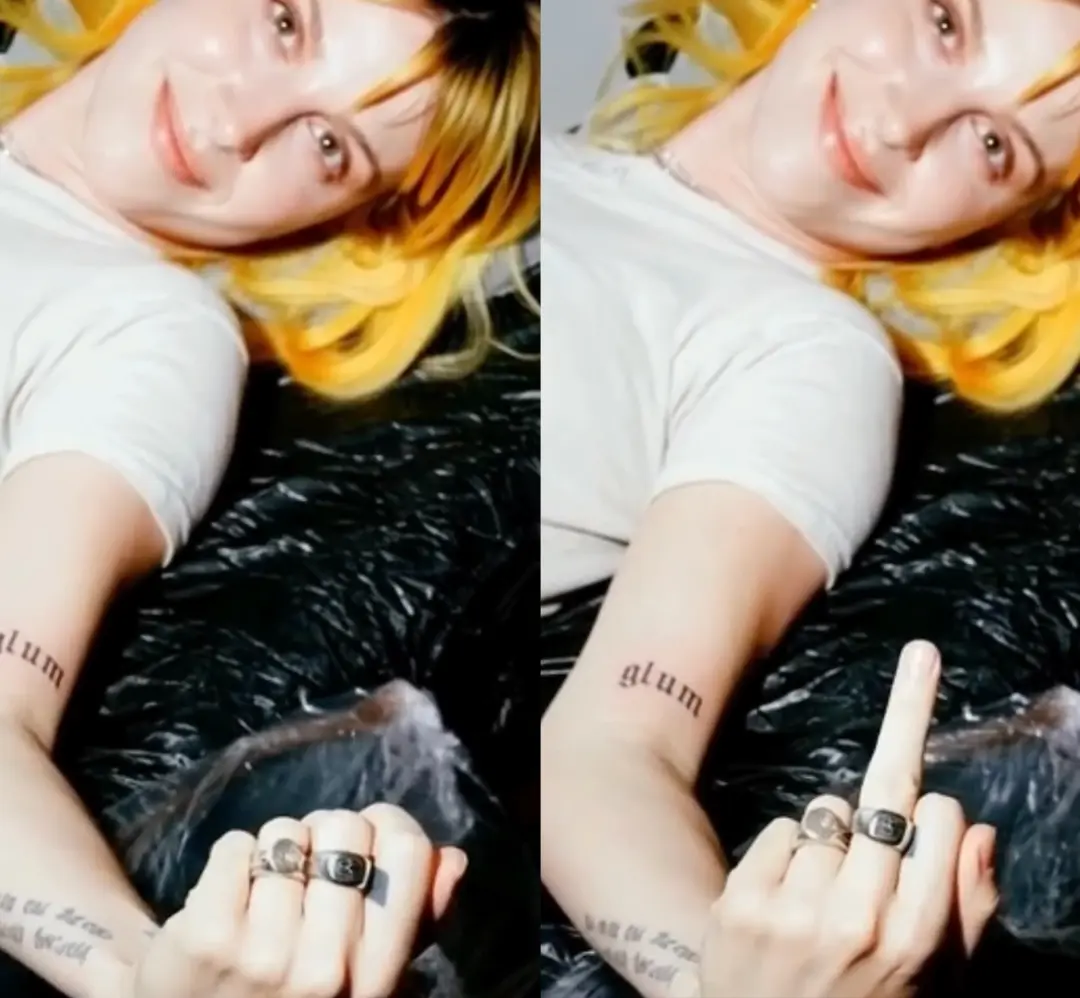
Paramore frontwoman Hayley Williams has once again found herself at the center of a public maelstrom following a series of politically charged pronouncements made during a recent concert, which subsequently elicited an official response from the Department of Homeland Security (DHS) and a defiant rebuttal from the artist herself. The incident, occurring on Saturday, October 3, in Chula Vista, California, saw Williams use her platform to vocalize strong sentiments against federal immigration enforcement and in solidarity with Palestinians, triggering a swift and critical reaction from governmental authorities and reigniting discussions about the role of public figures in political discourse.
The Chula Vista Incident and Initial Outcry
The focal point of the controversy emerged from Williams’s performance of her track "Ice In My OJ" from her solo project, Ego Death At A Bachelorette Party, during which she interpolated explicit political slogans. Addressing the audience in Chula Vista, a city located in San Diego County, mere miles from the U.S.-Mexico border, Williams reportedly shouted, "Fuck ICE" and "Free Palestine." These exclamations were delivered with characteristic fervor, consistent with Williams’s evolving public persona, which has increasingly embraced outspoken progressive advocacy. The choice of Chula Vista, with its significant Latinx population and proximity to border patrol operations, added a layer of immediate relevance and sensitivity to her statements regarding Immigration and Customs Enforcement (ICE).
The sentiments expressed by Williams are not isolated incidents but rather reflective of broader, deeply polarized debates within American society. "Fuck ICE" is a common rallying cry among activists advocating for immigration reform, protesting what they view as harsh and inhumane detention and deportation policies. Critics of ICE often point to allegations of human rights abuses, family separations at the border, and the agency’s enforcement tactics. Conversely, supporters of ICE emphasize its role in national security, border protection, and enforcing federal law.
Similarly, "Free Palestine" is a widely recognized slogan used by proponents of Palestinian self-determination and an end to the Israeli occupation of Palestinian territories. This phrase encapsulates a complex geopolitical conflict characterized by decades of historical grievances, territorial disputes, and human rights concerns. While many view it as a call for justice and freedom, others interpret it as a rejection of Israel’s right to exist or as an endorsement of specific political factions within the conflict. Williams’s direct invocation of these phrases from the stage immediately propelled her into the contentious crosshairs of these national and international debates.
The Department of Homeland Security’s Official Response
The artist’s remarks quickly garnered attention beyond the concert venue, reaching official channels. A spokesperson for the Department of Homeland Security, the federal executive department responsible for public security, including border control, customs, and emergency management, issued a formal statement to Fox News Digital in response to Williams’s "Fuck ICE" declaration. The statement read: "America is grateful all the time for our federal law enforcement officers who keep us safe. We suggest Ms. Williams to thank them for their service, not belittle their sacrifice."
This response from a federal agency to a musician’s political statement is noteworthy, underscoring the perceived gravity of Williams’s words in certain circles. The DHS statement positioned Williams’s comments as an attack on the integrity and dedication of federal law enforcement officers, implying a disrespect for their service and sacrifice. By framing its response around "gratitude" and "safety," the DHS sought to invoke a sense of patriotic duty and collective appreciation for its personnel, implicitly condemning Williams’s criticism as un-American or ungrateful. Such official rebukes from government bodies towards cultural figures are not unprecedented but typically occur when the statements are seen to directly challenge governmental authority or public order. The specificity of the DHS’s response highlights the sensitivity surrounding immigration enforcement and national security within the current political climate.
Williams’s Unapologetic Rebuttal and Escalation
Far from retreating in the face of governmental criticism, Hayley Williams chose to double down on her stance. On her Instagram Story, a platform frequently used by celebrities for direct communication with their followers, Williams issued a blunt and provocative retort to the DHS statement. Her post read: "AND MAY I SUGGEST ALL NAZI BITCHES SUCK ON MY FAT DICK." This incendiary response elevated the discourse considerably, shifting from a political disagreement to an intensely personal and confrontational broadside.
The use of "Nazi bitches" is a highly charged epithet, historically associated with extreme fascism and genocide, and its application here reflects a complete rejection of any common ground or polite debate. While it can be interpreted as hyperbole intended to shock and provoke, it also serves to align those who would criticize her stance with an ideology widely considered abhorrent. This defiant posture is characteristic of Williams’s recent public engagements, where she has demonstrated a willingness to embrace controversy and reject calls for moderation. Her response not only dismissed the DHS’s suggestion but also escalated the rhetoric, indicating a deep-seated conviction in her political views and a refusal to be silenced or intimidated by official condemnations.
Broader Context: Celebrity Activism and Political Discourse
Hayley Williams’s actions are situated within a long tradition of celebrity activism, where artists leverage their platforms to advocate for social and political causes. From the anti-war protests of the 1960s to contemporary movements for racial justice and environmental protection, musicians, actors, and other public figures have historically used their influence to shape public opinion and challenge established norms. In an increasingly polarized world, the intersection of entertainment and politics has become more pronounced, with artists often feeling compelled to speak out on issues they deem critical.
However, celebrity activism is a double-edged sword. While it can raise awareness, mobilize support, and provide a voice for marginalized communities, it also frequently draws criticism. Detractors often argue that celebrities are out of touch with everyday realities, lack a nuanced understanding of complex issues, or are simply seeking attention. Government responses, such as the one from the DHS, further complicate this dynamic, raising questions about freedom of speech, the legitimate scope of artistic expression, and the potential for official bodies to chill dissent.
The "Whole Foods" Incident and Previous Political Stances
The recent Chula Vista incident is not an isolated event in Williams’s history of engaging in political commentary. She has cultivated a reputation for being outspoken, particularly on issues she perceives as unjust. A notable precursor to this latest controversy was her public call-out of country music star Morgan Wallen. Following Wallen’s highly publicized use of a racial slur, Williams made a widely circulated comment telling him to find her "at Whole Foods, bitch." This remark, delivered with her characteristic blend of sass and indignation, positioned her as an artist unafraid to confront problematic behavior within the music industry and beyond. While less directly governmental, this incident demonstrated her willingness to publicly challenge figures and behaviors she found objectionable, aligning herself with progressive social justice causes.
These instances collectively paint a picture of an artist who has consciously evolved from a more apolitical pop-punk icon to a vocal advocate for progressive causes. This transformation reflects not only her personal growth but also a broader trend within the entertainment industry where younger generations of artists are increasingly expected, and often choose, to take clear stands on social and political issues.
Understanding "Fuck ICE" and "Free Palestine": A Deeper Dive
To fully appreciate the intensity of the reactions, it is crucial to understand the deeply entrenched issues surrounding "Fuck ICE" and "Free Palestine."
Immigration and Customs Enforcement (ICE):
ICE is a primary enforcement arm of the U.S. Department of Homeland Security, responsible for enforcing federal laws governing border control, customs, trade, and immigration to promote homeland security and public safety. Established in 2003, in the wake of the September 11 attacks, ICE’s mission includes identifying, apprehending, and deporting undocumented immigrants who violate U.S. immigration laws, as well as combating transnational crime.
Critics of ICE, including human rights organizations, civil liberties advocates, and progressive politicians, often cite:
- Family Separations: Policies leading to the separation of children from parents at the border, particularly under the Trump administration’s "zero tolerance" policy.
- Detention Conditions: Allegations of inhumane conditions, lack of medical care, and insufficient legal representation in immigration detention centers.
- Racial Profiling: Concerns that enforcement disproportionately targets specific ethnic groups.
- Aggressive Tactics: Criticisms of raids in communities and workplaces, leading to fear and instability.
Conversely, supporters of ICE argue that the agency is essential for: - National Security: Protecting the nation from threats, including terrorism and drug trafficking.
- Rule of Law: Enforcing existing immigration laws and maintaining an orderly immigration system.
- Public Safety: Removing dangerous criminals and individuals who pose a risk to communities.
"Free Palestine":
This slogan encapsulates the Palestinian nationalist movement and the broader struggle for Palestinian self-determination and human rights. The Israeli-Palestinian conflict is one of the world’s most enduring and complex geopolitical issues, rooted in competing historical claims to the same land.
Those who chant "Free Palestine" generally advocate for:
- End to Occupation: An end to the Israeli occupation of the West Bank, East Jerusalem, and Gaza, territories captured in the 1967 Six-Day War.
- Right of Return: The right of Palestinian refugees displaced during the 1948 Arab-Israeli War and subsequent conflicts to return to their ancestral homes.
- Statehood: The establishment of an independent, sovereign Palestinian state.
- Human Rights: An end to what they perceive as human rights abuses, restrictions on movement, and discriminatory policies against Palestinians.
Critics of the "Free Palestine" movement, or certain interpretations of it, often express concerns about:
- Israel’s Security: The security needs of Israel, which faces threats from militant groups.
- Anti-Semitism: Accusations that some anti-Israel rhetoric crosses into anti-Semitism.
- One-State vs. Two-State Solutions: Disagreements over the ultimate political solution, with some advocating for a single, secular state and others for a two-state solution alongside Israel.
Hayley Williams’s vocalization of these slogans thus taps into deep wells of emotion, historical grievance, and contemporary political division, ensuring that her statements resonate far beyond the typical confines of a concert venue.
The Intersection of Music, Politics, and Public Reaction
The immediate aftermath of Williams’s statements saw a predictable bifurcation of public opinion. On social media platforms, a significant segment of her fanbase expressed enthusiastic support for her outspokenness, applauding her courage and alignment with progressive values. Many shared her sentiments regarding ICE and Palestine, viewing her as an authentic voice unafraid to challenge authority. These supporters often highlighted the importance of artists using their platforms for social good and condemned the DHS’s response as an attempt to silence dissent.
Conversely, a vocal contingent of critics emerged, condemning Williams’s language as divisive, disrespectful, and inappropriate for a public figure. These critics, often aligning with conservative viewpoints or those who support federal law enforcement, accused her of being uninformed, radical, or simply seeking attention. The DHS’s statement found resonance among this group, who saw Williams’s comments as an affront to dedicated public servants. Her subsequent "Nazi bitches" retort further inflamed this segment, leading to accusations of extreme vulgarity and hypocrisy.
Mainstream media outlets, from entertainment news to political commentary, picked up the story, framing it as another instance of the culture wars playing out in the public sphere. The incident contributed to the ongoing national dialogue about freedom of speech, particularly for celebrities, and the appropriate boundaries, if any, for political expression in entertainment contexts.
Industry Implications: Primavera Sound Announcement
Amidst the swirling controversy, Williams’s professional standing appeared to remain undeterred, at least in some segments of the music industry. On the very same day her defiant Instagram post went viral, she was officially announced as part of Primavera Sound’s "stacked 2027 lineup." Primavera Sound is one of the world’s most prestigious and influential music festivals, known for its curated and often progressive lineups. The inclusion of Williams, a prominent artist with a history of social and political engagement, suggests that the festival organizers are either unconcerned by her controversial statements or, perhaps, even view her outspokenness as an asset that aligns with the festival’s ethos of diverse and sometimes edgy artistic expression.
This announcement serves as a subtle, yet significant, industry endorsement. It implies that for a major cultural institution like Primavera Sound, Williams’s political activism, even when confrontational, does not disqualify her from participating in high-profile events. In an era where "cancel culture" is frequently invoked, this booking suggests a resilience for artists who take firm political stances, particularly when those stances align with the values of influential cultural gatekeepers. It also highlights the growing divide within the cultural landscape, where certain segments are more tolerant, if not outright supportive, of artists who challenge established norms and authority.
Analysis of Free Speech and Government Scrutiny
The exchange between Hayley Williams and the Department of Homeland Security brings into sharp focus the complex interplay between free speech rights and governmental authority. In the United States, the First Amendment protects individuals from government censorship and abridgment of their freedom of speech. This protection generally extends to controversial and even offensive language, provided it does not incite imminent violence or constitute true threats. Williams, as a private citizen, clearly possesses the right to express her political opinions, however provocative.
However, the DHS’s response, while not a legal action to silence her, represents a form of governmental scrutiny and public condemnation. While the agency has a right to defend its personnel and mission, its direct engagement with a celebrity’s political commentary raises questions about the appropriate boundaries of such interactions. Some argue that such responses can have a chilling effect on free speech, potentially deterring others from speaking out for fear of official backlash. Others contend that a government agency, like any entity, has the right to respond to public criticism, especially when it perceives its employees or mission to be unfairly attacked.
This incident underscores the ongoing tension in democratic societies between the right to express dissent and the government’s role in maintaining public order and defending its institutions. It also highlights the disproportionate impact of celebrity speech, which can reach millions and thus elicit a more robust reaction from those it targets.
The Evolving Public Persona of Hayley Williams
Hayley Williams’s journey from the pop-punk princess of Paramore, known for her vibrant hair and powerful vocals, to an unapologetically political activist reflects a significant evolution. Early in her career, Paramore’s music, while emotionally resonant, largely steered clear of overt political messaging. However, as Williams matured and gained more control over her artistic narrative, her public persona began to shift. Her solo work, particularly Petals for Armor and Ego Death At A Bachelorette Party, delved into deeply personal themes, exploring vulnerability, trauma, and empowerment. This personal introspection seemingly paved the way for a more outward-looking, politically engaged stance.
Her recent actions suggest a deliberate choice to use her platform for advocacy, even at the risk of alienating certain segments of her audience or incurring official censure. This transformation aligns her with a growing number of artists who view their roles as extending beyond mere entertainment, embracing a responsibility to speak truth to power and contribute to social change. For Williams, this appears to be a deeply authentic commitment, one she is willing to defend with fierce resolve, as evidenced by her latest fiery retort.
Conclusion: The Ongoing Dialogue
The recent controversy involving Hayley Williams, the Department of Homeland Security, and her defiant response is more than just a passing news item; it is a microcosm of contemporary political and cultural dynamics. It encapsulates the ongoing battles over immigration policy and international conflict, the pervasive influence of celebrity activism, the boundaries of free speech, and the increasingly polarized nature of public discourse. As Williams continues her artistic career, now with a prominent booking at Primavera Sound, her voice remains a potent and often provocative force. This incident serves as a stark reminder that in an interconnected world, the lines between music, politics, and public accountability are increasingly blurred, ensuring that the dialogue surrounding these critical issues will persist and evolve.
