

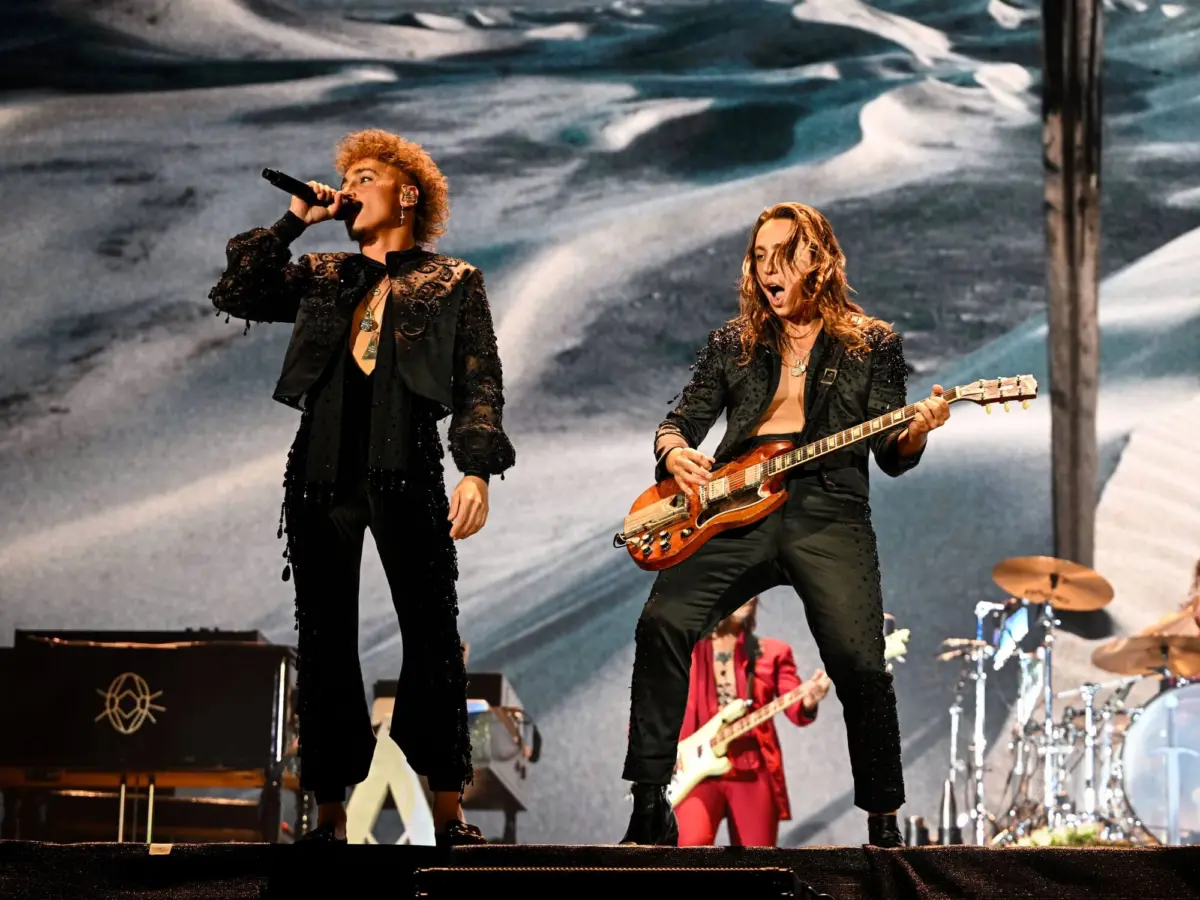
The polarizing Michigan rock quartet, Greta Van Fleet, has consistently ignited fervent debate since their emergence, captivating audiences while simultaneously drawing sharp criticism. At the heart of this ongoing dialogue is frontman Josh Kiszka, whose distinctive vocal style and the band’s unapologetic classic rock sensibilities have become their defining characteristics. In a recent interview with Classic Rock magazine, Kiszka offered a revealing anecdote that encapsulates the band’s journey through skepticism and eventual validation: even his own vocal coach initially harbored reservations about Greta Van Fleet’s approach to rock ‘n’ roll, only to experience a profound change of heart after witnessing their electrifying live performance. This personal revelation underscores the persistent challenges the band faces in a music landscape often wary of perceived homage, even as they continue to solidify their place with significant album releases and extensive touring.
The Crucible of Criticism: Early Days and the Zeppelin Shadow
Greta Van Fleet, comprising brothers Josh Kiszka (vocals), Jake Kiszka (guitar), Sam Kiszka (bass, keyboards), and longtime friend Danny Wagner (drums), burst onto the scene in 2017 with their debut EP, Black Smoke Rising. Hailing from Frankenmuth, Michigan, their sound immediately struck a chord with fans yearning for the grandiose, blues-infused hard rock of the 1970s. However, this immediate appeal was inextricably linked to comparisons with legendary acts, most notably Led Zeppelin. Critics and a segment of the rock community quickly labeled them as "derivative," accusing them of merely replicating the sound of their predecessors rather than forging a unique identity. This perception became a foundational narrative surrounding the band, shadowing their every release and performance.
Their subsequent double EP, From the Fires, released later that same year, further fueled both their ascent and the critical discourse. It earned them a Grammy Award for Best Rock Album in 2019, a testament to their undeniable commercial momentum, yet it did little to quell the accusations of unoriginality. The sheer volume of comparisons, often framed as outright imitation, created a unique challenge for the young band, forcing them to navigate a career under intense scrutiny from both adoring fans and staunch detractors. Kiszka, reflecting on these early days, has often articulated the band’s genuine respect for the genre and their intent to evolve it, rather than simply mimic. "When we came along, I think people were so concerned we were going to penetrate their hallowed rock ‘n’ roll world," he remarked, describing rock ‘n’ roll as a "religious temple" that some felt was being defiled by their presence.
A Vocal Coach’s Conversion: From Skeptic to Supporter
The interview with Classic Rock brought to light one of the most personal examples of this skepticism, originating from an unexpected source: Josh Kiszka’s own vocal coach. This professional, entrusted with honing his craft, initially shared the widespread sentiment that Greta Van Fleet was "meddling" with rock ‘n’ roll in an inappropriate manner. Her initial reaction, as recounted by Kiszka, was a dismissive "How dare they!" — a phrase that mirrors the indignation expressed by many purists within the rock community. This anecdote highlights the depth of the initial resistance the band encountered, even from individuals directly involved in Kiszka’s artistic development.
The turning point, however, came when the vocal coach attended one of Greta Van Fleet’s live shows in New York. The visceral, unadulterated energy of their performance proved to be a transformative experience. Live music, particularly rock, often transcends studio recordings, offering an unfiltered glimpse into an artist’s raw talent and passion. For the vocal coach, witnessing the band’s stage presence, Kiszka’s vocal prowess in a live setting, and the collective synergy of the musicians evidently dismantled her preconceived notions. Backstage after the show, she confessed her earlier skepticism but then offered a profound endorsement: "You deserve everything that is coming to you, and thank you for carrying the torch." Kiszka noted, "So her tune changed very quickly." This statement, particularly the phrase "carrying the torch," carries significant weight. It implies an acknowledgment of the band’s role in preserving and propagating the spirit of rock ‘n’ roll, an affirmation that directly counters the "derivative" label and positions them as inheritors of a musical legacy.
Evolution and Resilience: Navigating the Industry’s Shifting Tides
Greta Van Fleet’s trajectory since their initial breakout has been marked by a continuous effort to evolve their sound while staying true to their core identity. Following their Grammy-winning EP, they released their debut full-length album, Anthem of the Peaceful Army, in October 2018. The album debuted at number three on the Billboard 200 and topped the Rock Albums chart, demonstrating their formidable commercial appeal. While critical reception remained divided, the band showcased a slightly broader sonic palette, hinting at growth.
Their sophomore effort, The Battle at Garden’s Gate, released in April 2021, further illustrated this evolution. It debuted at number seven on the Billboard 200 and topped the Rock Albums chart once more, solidifying their commercial success. The album featured more complex arrangements and thematic depth, with tracks exploring spiritual and existential themes. While the Led Zeppelin comparisons persisted, many critics noted a discernible effort towards developing their own voice.
The band’s most recent studio album, Starcatcher, released on July 21, 2023, represents another significant chapter in their journey. This album, which the original article mistakenly referred to as Palace For The People (a track on the album), was met with anticipation and, predictably, a mix of reactions. Starcatcher debuted at number eight on the Billboard 200 and, once again, topped the Rock Albums chart, showcasing their consistent ability to connect with a large fanbase. The album’s sound was described by some as a return to a more raw, stripped-down rock approach, perhaps in response to the more expansive sound of The Battle at Garden’s Gate. Key tracks like "Meeting The Master" and "Farewell For Now" underscored their commitment to dramatic, riff-driven rock.
The band also faced a brief period of uncertainty in May 2023 when rumors of a potential breakup circulated online. These rumors, often fueled by social media speculation and misinterpretations, were quickly dispelled by the band members, who confirmed their continued collaboration and upcoming album release. Such incidents highlight the intense public scrutiny artists face in the digital age, where fleeting comments or perceived ambiguities can quickly escalate into widespread conjecture.

Commercial Success Amidst Divisive Reviews
Despite the persistent critical division, Greta Van Fleet’s commercial success has been undeniable. Their albums consistently perform well on the charts, and their tours sell out venues globally. This dichotomy between critical opinion and popular reception is not uncommon in music history, yet it is particularly pronounced with Greta Van Fleet. Review aggregation site Metacritic, for instance, typically shows mixed scores for their albums, with some critics praising their energy and musicianship, while others lament their lack of originality.
For Starcatcher, reviews often highlighted the band’s continued mastery of a classic rock sound, praising Kiszka’s vocal acrobatics and the instrumental prowess of the Kiszka brothers and Wagner. However, the familiar criticisms of sounding too much like their predecessors, particularly Led Zeppelin, continued to surface. This ongoing debate raises broader questions about the criteria for originality in a genre with a rich and established history, and whether homage can also be a form of innovation for new generations. The band’s ability to consistently top rock charts and maintain a loyal following, regardless of critical consensus, speaks volumes about their resonance with a significant segment of the music-consuming public. Their tours, such as the extensive Starcatcher World Tour, which included the "Into The Beginning" leg in early 2024, are testament to their enduring appeal and powerful live presence, which, as Kiszka’s vocal coach discovered, can often be the ultimate arbiter of an artist’s impact.
The Weight of Words: Kiszka on Online Harassment and Resilience
The candid admission from Josh Kiszka about his vocal coach’s initial disdain is part of a larger pattern of the band’s public engagement with criticism. Kiszka has frequently spoken about the emotional toll of online negativity. In the Classic Rock interview, he reiterated his sensitivity to harsh comments, acknowledging that "things like that stab you where you’re tender." He revealed his strategy of actively avoiding reading hate comments because they "weigh on my consciousness." This decision to disengage is a common coping mechanism for artists in an era where social media provides a direct, often unfiltered, conduit for public opinion, which can quickly devolve into personal attacks.
His experience underscores the psychological impact of constant scrutiny and the challenge of maintaining artistic integrity in the face of relentless negativity. Kiszka’s statement, "I don’t even know the name of the publication, but someone said we were a bunch of talentless musicians who don’t know how to write a song or perform it. Things like that stab you where you’re tender. Some of that I carry. But I don’t believe it," offers a glimpse into the vulnerability that lies beneath the flamboyant rockstar persona. It highlights the often-unseen struggle artists face in separating valid critique from malicious intent, and the internal fortitude required to continue pursuing their craft despite personal attacks. This resilience, born out of confronting skepticism, has arguably strengthened the band’s resolve and commitment to their musical vision.
Greta Van Fleet’s Place in Modern Rock: A Broader Analysis
Greta Van Fleet’s existence and success provoke fundamental questions about the state of rock music in the 21st century. In an era dominated by pop, hip-hop, and electronic genres, their emergence as a globally recognized rock act is itself noteworthy. The debate surrounding their originality versus homage touches upon a perennial theme in music: how much does an artist need to innovate versus perpetuate a beloved tradition? For many, Greta Van Fleet is not merely derivative but a vital conduit, introducing the raw power and theatricality of classic rock to a new generation of listeners who might otherwise overlook it. Their live shows, characterized by Kiszka’s soaring vocals, Jake Kiszka’s fiery guitar solos, and the rhythm section’s tight grooves, are often described as immersive experiences that evoke the grandeur of rock’s golden age.
The "carrying the torch" narrative, as expressed by Kiszka’s vocal coach, resonates deeply with fans who see the band as standard-bearers for a genre they feel has been marginalized or diluted. This perspective suggests that in a fragmented musical landscape, there is inherent value in an act that consciously embraces and champions a historical sound, even if it draws heavily from its inspirations. Their success could be interpreted as a demand from a significant audience segment for music that embodies the spirit and sonic characteristics of classic rock, proving that the genre still holds immense cultural power and commercial viability.
Looking Ahead: Tours and Trajectories
As Greta Van Fleet continues their journey, their focus remains firmly on their music and connecting with their audience through live performances. The Starcatcher World Tour, which spanned continents and included the "Into The Beginning" leg, demonstrates their commitment to the road. These extensive tours are not just revenue generators but crucial platforms for the band to directly address and convert skeptics, much like Kiszka’s vocal coach, through the sheer force of their live show.
The band members have consistently articulated their desire to push their sound forward while honoring the roots that define them. Their career arc, marked by initial meteoric rise, sustained commercial success, and persistent critical debate, positions them as one of the most compelling and discussed rock bands of the current era. Whether viewed as saviors of rock ‘n’ roll or simply skilled revivalists, Greta Van Fleet has undeniably carved out a significant space for themselves, proving their resilience in the face of adversity and their enduring appeal to a global fanbase. The revelation about Kiszka’s vocal coach serves as a poignant reminder that even the most entrenched skepticism can be overcome by the undeniable power of music, particularly when delivered with the conviction and spectacle that Greta Van Fleet consistently brings to the stage.
