

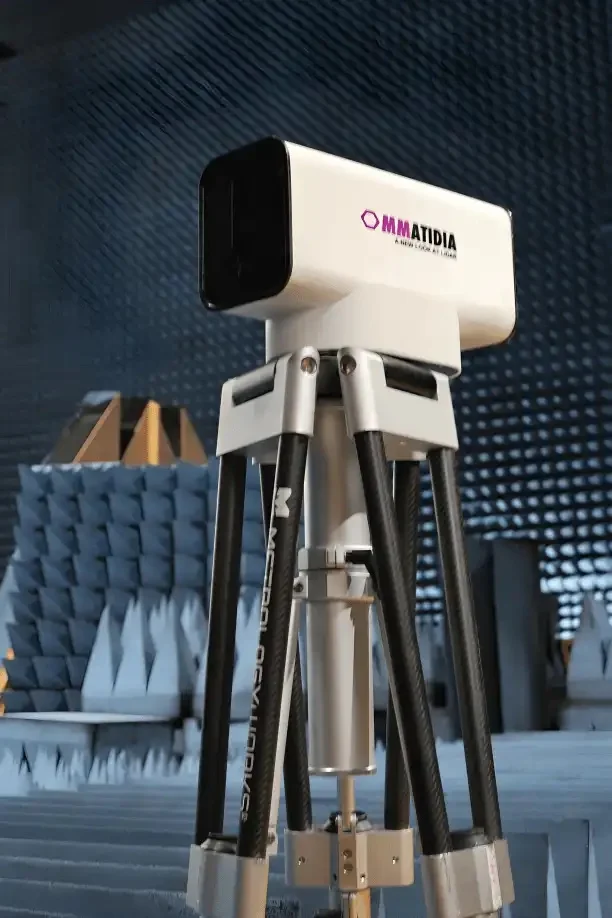
The landscape of industrial metrology and structural analysis has reached a significant milestone with the introduction of Ommatidia LiDAR’s latest non-contact vibration and acoustic analysis technology. Positioned as a transformative solution for the technical acoustics and Noise, Vibration, and Harshness (NVH) sectors, this new approach leverages high-density optical measurements to provide a more granular view of mechanical behavior than previously possible with traditional methods. By utilizing a massively parallel architecture, the system is designed to identify local resonances and complex motion patterns earlier in the development cycle, offering engineers a rapid path to comprehensive vibrometric data acquisition.
The Technological Shift in Vibration Analysis
In the fields of mechanical engineering, automotive design, and electroacoustics, understanding how a surface moves in response to internal or external stimuli is critical. Historically, this has been achieved through two primary methods: contact-based sensors, such as accelerometers, or single-point scanning laser Doppler vibrometers (LDV). While effective, both methods possess inherent limitations. Contact sensors add mass to the structure being measured, which can alter the very vibrations they are meant to record—a phenomenon known as "mass loading." Conversely, scanning LDVs, while non-contact, often require significant time to map a surface point-by-point, making them less ideal for transient events or high-throughput environments.
Ommatidia LiDAR addresses these challenges by introducing a system capable of simultaneous multi-point acquisition. At the core of this technology are sensor arrays featuring 65 to 128 parallel channels. Unlike traditional scanning systems that move a single beam across a surface, this parallel approach captures quantitative velocity data across a wide area instantaneously. This allows for the creation of high-resolution vibrometric maps that reveal not just if a component is vibrating, but exactly how those vibrations are distributed across its geometry.
Precision Through Parallelization: Technical Specifications
The technical leap offered by Ommatidia lies in its spatial density and the speed of its data processing. By deploying over 100 parallel channels, the system can achieve a level of detail that minimizes the need for mathematical interpolation. In lower-density measurements, engineers often have to "guess" the behavior of the material between two distant points. This can lead to missing "hotspots"—small, localized areas of high-intensity vibration that can lead to structural failure or unwanted noise.
The systems provide quantitative velocity data, allowing for the precise calculation of displacement and frequency response across the entire measured surface. This high point density is particularly effective in identifying "distributed motion patterns," where different parts of a single component may be out of phase or exhibiting complex modal shapes. For R&D departments, this means that the "unknown local behavior" that often plagues the final stages of product testing can now be visualized and corrected much earlier in the design phase.
Targeted Industry Applications: From Loudspeakers to EV Motors
The versatility of non-contact, high-density LiDAR measurement makes it applicable across a wide spectrum of high-tech industries. One of the primary beneficiaries is the electroacoustics sector. In the development of high-end loudspeakers and microphones, even microscopic membrane deformations can lead to audible distortion. Ommatidia’s technology allows designers to observe the real-time behavior of speaker cones and enclosures, ensuring that the movement aligns with the intended acoustic output.
In the automotive sector, the transition to electric vehicles (EVs) has heightened the importance of NVH analysis. Without the masking noise of an internal combustion engine, secondary vibrations from cooling systems, gearboxes, and power electronics become far more noticeable to passengers. Ommatidia’s ability to map these vibrations across complex surfaces without the labor-intensive process of attaching hundreds of individual sensors represents a significant efficiency gain for automotive OEMs.
Furthermore, the technology is finding a home in general industrial quality control. For high-precision machinery, such as those used in semiconductor manufacturing or aerospace, maintaining structural integrity is paramount. The ability to perform rapid, non-contact "health checks" on components while they are in operation allows for predictive maintenance strategies that were previously cost-prohibitive.
Eliminating the Constraints of Contact-Based Sensing
The move toward non-contact sensing is driven by the need for greater accuracy in delicate environments. When measuring lightweight structures—such as carbon fiber composites used in aerospace or thin polymer membranes in consumer electronics—the weight of a traditional sensor can exceed the weight of the component itself. This renders the resulting data inaccurate.
By using light as the medium of measurement, Ommatidia removes the physical interface between the tool and the object. This is particularly beneficial in "harsh" or inaccessible environments. For example, measuring a component inside a vacuum chamber or one that is operating at extreme temperatures is impossible with wired contact sensors but well-within the capabilities of a long-range LiDAR system. The optical nature of the system also ensures that measurements are immune to electromagnetic interference (EMI), a common problem when testing electric motors or high-voltage power systems.
Chronology of Development and Market Entry
The emergence of this technology follows a multi-year trend of LiDAR miniaturization and the adaptation of telecommunications technology for sensing purposes. Ommatidia LiDAR has spent several years refining the silicon photonics required to manage 128 parallel channels on a single chip architecture.
Earlier iterations of optical vibrometry were often confined to laboratory settings due to their sensitivity to ambient light and their bulky configurations. However, the 2026 rollout of these high-density systems marks a transition toward "shop-floor" ready devices. These systems are now ruggedized and integrated with software suites that allow for immediate visualization, moving the technology from the hands of specialized physicists into the hands of standard mechanical and acoustic engineers.
Supporting Data and Performance Metrics
Preliminary data from field tests indicate that the use of 128 parallel channels can reduce the time required for a full structural modal analysis by up to 80% compared to traditional scanning LDV systems. In a benchmark test involving a standard automotive door panel, the high-density LiDAR system was able to identify a localized resonance at 450 Hz that was completely invisible to a 16-point accelerometer grid.

Furthermore, the spatial resolution provided by the system—often measured in sub-millimeter increments—allows for the detection of "micro-cracks" or delamination in composite materials. When a material begins to fail internally, its vibration signature changes. By mapping these changes with high density, the Ommatidia system can pinpoint the exact location of internal structural degradation before it becomes visible to the naked eye or detectable via standard ultrasound.
Expert Reactions and Industry Impact
Industry analysts suggest that the democratization of high-density vibrometry will lead to a "digital twin" revolution. Dr. Marcus Hentschel, a senior consultant in industrial metrology, noted that "the bottleneck in creating accurate digital twins has always been the quality of the real-world data we feed into the models. With 128 channels of simultaneous data, we are finally reaching a point where the digital simulation and the physical reality are perfectly synchronized."
From a manufacturing perspective, the reduction in setup time is seen as the most immediate benefit. "In a typical NVH test, 70% of the time is spent on sensor placement and wiring," says Sarah Jenkins, a Lead Acoustics Engineer at a major European automotive firm. "A non-contact system that provides better data in a fraction of the time isn’t just a luxury; it’s a fundamental shift in how we approach the development cycle."
Broader Implications for Future Research
The implications of this technology extend beyond immediate industrial applications into the realm of fundamental research. In material science, the ability to observe how energy dissipates through new alloys or 3D-printed structures at a granular level will likely lead to the development of quieter, more efficient materials.
As Ommatidia LiDAR continues to refine its sensor arrays, the industry expects a further increase in channel counts, potentially reaching 512 or 1,024 channels in the coming decade. This would allow for near-instantaneous "video-rate" vibration mapping of entire vehicles or aircraft sections.
The integration of artificial intelligence with this high-density data is the next logical step. By feeding thousands of high-resolution vibrometric maps into machine learning algorithms, systems could soon be able to automatically diagnose structural flaws or acoustic leaks without human intervention. This would transform NVH from a reactive troubleshooting discipline into a proactive, data-driven design philosophy.
Conclusion
The introduction of Ommatidia LiDAR’s high-density vibration analysis systems represents a significant leap forward for the technical acoustics community. By combining the speed of parallel processing with the precision of optical measurement, the company has provided a tool that addresses the long-standing limitations of contact sensors and scanning lasers. As industries from automotive to consumer electronics continue to demand quieter and more reliable products, the ability to visualize and interpret complex vibration patterns with such clarity will become an indispensable asset in the global engineering toolkit. The era of "blind spots" in structural analysis is rapidly coming to a close, replaced by a new standard of high-resolution, non-contact transparency.
