

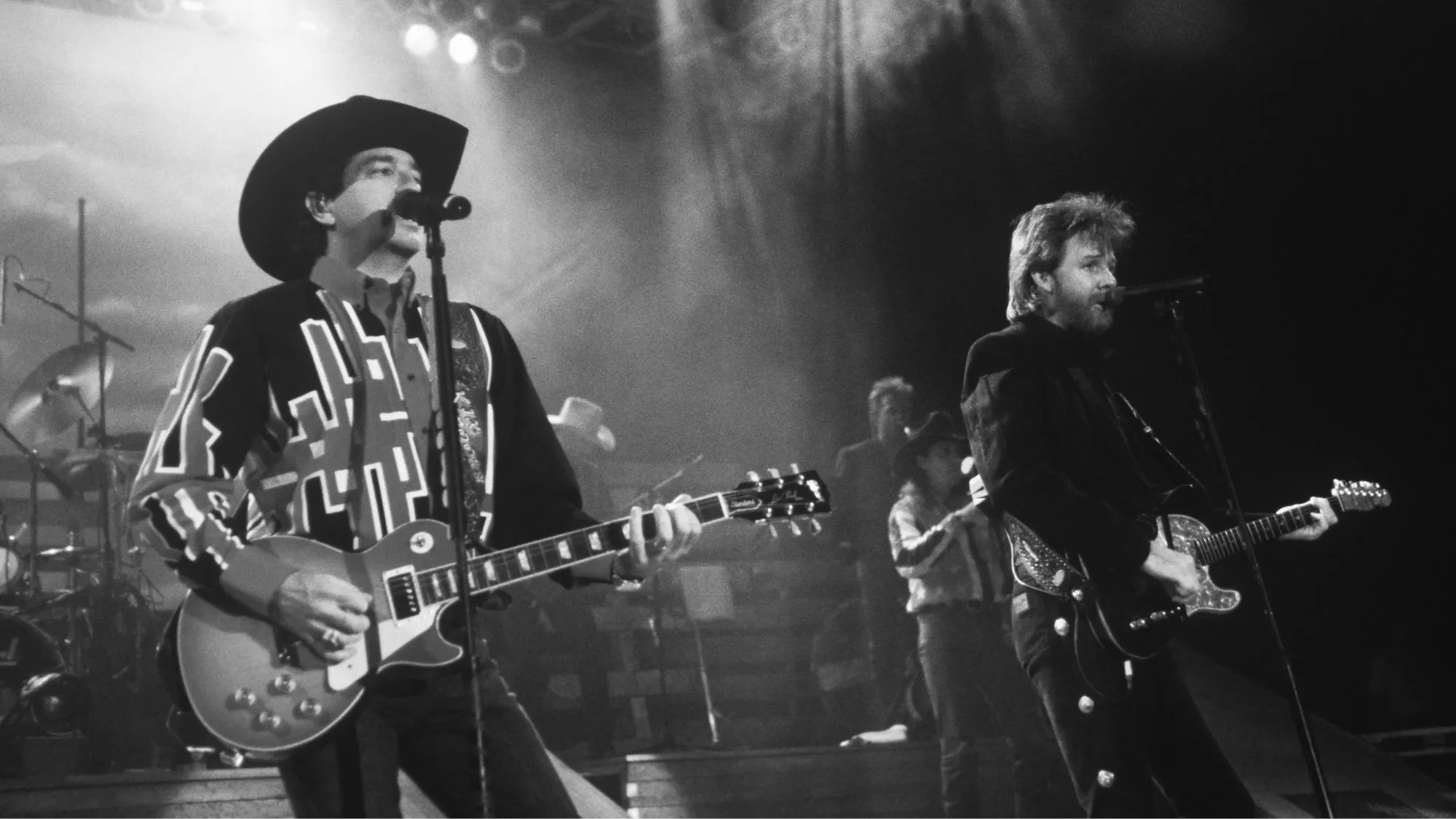
On August 23, 1992, the landscape of American country music reached a definitive turning point as the duo Brooks & Dunn secured their fourth consecutive number-one single with the high-energy anthem "Boot Scootin’ Boogie." This milestone did more than just cement the duo’s status as rising stars; it signaled the beginning of a cultural phenomenon that would integrate honky-tonk traditions with a modern, dance-driven sensibility. While the song is now recognized as a quintessential staple of the genre, its journey to the top of the Billboard Hot Country Songs chart was marked by industry skepticism, a grassroots movement in dance clubs across the United States, and a strategic pivot that would eventually make Leon “Kix” Brooks and Ronnie Dunn the most decorated duo in the history of the Country Music Association (CMA).
The Genesis of a Country Music Powerhouse
The formation of Brooks & Dunn was not a gradual evolution but rather a calculated "shotgun marriage" orchestrated by Arista Nashville executive Tim DuBois. Before their pairing in 1988, both Kix Brooks and Ronnie Dunn were pursuing independent paths within the Nashville circuit. Brooks was a successful songwriter, having penned hits for artists like John Conlee and Highway 101, while Dunn was a talented vocalist who had won the Marlboro Talent Search. Recognizing that both men possessed distinct but complementary strengths—Brooks’ showmanship and Dunn’s soulful, powerhouse vocals—DuBois encouraged them to write together.
The chemistry was instantaneous. Their debut album, Brand New Man, released in 1991, became an immediate juggernaut. Prior to "Boot Scootin’ Boogie" reaching the summit in August 1992, the duo had already achieved three consecutive number-one hits: the title track "Brand New Man," the mid-tempo "My Next Broken Heart," and the melancholic masterpiece "Neon Moon." By the time their fourth single was slated for heavy rotation, the duo was already operating at a level of commercial success rarely seen by debut acts in the genre.
The Origin and Evolution of "Boot Scootin’ Boogie"
Although "Boot Scootin’ Boogie" is inextricably linked to Brooks & Dunn, Ronnie Dunn actually wrote the song before the duo’s formation. It was first recorded by the Western swing band Asleep at the Wheel for their 1990 album Keepin’ Me Up Nights. While the Asleep at the Wheel version maintained a traditional swing feel, the Brooks & Dunn rendition, produced by Don Cook and Scott Hendricks, infused the track with a driving four-on-the-floor beat and a rock-influenced guitar crunch that appealed to a broader, younger demographic.
The lyrical content of the song pays homage to the "honky-tonk" lifestyle, referencing the relief of the working class at the end of a grueling week. Lines describing the "cadillac, blackjack, baby meet me outback" created a vivid imagery of the American nightlife that resonated with rural and suburban audiences alike. However, despite the song’s infectious energy, the executive leadership at Arista Nashville was initially hesitant to release it as a single.
Overcoming Institutional Skepticism
In the early 1990s, Nashville was undergoing a transition often referred to as the "Class of ’89" boom, which saw the rise of artists like Garth Brooks and Alan Jackson. Even within this innovative climate, Arista executives feared that "Boot Scootin’ Boogie" was perhaps "too progressive" or "pushing the limits" of what country radio would accept. The concern was rooted in the song’s heavy rhythmic emphasis, which some felt leaned too far toward rock or pop structures.
Ronnie Dunn later reflected on this period in a 2024 interview with Taste of Country Nights, noting the irony of the label’s hesitation. The industry’s internal metrics suggested the song might alienate traditionalists, but the duo’s live performances told a different story. While the executives deliberated, a grassroots movement was already underway in the dance halls and bars where the duo performed during their first year of heavy touring.
The Grassroots Revolution and the Line Dancing Phenomenon
The success of "Boot Scootin’ Boogie" is perhaps the most prominent example of fan-driven demand in 1990s country music. As Kix Brooks recalled, the duo witnessed firsthand the impact of the song in the clubs. Fans were not only requesting the track on radio stations but were also creating synchronized dances to accompany the rhythm. This coincided with the massive "line dancing" craze of the early 90s, a movement that brought millions of people to dance floors across the country.
By the time Arista officially released the song to radio, the "Boot Scootin’ Boogie" line dance had already become a viral sensation in a pre-internet era. The song effectively commercialized the line dancing trend, which was further bolstered by Billy Ray Cyrus’s "Achy Breaky Heart" released earlier that same year. According to dance archives, there are at least 16 distinct line dances that feature the song’s title, illustrating its deep integration into the social fabric of the era. The fans’ overwhelming response forced the label’s hand, proving that the audience was ready for a more rhythmic, high-energy version of country music.
Statistical Dominance and Industry Impact
The ascent of "Boot Scootin’ Boogie" to number one on August 23, 1992, was the catalyst for a career of unprecedented statistical dominance. Brand New Man would eventually be certified 6× Platinum by the RIAA, making it one of the best-selling debut albums in country music history. The duo’s ability to follow a heartbreak ballad like "Neon Moon" with a high-tempo dance track like "Boot Scootin’ Boogie" demonstrated a versatility that became their trademark.
Throughout their career, Brooks & Dunn achieved:
- 20 Number One hits on the Billboard country charts.
- 20 CMA Awards, including the Entertainer of the Year in 1996.
- Two Grammy Awards for Best Country Performance by a Duo or Group with Vocal.
- Nearly 30 million albums sold in the United States alone.
The 1992 milestone was a harbinger of their longevity. While many artists associated with the line dancing era saw their popularity wane as trends shifted, Brooks & Dunn remained a fixture on the charts for two decades. Their success provided a blueprint for the "arena country" of the 2000s and 2010s, blending traditional country themes with the production values and energy of stadium rock.
A Lasting Legacy and Modern Relevance
The impact of "Boot Scootin’ Boogie" extends far beyond its 1992 chart run. The song remains a cultural touchstone, frequently appearing in films, television shows, and at nearly every country-themed social gathering. In 2019, the duo revisited the hit for their Reboot album, collaborating with modern country superstar Midland. This project highlighted the song’s enduring appeal to a new generation of listeners and artists.
Furthermore, the duo’s influence on contemporary country music is frequently cited by current stars. Artists such as Luke Combs and Jon Pardi have pointed to the Brooks & Dunn sound—specifically the balance of Dunn’s traditionalist vocals and the duo’s modern production—as a primary inspiration for their own work. In 2019, Brooks & Dunn were inducted into the Country Music Hall of Fame, the highest honor in the genre, solidifying their place among the legends of American music.
Conclusion
The anniversary of "Boot Scootin’ Boogie" hitting number one serves as a reminder of a transformative moment in music history. What began as a song the label feared was "too progressive" became the anthem of a movement, bridging the gap between the honky-tonks of the past and the massive commercial engines of the future. By trusting their instincts and listening to their audience, Kix Brooks and Ronnie Dunn did more than just top the charts; they defined the sound of a generation and established a legacy of excellence that continues to resonate three decades later. Even as the genre continues to evolve, the sight of a crowded dance floor reacting to the opening chords of "Boot Scootin’ Boogie" remains one of the most enduring images in country music.
