

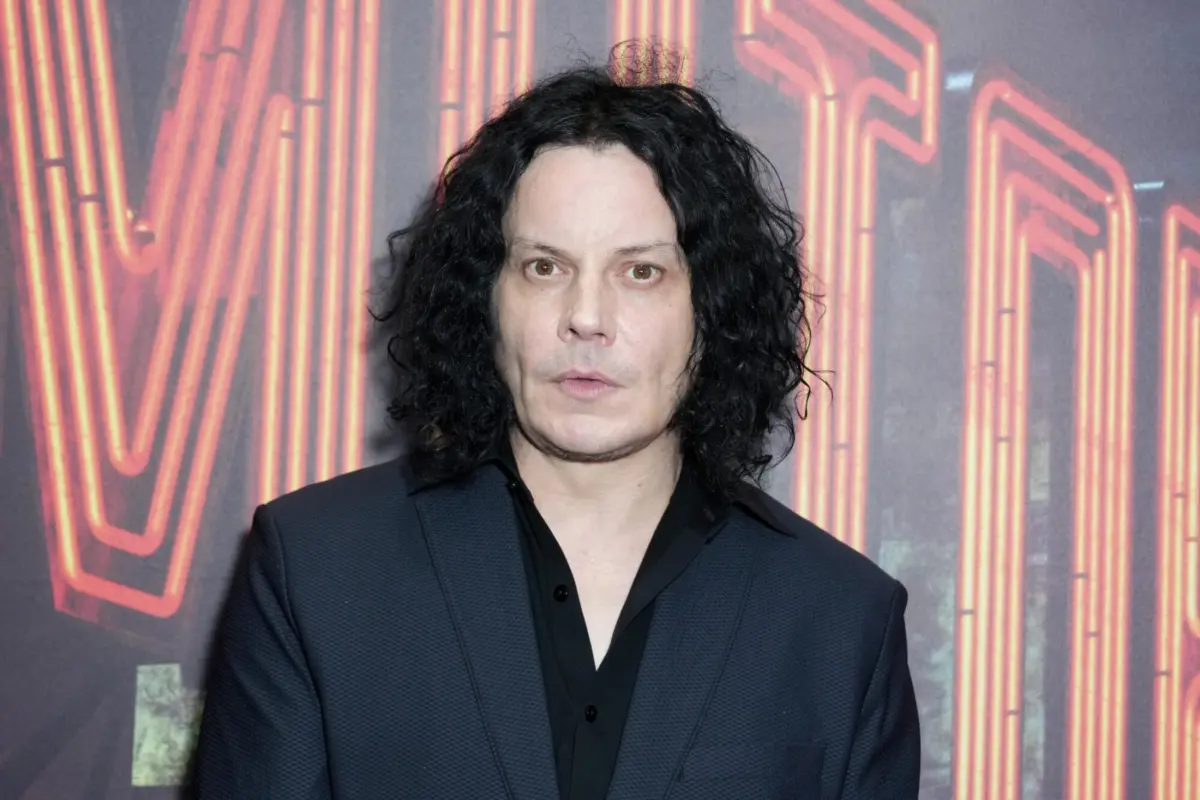
Renowned rock musician Jack White, co-founder of The White Stripes, has issued a forceful rebuke against former President Donald Trump following controversial remarks made by Trump regarding the cities of Los Angeles and San Diego. White’s impassioned statement, delivered via an Instagram post on Tuesday, October 6, directly challenged Republicans and conservatives residing in the Southern California metropolises to consider the implications of Trump’s statements, which seemed to suggest that an attack on these cities by Iran would constitute a "very small price to pay." The incident has ignited a fresh round of debate concerning political rhetoric, national security, and the role of celebrity voices in public discourse.
The Musician’s Stinging Rebuke
Jack White, known for his distinctive musical style and occasional outspoken political commentary, did not mince words in his online address. His Instagram post featured a screenshot of Trump’s remarks, accompanied by a direct question to the residents of Los Angeles and San Diego: "Hey republicans and conservatives that live in L.A. and San Diego; how do you feel about your Fuhrer recommending that the cities you live in get attacked?" The use of the term "Fuhrer," a direct reference to Adolf Hitler, underscored the depth of White’s outrage and his perceived parallel between Trump’s leadership and authoritarianism.
White further urged his followers to view a reposted video of Trump’s speech, drawing attention to the audience’s reaction: "Click the video I reposted and watch for yourself. Listen to the cult members CLAPPING and cheering for this." This observation highlighted White’s concern not only with the President’s words but also with what he interpreted as an alarming endorsement from his supporters. Anticipating the common defenses of Trump’s rhetoric, White sarcastically predicted responses such as "it was a joke, owning the libs, insert cult rhetoric here, etc." He then unequivocally dismissed such justifications, labeling them as indicative of a "laughable and ignorant" allegiance to a "corrupt felon." White’s post concluded with the scathing declaration, "That’s right, a U.S. ‘President’ that recommended that two major cities in our country be bombed because they don’t give total allegiance to his ego," and reiterated his consistent criticism of Trump as "The Worst American of All Time," accompanied by the hashtag #TWAAT.
Unpacking the President’s Remarks
The remarks that triggered White’s condemnation were made by then-President Trump during a campaign rally in Grand Island, Nebraska, on the evening of Monday, October 5. The context of Trump’s comments was a broader discussion about the ongoing U.S. conflict with Iran and the potential economic ramifications, particularly concerning oil prices. Trump was articulating a perspective on national security, arguing that certain economic consequences were "a small price to pay for keeping the world safe, keeping our country safe." It was within this specific framing that he uttered the controversial lines: "They can take out a city. Let them take out Los Angeles. Let them take out San Diego. This is a very small price to pay." The audio from the rally clearly captured a segment of the audience cheering in response to these specific statements.
The setting of the rally in Grand Island, Nebraska, a predominantly conservative state that overwhelmingly voted for Trump in the preceding election cycles, provides important context. The audience’s reaction, as noted by White and audible in recordings, suggests a segment of Trump’s base interpreted these remarks in a way that resonated with their existing political views or willingness to accept the President’s often provocative rhetoric. This dynamic between speaker, audience, and interpretation forms the crux of the ensuing controversy.
The White House’s Counter-Narrative
In the wake of the public outcry, the White House and Trump’s campaign apparatus quickly moved to clarify and defend the President’s statements. Communications director Steven Cheung, along with various rapid-response accounts associated with the administration, argued that Trump’s remarks were being deliberately misinterpreted by critics. Their official stance was that the President was not advocating for an attack on American cities, nor was he suggesting such an attack would be acceptable. Instead, they asserted that Trump was discussing the hypothetical threat Iran could pose if it were to develop a nuclear weapon and the potential consequences that the U.S. might face or be willing to endure to prevent such a scenario.
The administration’s argument centered on the idea that Trump was illustrating a worst-case scenario to underscore the gravity of preventing Iran from acquiring nuclear capabilities, rather than literally inviting an attack on Los Angeles or San Diego. They contended that the President was employing a rhetorical device to emphasize the importance of his foreign policy approach towards Iran, and that his critics were deliberately twisting his words for political gain. This official framing, however, was explicitly rejected by Jack White in his Instagram post, who viewed it as an attempt to obfuscate the plain meaning of the President’s words and the audience’s reaction.
Geopolitical Tensions: The U.S. and Iran
To fully appreciate the context of Trump’s remarks, it is essential to consider the strained relationship between the United States and Iran during his presidency. Following his withdrawal from the Joint Comprehensive Plan of Action (JCPOA), commonly known as the Iran nuclear deal, in May 2018, the Trump administration pursued a policy of "maximum pressure" against Iran. This involved reimposing and escalating sanctions aimed at crippling Iran’s economy and forcing it to renegotiate a more comprehensive nuclear agreement, as well as curbing its regional influence and ballistic missile program.
This period was marked by several flashpoints, including attacks on oil tankers in the Persian Gulf, a drone strike on Saudi oil facilities, and the U.S. killing of Iranian General Qasem Soleimani in January 2020, which brought the two nations to the brink of war. Iran, in turn, retaliated with missile strikes on U.S. bases in Iraq. The rhetoric from both sides was often highly inflammatory, with threats and counter-threats exchanged regularly. It was within this highly charged geopolitical atmosphere that Trump made his remarks in Nebraska, ostensibly discussing the costs and sacrifices associated with maintaining national security and countering perceived Iranian aggression. The specter of a nuclear-armed Iran, and the potential for devastating attacks, was a recurring theme in the administration’s justification for its aggressive stance.
The American Political Landscape in Context
The timing of Trump’s remarks and White’s subsequent condemnation also falls within a broader political landscape characterized by deep partisan divisions and an increasingly polarized media environment. The incident occurred approximately one month before the U.S. midterm elections, a period when political rhetoric typically intensifies as parties vie for control of Congress. Jack White’s explicit reference to potential "illegal measures to not allow democracy at the polls to prevail when the right lose badly in the midterm elections" reflects the heightened anxiety and distrust prevalent in American politics at the time, particularly concerning electoral integrity and democratic norms.
California, home to Los Angeles and San Diego, is a reliably Democratic state, often serving as a counterpoint to the more conservative heartland states where Trump enjoyed strong support. The perceived willingness of a President to seemingly dismiss the safety of major American cities, particularly those in politically opposing states, resonated strongly with critics who saw it as an extension of his divisive political strategy. For many, Trump’s comments were not merely a rhetorical flourish but an alarming display of disregard for the welfare of all Americans, irrespective of their political affiliation. Conversely, his supporters often interpret such statements as demonstrating a willingness to speak "unfiltered" truths and challenge conventional political correctness, a trait they frequently laud.
Celebrity Voices in Political Discourse
Jack White’s intervention is not an isolated incident but rather part of a long tradition of musicians and celebrities engaging in political commentary and activism. From Bob Dylan and Joan Baez during the Civil Rights era and Vietnam War, to more contemporary figures like Bruce Springsteen, Taylor Swift, and Kanye West, artists have often leveraged their platforms to express political views, advocate for causes, or criticize public figures. White himself has been a consistent critic of Trump’s policies and rhetoric throughout his presidency.
The impact of celebrity political statements is a subject of ongoing debate. Proponents argue that celebrities can raise awareness, mobilize voters, and bring important issues to the forefront of public consciousness. Their large followings can amplify messages and reach demographics that traditional political campaigns might struggle to engage. Critics, however, often dismiss celebrity opinions as uninformed or elitist, arguing that their influence is disproportionate and that their pronouncements can further polarize public discourse without contributing substantive policy solutions. In this instance, White’s celebrity status undoubtedly ensured that his strong denunciation of Trump’s remarks garnered significant media attention and fueled discussions across various platforms, far beyond what an ordinary citizen’s post might achieve.
The Nuance of Political Rhetoric and Public Perception
The controversy surrounding Trump’s comments on Los Angeles and San Diego highlights the inherent challenges in interpreting political rhetoric, particularly when delivered in a rally setting. Political speeches often employ hyperbole, metaphors, and rhetorical questions designed to energize a base, provoke opponents, or simplify complex issues. The speaker’s intent, the audience’s reception, and the subsequent media interpretation can all diverge significantly.
For many critics, Trump’s words were taken at face value: a shocking and unacceptable suggestion that American lives and cities could be sacrificed for a geopolitical objective, particularly when framed as a "small price to pay." The cheering from the crowd further cemented this interpretation for them, suggesting an alarming acceptance of such a notion among a segment of the populace. For Trump’s supporters and the White House, the remarks were viewed through a different lens—as a strategic communication, albeit perhaps clumsily worded, aimed at conveying strength and resolve against a foreign adversary. This gap in interpretation underscores the highly subjective nature of political communication and the profound impact of pre-existing biases and political affiliations on how messages are received. The incident serves as a potent example of how quickly and intensely a politician’s words can be dissected and debated, especially when they touch upon sensitive issues of national security and public safety.
Implications for National Unity and Discourse
The exchange between Jack White and the Trump administration, spurred by the President’s controversial remarks, carries significant implications for national unity and the broader landscape of political discourse. At a time when partisan divisions were already pronounced, such incidents further deepen the chasm between different segments of the American population. The idea that a President might seem to prioritize geopolitical maneuvering over the safety of American citizens, or that a segment of the populace might cheer such a sentiment, fuels narratives of disunity and distrust.
Moreover, the event underscores the enduring power of celebrity voices to shape political conversations and the ongoing struggle to define acceptable boundaries for political speech. As the nation grapples with complex issues ranging from foreign policy to domestic security, the manner in which leaders communicate, and how those communications are interpreted and responded to, remains critical. The debate initiated by Jack White’s post serves as a potent reminder of the constant tension between rhetorical flourish and literal meaning, and the profound consequences these interpretations can have on public perception and political cohesion. It highlights the continued public vigilance required in holding leaders accountable for their words and ensuring that political discourse, however passionate, remains anchored in a shared commitment to the safety and well-being of all citizens.
