

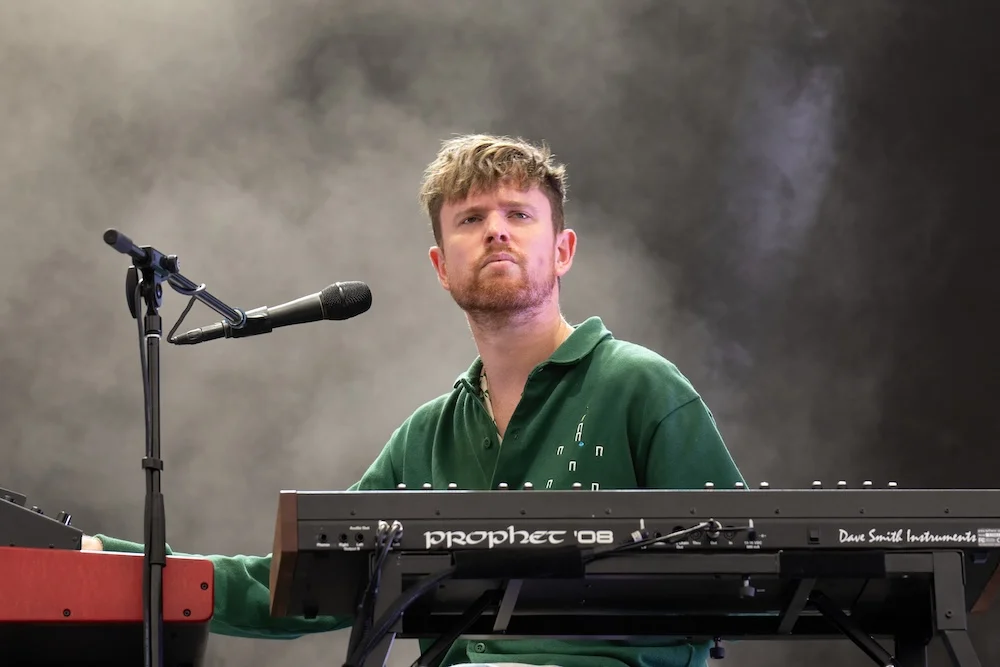
In a significant development echoing ongoing debates about artistic integrity and collaboration in the modern music industry, acclaimed English singer-songwriter and producer James Blake has publicly requested the removal of his producer credit from Kanye West’s newly released album, Bully. The decision, announced by Blake through his direct-to-fan platform Vault, stems not from the controversies surrounding West’s recent past but from profound creative differences, with Blake stating his original production for the track "THIS ONE HERE" bears little resemblance to the final version. This move casts a spotlight on the complexities of collaborative artistry, especially when intertwined with an artist as polarizing as Kanye West, now known as Ye.
A Decades-Long Collaborative History Amidst Shifting Landscapes
The working relationship between James Blake and Kanye West is not new, tracing back over a decade to their initial collaborations. Blake, celebrated for his soulful vocals, intricate electronic productions, and innovative sound design, has long been a sought-after collaborator across genres. His early work with West positioned him within the orbit of one of music’s most influential, albeit controversial, figures.
The most recent known joint venture between the two artists prior to Bully was a project titled WAR, which was slated for release in 2022 but ultimately never saw the light of day. This unreleased work serves as a poignant backdrop, suggesting a history of creative interaction that has now reached a critical juncture with Blake’s public disavowal. The period immediately following the WAR project’s intended release marked a dramatic shift in Kanye West’s public persona and career trajectory.
Kanye West’s Controversies and Public Reckoning
Beginning in late 2022, Kanye West, who officially changed his name to Ye, embarked on a highly publicized and widely condemned spree of antisemitic remarks and conspiracy theories. These comments were disseminated across various social media platforms, including X (then Twitter), and through interviews, leading to widespread outrage. Ye’s rhetoric often involved direct associations with far-right figures and extremist ideologies, drawing comparisons to historical hate speech.
The fallout from these pronouncements was swift and severe. Major corporations and business partners, wary of the irreparable damage to their brands, moved to sever ties with the artist. Adidas, which had a highly lucrative and globally successful Yeezy sneaker line with West, terminated their partnership, citing the unacceptable nature of his comments. Other significant brands, including Balenciaga, Gap, and Def Jam Recordings, also distanced themselves, resulting in substantial financial losses and a significant blow to West’s commercial empire. The condemnation was global, coming from religious organizations, civil rights groups, fellow artists, and political leaders alike.
After a period of intense scrutiny and public isolation, Ye issued a polarizing apology in January of 2026, published as a full-page advertisement in the Wall Street Journal. In this statement, he acknowledged having "lost touch with reality," attributing his behavior to bipolar disorder and a previously undiagnosed brain injury. He explicitly disavowed his earlier claims that he was a Nazi and committed himself to "accountability, treatment, and meaningful change." This apology, while a step toward reconciliation for some, was met with skepticism by others who questioned its sincerity and timing, particularly in the context of his ongoing musical endeavors.
The Release of Bully and Blake’s Creative Conundrum
Against this complex backdrop, Kanye West released his new album, Bully, on streaming services today. The album arrived a few months after his Wall Street Journal apology, signaling a potential return to the public sphere following his period of controversy. Blake is credited on the album’s closing track, "THIS ONE HERE," alongside Don Toliver and Quentin Miller for both writing and production, in addition to Ye himself.
However, the celebratory atmosphere surrounding a new Kanye West release was quickly overshadowed by James Blake’s unprecedented public request. The catalyst for Blake’s statement was a fan’s comment on Vault, his direct-to-fan music platform launched in 2024. The fan remarked, "Ye dropped This One Here with James on the producer credits last night. Really sad that it’s all AI vocals – it had lots of potential."
Blake’s response was immediate and candid, shedding light on the core issue: "The way I pitched his vocals and constructed the track from his freestyle is partially there, majorly peppered with other newer vocal takes etc. but the spirit of my actual production is mostly absent other than that. My original version is a completely different production in spirit." He continued, emphasizing that his decision was not personal but professional: "Happy for the fans but I’ve asked to be taken off the producer credits for now as I don’t want to take credit for other people’s work and this version isn’t what I created with Ye. It’s not personal! I just hit a point where don’t want to be credited on music where I can’t affect the end result."
This statement underscores a fundamental principle for many artists: the desire for creative control and accurate attribution. For a producer of Blake’s caliber, whose work is characterized by meticulous sound design and a distinct artistic vision, having his name attached to a track that significantly deviates from his original creative input can be seen as a misrepresentation of his craft. The issue of "AI vocals" mentioned by the fan further complicates the matter, though Blake’s primary concern appears to be the overall "spirit" of the production rather than the specific technology used.
The Enigma of AI and Kanye’s Contradictions
The discussion around AI in music adds another layer of intrigue to Bully‘s release. Kanye West had previously teased the album throughout 2024, shortly after the release of his collaborative album Vultures 2 with Ty Dolla $ign. In interviews, notably with influencer Justin LaBoy last year, Ye openly discussed his intention to utilize artificial intelligence in the album’s creation. He famously stated that he would incorporate AI "the same way I incorporated Auto-Tune," and declared, "It’s time for me to explain to people the power of AI in music."
However, just days before Bully‘s release, West contradicted his earlier statements. When revealing the tracklist on X, he posted a succinct message: "BULLY ON THE WAY NO AI." This flip-flop raises questions about the album’s actual production process, the extent to which AI was ultimately used (if at all), and West’s communication strategy surrounding his artistic output. It also highlights the broader industry’s ongoing grapple with the integration and ethical implications of AI in creative fields. For James Blake, whose work often explores the nuanced interplay of human emotion and electronic textures, the potential for AI to alter or dilute a track’s "spirit" could be a significant factor in his decision.
Album Details and Rollout Strategy
Bully was released via YZY, Kanye West’s own imprint, and the independent label Gamma. Beyond James Blake, other credited producers on the album include the Legendary Traxster and 88-Keys, known for their significant contributions to hip-hop production. The album features a diverse array of guest artists, including Don Toliver, Travis Scott, CeeLo Green, André Troutman, and Peso Pluma. Vocal appearances also come from Nine Vicious and Ty Dolla Sign, who has been a frequent collaborator with West in recent years.
The album’s rollout included a series of listening parties held in four US cities on Thursday night, where Ye previewed the album to eager fans. The event was also livestreamed on YouTube, maximizing its reach and engaging a global audience immediately prior to its official release. This multi-pronged approach to album promotion is characteristic of West’s high-profile releases, aiming to generate maximum buzz and direct fan engagement.
Broader Implications: Artistic Integrity in a New Era
James Blake’s decision to distance himself from Bully carries significant implications for the music industry, particularly concerning artistic integrity, collaboration, and the challenges posed by evolving production technologies. It underscores the increasing complexity of creative partnerships, especially when one artist’s vision for a final product diverges dramatically from another’s initial contribution.
In an era where digital tools allow for extensive manipulation and reinterpretation of original recordings, the concept of "authorship" and "credit" becomes increasingly blurred. Blake’s firm stance serves as a powerful reminder that for many artists, the finished work must authentically reflect their creative input and artistic intent. This is not merely about a name on a credit list but about the integrity of their body of work and how it is perceived by their audience and peers.
Furthermore, this incident highlights the growing importance of direct-to-fan platforms like Vault, which provide artists with a direct channel to communicate with their audience, bypassing traditional media filters. Blake’s ability to articulate his position directly and transparently fosters trust and understanding with his fanbase, who are often keenly attuned to issues of authenticity and artistic control.
The episode also implicitly touches upon the broader public discourse surrounding Kanye West’s career. While Blake explicitly stated his reasons were not "personal" or moral, the controversy surrounding West undeniably shapes the context in which any collaboration with him is viewed. Artists partnering with figures embroiled in controversy often face scrutiny, and decisions like Blake’s, even if purely creative in motivation, are inevitably interpreted through that lens.
As the music industry continues to navigate technological advancements like AI and the ever-present challenges of public image and artistic expression, incidents like this serve as crucial case studies. They provoke discussions about the ethical responsibilities of collaborators, the sanctity of an artist’s original vision, and the evolving definitions of credit and ownership in a rapidly changing creative landscape. James Blake, who recently released his own latest album, Trying Times, just two weeks ago via his independent label Good Boy Records, continues to demonstrate his commitment to his distinct artistic path and unwavering creative principles. His request to be removed from Bully‘s credits is a testament to the enduring value of creative autonomy in the face of commercial pressures and complex collaborations.
