

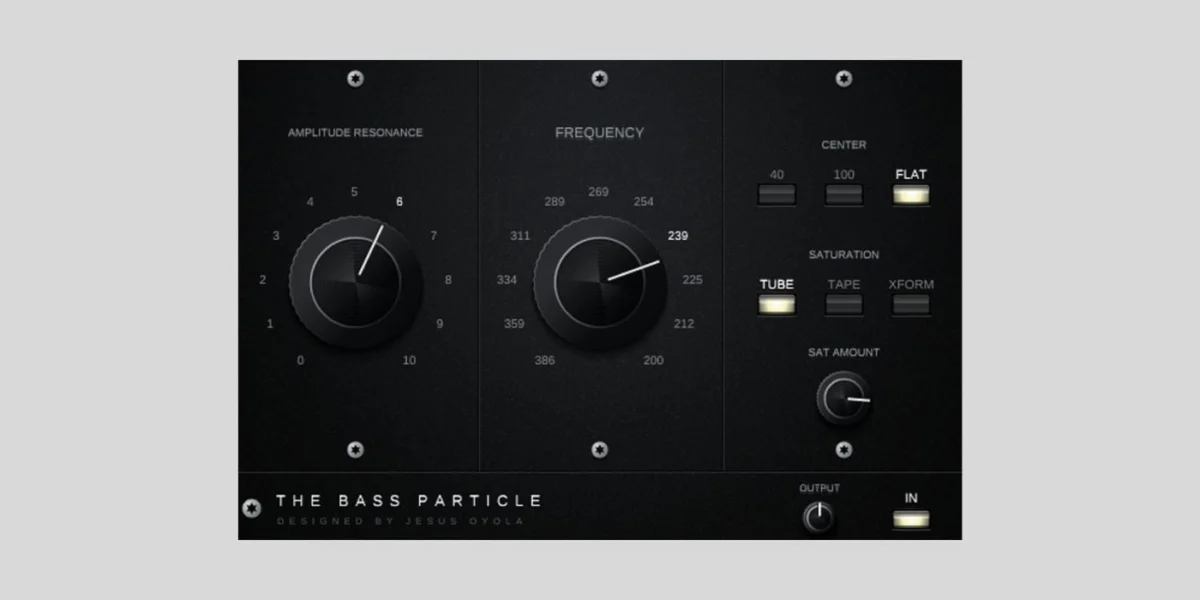
Independent developer Jesus Oyola has officially released "The Bass Particle," a new, free-to-download plugin designed to enhance bass frequencies through sophisticated saturation and sub-resonance capabilities. Available across Windows, macOS, and Linux operating systems in VST3 format, this utility aims to provide music producers with a robust yet accessible tool for thickening basslines and adding impactful weight to low-end elements in their mixes. The plugin’s introduction into the highly competitive digital audio workstation (DAW) ecosystem underscores a continuing trend of high-quality, specialized tools being offered freely, significantly lowering the barrier to entry for professional-grade sound design.
Unpacking The Bass Particle’s Core Functionality
At its operational core, The Bass Particle is engineered around two primary mechanisms: a resonant low-end boost and a multi-flavor saturation engine. These components work in conjunction to imbue bass frequencies with greater presence, warmth, and perceived power. The design philosophy appears to prioritize intuitive control while offering substantial sonic manipulation, catering to both novice and experienced producers.
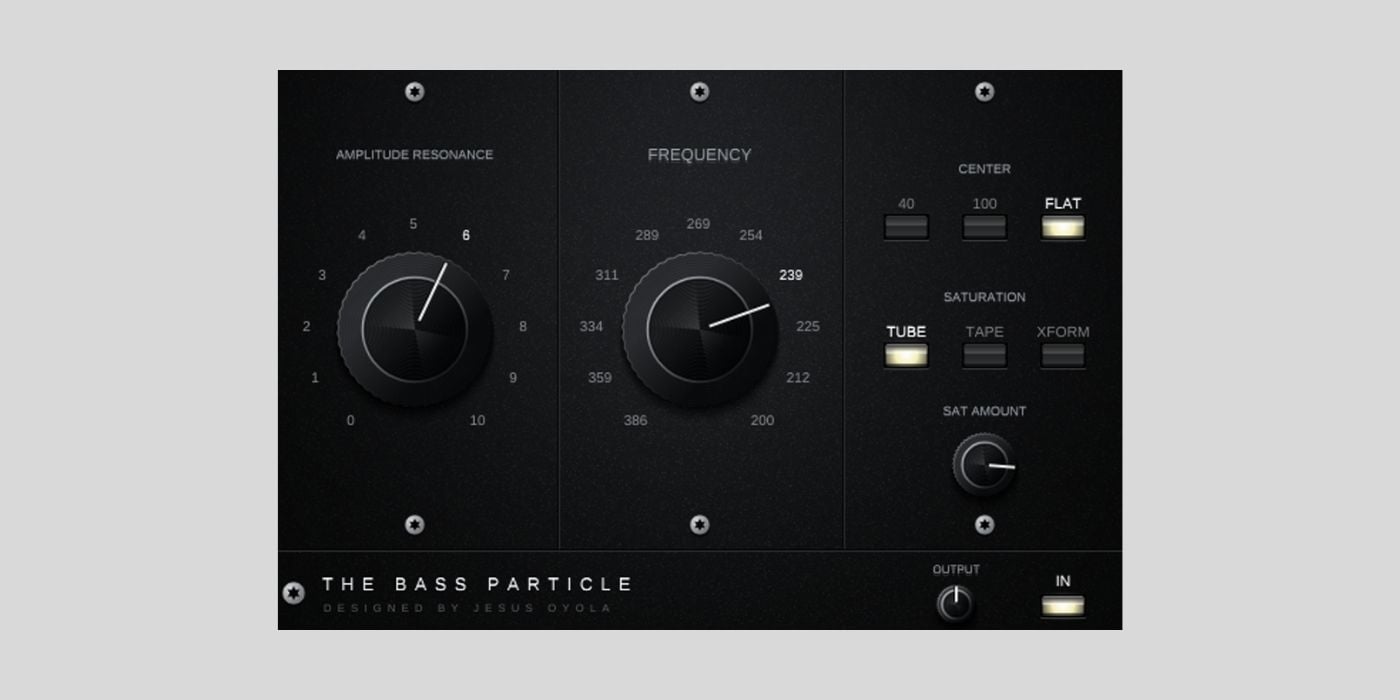
The resonant low-end boost section is meticulously crafted to allow precise shaping of the sub-harmonic and fundamental bass frequencies. This section features two primary controls: "Amplitude" and "Frequency." The Amplitude knob dictates the intensity of the resonance, offering a dynamic range from subtle, transparent enhancement at its lower settings to a significant boost of up to 14 dB of added sub-bass when pushed to its limits. This granular control allows producers to either delicately fill out the lower octaves or aggressively sculpt a commanding sub-frequency foundation, depending on the track’s requirements.
Complementing the Amplitude control, the "Frequency" knob enables users to sweep and pinpoint the exact resonant area. This allows for precise targeting of specific problematic or desired frequencies within the bass spectrum. To further refine this targeting, The Bass Particle includes dedicated range buttons for 40 Hz and 100 Hz. The 40 Hz range typically focuses on the deepest sub-bass frequencies, crucial for genres like EDM, Hip-Hop, and modern pop, where an impactful, felt low-end is paramount. The 100 Hz range, conversely, often encompasses the fundamental frequencies of many bass guitars and the body of kick drums, contributing more to the audible punch and clarity of the bass. The inclusion of a "Flat mode" provides an essential bypass option for the resonance, isolating the clean high-pass filter functionality, which can be useful for removing unwanted muddiness below a certain point without engaging the resonance effects.
Advanced Saturation: Shaping Harmonic Content
Beyond its resonant capabilities, The Bass Particle features a versatile saturation section, offering three distinct "flavors"—Tube, Tape, and Xform—each designed to impart unique harmonic characteristics and tonal qualities. Saturation is a crucial mixing technique that introduces harmonic overtones, perceived loudness, and a sense of "glue" to audio signals.
- Tube Saturation: This mode emulates the warm, rich, and often harmonically complex sound associated with analog tube amplification. It typically adds even-order harmonics, which are perceived as musical and pleasant, contributing to a smooth, thick, and well-rounded bass tone. This is particularly beneficial for bass guitars that require a vintage character or for kicks that need more body and sustain.
- Tape Saturation: Drawing inspiration from analog tape machines, this mode introduces characteristics like subtle compression, transient softening, and a distinctive low-end warmth. Tape saturation is often favored for its ability to "glue" sounds together and add a certain "mojo" or vintage authenticity. On bass, it can make elements sit better in the mix, reducing harsh transients while adding a pleasing density.
- **Xform Saturation: While less explicitly defined than Tube or Tape, "Xform" often implies a transformer-based or more aggressive, unique form of saturation. Such algorithms can introduce both even and odd-order harmonics in a specific way, potentially offering a more modern, gritty, or pronounced drive compared to the smoother characteristics of Tube or Tape. This mode can be ideal for creating bass sounds that need to cut through a dense mix or exhibit a more pronounced edge.
A critical technical feature within the saturation section is "oversampling." Digital saturation, if not handled correctly, can introduce unwanted digital aliasing artifacts—unmusical high-frequency components that can sound harsh and detract from the audio quality. Oversampling combats this by internally processing the audio at a higher sample rate, pushing these aliasing artifacts far beyond the audible range, and then downsampling back to the project’s original sample rate. This ensures that the saturation remains clean, smooth, and artifact-free, maintaining the integrity of the original signal while enhancing its sonic character.
The "Sat Mix" control functions as a dry/wet knob, allowing producers to blend the saturated signal with the original, unprocessed signal. This parallel processing technique is invaluable for preserving the original transient punch and dynamic range of the bass while still benefiting from the added harmonics and warmth of saturation. It offers a degree of control that prevents the bass from becoming overly compressed or "flattened," ensuring it retains its impact and clarity within the overall mix.
Interface and Workflow: Simplicity as a Virtue
The user interface of The Bass Particle has been lauded for its clean and straightforward design. In an era where many plugins feature elaborate, often skeuomorphic graphical user interfaces, Oyola’s approach prioritizes functionality and ease of use. The controls are logically laid out, making it easy for users to quickly grasp the plugin’s capabilities and dial in desired settings without extensive manual reading. This "old-school freeware plugin feel," as described by early reviewers, signifies a dedication to core functionality over aesthetic embellishment. Such an approach often resonates with producers who value efficient workflow and direct sonic manipulation over flashy visuals. The intuitive design facilitates a rapid workflow, allowing producers to achieve meaningful results quickly, which is a significant advantage in time-sensitive production environments.
Developer Background and the Freeware Ecosystem
Jesus Oyola, as an independent developer, contributes to a vibrant and growing community of creators who share their tools, often for free, with the wider music production world. This ecosystem of freeware plugins plays a crucial role in democratizing music production, making high-quality processing accessible to aspiring artists, home studio enthusiasts, and professionals operating on tighter budgets. The decision to distribute The Bass Particle directly through his Patreon page is a common strategy for independent developers. It allows for direct community engagement, provides a platform for receiving feedback, and offers a voluntary support mechanism for those who wish to contribute to the developer’s ongoing work, fostering a more direct relationship between creators and users.
The existence of plugins like The Bass Particle also highlights the continuous innovation within the freeware space. These tools often compete favorably with commercial offerings, pushing the boundaries of what is expected from a "free" plugin. The comparison drawn by Bedroom Producers Blog to their own "BPB Bassaturator" plugin, while noting distinct control setups, implicitly suggests that The Bass Particle meets a similar standard of quality and utility within the bass enhancement category, further validating its place in the market.
Applications and Broader Sonic Impact
The utility of The Bass Particle extends across a broad spectrum of music production scenarios. As highlighted in initial assessments, it excels at adding "oomph" to bass guitars, providing them with a thicker, more commanding presence that can anchor a track. For kick drums, the plugin is effective in adding "weight," enhancing the low-end impact and ensuring they cut through the mix with authority.
Beyond these specific examples, The Bass Particle’s capabilities make it invaluable for a multitude of genres:
- Electronic Dance Music (EDM) and Hip-Hop: Where sub-bass is often the foundation, the resonant boost can sculpt devastatingly powerful low-ends, while saturation can add grit and character to synthetic basslines.
- Rock and Metal: Bass guitars often require thickness and aggression. Tube or Xform saturation can provide the necessary drive, while the resonant boost can ensure the bass stands out against distorted guitars.
- Pop and R&B: Clean yet present bass is crucial. The ability to add subtle sub-resonance and smooth tape saturation can help basslines sit perfectly in the mix, providing warmth without muddiness.
- Film Scoring and Game Audio: Where impactful sound design is key, the plugin can be used to create rumbling sound effects or enhance the low-frequency elements of orchestral arrangements.
By addressing common mixing challenges such as a lack of low-end presence, muddy bass, or weak transients, The Bass Particle empowers producers to achieve polished, professional-sounding bass elements more efficiently. Its versatility means it can be applied to diverse sound sources beyond traditional bass and drums, such as synthesizers, low-frequency effects, or even entire subgroups, to enhance their low-end characteristics.
Technical Specifications and Platform Compatibility
The Bass Particle is distributed as a compact 2.8 MB ZIP archive, containing a VST3 plugin for manual installation. The choice of the VST3 format is significant. VST3 is the latest iteration of Steinberg’s Virtual Studio Technology standard, offering several advantages over its predecessors (VST2.x). These include improved CPU efficiency (plugins only process audio when an input signal is present), better parameter organization, and enhanced support for modern DAW features. This ensures that The Bass Particle integrates seamlessly and efficiently into most contemporary production environments.
Crucially, The Bass Particle supports Windows, macOS, and Linux, providing broad accessibility across the major operating systems used by music producers. The inclusion of Linux support is particularly noteworthy, as the Linux audio production community, while smaller than Windows or macOS, is dedicated and growing, often seeking high-quality native plugin solutions.
However, it is important to note the absence of an Audio Unit (AU) version. Audio Unit is Apple’s proprietary plugin format, predominantly used by Logic Pro X and other AU-native DAWs on macOS. This means that Logic Pro users, for instance, would not be able to utilize The Bass Particle directly. This decision, common among independent developers, is often influenced by development resources and time constraints, as creating and maintaining multiple plugin formats requires additional effort. Despite this, the VST3 format is widely supported on macOS by DAWs such as Ableton Live, Cubase, Studio One, FL Studio, and Reaper, ensuring a large segment of macOS users can still benefit from the plugin.
Market Context and Future Implications
The release of The Bass Particle enters a vibrant market of bass enhancement tools, ranging from simple EQs to complex multi-band compressors and specialized saturation units. Its free availability positions it as a highly attractive option, especially when compared to commercial alternatives that can cost hundreds of dollars. This democratizes access to professional-grade bass processing, enabling producers at all levels to achieve powerful low-end mixes without financial barriers.
The positive initial reception, including expert analysis from prominent industry blogs, underscores the plugin’s immediate value. This reinforces the idea that the quality of freeware plugins is consistently rising, often challenging the perceptions associated with "free" tools. The demand for such specialized, high-quality free tools remains strong, driven by a global community of music makers continually seeking new ways to refine their sound.
Looking ahead, the success of plugins like The Bass Particle can inspire further innovation within the freeware development community, potentially leading to more specialized, platform-agnostic tools that continue to push the boundaries of accessible music production technology. It also highlights the significant contribution of independent developers like Jesus Oyola in shaping the modern digital audio landscape. By providing effective and well-designed solutions for critical mixing tasks, these developers are not only empowering individual artists but also fostering a more inclusive and creatively rich global music production environment. The Bass Particle stands as a testament to this ongoing evolution, offering a powerful, no-cost solution for crafting compelling and impactful bass frequencies.
