

Kanye West’s latest musical offering, Bully, has entered the Billboard 200 chart at the number two position, accumulating 152,000 equivalent album units in its inaugural week of release. This debut arrives amidst a backdrop of significant public discourse and controversy surrounding the artist. According to data compiled by Billboard, the album’s first-week performance was driven by a substantial streaming component, accounting for 96,000 of the total units, translating to over 98.43 million on-demand official streams. The remaining 56,000 units were derived from traditional album sales.
The release of Bully marks a notable shift in Kanye West’s charting history. The album was narrowly edged out of the top spot by K-Pop group BTS, whose tenth album, ARIRANG, secured the number one position with 187,000 equivalent units in its second week. BTS’s album had initially debuted at number one with a commanding 641,000 units. This outcome has ended a 21-year streak of number-one solo albums for West on the Billboard 200. Bully is now his second solo LP to not reach the summit of the chart, with the first being his 2004 debut, The College Dropout, which also peaked at number two.
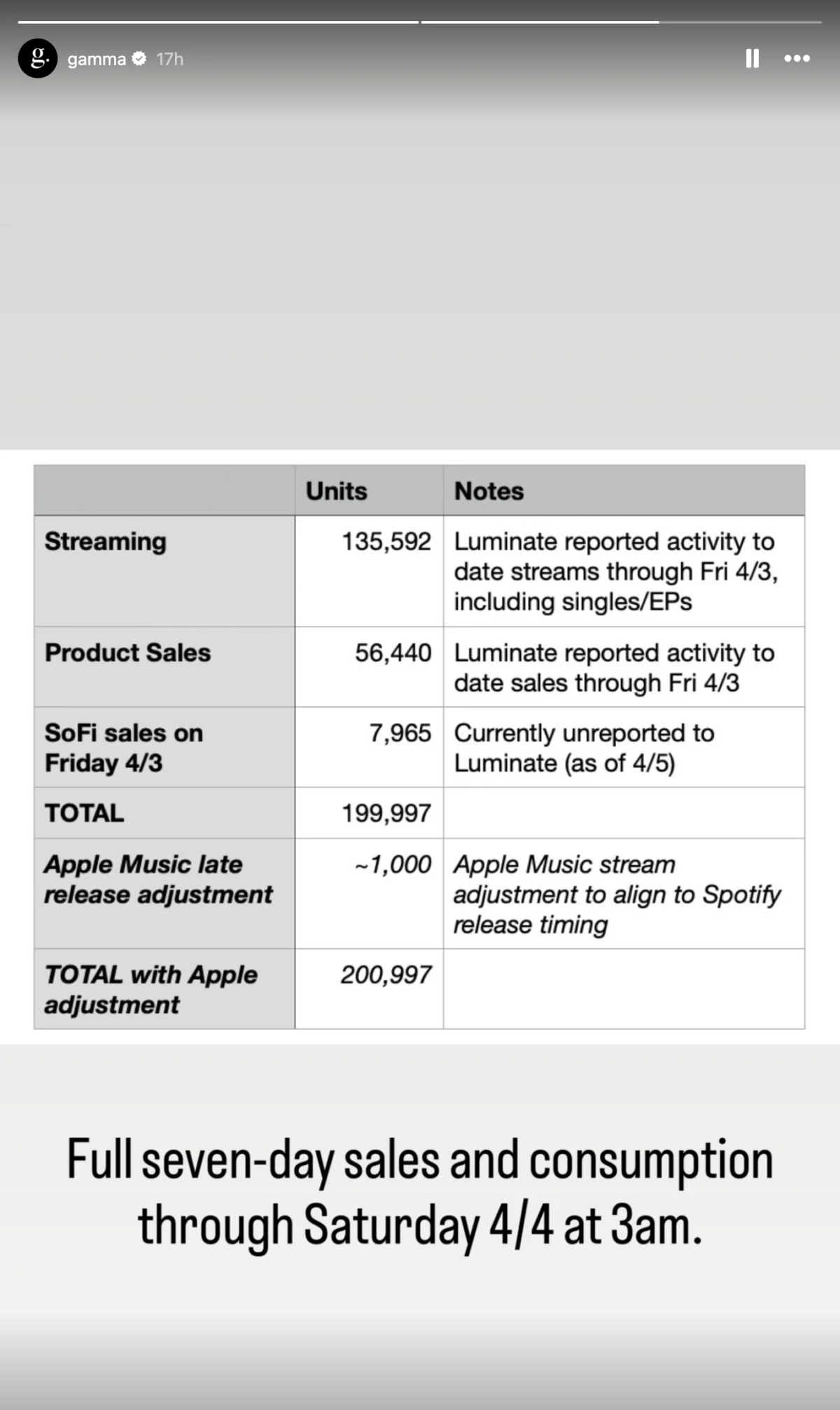
However, the official Billboard figures have been met with a counter-claim from Gamma., the distribution company founded by former Apple Music executive Larry Jackson, which was responsible for releasing Bully. Gamma. has asserted that the album’s first-week performance significantly surpassed the reported figures, claiming that Bully actually garnered over 200,000 equivalent units. This revised total, if accurate and recognized by chart compilers, would indeed be sufficient to place Bully at number one, displacing BTS.
Gamma. publicly shared its sales and consumption breakdown via Instagram Stories, detailing a total of 200,997 units generated within the first seven days. As of the latest reports, neither Billboard nor Luminate, the official data provider for the Billboard charts, have issued a response to Gamma.’s claims. The discrepancy raises questions about the methodologies used for calculating album units and the potential for differing interpretations of the data.
The rollout of Bully has been characterized by its extensive tracklist, featuring 18 songs. Yet, the possibility of further content from this project is already on the horizon. In a separate Instagram Story announcement, Gamma. hinted at an upcoming expanded edition of the album. The post simply stated, "Bully deluxe on the way," indicating that fans can anticipate additional material. Specific details regarding the release date for this deluxe version or the number of new tracks to be included have not yet been disclosed. This suggests a strategic approach to prolonging the album’s commercial lifecycle and engaging with West’s fanbase.
The commercial performance of Bully unfolds against a backdrop of significant controversy, particularly concerning Kanye West’s scheduled headlining performances at London’s Wireless Festival in July. His booking for the festival has ignited considerable debate and backlash due to his past antisemitic remarks and controversial statements. The gravity of these concerns has led to a number of major sponsors withdrawing their support from the festival. Notable brands such as Pepsi, PayPal, and the drinks giant Diageo have announced their disassociation from the event.
The opposition to West’s participation extends to prominent political figures. Both Prime Minister Sir Keir Starmer and London Mayor Sadiq Khan have publicly expressed their disapproval. Sir Keir Starmer described the decision to book the artist as "deeply concerning," highlighting West’s history of "antisemitic remarks and celebration of Nazism." This widespread criticism underscores the ongoing societal scrutiny of West’s public persona and the impact of his controversial statements on his professional engagements.
These scheduled festival appearances follow a period of renewed performance activity for West. He recently concluded two sold-out shows at Los Angeles’ SoFi Stadium, which were held in support of Bully. The Wireless Festival performances are slated to see him headline all three nights of the event, a prominent slot that has amplified the existing debate surrounding his presence. The artist’s engagement with live performances, even amidst controversy, indicates a continued effort to connect with his audience and promote his latest work.
Background and Charting Dynamics
The debut of Bully at number two on the Billboard 200 signifies a departure from Kanye West’s historically dominant chart performance. Throughout his career, West has been a consistent presence at the top of the charts, with numerous albums achieving number-one status. His debut album, The College Dropout, released in 2004, established his presence and reached a peak of number two. Since then, a string of subsequent solo projects had consistently claimed the top spot, cementing his reputation as a chart-topping artist. The current performance of Bully suggests a potential shift in listener engagement or market dynamics, particularly when juxtaposed with the immense popularity of global acts like BTS.
The concept of "equivalent album units" is crucial to understanding modern music chart performance. This metric, utilized by Billboard, combines traditional album sales with the equivalent value of streaming and digital track sales. A specific number of on-demand streams (e.g., 1,500) or track downloads (e.g., 10) are counted as one equivalent album unit. This system reflects the evolving ways in which music is consumed and allows for a more comprehensive comparison of album performance across different formats. The substantial streaming numbers for Bully indicate a strong listener engagement through digital platforms, while the traditional sales component also contributes significantly to its overall unit total.
The Gamma. Counter-Claim and Industry Implications
The discrepancy between Billboard’s reported figures and Gamma.’s claimed sales for Bully introduces an element of intrigue and potential contention within the music industry. Independent distributors and artists have, at times, questioned or challenged chart methodologies, particularly when they perceive discrepancies or believe their own data provides a more accurate reflection of market performance. Gamma.’s proactive release of their own detailed breakdown suggests a desire to publicly advocate for their figures and potentially initiate a dialogue with chart compilers.
If Gamma.’s claims are substantiated and lead to a revision of the Billboard 200 rankings, it would represent a significant event. It could prompt a closer examination of the data collection and reporting processes employed by Luminate and Billboard. Furthermore, it might encourage other artists and distributors to scrutinize their own performance data and challenge any perceived inaccuracies. The music industry relies heavily on chart positions for metrics of success, artist perception, and commercial opportunities, making such disputes consequential.
The release of a deluxe edition of Bully is a common industry strategy to maintain momentum and capture additional sales or streams after the initial release. Given the album’s substantial length, the inclusion of new tracks could offer fresh material for both long-time fans and casual listeners. The timing of this deluxe release, especially in light of the current chart debate, could also be strategically employed to influence future chart performance or generate renewed media attention.
Broader Context and Public Reaction
The controversies surrounding Kanye West, particularly his past antisemitic remarks, have had a tangible impact on his professional engagements. The withdrawal of major sponsors from the Wireless Festival is a direct consequence of these concerns. This demonstrates a growing trend of brands and organizations taking a stance against artists whose public statements are deemed offensive or harmful. The statements from political leaders like Sir Keir Starmer and Sadiq Khan highlight the broader societal implications of booking artists with such controversial histories, underscoring the intersection of entertainment, public discourse, and ethical considerations.
West’s recent performances at SoFi Stadium indicate a continued commitment to his musical output and live performance career. The decision to headline multiple nights at a major festival like Wireless, despite the significant backlash, suggests a determination to proceed with his planned appearances. The ensuing scrutiny is likely to remain intense, with heightened attention on his performances and any public statements he may make. The situation serves as a case study in the complex relationship between artistic expression, public perception, and corporate responsibility in the contemporary cultural landscape. The ongoing discussion around Bully‘s chart performance, coupled with the controversy surrounding his festival appearances, positions Kanye West at the center of a multifaceted narrative that continues to evolve.
