

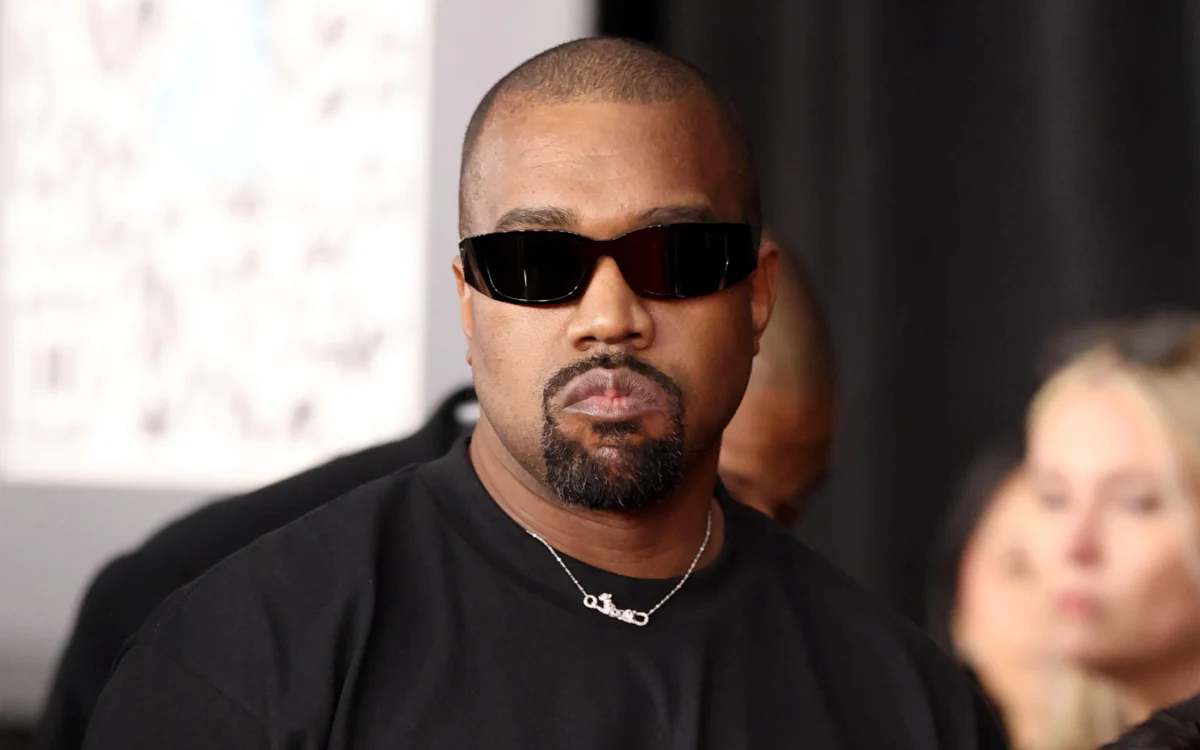
Kanye West, the enigmatic and often controversial figure in music and culture, has unveiled the complete tracklist for his highly anticipated 12th studio album, Bully, slated for release this Friday, March 27th, via Gamma. The announcement, made through a rare and direct post on the social media platform X (formerly Twitter) on Wednesday, March 25th, offered fans a glimpse into the sprawling 18-track project that marks West’s first full solo effort since the 2021 release of Donda.
The handwritten tracklist, shared by West himself, confirms the inclusion of several previously teased or released songs, including "Preacher Man," "Beauty and the Beast," and "Damn." While details regarding the full roster of producers and guest vocalists remain under wraps, speculation is rife. Industry whispers suggest a potential collaboration with Travis Scott on the track "Father," a rumor that, if true, would signify a significant artistic reunion for the two artists who have a history of impactful joint projects. Longtime collaborator Mike Dean has also been confirmed by West to be involved in the production of Bully, signaling a return to the trusted sonic architects that have shaped much of West’s acclaimed discography.
A Shift Away from AI: West’s Direct Statement
Crucially, West’s X post also included a direct and emphatic statement: "BULLY ON THE WAY NO AI." This declaration serves as a stark contradiction to earlier indications and public demonstrations where West explored the use of artificial intelligence in music creation. In a widely circulated 2025 interview with Justin Laboy, West had showcased his experiments with AI, articulating a vision for its potential in music production. He described how AI could deconstruct songs into individual components – vocals, basslines, and drums – facilitating easier sampling and manipulation for his engineers. At the time, he even alluded to using this technology, referring to it as "JS, AI" in communication with his engineer, John Scott, and speaking in what he described as "digital THX [language]."
West’s pivot away from AI in Bully comes with a simultaneous revelation about his creative process for the album. Despite his earlier explorations into digital frontiers, he has clarified that he "chopp[ed] up all the samples by hand." This statement suggests a return to more traditional, labor-intensive sampling techniques, a hallmark of classic hip-hop production. This hands-on approach, coupled with his assertion of "no AI," positions Bully as a project deeply rooted in analog artistry and meticulous craftsmanship.
Artistic Aspirations and Thematic Undercurrents
West has characterized Bully as a more "positive" record, drawing parallels to influential works in his career and the broader music landscape. He has explicitly stated, "This is more the way I remember Lauryn Hill’s album. I feel like [Bully] is my Miseducation, my Gnarls Barkley album." This comparison to Lauryn Hill’s seminal The Miseducation of Lauryn Hill and the critically acclaimed St. Elsewhere by Gnarls Barkley signals West’s ambition to create an album that is both artistically profound and widely resonant, aiming for a similar cultural impact.
Regarding the album’s title, Bully, West acknowledges its potentially polarizing connotations. He stated, "I know the title Bully has a connotation that a lot of people are anti-bully, but we can bring it… I’m just hyper-next-level frequency right now." This suggests an intent to reframe or reinterpret the term, perhaps exploring themes of resilience, overcoming adversity, or a more assertive artistic stance, all while operating at a perceived heightened creative state. The album’s title, coupled with his statement of being on a "hyper-next-level frequency," hints at a project that may challenge listener perceptions and delve into complex emotional and psychological territories.
A Legacy in Flux: The Shadow of Controversy
The release of Bully arrives at a critical juncture in Kanye West’s career, occurring in the wake of his extensive public apology for antisemitic behavior. This apology, published in The Wall Street Journal earlier this month, represents a significant moment of public reckoning for the artist. His years-long pattern of controversial statements and actions led to the termination of numerous lucrative business partnerships, including those with adidas and Gap, effectively eradicating his billionaire status and casting a shadow over his legacy.
In his letter, West expressed "deep regret" for his actions, attributing them in part to undiagnosed brain injuries sustained from a 2002 car accident. He described a state where he "gravitated toward the most destructive symbol I could find, the swastika, and even sold T-shirts bearing it." He further articulated his remorse, stating, "I regret and am deeply mortified by my actions in that state, and am committed to accountability, treatment, and meaningful change." He concluded by asserting, "It does not excuse what I did though. I am not a Nazi or an antisemite. I love Jewish people." This public atonement, while a significant step, remains a focal point for many as Bully prepares to enter the public sphere. The album’s reception will undoubtedly be viewed through the lens of this ongoing conversation about his past actions and his commitment to personal growth and accountability.
Touring Plans and Global Reach
Bully is slated to be supported by a comprehensive international tour, underscoring West’s intent to connect with his global fanbase. The tour will include multiple dates at Los Angeles’s SoFi Stadium on April 1st and 3rd. Beyond the United States, West is scheduled to perform in India, Turkey, France, the Netherlands, Italy, and Spain between June and August. These tour dates, particularly in the current climate surrounding West, are expected to draw significant attention, both from supporters and critics alike, as he navigates the complex terrain of his public image and artistic output. The scale of the tour suggests a commitment to reclaiming his presence on the world stage, even as his past controversies continue to be a subject of public discourse.
The release of Bully represents more than just a new musical offering from Kanye West; it is a statement of intent, a potential artistic rebirth, and a significant chapter in the ongoing narrative of one of contemporary culture’s most compelling and divisive figures. The album’s success, both commercially and critically, will likely be measured not only by its sonic merit but also by its ability to transcend the controversies that have defined West’s recent public life and to resonate with audiences on a profound artistic level.
