

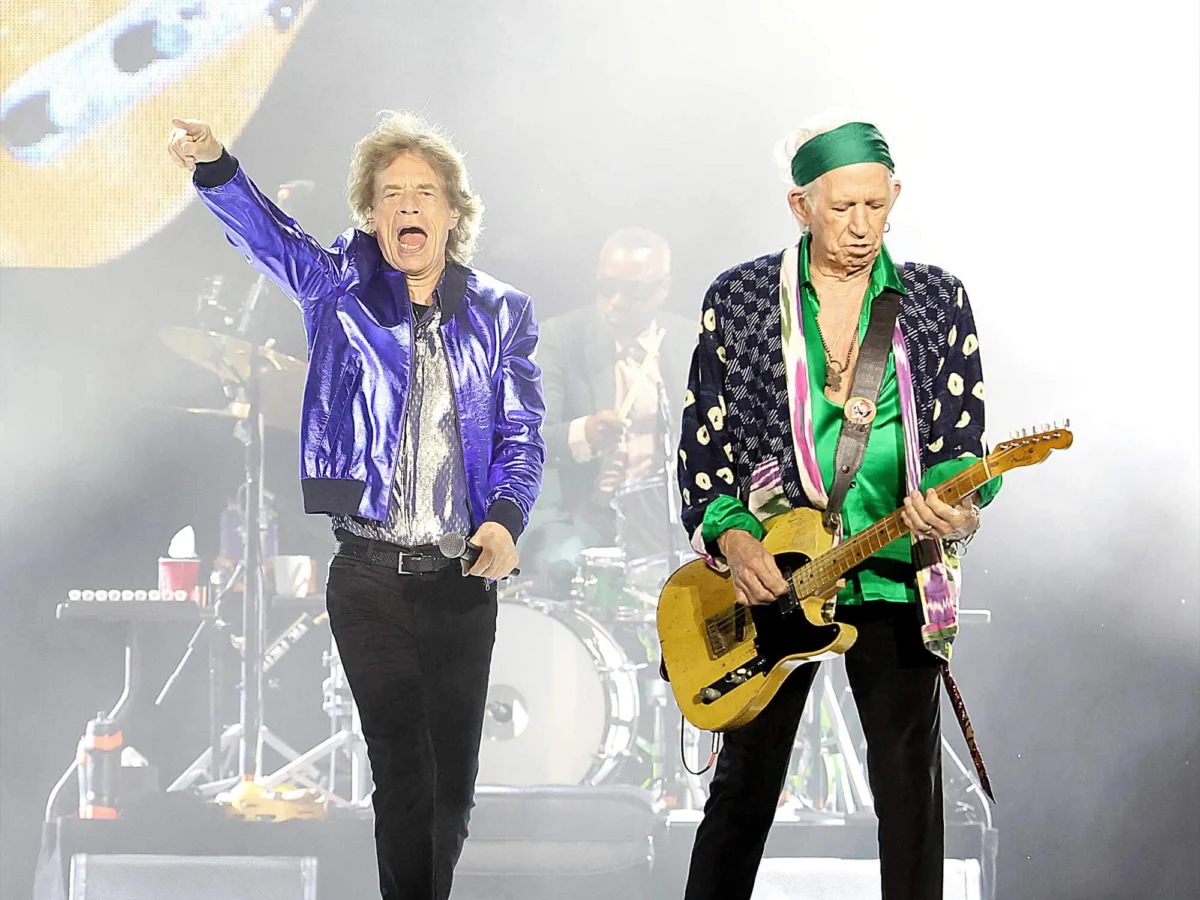
The rapid proliferation of artificial intelligence (AI) has ignited fervent debate across industries, and the music world is no exception. While AI offers transformative capabilities, from streamlining technical processes to generating novel content, its integration raises profound questions about authenticity, originality, and the very essence of human creativity. Legendary rock icons The Rolling Stones, known for their enduring innovation and adaptability across six decades, have offered a nuanced perspective on this technological frontier, embracing AI for specific visual applications while expressing strong reservations about its use in generating musical compositions.
The Nuance of AI Application: Visuals vs. Composition
The Rolling Stones’ recent album, Hackney Diamonds, marked a significant return to original material after nearly two decades. Accompanying this release was the music video for "In the Stars," a poignant tribute to their late drummer Charlie Watts. For this video, the band, now largely in their 80s (with Ronnie Wood at 76, not 79 as in the original source, and the others in their 80s), employed AI-powered de-aging technology to present younger versions of themselves. This strategic use of AI was a calculated visual choice, aimed at evoking a nostalgic yet vibrant image of the band in their earlier years, effectively connecting their storied past with their present creative output.
Mick Jagger, in an interview with Billboard, clarified the extent of AI’s involvement in the video. "They’re not fake people in a fake room; they’re all in a room, really playing together," Jagger explained. "The musicians are real musicians that look a bit like the Rolling Stones in 1968. The only thing was the faces." He further elaborated on the iterative process of perfecting the digital youthfulness, noting initial discrepancies. "They worked on mine first, and it kind of looked like me, but not really — like one of my children when they were 23 or something. And then I saw Ronnie, and I said to the people working on it, ‘It looks more like Jeff Beck.’ So they had to do a bit of extra work." This detailed account highlights AI’s role as a sophisticated visual effect tool, augmenting live performances rather than replacing them.
Keith Richards echoed this pragmatic acceptance of AI for visual enhancements. "That’s our brushing with AI," Richards stated. "I said, ‘Very nice. I wish I looked like that now.’ But maybe that’s what they’re good for — music videos. Put it in its proper place." His comments underscore a willingness to leverage AI for its utility in specific, defined contexts, particularly when it serves to enhance the storytelling or aesthetic quality of their visual content. This selective endorsement suggests a recognition of AI’s potential as a creative assistant, a tool to achieve desired visual outcomes that might otherwise be impossible or prohibitively expensive.
However, this pragmatic view shifts dramatically when the conversation turns to AI’s role in the actual creation of music. Both Richards and Jagger expressed profound skepticism and outright opposition to the use of AI for generating original compositions or mimicking their distinctive sound. Richards articulated a fundamental desire for genuine artistic input. "My thoughts are: I’d rather hear something original," he asserted. "Music could do a lot better than just trying to copy itself. After all, it’s pretty simple stuff — this is not Beethoven or Bach, and I’ve no doubt AI can do that, but so what? We want new input." His critique is rooted in the belief that true music should evolve through human ingenuity and fresh perspectives, rather than merely synthesizing existing patterns. He emphasized, "We don’t want more and more copying and synthesizing. At least that’s my point of view. Music is to play around with. Surely there’s enough originality without having to copy nursery rhymes."
Jagger reinforced this sentiment, urging those who consider using AI for music composition to prioritize "your own input and your own thoughts." He articulated a strong ethical stance against AI impersonation. "I don’t want to be imitated by AI, vocally and instrumentally, and the band doesn’t. I don’t want people just putting stuff out there that can sound exactly like the Rolling Stones — I think that’s obviously wrong. If someone wants to make music by AI, go ahead, but it has to be original." This statement delineates a clear boundary: while AI as a tool for new, human-directed creation might be acceptable, its use to replicate or plagiarize an artist’s unique sonic identity is deemed fundamentally unethical and creatively bankrupt.
The Broader Landscape of AI in the Music Industry
The Rolling Stones’ measured stance reflects a broader, often contentious, debate within the global music industry. The past few years have witnessed an explosion in AI’s capabilities, moving beyond predictive algorithms and data analysis to sophisticated generative models capable of producing text, images, and, crucially, music. AI-powered tools are now available that can compose melodies, generate lyrics, create instrumental backing tracks, and even simulate the vocal styles of established artists.
A Rapidly Evolving Technology
The development of AI in music spans various applications. On one end, AI assists in mastering, mixing, and optimizing audio, offering efficiency and consistency. Algorithmic tools also power personalized music recommendations on streaming platforms, shaping discovery and consumption habits. More recently, the advent of generative AI has enabled machines to create entirely new musical pieces, often by analyzing vast datasets of existing music to learn patterns, harmonies, and stylistic nuances. Companies like Amper Music, AIVA, and Google’s Magenta project have demonstrated AI’s capacity to produce music across diverse genres, from classical to electronic.
Industry Adoption and Resistance
While some within the industry view AI as an exciting frontier, offering new creative avenues and democratizing music production, others, like The Rolling Stones, express profound concern. Major record labels, including Universal Music Group, have taken proactive steps to protect their copyrighted material, sending notices to AI developers to prevent unauthorized scraping of their extensive music catalogs for training AI models. The fear is that without proper licensing and compensation, AI-generated music could dilute the market, devalue human artistry, and infringe upon intellectual property rights.
Copyright and Ownership Dilemmas
The legal implications of AI-generated music are complex and largely unresolved. Traditional copyright law typically requires a human author. This raises fundamental questions: Who owns the copyright to a song composed by AI? Is it the AI’s developer, the user who prompted the AI, or is it uncopyrightable? Furthermore, the use of existing copyrighted music to train AI models without explicit permission or compensation is a contentious issue. Artists and rights holders argue that this constitutes unauthorized use of their intellectual property, potentially leading to widespread infringement and economic harm. The debate centers on defining "fair use" in the context of AI training and establishing frameworks for licensing and remuneration.
Historical Precedent: Technology’s Impact on Music
The music industry has a long history of adapting, and sometimes resisting, technological disruption. From the advent of electric guitars and synthesizers in the mid-20th century to the rise of digital audio workstations (DAWs), sampling, and auto-tune in later decades, each technological leap has sparked debate about authenticity and the future of music.

From Samplers to Synths
Synthesizers, introduced in the 1960s, expanded sonic palettes, while drum machines in the 1980s revolutionized rhythm sections. Sampling, which allows artists to repurpose existing sound recordings, became a cornerstone of hip-hop and electronic music, though it too faced early legal battles over copyright. Auto-tune, initially a corrective tool, became a stylistic effect, altering vocal aesthetics. In each case, these technologies were initially met with skepticism by purists, who feared they would diminish human skill or homogenize music. However, they ultimately became integrated tools, utilized by artists to create entirely new genres and sounds, augmenting human creativity rather than replacing it.
The Uniqueness of Generative AI
The crucial distinction with generative AI, as highlighted by The Rolling Stones, lies in its ability not just to process or enhance existing sounds, but to create entirely new compositions that can mimic human artistry. Previous technologies, while transformative, largely served as sophisticated instruments or production aids, requiring direct human input and creative direction. Generative AI, by contrast, can operate with minimal human prompting, raising questions about authorship, the nature of artistic expression, and the fundamental value proposition of human ingenuity. This shift from augmentation to generation presents a qualitatively different challenge to the established norms of creative production.
Ethical and Artistic Implications
The ethical and artistic implications of AI in music extend far beyond legal frameworks. The Rolling Stones’ insistence on "original input" speaks to a deeper concern about the soul of music.
The Value of Human Ingenuity
For many artists, music is an deeply personal expression of emotion, experience, and cultural context. The spontaneity, imperfections, and unique interpretations that define human performance are often considered irreplaceable. Keith Richards’ emphasis on "playing around with" music underscores the improvisational, explorative nature of human creation, which he believes AI cannot truly replicate. The fear is that an overreliance on AI could lead to a sterile, predictable musical landscape, devoid of the unexpected brilliance or raw emotion that defines truly impactful art.
Economic Impact on Musicians
There are significant economic concerns for musicians, composers, and lyricists. If AI can generate commercially viable music at scale and low cost, it could depress the value of human-created content, potentially displacing artists and further exacerbating economic precarity in an industry already struggling with fair compensation models (e.g., streaming royalties). The rise of "AI ghostwriters" or AI-generated background music could reduce opportunities for human talent.
The Future of Musical Identity
Jagger’s specific concern about AI sounding "exactly like the Rolling Stones" touches upon the critical issue of artistic identity and legacy. An artist’s unique voice, instrumental style, and lyrical themes are meticulously cultivated over years, forming their brand and connection with audiences. If AI can convincingly replicate these elements, it not only infringes on their intellectual property but also blurs the lines of artistic ownership and authenticity, potentially undermining an artist’s distinct contribution to music history.
Regulatory Responses and Industry Dialogue
Recognizing the multifaceted challenges posed by AI, various stakeholders within the music industry are actively seeking solutions and advocating for protective measures.
Calls for Regulation
Artist unions, advocacy groups, and industry bodies like the Recording Industry Association of America (RIAA) and the International Federation of the Phonographic Industry (IFPI) are pushing for stronger regulations. Key demands include:
- Transparency: Requiring AI developers and users to disclose when AI has been used in the creation of music, particularly if it has been trained on copyrighted material.
- Consent and Compensation: Establishing frameworks that mandate explicit consent from rights holders for their work to be used in AI training datasets and ensuring fair compensation for such use.
- Protection of Likeness: Creating legal protections against the unauthorized replication of artists’ voices, styles, and likenesses by AI.
- Human Authorship: Reaffirming the principle that only human-created works can be granted copyright protection, to preserve the value of human artistry.
The "Human-Centric AI" Debate
The overarching goal for many in the music industry is to ensure that AI serves as a tool to augment and inspire human creativity, rather than diminish or replace it. This involves developing ethical AI guidelines that prioritize human control, agency, and fair compensation. The dialogue seeks to strike a balance where AI’s innovative potential can be harnessed without compromising the artistic integrity, economic viability, and cultural significance of human-made music.
Conclusion: A Crossroads for Creativity
The Rolling Stones’ measured engagement with AI encapsulates the complex decisions facing the creative industries today. Their willingness to embrace AI for visual spectacle, while vehemently rejecting its application to core musical composition, draws a clear line in the sand. It highlights a critical distinction: AI as a utility to enhance existing human artistry versus AI as a generative force that could potentially supplant it.
As AI technology continues its rapid advancement, the music industry stands at a crossroads. The choices made now—by artists, developers, policymakers, and consumers—will profoundly shape the future soundscape. The impassioned statements from Keith Richards and Mick Jagger serve as a powerful reminder of the enduring value of originality, human touch, and the irreplaceable spark of authentic creativity in an increasingly automated world. The challenge remains to integrate technological progress responsibly, ensuring that innovation truly serves to enrich human culture, rather than dilute its essence.
