

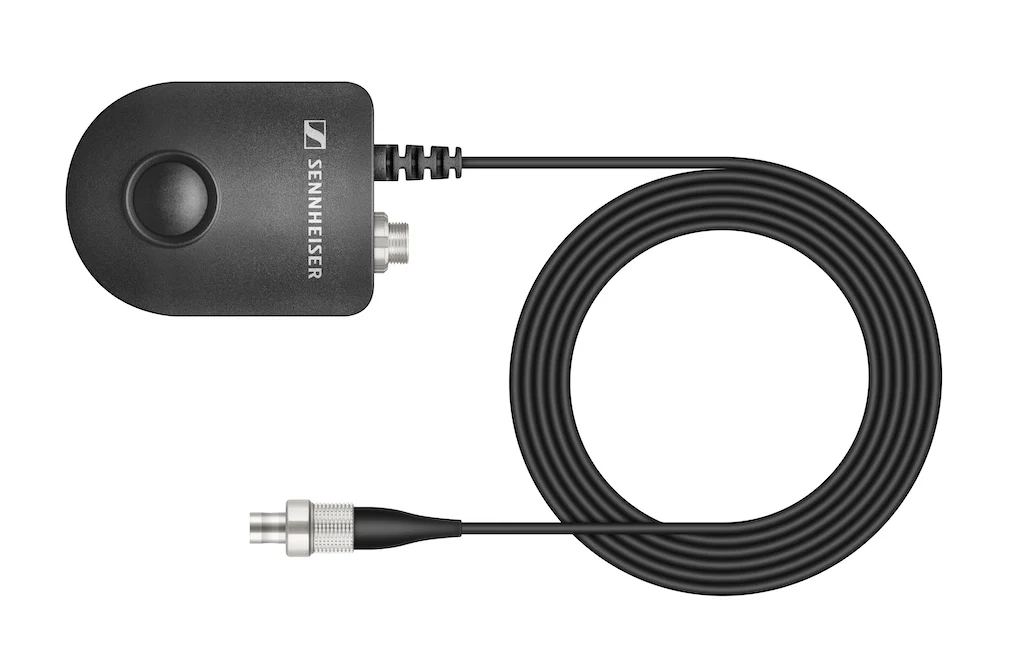
The professional audio landscape is undergoing a significant transformation with the latest expansion of the Sennheiser Spectera ecosystem, marked by the release of firmware version 1.4 and the introduction of a dedicated hardware Command Button. This development represents a pivotal moment for Sennheiser’s flagship wideband digital wireless system, which utilizes Wireless Multi-Channel Audio Systems (WMAS) technology to redefine how audio professionals manage complex RF environments. By integrating sophisticated software control with tactile hardware solutions, Sennheiser is addressing the nuanced demands of live sound reinforcement, high-stakes broadcasting, and the evolving needs of modern houses of worship.
The Spectera ecosystem, initially launched to provide a more efficient alternative to traditional narrowband wireless systems, has quickly become a benchmark for spectrum efficiency. The introduction of firmware 1.4 enhances this foundation by providing deeper telemetry, improved monitoring capabilities, and refined control over audio routing. Simultaneously, the new Spectera Command Button offers a physical interface for performers and presenters to interact with the system, bridging the gap between digital complexity and on-stage simplicity.
The Technical Core: Firmware 1.4 and Enhanced Monitoring
The release of firmware version 1.4 is more than a routine update; it is a comprehensive overhaul of the Spectera WebUI (Web User Interface). For RF technicians and sound engineers, visibility is the most critical asset in a live environment. The new firmware addresses this by providing real-time data on several key performance indicators. Chief among these are the Received Signal Strength Indicator (RSSI) and the Link Quality Indicator (LQI).
While RSSI provides a measurement of the power level of the received radio signal, the LQI is often considered more vital in digital systems as it measures the integrity of the data packets being received. In the crowded RF environments of modern metropolitan areas or large-scale festivals, having both metrics allows engineers to differentiate between a strong but interfered signal and a clean, reliable link. Additionally, the WebUI now displays precise battery levels and interference status, alongside audio levels for both microphones and In-Ear Monitoring (IEM) channels.
This level of granular monitoring is integrated directly into the Base Station’s control interface, allowing for a centralized management point. The firmware also unlocks the ability to program audio outputs on both the Base Station and the newly released Command Button, enabling a level of customization previously reserved for high-end, bespoke broadcast consoles.
The Spectera Command Button: Tactile Control for Performers
The Spectera Command Button is a hardware accessory designed to be inserted into the signal chain between the SEK bodypack transmitter and the microphone. Its primary function is to give the user direct control over audio routing without requiring intervention from the front-of-house (FOH) or monitor engineer.
The device supports two primary modes of operation: Push-to-Talk (PTT) and Push-to-Mute (PTM). In a "Push-to-Mute" configuration, often referred to in the industry as a "cough button," the performer can instantly silence their feed. This is particularly useful in broadcast settings where a presenter might need to clear their throat or in musical theater where an actor remains mic’d while off-stage.
Conversely, the "Push-to-Talk" or Talkback function allows the user to divert their audio signal to a private communication channel. This enables a lead singer to speak directly to the monitor engineer or a broadcast reporter to check in with a producer without the audio being broadcast to the main audience or the "on-air" feed. The button can be configured as either a "momentary" switch (active only while held) or a "latching" switch (toggled on and off with a single press), providing flexibility for different performance styles and technical requirements.
Significantly, Sennheiser has ensured backward compatibility within its professional lineup. The Command Button is compatible not only with the Spectera SEK bodypack but also with the SK 9000 and SK 6000 digital narrowband bodypack transmitters, provided they are running the latest firmware versions. This cross-platform utility ensures that rental houses and production companies can integrate the new hardware into their existing inventories.
Strategic Integration with SoundBase
A major highlight of this update is the full integration of Spectera into the SoundBase application. SoundBase is a brand-agnostic software suite used globally for RF coordination, planning, and management. Dennis Stegemerten, Manager of Software & Services at Sennheiser, emphasized that this integration makes SoundBase the first RF management application in the world capable of handling both narrowband and wideband systems from multiple manufacturers in a single interface.
For large-scale productions that often employ a mix of Sennheiser Spectera wideband systems and traditional narrowband units from other brands, this integration is a game-changer. Users can now coordinate frequencies, monitor signal health, and manage multiple Base Stations from a single laptop. Sennheiser’s decision to support the free SoundBase SE version for Spectera management reflects a commitment to accessibility, while the Pro version remains available for those managing high-channel-count, multi-brand environments.
Global Regulatory Milestones and the WMAS Revolution
The rollout of Spectera coincides with a global shift in how radio frequency spectrum is regulated. Traditional wireless microphones operate on narrowband channels (typically 200 kHz wide). Spectera, utilizing WMAS, uses a single wideband channel (up to 6 MHz or 8 MHz) to transmit multiple audio signals simultaneously. This approach is far more efficient in terms of spectrum usage, allowing for more channels in a smaller footprint while reducing the risk of intermodulation distortion.
Andreas Wilzeck, Sennheiser’s Head of Spectrum Policy and Standards, noted that the regulatory acceptance of Spectera has been remarkably swift. Most countries have adopted an "innovation first" policy, certifying the system under existing frameworks or quickly updating their rules to accommodate wideband technology. Currently, the only major markets where regulatory procedures are still finalized are mainland China, South Korea, and Japan. The near-worldwide certification of Spectera ensures that international touring acts can use the same equipment across continents without fear of legal non-compliance.
Industry Implications: Broadcast, Live, and Worship
The implications of these updates vary across different sectors of the audio industry:
Broadcast and Media Production
In the fast-paced world of live television, communication is as important as the broadcast audio itself. The Command Button’s talkback feature allows on-air talent to stay in constant contact with the gallery. Furthermore, the enhanced telemetry in firmware 1.4 allows broadcast engineers to monitor the health of every wireless link from a central hub, reducing the need for "runners" to check equipment during a live show.

Live Music and Festivals
For major music festivals, where RF congestion is a constant threat, the move to wideband WMAS technology reduces the complexity of frequency coordination. The ability to monitor LQI (Link Quality) ensures that the monitor engineer can anticipate potential dropouts before they become audible, providing a safety net for the world’s largest tours.
Houses of Worship
Modern houses of worship often rely on volunteers to manage complex audio systems. The "Push-to-Mute" function on the Command Button is particularly valuable here. It allows a pastor or worship leader to mute their own microphone during private moments or transitions, preventing accidental broadcasts of "hot mic" situations. The simplicity of the hardware button reduces the burden on the sound technician during the service.
Chronology of Development
The journey to the 1.4 firmware and the Command Button began several years ago with Sennheiser’s heavy investment in WMAS research.
- Phase 1: Research and Advocacy. Sennheiser spent years working with international regulatory bodies (like the FCC in the US and ETSI in Europe) to pave the way for wideband wireless audio.
- Phase 2: The Launch of Spectera. The system was introduced as the world’s first bidirectional wideband wireless ecosystem, combining mic signals and IEM feeds into a single RF channel.
- Phase 3: Ecosystem Expansion. Following initial feedback from early adopters in the touring world, Sennheiser identified the need for more robust remote monitoring and a physical user interface for performers.
- Phase 4: Firmware 1.4 and Hardware Release. The current update represents the culmination of that feedback, moving the system from a "technological breakthrough" to a "mature production tool."
Analysis of the Competitive Landscape
Sennheiser’s expansion of the Spectera ecosystem places it in a strong position relative to its primary competitors, such as Shure and Lectrosonics. While other manufacturers continue to refine digital narrowband technology, Sennheiser has made a definitive bet on wideband WMAS.
The primary advantage of the Spectera approach is the bidirectional nature of the link. In traditional systems, a performer wears a transmitter for their voice and a separate receiver for their in-ear monitors, requiring two different frequency sets. Spectera handles both in a single wideband stream, significantly reducing the "RF footprint" of a single performer. The addition of the Command Button and the SoundBase integration further solidifies this ecosystem as a comprehensive solution rather than just a collection of hardware components.
Conclusion and Availability
The introduction of the Spectera Command Button (Article No. 701014) and firmware version 1.4 marks a significant step forward in the democratization of advanced RF management. By providing professional-grade tools that are both powerful for engineers and simple for performers, Sennheiser is addressing the core challenges of modern wireless audio: spectrum scarcity and operational complexity.
Firmware version 1.4 is available for immediate download via the Sennheiser Base Station product page, and the Command Button has entered global distribution. As the industry continues to navigate a world with less available spectrum and higher production values, the Spectera ecosystem’s focus on efficiency and integrated control appears to be the blueprint for the future of professional wireless audio.
