

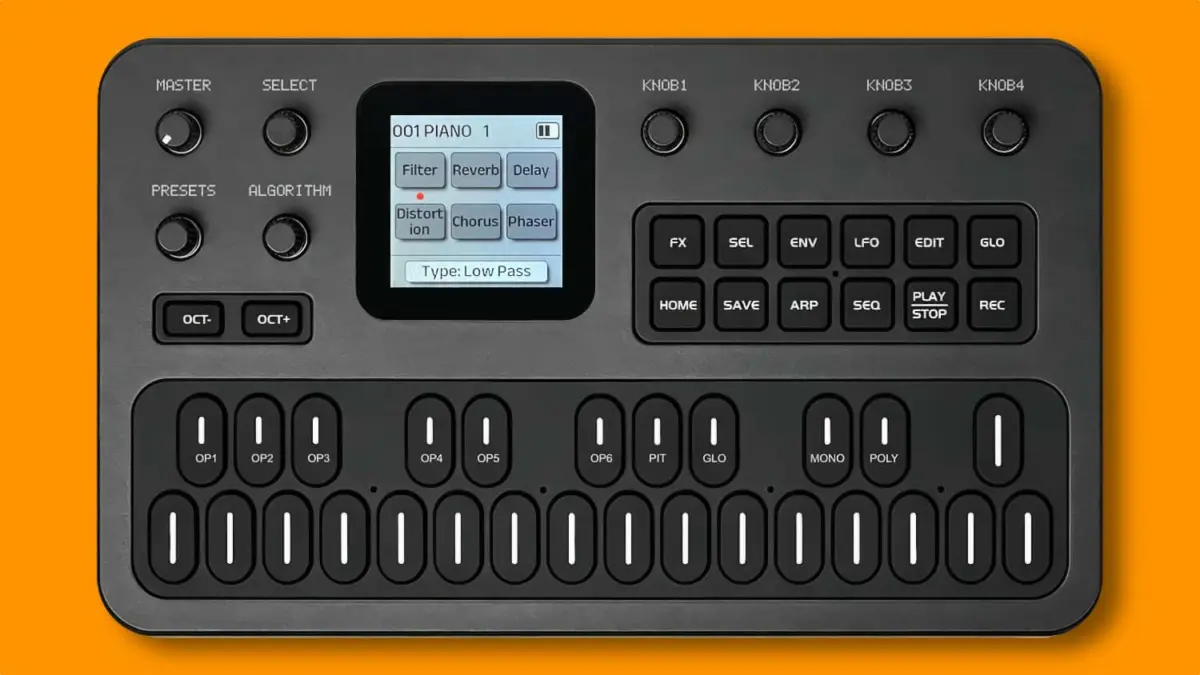
The digital music production landscape has witnessed a significant technological milestone with the release of a dedicated web-based emulator for the M-Vave FM-1 hardware synthesizer, developed by software engineer Kirill Pugachev. This new platform, accessible via a standard web browser, serves as a centralized hub for the M-Vave FM-1 community, providing a virtualized environment where users can test, explore, and learn from more than 200 distinct firmware variations. By bridging the gap between hardware experimentation and software accessibility, the emulator offers a rare glimpse into the highly active world of boutique synthesizer modification and open-source firmware development.
The M-Vave FM-1 itself has gained a cult following in recent years due to its remarkably low price point and its surprisingly flexible architecture. As a compact, hardware-based frequency modulation (FM) synthesizer, it initially targeted entry-level musicians and hobbyists. However, the device’s internal hardware proved to be a fertile ground for developers and enthusiasts who began rewriting its code to unlock features far beyond the manufacturer’s original specifications. Pugachev’s new site, the FM-1 Emulator, effectively archives this collective history of innovation, allowing anyone with an internet connection to experience the sonic diversity of these community-driven projects without owning the physical hardware.
The Evolution of the M-Vave FM-1 Ecosystem
To understand the significance of Pugachev’s emulator, one must first examine the trajectory of the M-Vave FM-1 hardware. Originally released as an affordable alternative to more expensive FM desktop modules, the FM-1 provided a basic but functional implementation of frequency modulation synthesis—a method of sound generation made famous by the Yamaha DX7 in the 1980s. FM synthesis is notoriously complex, relying on the mathematical interaction of "operators" (oscillators) to create harmonically rich and evolving timbres.
The hardware’s popularity spiked not just because of its affordability, but because of its "hackable" nature. Developers within the electronic music community realized that the FM-1’s processor could be repurposed. This led to a decentralized movement where programmers began releasing "alternate firmwares." These custom software packages could transform the FM-1 from a standard synthesizer into a drum machine, a generative ambient drone generator, or a more sophisticated multi-operator synth with expanded modulation matrices.
Until the launch of Pugachev’s site, exploring these firmwares was a cumbersome process. A hardware owner would typically have to download a firmware file from a repository like GitHub, connect their device to a computer via USB, and "flash" the new code onto the machine. If the user did not like the sound or functionality of that specific version, they would have to repeat the process for every subsequent trial. Pugachev’s emulator removes this friction by virtualizing the entire experience.
Technical Foundation and Collaborative Development
The FM-1 Emulator is built upon the technical groundwork laid by a developer known as Joakim, whose "fm1-emu" project provided the initial emulation core under the MIT License. Pugachev took this foundational code and significantly expanded its utility for the general public. By utilizing WebAssembly and the Web Audio API, the emulator runs the actual firmware code within the browser, ensuring that the sounds produced are accurate representations of what the hardware would output.
One of the most striking features of Pugachev’s implementation is the sheer scale of the library. With over 200 community firmwares integrated into a single, searchable interface, the site acts as a living museum of the FM-1’s development. The interface includes the original stock firmware provided by M-Vave, allowing users to compare the baseline performance of the unit against the sophisticated enhancements created by the community.
Pugachev has also addressed the "paradox of choice" that often accompanies large libraries. To assist users who might be overwhelmed by the volume of options, the site includes a "Surprise Me" button. This feature selects a firmware at random, encouraging serendipitous discovery and highlighting the work of lesser-known developers. Furthermore, Pugachev has integrated links to the original source code and the developers’ personal websites for every firmware hosted, ensuring that the creators receive proper credit and that the open-source spirit of the project is maintained.
Educational Integration and User Experience
Beyond being a simple testing ground, the FM-1 Emulator is designed as an educational tool. FM synthesis has a steep learning curve, often intimidating beginners with its reliance on non-intuitive mathematical relationships between operators. Pugachev’s site seeks to demystify this process through a structured "beginner course." This course utilizes the real firmware sound engine to guide users through the basics of sound design, providing a tactile understanding of how changing parameters affects the final audio output.
In addition to the educational modules, the site introduces a "Make your first track" recipe for each firmware. These recipes are essentially sets of instructions or templates that help users achieve immediate musical results. By providing a clear starting point, the platform lowers the barrier to entry for aspiring electronic musicians, turning a complex piece of technology into an accessible creative instrument.

The user interface of the emulator mirrors the minimalist aesthetic of the hardware while providing the additional metadata that a physical screenless or limited-screen device cannot offer. Users can see the names of the firmware authors, read descriptions of the features, and understand the specific "flavor" of FM synthesis being employed—whether it is a 4-operator vintage emulation or a modern, experimental approach to digital synthesis.
Implications for the Music Technology Market
The launch of the FM-1 Emulator carries broader implications for the music technology industry. It highlights a growing trend toward "software-defined hardware," where the value of a physical product is increasingly tied to the community of developers that support it. In this model, a budget-friendly piece of hardware becomes a long-term investment because its capabilities can be infinitely expanded through software updates.
Industry analysts suggest that Pugachev’s project could serve as a blueprint for other hardware manufacturers. By providing a web-based "try before you buy" or "virtual sandbox" environment, companies can foster deeper engagement with their products. It also demonstrates the power of the MIT License and open-source collaboration in sustaining the lifecycle of hardware that might otherwise become obsolete.
Furthermore, the emulator addresses the environmental and economic barriers to music production. Not every musician has the financial means to purchase multiple hardware units, nor do they have the physical space to house them. A web-based emulator provides a zero-cost, zero-footprint alternative that democratizes access to unique sound engines. While it does not replace the tactile experience of turning physical knobs and pressing buttons, it serves as a powerful supplementary tool for sound design and composition.
Chronology of the Project’s Development
The journey from a budget hardware unit to a comprehensive web emulator followed a distinct chronological path:
- Hardware Release (Circa 2022-2023): M-Vave releases the FM-1, marketed as a portable, low-cost FM synthesizer.
- Community Discovery: Tech-savvy musicians and developers identify the internal architecture as being compatible with custom coding.
- The Rise of Alternate Firmwares: Developers like Joakim and others begin publishing custom code on GitHub, expanding the unit’s capabilities (e.g., adding filters, new envelopes, and MIDI improvements).
- The Emulation Breakthrough: Joakim develops the initial "fm1-emu" core, proving that the hardware’s logic could be replicated in a software environment.
- Pugachev’s Aggregation: Kirill Pugachev identifies the need for a centralized, user-friendly interface. He begins the process of porting the various firmwares into a unified web platform.
- Official Launch (October 2024): The FM-1 Emulator goes live, featuring the searchable library, educational courses, and "recipes" for music creation.
Community and Expert Reaction
Initial reactions from the synthesizer community have been overwhelmingly positive. On forums such as Reddit’s r/synthesizers and various Discord servers dedicated to music tech, users have praised the emulator for its responsiveness and the accuracy of its sound engine. Many hardware owners have noted that they use the emulator to "audition" firmwares before deciding which one to flash onto their physical devices, saving them significant time and effort.
Experts in the field of digital signal processing (DSP) have also weighed in, noting that Pugachev’s work represents a sophisticated use of modern web technologies. The ability to run low-latency audio synthesis directly in a browser—while simultaneously managing a library of 200+ distinct codebases—is a testament to the efficiency of the current Web Audio standards.
While Pugachev himself has remained humble about the project, stating that it was built on the work of others, his contribution in terms of curation and user experience design cannot be understated. By organizing a fragmented ecosystem into a coherent, accessible platform, he has effectively extended the life and relevance of the M-Vave FM-1 hardware.
Future Outlook and Conclusion
Looking ahead, the FM-1 Emulator is expected to continue growing as new firmwares are developed by the community. Pugachev has indicated that the site is designed to be extensible, allowing for the easy addition of new contributions. There is also potential for the platform to expand its educational offerings, perhaps including more advanced tutorials on the mathematics of FM synthesis or integration with web-based MIDI controllers.
In a broader sense, the project underscores the shift toward a more transparent and collaborative relationship between creators and consumers of music technology. The M-Vave FM-1 may have started as an inexpensive "toy" in the eyes of some critics, but through the efforts of developers like Kirill Pugachev and the wider open-source community, it has evolved into a sophisticated platform for sonic exploration.
The FM-1 Emulator stands as a significant achievement in the virtualization of music hardware. It provides a valuable resource for existing owners of the device, a low-stakes entry point for beginners, and a fascinating case study for those interested in the intersection of software engineering and musical creativity. As digital and physical realms continue to merge, projects like this offer a glimpse into a future where the constraints of hardware are increasingly mitigated by the boundless possibilities of the web.
