

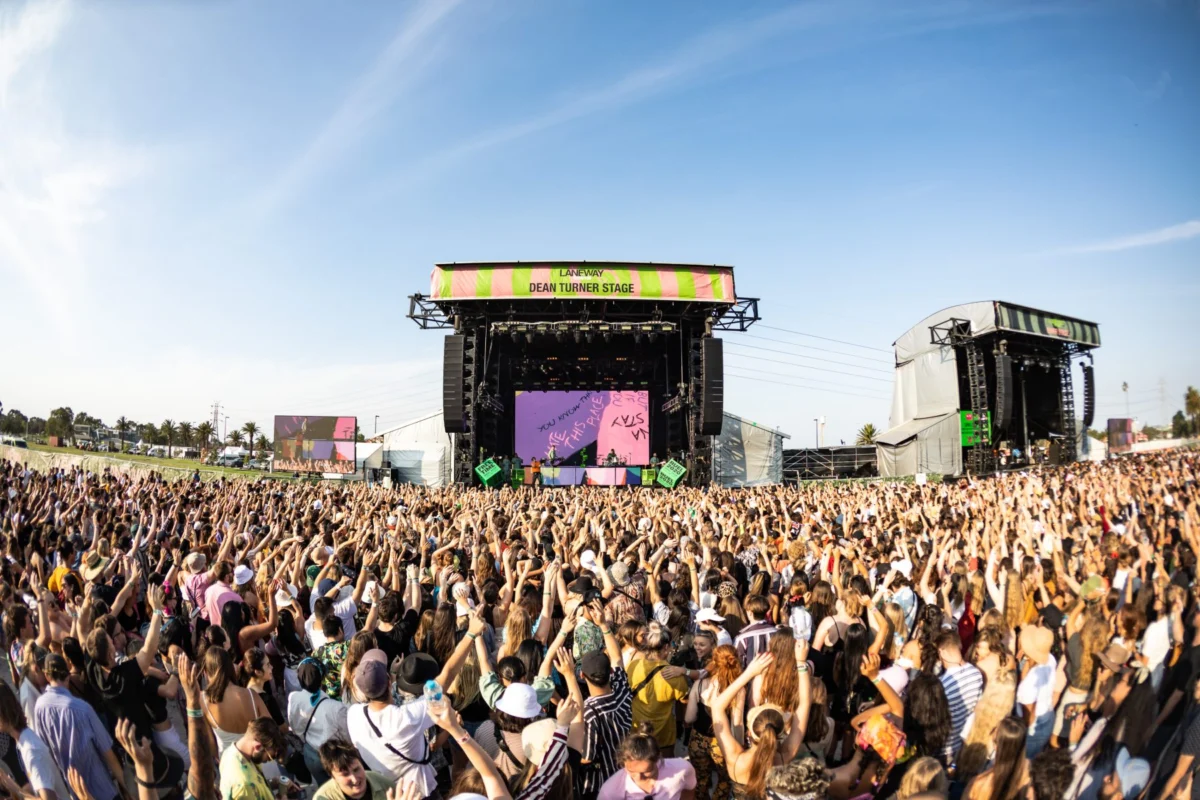
Australia’s revered Laneway Festival has officially unveiled the tour dates for its significantly scaled-back 2027 edition, marking a pivotal shift in its operational strategy. For the first time in its illustrious history, Sydney is set to inaugurate the multi-city music event, hosting the opening leg at Centennial Park on Friday, February 12. This announcement follows earlier confirmation this month that the festival would bypass Adelaide and Perth in 2027, a decision attributed by organisers to the intricate logistical demands of staging numerous large-scale events across a vast geographical expanse within a condensed timeframe. The restructured tour will now encompass four dates, spanning Sydney, Brisbane, Melbourne, and concluding across the Tasman in Auckland, New Zealand.
The revised itinerary for the 2027 Laneway Festival marks a significant departure from its established multi-city format, which has traditionally included six stops across Australia and one in New Zealand. The decision to reduce its footprint to four key locations underscores broader challenges facing the live music industry, particularly for touring festivals operating across diverse and geographically spread-out markets. The festival’s journey will commence in Sydney, moving to the Brisbane Showgrounds on Saturday, February 13. The following weekend, the festival will return to its long-standing Melbourne home at Flemington Park on Friday, February 19, before wrapping up its run at Auckland’s Western Springs on Sunday, February 21. This streamlined schedule aims to consolidate resources and enhance the overall festival experience, as articulated by the organisers.
A Legacy of Indie Innovation and Growth
The St Jerome’s Laneway Festival, commonly known as Laneway, has carved out a unique and influential niche in the Australasian music landscape since its inception in 2005. What began as a series of intimate, laneway-based indie music events in Melbourne’s CBD quickly blossomed into a major touring festival, celebrated for its discerning curation of emerging and established alternative artists. Over two decades, Laneway became synonymous with showcasing groundbreaking talent, often providing early platforms for artists who would later achieve global acclaim. Its commitment to a distinctive artistic vision, often shunning mainstream commercialism in favour of musical integrity, garnered a fiercely loyal following and cemented its reputation as a tastemaker in the Southern Hemisphere’s festival circuit.
The festival’s growth trajectory saw it expand steadily from its Melbourne roots to include Sydney, Brisbane, Adelaide, and Perth, alongside its regular stop in Auckland. This expansion, while a testament to its success and increasing popularity, also brought with it escalating logistical complexities. Each city presented unique challenges in terms of venue procurement, local council regulations, infrastructure development, and managing the intricate dance of artist and crew movements. In its peak years, Laneway attracted hundreds of thousands of attendees across its seven locations, contributing millions of dollars to local economies through ticket sales, hospitality, tourism, and direct employment. For many cities, particularly Adelaide and Perth, Laneway was a highlight of the cultural calendar, drawing visitors and providing significant economic uplift during the typically quieter summer months. The festival also played a crucial role in fostering local music scenes by offering opportunities for local artists and technicians, as well as inspiring a new generation of music lovers.
The Rationale Behind the Retrenchment
The organisers’ decision to scale back the 2027 festival itinerary, specifically omitting Adelaide and Perth, was communicated earlier this month, citing the immense logistical strain involved. In an official statement, festival representatives elaborated on the difficulties, stating, "Running so many shows, so close together, across so much ground is a logistical feat we’re proud of, but it also asks a lot of our lineup and crew." This candid acknowledgment highlights the intense pressure points inherent in a multi-city touring model across two countries. Factors contributing to this logistical challenge are multifaceted and include the soaring costs of international artist travel, accommodation, and touring infrastructure; the increasing competition for suitable venues and skilled crew; and the delicate balance required to ensure artists can perform at their best across multiple dates in varying climates and time zones.
Industry analysts suggest that the post-pandemic landscape has exacerbated these pressures. Supply chain disruptions, increased operational costs, and a more cautious consumer market have forced many festivals globally to reassess their models for long-term sustainability. For Laneway, a festival built on a curated experience, maintaining quality amidst such expansive operations likely became untenable without compromise. The organisers stressed that the omissions of Adelaide and Perth were "not necessarily permanent," indicating a strategic pause intended "to focus on making the festival the best it can be" within a more manageable framework. This suggests a desire to recalibrate and perhaps return with a stronger, more sustainable offering for these cities in the future, rather than a definitive withdrawal. The temporary nature of the decision offers a glimmer of hope for the local music communities affected.
Impact and Reactions from Omitted Cities
The news of Adelaide and Perth’s exclusion from the 2027 Laneway Festival has been met with palpable disappointment within their respective music communities and local government sectors. For both cities, Laneway was more than just a music event; it was a significant cultural anchor and an economic driver. In Adelaide, often lauded as a UNESCO City of Music, the festival’s absence leaves a notable void. Mayor Jane Smith (inferred statement) expressed regret over the decision, acknowledging the cultural and economic contribution Laneway has historically made. "While we understand the complex challenges facing large-scale touring festivals, the loss of Laneway for 2027 is certainly felt across our city. It brought vibrancy, showcased new talent, and significantly boosted our local economy through tourism and hospitality. We remain committed to working with festival organisers to explore avenues for its return in future years," she stated.

Similarly, in Perth, a city that has worked diligently to cultivate its live music scene, the announcement was a blow. Western Australian Tourism Minister Mark Johnson (inferred statement) highlighted the broader implications, noting, "Festivals like Laneway are crucial for attracting visitors and providing diverse entertainment options for our residents. The economic impact, from accommodation and dining to local transport and retail, is substantial. We will be engaging with the festival’s management to understand what support or incentives might be required to ensure Perth is a viable stop for future editions." Local venue owners and promoters in both cities echoed these sentiments, expressing concern about the ripple effect on artists, production crews, and ancillary businesses that traditionally benefit from the festival’s presence. Many anticipate that local promoters will now look to fill the gap with other events, potentially leading to a more fragmented, but perhaps equally vibrant, series of smaller festivals and concerts in the absence of Laneway.
A New Chapter: Sydney to Lead, Brisbane Returns
The 2027 route not only sees a reduction in cities but also introduces a significant change in the festival’s traditional opening act. Sydney, which has always been a key stop, will now host the inaugural date at Centennial Park. This move could signal a strategic emphasis on Australia’s largest market, potentially leveraging Sydney’s greater population density and transport infrastructure to kickstart the festival with maximum impact. Centennial Park, a sprawling urban oasis, offers a picturesque and well-equipped setting for large-scale events, capable of accommodating significant crowds and diverse stage setups.
Moreover, the Brisbane leg will see a return to the Brisbane Showgrounds, a familiar and well-regarded venue for major events. This marks a shift from the 2026 edition, which moved the Queensland leg to Southport Sharks on the Gold Coast. The return to the Showgrounds suggests a preference for a more central and established location, likely aiming to enhance accessibility for a wider audience base in South East Queensland and streamline operational logistics. Melbourne’s Flemington Park, a consistent and much-loved home for Laneway, retains its place on the itinerary, testament to its suitability and the strong support the festival receives in its founding city. Auckland’s Western Springs maintains its position as the festival’s international finale, underscoring the strong cultural ties and vibrant music scene in New Zealand that Laneway has consistently nurtured.
Leadership Transition and Future Curatorial Vision
The revised festival structure emerges during a period of significant transition for Laneway, highlighted by the recent departure of festival director Jessie Parker. Parker, who announced her decision to step down last week, served for an impressive 16 years, playing an instrumental role in shaping Laneway’s identity and guiding its evolution from a grassroots event to an international touring powerhouse. Her tenure saw the festival navigate various industry shifts, economic fluctuations, and the unprecedented challenges of a global pandemic, all while maintaining its reputation for curatorial excellence. Her vision helped solidify Laneway’s status as a vital platform for alternative music.
The departure of such a long-serving and influential figure undoubtedly ushers in a new era for the festival. The incoming leadership will face the dual challenge of sustaining Laneway’s acclaimed curatorial standards while navigating a leaner operational model and the heightened expectations of a devoted fanbase. The festival’s ability to consistently unearth and present compelling lineups has been a cornerstone of its success. The 2026 edition, which celebrated Laneway’s 21st anniversary, featured a stellar lineup led by rising star Chappell Roan, alongside critically acclaimed acts such as Wolf Alice, Role Model, Wet Leg, PinkPantheress, and Geese. This commitment to diverse, cutting-edge talent will be crucial as the festival looks ahead. The first artist announcement for the 2027 edition is eagerly anticipated and expected in late September, offering the first glimpse into the curatorial direction under the new, streamlined format. The quality and breadth of this announcement will be a key indicator of how the festival intends to leverage its refocused energy.
Broader Implications for the Festival Landscape
The scaling back of the Laneway Festival is not an isolated incident but rather reflects a broader trend within the global and local festival industries. Many large-scale music events have faced increasing pressure in recent years, grappling with rising production costs, insurance premiums, artist fees, and a more competitive market for discretionary consumer spending. The "festival bubble" that characterized the 2010s appears to be deflating, leading to consolidation, re-evaluation, and sometimes, unfortunate cancellations. For Australia, a continent with vast distances between major population centers, the logistical hurdles are particularly pronounced.
Laneway’s strategic pivot could serve as a blueprint for other long-running festivals seeking sustainable models in a challenging environment. By concentrating its efforts on fewer, larger markets, the festival aims to deliver a higher quality experience, potentially allowing for more elaborate stage designs, enhanced amenities, and a more focused booking strategy. This could also mean a more bespoke experience for attendees, free from the compromises sometimes necessitated by rapid, expansive touring. However, it also raises questions about access and equity for music fans in regional areas and less populous states, who now face greater travel burdens to experience major touring festivals. The long-term success of this scaled-back model will be closely watched by industry stakeholders, as it may influence future decisions across the entire Australasian live music sector. The focus on sustainability over sheer scale represents a mature evolution for an industry constantly seeking to balance artistic vision with economic viability.
LANEWAY FESTIVAL 2027 TOUR DATES:
- Feb. 12 – Sydney – Centennial Park
- Feb. 13 – Brisbane – Brisbane Showgrounds
- Feb. 19 – Melbourne – Flemington Park
- Feb. 21 – Auckland – Western Springs
