

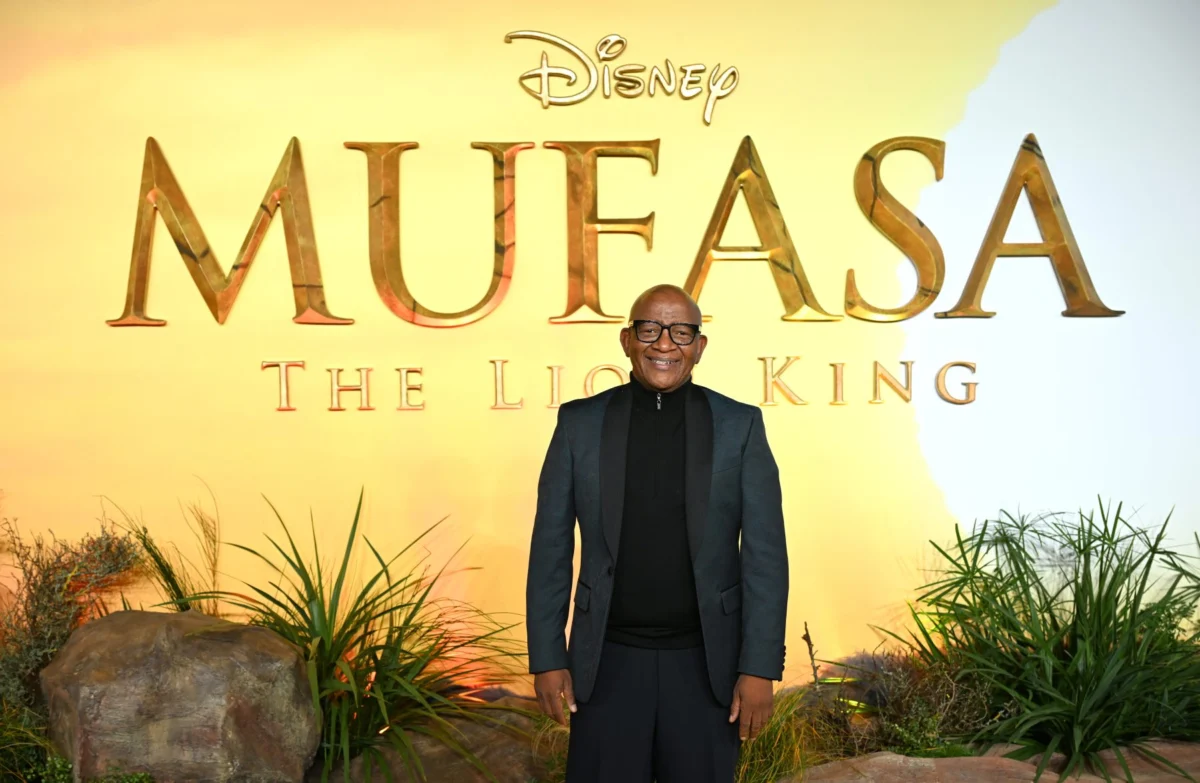
South African composer and performer Lebohang "Lebo M" Morake, globally recognized as the distinctive voice behind the iconic opening chant of "The Circle of Life" from Disney’s The Lion King, has filed a substantial $27 million lawsuit against Zimbabwean comedian Learnmore Jonasi. The legal action, lodged on Monday, March 16, centers on allegations of defamation, libel, and business interference, stemming from a viral podcast clip in which Jonasi offered a significantly simplified and, according to Lebo M, fabricated translation of the beloved Zulu lyrics. The dispute, which has escalated from a social media exchange into a high-stakes legal battle, highlights complex issues surrounding artistic interpretation, cultural representation, and the boundaries of comedic expression in the digital age.
The Genesis of the Dispute: A Viral Podcast Moment
The controversy ignited following Learnmore Jonasi’s appearance last month on the podcast One54 Africa. During the segment, a clip of which subsequently achieved widespread virality across various social media platforms, Jonasi asserted that the renowned opening phrase of "The Circle of Life"—"Nants’ingonyama bagithi Baba"—translates in English to "Look, there’s a lion. Oh my god." This interpretation, delivered by Jonasi, quickly circulated, amusing many but deeply offending the original composer and performer, Lebo M, who views it as a gross misrepresentation of his artistic and cultural contribution.
Lebo M, who not only composed but also famously performed the powerful Zulu chant in both the original 1994 animated The Lion King film and its 2019 photorealistic remake, contends that Jonasi’s translation is not merely inaccurate but deliberately trivializing. According to the lawsuit, filed by Lebo M (whose full name is Lebohang Morake), the chant is far more profound, rooted in a tradition of royal praise poetry, employing metaphor and rich cultural nuance. He asserts that the true, intended translation conveys a message of reverence and homage: "All hail the king, we all bow in the presence of the king." This stark divergence in interpretation forms the core of the defamation claim, with Lebo M’s legal team arguing that Jonasi’s rendition strips the chant of its inherent dignity and artistic merit.
Lebo M’s Allegations: Defamation, Business Interference, and Xenophobia Concerns

The lawsuit seeks a staggering $27 million in damages, alleging that Jonasi’s comments have not only defamed Lebo M but also caused significant business interference, potentially jeopardizing his long-standing and highly lucrative collaborative relationship with Disney. Lebo M has been an integral part of The Lion King franchise since its inception, contributing extensively to the film’s score, its Broadway musical adaptation, and subsequent related projects, cementing his status as a key cultural ambassador for the property. Any perceived tarnishing of his work or reputation could, from his perspective, have severe professional repercussions.
Beyond the financial and professional implications, Lebo M’s complaint includes a deeply personal and alarming dimension: he claims to now "fear for his life due to Xenophobic comments." He further alleges that he has been "confronted and bombarded" with disparaging comments about the podcast clip while on tour with renowned film composer Hans Zimmer in Europe. This element of the lawsuit underscores the intense emotional and psychological toll the viral incident has taken on him, adding a layer of personal safety concerns to the legal battle. The xenophobia claim suggests that Jonasi’s misinterpretation may have inadvertently fueled a narrative that undermines the authenticity and gravitas of African cultural expressions, potentially exposing Lebo M to hostility.
The Defense’s Stance: Comedy and the First Amendment
Lebo M’s claims face considerable legal hurdles, particularly given the broad protections typically afforded to comedic expression under the First Amendment in the United States, where the lawsuit appears to have been filed given the legal arguments presented. The First Amendment broadly shields speech from legal scrutiny and liability for defamation, especially when presented as satire, parody, or opinion. However, Lebo M’s legal counsel, attorney Michael Younge, is attempting to circumvent these free speech protections by arguing that Jonasi "did not frame this as a joke in delivery." Younge contends that Jonasi "presented it as factual knowledge with misguided authenticity to increase exposure and mockery of Lebo M’s creative masterpiece," thereby removing it from the realm of protected comedic commentary. This distinction—between a genuine factual assertion and a humorous exaggeration—will likely be a pivotal point of contention in court.
A Timeline of Escalation: From DMs to Lawsuits
The legal action represents a significant escalation in a dispute that initially played out on social media platforms.

- Early February 2026: Learnmore Jonasi appears on the One54 Africa podcast, where he offers his translation of "Nants’ingonyama bagithi Baba."
- Late February/Early March 2026: The clip of Jonasi’s translation goes viral, garnering widespread attention and sparking online discussions.
- March 4, 2026: Lebo M posts a video on Instagram, expressing his profound disappointment and concern. In the video, he reveals that he had attempted to engage Jonasi directly through private messages to address his concerns. Lebo M stated that Jonasi "brushed him off" and indicated he had been performing the same joke for eight years with no intention of stopping. Lebo M publicly lamented, "It’s rather painful to see an ignorant wannabe comedian promote ignorance and it become so globally powerful. I did try to engage this young man, and he was so arrogant."
- March 14, 2026: Learnmore Jonasi responds with an Instagram video of his own, offering his side of the story. He claimed he was initially receptive to Lebo M’s messages and had hoped they could collaborate on a video to clarify the situation. However, Jonasi stated that he shut down the conversation after the composer allegedly called him "self-hating." Jonasi elaborated, "I realized that I’m not having a conversation with somebody that actually wants to do that. This person is literally not attacking the joke, but my character."
- March 16, 2026: Lebo M formally files the $27 million lawsuit against Jonasi, transforming the public social media spat into a formal legal battle.
A representative for Jonasi did not immediately return a request for comment on Tuesday, March 17, following the filing of the lawsuit.
The Cultural and Artistic Significance of "The Circle of Life"
"The Circle of Life" is not merely a song; it is a global cultural touchstone. Its opening chant, delivered by Lebo M, instantly transports audiences to the African savanna and sets the majestic tone for one of Disney’s most successful and beloved animated films. Released in 1994, The Lion King became a colossal box office success, grossing over $968 million worldwide during its initial run and cementing its place as a cinematic masterpiece. Its enduring legacy led to a highly successful Broadway musical adaptation, which premiered in 1997 and has since become one of the highest-grossing productions in theatrical history, earning billions globally. The 2019 remake further underscored the timeless appeal of the story and its music, with Lebo M once again providing the iconic vocals.
Lebo M’s contribution to The Lion King soundtrack, including "The Circle of Life," "He Lives in You," and other African-infused compositions, earned him widespread acclaim, including a Grammy Award and a Tony Award nomination. He is often credited with bringing authentic African sounds and vocalizations to a global audience through his work with Disney, establishing himself as a crucial bridge between African musical traditions and mainstream entertainment. His role as the "voice of Africa" for Disney is a source of immense pride and cultural responsibility, making any perceived trivialization of his work particularly sensitive. The chant itself, "Nants’ingonyama bagithi Baba," is more than a string of words; it embodies a spiritual and ceremonial greeting to the incoming king, resonating with deep cultural meaning within the Zulu tradition.
Legal Precedents and the Future of Online Comedy
The lawsuit against Jonasi enters a complex legal arena where the lines between protected speech, artistic license, and defamation are frequently debated. Courts often weigh the public’s interest in free expression against an individual’s right to protect their reputation. In cases involving comedians, judges often consider the context in which remarks are made, whether a reasonable audience would perceive them as factual assertions, and if they convey actual malice. While Jonasi’s lawyer will undoubtedly invoke the First Amendment and the nature of comedy as a defense, Lebo M’s legal team will argue that Jonasi crossed a line by presenting his translation as an authentic, factual statement rather than a clear joke or satire, causing tangible harm.

This case could have broader implications for online content creators and comedians, particularly in the age of viral clips and rapid dissemination of information. The dispute highlights the challenges of cultural translation and interpretation in a globalized world, where nuanced cultural expressions can be easily misinterpreted or misrepresented, intentionally or unintentionally, across different linguistic and cultural contexts. The potential for a single viral moment to lead to such significant legal and financial repercussions could compel creators to exercise greater caution, while simultaneously raising concerns about chilling effects on free speech and artistic commentary.
Broader Impact and Implications
The outcome of this lawsuit could set a precedent for how cultural works, especially those rooted in specific linguistic and traditional contexts, are treated in the realm of popular entertainment and comedy. For Lebo M, the suit is not just about financial compensation; it is about defending the integrity of his work, his cultural heritage, and his reputation as a respected artist. His claim of xenophobia also brings into focus the vulnerability of artists from minority or underrepresented cultures when their work is subjected to global scrutiny and potentially disrespectful interpretations.
For Learnmore Jonasi, the lawsuit represents a significant challenge to his comedic career and potentially his financial stability. While comedians often push boundaries, the assertion that his comments were presented as fact rather than jest complicates his defense. The case also serves as a stark reminder of the power and permanence of online content, where a casual remark in a podcast can quickly escalate into a multi-million-dollar legal battle.
As the legal proceedings unfold, the world will be watching to see how the courts reconcile the principles of free speech and comedic license with the imperative to protect artistic integrity, cultural heritage, and individual reputations in an increasingly interconnected and digitally driven world. The resolution of Morake v. Jonasi will undoubtedly contribute to the ongoing global conversation about the responsibilities that accompany public platforms and the delicate balance between humor and respect.
