

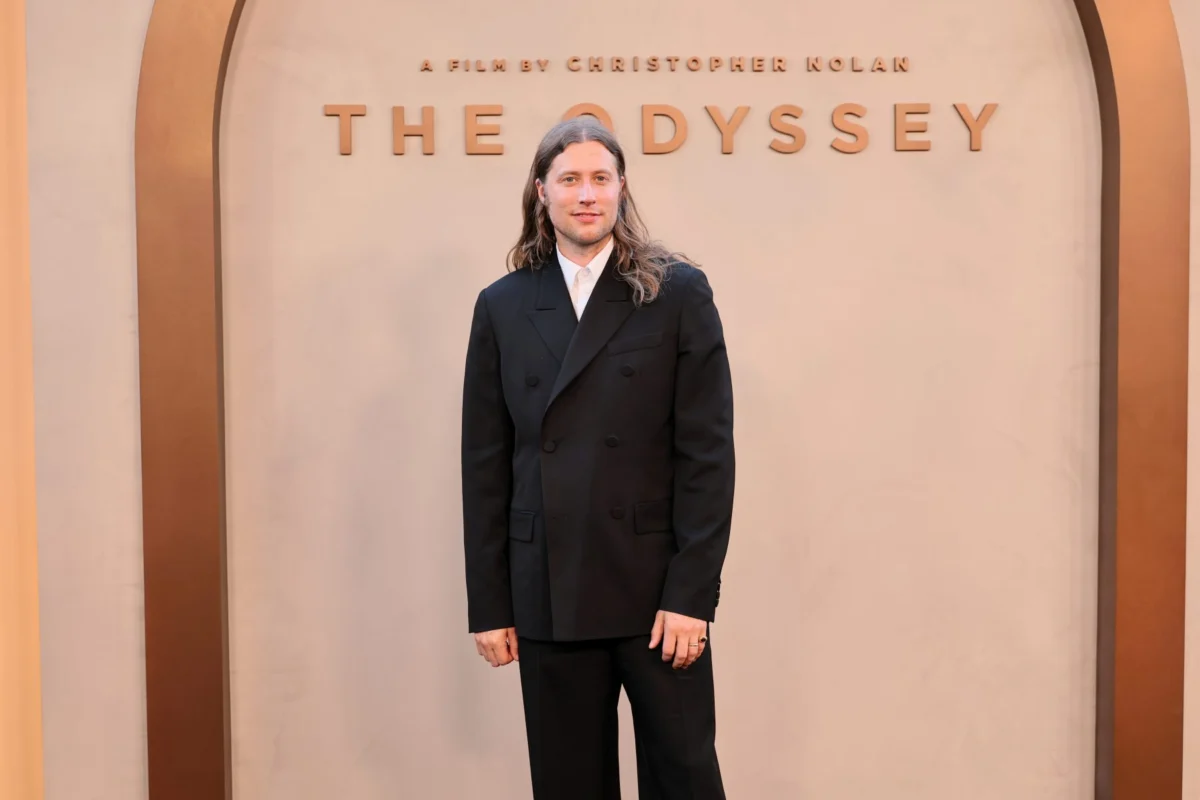
Christopher Nolan’s latest cinematic epic, The Odyssey, has made an immediate and profound impact on the global box office, grossing an astounding $263.8 million worldwide in its opening weekend. This colossal debut, which includes $123.5 million from U.S. and Canadian theaters, according to boxofficemojo.com, not only solidifies the film’s commercial success but also casts a significant spotlight on its acclaimed composer, Ludwig Göransson, whose score is already generating fervent Oscar speculation. As of July 21, 2026, the film’s performance positions it as a major contender for the upcoming awards season, potentially challenging existing records, particularly those recently set by Sinners.
A Monumental Opening for The Odyssey
The Odyssey, a nearly three-hour cinematic journey, premiered to eager audiences on July 14, 2026, with its New York premiere held at AMC Lincoln Square Theater, attended by key figures including Göransson himself. Its opening weekend performance marks one of the strongest debuts of the year, underscoring the enduring appeal of original, large-scale theatrical experiences, especially when helmed by a director of Christopher Nolan’s caliber. The film’s domestic take of $123.5 million reflects a robust turnout across North America, while its international gross of over $140 million highlights its broad global appeal, resonating with diverse audiences worldwide. This immediate financial triumph positions The Odyssey as a definitive commercial success, setting a high bar for subsequent releases in the latter half of 2026. Industry analysts are already dissecting its demographic reach and market penetration, noting its ability to attract both Nolan’s established fanbase and new viewers drawn by the epic scope and critical buzz. Early reports suggest strong word-of-mouth, often a critical factor in a film’s long-term box office trajectory. The film’s robust critical reception, as indicated by its strong scores on aggregation sites like Metacritic, further amplifies its potential for sustained theatrical performance.
Oscar Pundits Gaze Towards the 99th Academy Awards
Beyond its impressive box office numbers, The Odyssey has rapidly become a central topic in early Oscar discussions. The film is widely speculated to be a frontrunner for a multitude of nominations at the 99th annual Academy Awards, with some pundits breathlessly predicting it could equal or even surpass the newly minted record of 16 nominations achieved by Ryan Coogler’s Sinners just months prior. The nominations for this prestigious event are slated to be announced on January 21, 2027, leaving more than five months for the speculative fervor to build. This early and intense buzz is a testament not only to Nolan’s directorial prowess but also to the perceived artistic merit of The Odyssey across various categories, including Best Picture, Best Director, Cinematography, and, crucially, Best Original Score.
The possibility of The Odyssey matching or exceeding Sinners‘ nomination count places it in elite company. The record of 14 nominations, previously held by films like All About Eve (1950), Titanic (1997), and La La Land (2016), was significantly elevated by Sinners. Should The Odyssey indeed reach 16 or more nominations, it would signify a remarkable achievement, reflecting a consensus of excellence across multiple disciplines within the Academy. This level of broad recognition often translates into significant wins, solidifying a film’s place in cinematic history.
Ludwig Göransson: A Maestro’s Unprecedented Ascent
At the heart of much of this Oscar speculation lies Ludwig Göransson, the Swedish composer whose score for The Odyssey is receiving widespread acclaim. Göransson is the common, highly successful link between The Odyssey and Sinners, having won an Oscar for the latter on March 15, 2026. His trajectory in the film scoring world has been nothing short of meteoric. He already holds the distinction of having won three Oscars for Best Original Score, more than any other composer in the 21st Century. His previous wins include 2019 for Ryan Coogler’s groundbreaking Black Panther, 2024 for Nolan’s critically acclaimed Oppenheimer, and most recently, 2026 for Coogler’s aforementioned Sinners. This rapid accumulation of accolades places Göransson in an exclusive pantheon of film composers, demonstrating a consistent ability to craft scores that are both critically lauded and deeply impactful.
Göransson’s distinct compositional style is characterized by its innovative blend of traditional orchestral elements with modern electronic soundscapes, often incorporating world music influences and unique percussive textures. His work frequently features intricate rhythmic patterns and powerful melodic themes that deeply intertwine with the narrative and emotional core of the films he scores. From the Wakandan chants and percussions in Black Panther to the ticking tension and psychological depth of Oppenheimer, and the raw emotional power of Sinners, Göransson consistently demonstrates a chameleon-like ability to adapt his sound while retaining a recognizable artistic signature. His collaborators, including Donald Glover (Childish Gambino) and Ryan Coogler, often praise his immersive approach and willingness to experiment, pushing the boundaries of what film music can achieve. This innovative spirit, combined with a profound understanding of cinematic storytelling, has made him one of the most sought-after talents in contemporary Hollywood.
A Blockbuster Streak Unparalleled in Modern Scoring
The Odyssey marks a significant milestone for Göransson: it is the fifth consecutive film he has scored that has achieved certified blockbuster status. This extraordinary streak underscores not only his artistic prowess but also his commercial viability and his integral role in the success of major studio productions. His output since 2022 paints a clear picture of this unparalleled run:
- Black Panther: Wakanda Forever (2022): Grossing $859.2 million globally, Göransson’s score was praised for its emotional depth and cultural authenticity, building upon his Oscar-winning work for the first film.
- Oppenheimer (2023): A global phenomenon with $975.8 million at the box office, this film earned Göransson his second Oscar for a score that masterfully built suspense and conveyed the profound psychological weight of its subject matter.
- Sinners (2025): Achieving $371.4 million worldwide, this film earned Göransson his third Oscar, with critics highlighting its raw, impactful score that resonated deeply with audiences.
- The Mandalorian and Grogu (2026): A highly anticipated big-screen adaptation from the beloved Star Wars universe, this film brought in $340.6 million, further extending Göransson’s reach into major franchises and demonstrating his versatility.
- The Odyssey (2026): With $263.8 million and counting in its opening weekend, this latest collaboration with Nolan is set to continue the trend, proving Göransson’s scores are not just critical darlings but also powerful box office draws.
This consistent success across diverse genres and franchises positions Göransson as a rare talent whose musical contributions are demonstrably linked to a film’s widespread appeal and financial triumph. Such a sustained run of blockbusters is exceptional for a composer, indicating a unique synergy between his artistic vision and mainstream audience engagement.
Symphony of Collaboration: Göransson and Nolan

The Odyssey represents the third consecutive collaboration between Ludwig Göransson and Christopher Nolan, a partnership that has rapidly become one of the most compelling in contemporary cinema. Their collaboration began with the mind-bending thriller Tenet in 2020, where Göransson crafted a complex, often reverse-engineered score that perfectly mirrored the film’s temporal mechanics. This was followed by the monumental Oppenheimer in 2023, for which Göransson delivered an intensely dramatic and psychologically rich score that earned him his second Oscar.
Nolan has a history of forging strong bonds with his composers. Prior to Göransson, he famously teamed with Hans Zimmer for six films, a collaboration that produced iconic scores for Inception, Interstellar, and Dunkirk, all of which earned Zimmer Oscar nominations. Before Zimmer, Nolan worked with David Julyan on his first four features, including Memento and The Prestige. The transition to Göransson, beginning with Tenet, marked a conscious evolution in Nolan’s soundscapes, moving towards a more experimental, often electronic, and rhythmically driven approach, while still retaining the epic scale and emotional depth characteristic of Nolan’s storytelling.
The synergy between Nolan’s meticulous, grand-scale direction and Göransson’s innovative compositional style has proven incredibly potent. Nolan’s films often demand scores that are not merely background music but integral narrative elements, guiding the audience through complex plots and profound emotional arcs. Göransson’s ability to create immersive, thematic soundscapes that amplify tension, wonder, and human drama aligns perfectly with Nolan’s vision, making their partnership one of the most exciting in Hollywood.
Setting New Records: Oscar History in the Making
While it is still early in the eligibility year for the 99th Academy Awards, the buzz surrounding Göransson’s score for The Odyssey is undeniable. Given his remarkable track record and the film’s dual success with critics and audiences, his score seems all but guaranteed to be a central part of the Oscar conversation for Best Original Score.
If Göransson’s score for The Odyssey secures a nomination, it will mark a significant historical achievement. He would become the first composer to be nominated for Best Original Score in the year immediately following a win in that category since Alexandre Desplat was nominated for Isle of Dogs in 2019, one year after winning for The Shape of Water in 2018. This consecutive recognition highlights a sustained period of creative excellence and industry acknowledgment.
Should Ludwig Göransson ultimately win the Oscar for Best Original Score for The Odyssey on March 14, 2027, he would shatter several significant Academy records, further cementing his legacy as one of the most influential composers of his generation. These potential records include:
- Most Wins in a Decade (21st Century): With a potential fourth win, Göransson would achieve four Oscars for Best Original Score within an eight-year span (2019-2027), an unprecedented rate of wins for any composer in the 21st century, demonstrating unmatched dominance in the category.
- First Composer to Win Back-to-Back Oscars Twice: Having won in 2024 (Oppenheimer) and 2026 (Sinners), a win in 2027 for The Odyssey would mark his second instance of winning consecutive Oscars for Best Original Score, a feat rarely achieved and never before by a contemporary composer in this fashion.
- Youngest Composer with Four Wins: At just 42 years old (born September 1, 1984), a fourth Oscar would make him the youngest composer in Academy history to achieve four wins in the Best Original Score category, surpassing the age at which legendary composers like Alfred Newman or John Williams reached similar milestones.
- Most Wins for a Living Composer (tied): A fourth win would place him in an elite group, potentially tying him with or surpassing other living legends in terms of sheer number of Best Original Score awards, solidifying his position as a contemporary icon.
- Most Wins for a Composer Collaborating with a Single Director (Contemporary Era): If The Odyssey wins, it would be his third Oscar for a Christopher Nolan film, marking a unique distinction for a composer-director partnership in the modern era, reflecting a profound creative synergy that translates into consistent award recognition.
These potential achievements underscore the extraordinary impact Göransson has had on film music in a relatively short period, challenging and rewriting the historical benchmarks for success in the field.
Critical Acclaim and Broader Industry Impact
The critical reception for The Odyssey has been overwhelmingly positive, with particular praise directed at Göransson’s score. Critics have lauded its innovative sound design, emotional resonance, and its seamless integration into Nolan’s ambitious narrative. "Göransson’s score for The Odyssey is not just music; it’s a character in itself, driving the narrative forward with an almost primordial force," remarked a leading film critic for Variety, encapsulating the general sentiment. This critical adoration, combined with the film’s box office dominance, suggests a broader industry impact, reaffirming the importance of original, compelling scores in drawing audiences and elevating cinematic experiences.
The success of The Odyssey and Göransson’s pivotal role in it also reflects a positive trend for the film industry. In an era where streaming services and franchise fatigue often dominate headlines, the robust performance of an original, non-IP driven epic demonstrates that audiences are still willing to flock to theaters for high-quality, ambitious filmmaking. The film’s ability to command such attention and generate Oscar-level buzz so early in its release cycle is a testament to the enduring power of cinematic artistry when executed at the highest level.
Looking Ahead
As the calendar progresses towards the 99th Academy Awards, all eyes will remain on The Odyssey and Ludwig Göransson. The film’s continued box office performance, coupled with the escalating Oscar buzz, positions it as a defining cinematic event of 2026. For Göransson, the coming months will be a period of intense anticipation. Whether he secures a nomination or goes on to win, his indelible mark on contemporary film scoring is already undeniable. His career trajectory, marked by an unprecedented string of blockbusters and Oscar triumphs, continues to redefine the role and impact of a film composer in the 21st century, setting a new benchmark for creative and commercial success in Hollywood.
