

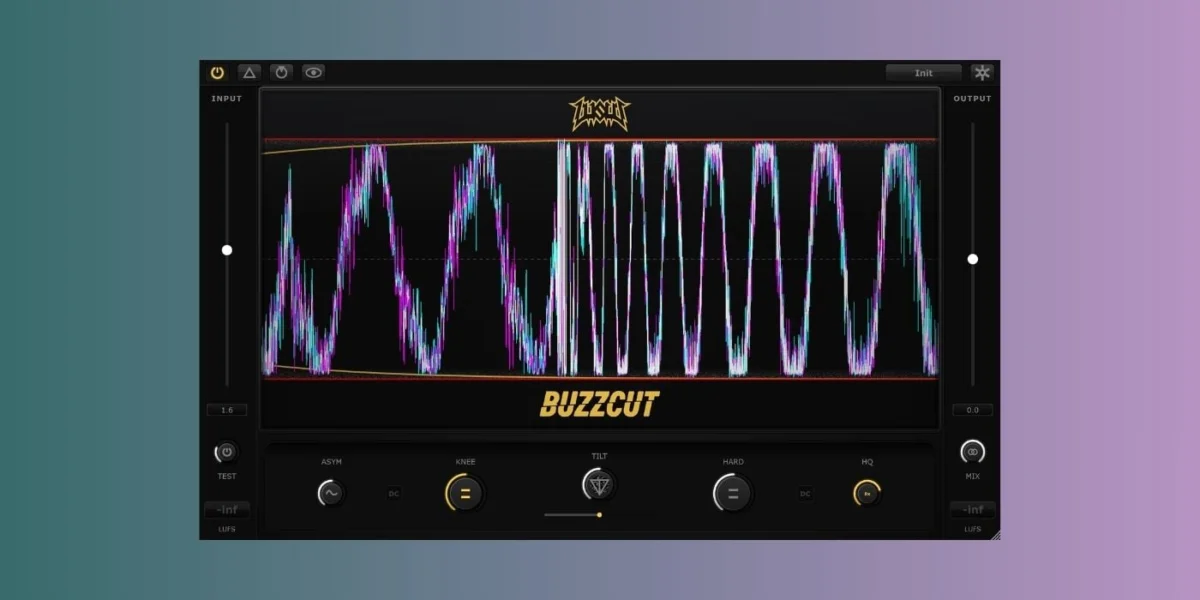
LusiD Music has announced the release of BuzzCut, an innovative clipper plugin introducing a novel approach to achieving loudness in audio production, described by its developer as an "erosion clipper." To mark its launch, five licenses for BuzzCut are being offered through an exclusive giveaway, alongside a limited-time 30% discount for readers of Bedroom Producers Blog (BPB) using the code “BPB30.” The initiative provides audio engineers and music producers with an opportunity to acquire a tool that promises to redefine how digital audio peaks are managed, aiming to deliver louder masters while preserving critical sonic integrity.
The giveaway offers a direct pathway for participants to experience BuzzCut’s unique capabilities. Prospective entrants are required to submit their email address via a dedicated Giveaway Form. This action simultaneously registers them for the giveaway and subscribes them to the BPB newsletter. For individuals already subscribed to the newsletter, re-entry of their email address is necessary to ensure their participation in the drawing. Winners of the five BuzzCut licenses are scheduled to be announced on March 30th, creating anticipation within the music production community. This promotional strategy not only generates immediate interest in the new plugin but also expands the reach of BPB’s informational platform, fostering a symbiotic relationship between the developer, the publication, and the end-users.
Unveiling the Erosion Clipper: A New Paradigm in Loudness
At the core of BuzzCut’s innovation is its designation as an "erosion clipper," a term coined by its developer, Dave Scarlett, also known as LusiD. Traditional digital clippers typically operate by enforcing a fixed, hard ceiling, abruptly truncating any signal peaks that exceed a predetermined threshold. While effective at increasing perceived loudness, this method often introduces harsh tonal aliasing, a form of distortion that can degrade the audio quality, particularly at higher clipping levels. This aliasing manifests as unwanted frequencies that were not present in the original signal, often perceived as brittle or digital harshness.
BuzzCut diverges significantly from this conventional approach. Instead of a static ceiling, it employs a dynamic system that modulates the clipping threshold with shaped noise on a per-sample basis. This sophisticated modulation process aims to convert the undesirable harsh tonal aliasing, characteristic of hard clipping, into broadband noise. The underlying principle draws a parallel to the well-established digital audio technique of dithering, which is used to mask quantization distortion by introducing a small amount of random noise. Just as dithering effectively pushes quantization errors below the threshold of audibility or converts them into a less objectionable form of noise, BuzzCut endeavors to transform the grating artifacts of clipping into a more acoustically natural broadband noise.
The practical implication of this "erosion" technique is a clipper that allows audio engineers to push their mixes and masters to higher perceived loudness levels before the sound quality begins to deteriorate. By mitigating the harshness associated with traditional clipping, BuzzCut promises to retain more of the original signal’s stereo depth and transient information. This preservation of spatiality and dynamic nuance is a critical advantage in modern audio production, where the pursuit of loudness often comes at the cost of these essential sonic attributes. The ability to achieve competitive loudness without the typical sonic compromises represents a significant step forward in the digital clipping landscape.
The Genesis of BuzzCut: Developer’s Vision and Technical Innovation
Dave Scarlett, the mind behind LusiD Music, developed BuzzCut out of a clear understanding of the challenges faced by audio professionals in the ongoing "Loudness Wars." For decades, music producers and mastering engineers have grappled with the demand for increasingly louder tracks, driven by competitive pressures in broadcast, streaming, and commercial releases. While limiters and clippers are essential tools in this pursuit, Scarlett recognized a persistent limitation: the trade-off between loudness and sonic fidelity, particularly concerning the harsh aliasing generated by conventional clipping.
Scarlett’s vision was to create a clipping solution that transcended these limitations, offering a more musical and less destructive path to loudness. This led to the development of the "erosion" concept, an innovative blend of signal processing techniques designed to intelligently manage peak transients. The analogy to dithering is not merely conceptual but reflects a deep understanding of psychoacoustics – how the human ear perceives and processes sound. By converting undesirable tonal artifacts into broadband noise, BuzzCut aims to exploit the ear’s tolerance for certain types of noise while minimizing its sensitivity to harsh, static distortions. This focus on the perceptual quality of loudness, rather than just raw decibel levels, underscores the thoughtful engineering behind BuzzCut.
The development process likely involved extensive research into digital signal processing, psychoacoustic modeling, and iterative testing to refine the noise-shaping algorithms. Scarlett’s decision to offer BuzzCut at an early access price of €49 (with a regular price of €99) signals a commitment to gathering user feedback from the audio community. This phased release strategy is common among independent developers, allowing for real-world validation and further refinement based on the diverse applications and workflows of early adopters. The generous trial period, lifetime license, absence of iLok dependency, and a 30-day money-back guarantee further demonstrate confidence in the plugin’s performance and a user-centric development philosophy.
Deep Dive into BuzzCut’s Architecture and Features
BuzzCut’s user interface is designed for intuitive operation, centered around a visually informative DAW-synced dual-channel oscilloscope. This real-time visual feedback is crucial for understanding the plugin’s impact on the audio waveform, displaying precisely what is happening to both the left and right channels as the signal is processed. This immediate visual representation empowers users to make informed adjustments and observe the effects of their settings dynamically.
The plugin incorporates a sophisticated three-stage clipping architecture:
- Exponential Soft Clipper: This initial stage focuses on gently compressing peaks rather than abruptly cutting them. An exponential curve allows for a smoother, more musical saturation before the signal reaches the harder clipping stages, helping to preserve transients and add harmonic richness.
- Erosion Engine: This is the core of BuzzCut’s unique processing. Here, the shaped noise modulation is applied on a per-sample basis, actively converting harsh tonal aliasing into broadband noise, as previously described. This stage is where the plugin differentiates itself from conventional clippers, delivering its signature sound.
- Brick-Wall Hard Ceiling: A final, uncompromising hard ceiling ensures that no peaks exceed 0dB, providing absolute peak control necessary for mastering and preventing inter-sample peaks that can occur downstream in digital-to-analog conversion.
A key aspect of BuzzCut’s usability is the ability to directly drag the clipping thresholds on the oscilloscope. This interactive control simplifies the process of shaping the audio signal, allowing users to intuitively grasp the relationship between their adjustments and the resulting waveform.
Beyond its core erosion functionality, BuzzCut boasts a comprehensive suite of features designed to enhance its versatility and precision:
- Asymmetric Mode: This advanced mode allows for independent wave-shaping curves to be applied to positive and negative signal polarities. By introducing asymmetry, the plugin can generate even-order harmonics, imparting a desirable warmth and character often associated with analog tube amplification. This feature extends BuzzCut’s utility beyond pure loudness maximization into creative saturation and tone shaping.
- Oversampling: Users can select up to 16x oversampling, available in both linear phase and minimum phase modes. Oversampling is critical for reducing aliasing artifacts that can arise from non-linear processing, especially at higher gain reductions. The inclusion of True Ceiling protection ensures that even with oversampling, no peaks sneak past the 0dB mark, maintaining absolute control over the output level.
- Multi-stage RMS and LUFS Auto-Gain Matching: These features facilitate objective comparison of processed and unprocessed signals by automatically compensating for perceived loudness differences. This is invaluable for making critical decisions during mixing and mastering without being deceived by "louder always sounds better" bias.
- Delta Monitoring: This powerful tool allows users to listen exclusively to the signal that is being removed or altered by the plugin. By isolating the processed "delta" signal, engineers can precisely identify and understand the impact of BuzzCut’s algorithms, aiding in fine-tuning and ensuring transparent processing.
- Dry/Wet Mix: A classic control for parallel processing, enabling users to blend the processed signal with the original dry signal. This is particularly useful for subtle saturation, gentle peak shaping, or preserving the original dynamics while adding character.
- Test Tone Generator: An integrated utility for calibration, signal analysis, and troubleshooting.
- Factory Presets: 12 professionally designed factory presets provide starting points and showcase the plugin’s capabilities across various applications.
- Zero-Latency Core Processing: Ensures that BuzzCut can be used effectively in real-time mixing and tracking scenarios without introducing noticeable delay.
Beyond Loudness: Creative Sound Design Applications
While BuzzCut’s primary function addresses the challenge of loudness, its unique "erosion" engine and versatile features open up significant possibilities for creative sound design. The plugin’s ability to transform tonal aliasing into broadband noise, combined with its asymmetric mode and various clipping stages, allows for a wide palette of sonic textures.
For electronic music producers, particularly those working with heavy bass sounds, BuzzCut can be a transformative tool. Bass frequencies often present the greatest challenge in achieving loudness without muddiness or harsh distortion. By shaping the transients and converting unwanted artifacts into a more palatable noise, BuzzCut can help basslines cut through a mix with power and clarity, while also introducing interesting harmonic content. The range of tones achievable, from subtle warmth to aggressive saturation, makes it ideal for crafting unique bass patches or enhancing existing ones.
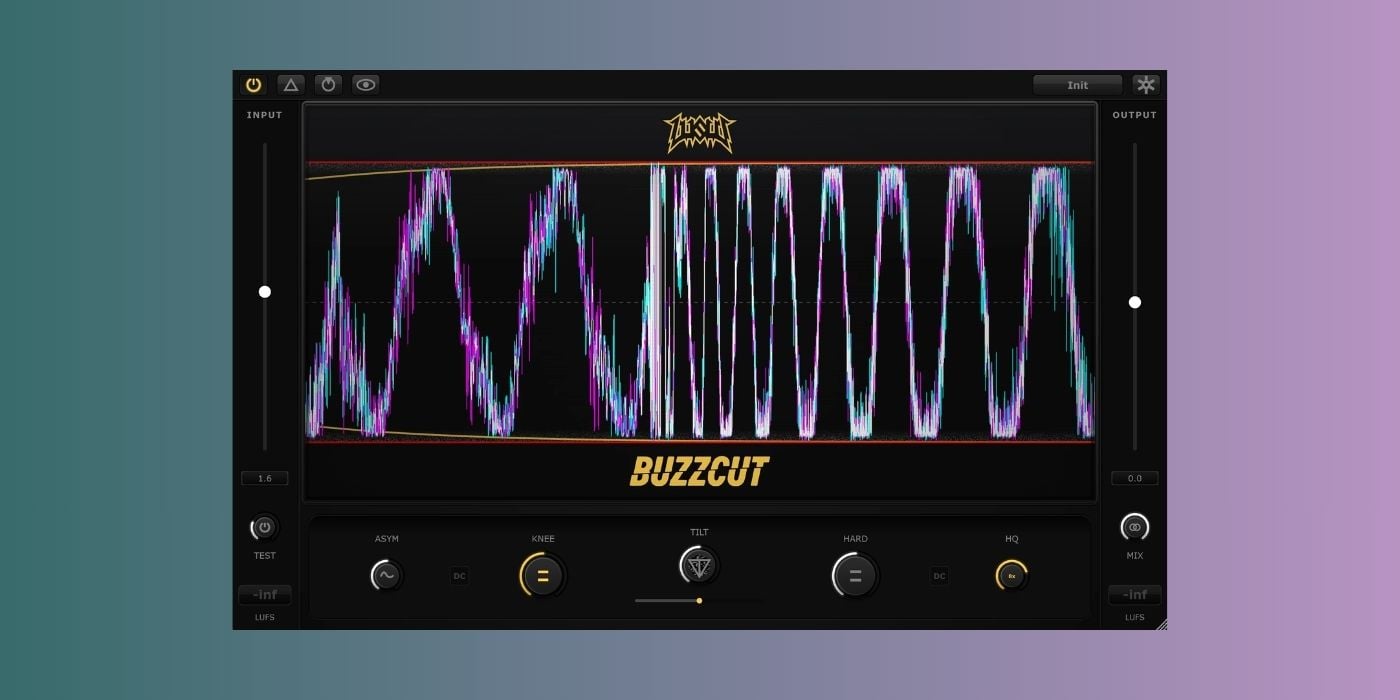
In cinematic sound design, BuzzCut can be applied to elements such as impacts, risers, and sound effects to add weight, grit, and character. The ability to manipulate transients and introduce controlled noise can make subtle sounds more impactful or transform mundane audio into something dramatic and textured. For instance, a drum hit can be given more punch and sustain, or a synthesized pad can be imbued with a unique, evolving texture by experimenting with the erosion engine and asymmetric clipping. The plugin’s real-time oscilloscope aids in visualizing these transformations, making it an intuitive tool for sonic experimentation.
Furthermore, its application can extend to guitar and vocal processing, where subtle saturation and harmonic enhancement can add presence and warmth. The ability to generate even-order harmonics in asymmetric mode mimics the characteristics of analog tube gear, offering a digital pathway to achieving classic analog warmth without the associated hardware. BuzzCut positions itself not just as a utilitarian mastering tool but also as a versatile creative effect for various stages of music production.
The Loudness Wars Revisited: Context for Innovation
The development of tools like BuzzCut must be understood within the broader historical context of the "Loudness Wars" – an informal arms race in the music industry to produce records that are perceived as louder than their competitors. This phenomenon, largely driven by advancements in digital audio and the proliferation of different playback mediums, has had a profound impact on mixing and mastering practices since the 1990s.
The pursuit of loudness often led to excessive compression and limiting, resulting in a reduction of dynamic range and a phenomenon known as "brickwalling." While achieving competitive loudness, this approach frequently sacrificed the natural dynamics, punch, and clarity of the music, leading to "fatigue" for listeners and a perceived degradation of audio quality. Traditional clippers, used to shave off peak transients before hitting a limiter, contributed to loudness but often introduced harsh digital artifacts when pushed aggressively.
In recent years, there has been a growing movement towards more dynamic masters, partly influenced by the adoption of loudness standards (e.g., LUFS for streaming platforms) that penalize overly loud, compressed tracks. However, the fundamental desire for music to sound impactful and "present" remains. This creates a continuous demand for advanced tools that can achieve competitive loudness without succumbing to the sonic compromises of the past. BuzzCut, with its "erosion clipper" concept, represents an evolutionary step in this ongoing quest. By offering a method to manage peaks that converts harsh artifacts into less objectionable broadband noise, it provides engineers with a new weapon in their arsenal, allowing them to push boundaries while striving for greater fidelity. It acknowledges the need for loudness but seeks to achieve it through intelligent, psychoacoustically informed processing rather than brute-force compression.
Market Dynamics: Pricing, Availability, and Strategic Promotion
BuzzCut enters a highly competitive audio plugin market, characterized by a vast array of saturation, clipping, and limiting tools from both established companies and independent developers. Its early access pricing of €49, significantly lower than its planned regular price of €99, is a strategic move to attract early adopters, generate initial sales, and foster a community of users who can provide valuable feedback. This pricing model encourages engagement and allows LusiD Music to refine the product based on real-world usage before its full commercial launch.
The bundled promotional offer with BPB — five giveaway licenses and an exclusive 30% discount code ("BPB30") — is a targeted marketing strategy. BPB, as a prominent platform for independent music producers and audio enthusiasts, offers direct access to a key demographic actively seeking new and innovative production tools. Such collaborations are mutually beneficial: LusiD Music gains significant exposure and direct sales, while BPB provides its readership with exclusive access to cutting-edge technology and cost-saving opportunities.
From a technical availability standpoint, BuzzCut supports widely used plugin formats: VST3 and AU. This ensures compatibility with major Digital Audio Workstations (DAWs) on Windows (version 10 and above) and macOS (Monterey and above) operating systems. The planned support for AAX format further indicates a commitment to reaching a broader professional audience, particularly those utilizing Avid Pro Tools. The absence of iLok dependency is a user-friendly decision, simplifying the authorization process and reducing potential friction for customers. The 14-day free trial and 30-day money-back guarantee underscore the developer’s confidence in the product and mitigate financial risk for potential buyers, further encouraging adoption.
The Role of Community Engagement: BPB and the Independent Producer
Bedroom Producers Blog plays a crucial role in the ecosystem of music technology, particularly for independent artists and home studio enthusiasts. By consistently reviewing new software, hardware, and techniques, and by facilitating access to deals and giveaways, BPB acts as a vital bridge between developers and a vast, engaged community. The collaboration for the BuzzCut launch exemplifies this dynamic.
For independent producers, access to high-quality, innovative tools is paramount. However, budget constraints often limit their ability to invest in every new piece of software. Giveaways like the BuzzCut license drawing, coupled with exclusive discounts, democratize access to advanced technology. This enables a wider range of producers to experiment with tools that might otherwise be financially out of reach, fostering creativity and potentially leading to breakthroughs in their own music.
Furthermore, the newsletter subscription tied to the giveaway entry creates a sustained channel for communication. BPB can continue to inform its audience about updates to BuzzCut, future products from LusiD Music, and other relevant news in the audio production world. This continuous engagement builds a loyal readership and helps cultivate an informed community that is eager to adopt and discuss new technologies. The feedback generated from early users, particularly those who win licenses or purchase at a discount, can be invaluable for developers like Dave Scarlett, guiding future updates and product development.
Broader Implications for Audio Production
The introduction of plugins like BuzzCut signifies a continuous evolution in digital audio processing. As computing power increases and algorithmic sophistication grows, software is increasingly able to tackle challenges once thought intractable or exclusively the domain of analog hardware. BuzzCut’s "erosion clipper" concept pushes the boundaries of how digital clipping is understood and applied, potentially influencing future designs for limiters, saturators, and other dynamics processors.
The emphasis on psychoacoustically informed processing – converting undesirable artifacts into perceptually less offensive noise – points towards a broader trend in audio software development. Future tools may increasingly focus on how the human ear interprets sound, rather than purely on objective measurements, leading to more "musical" and less sterile digital processing. This could lead to a renaissance in achieving loudness with greater fidelity and dynamic retention across all genres of music.
Ultimately, BuzzCut empowers a new generation of producers and engineers. By offering a sophisticated yet intuitive tool for loudness and sound design, it lowers the barrier to entry for achieving professional-grade results. This innovation, combined with strategic pricing and community engagement, contributes to a vibrant and evolving landscape of music technology, continually pushing the creative and technical possibilities for audio production worldwide.
The opportunity to acquire BuzzCut at an early access price of €49, with an additional 30% discount using the code BPB30, or potentially win one of five free licenses, represents a significant event for the audio production community. The giveaway form is accessible via the provided link, and more detailed information about BuzzCut can be found on the LusiD Music website. As the March 30th announcement date approaches, anticipation builds for what this innovative "erosion clipper" will bring to the future of loudness and sound design.
