

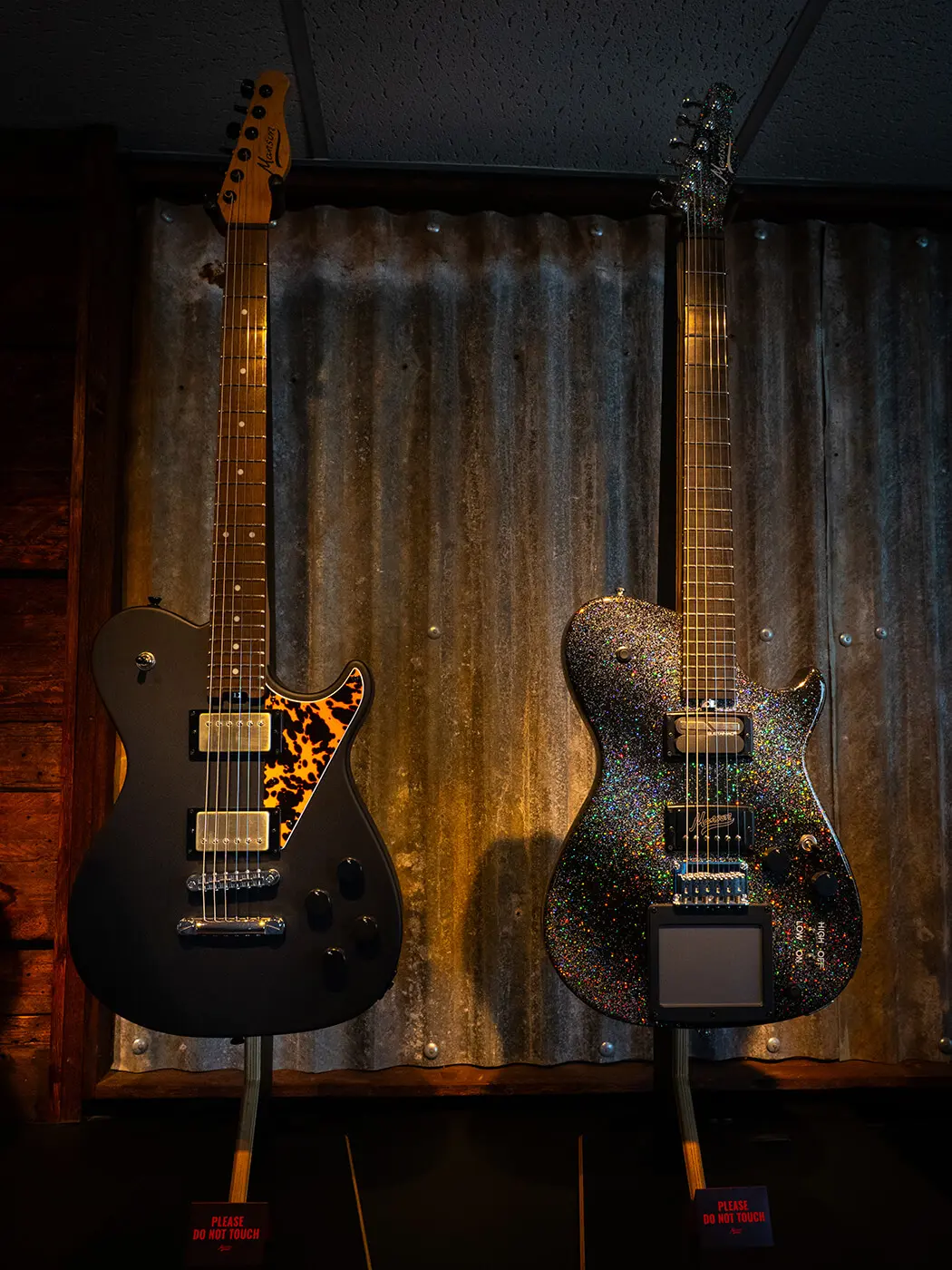
The latest triumph for Manson Guitars, ironically, began with its owner, Matt Bellamy, failing a simple test. During a recent visit to the brand’s newly unveiled showroom and expanded factory in Devon, UK, the Muse frontman was challenged to distinguish his original, battle-worn Manson 007 guitar from a meticulously crafted, super-limited replica, the Black Edition, released last year. Despite years of playing the original on global stages and in recording studios, Bellamy admitted to selecting the wrong instrument, a testament to the unparalleled accuracy and craftsmanship that has become a hallmark of the boutique guitar manufacturer. This anecdote underscores a pivotal moment for Manson Guitars, showcasing not only its technical prowess in replication but also the ambitious vision driving its evolution under Bellamy’s ownership since 2019.
The incident, which Bellamy recounted with a chuckle from the new Devon headquarters, highlights the company’s commitment to precision. The Black Edition replica, a near-perfect recreation down to every ding and crack, commanded a five-figure price tag and sold out almost immediately upon release. This commercial success, alongside the recent factory expansion in Ashburton designed to scale UK operations and meet burgeoning demand, signifies Manson Guitars’ transformation from a revered custom shop into a formidable, innovative force in the high-end guitar market.
A Legacy of Innovation: From Exeter Workshop to Global Stage
Manson Guitars’ journey is deeply intertwined with Matt Bellamy’s career. The relationship began decades ago when a young Bellamy frequented Hugh Manson’s Exeter workshop, seeking instruments that would push the boundaries of conventional guitar design. Hugh Manson, a legendary luthier, was renowned for his bespoke creations and willingness to integrate experimental electronics into guitars, making him an ideal collaborator for Bellamy’s innovative spirit. This partnership blossomed, with Manson crafting many of Bellamy’s iconic instruments, which became central to Muse’s distinctive sound and electrifying live performances.

Bellamy’s early Manson guitars were not merely aesthetic departures; they were technological marvels, integrating onboard effects, MIDI controllers, and even a Korg Kaoss Pad directly into the body. This pioneering approach was born out of necessity – as a singer-guitarist in a three-piece band without dedicated technicians in its formative years, Bellamy sought ways to control his sound and effects without being tethered to a cumbersome pedalboard. This philosophy of integration and innovation laid the groundwork for the brand’s future trajectory.
In 2019, Bellamy solidified his commitment to the brand by acquiring a majority stake, transitioning from a primary client and endorser to its strategic owner. This move was widely seen as a natural progression, codifying a rare symbiosis between artist and brand. Industry analysts noted that such an acquisition by a high-profile musician was a significant endorsement, promising a new era of growth and creative direction for Manson Guitars, which had already established a reputation for quality and bespoke design, also counting Led Zeppelin bassist John Paul Jones among its esteemed clientele.
Strategic Expansion and Market Positioning
The recent opening of Manson’s new artist showroom, situated above an expanded factory facility in Ashburton, marks a critical milestone in this post-acquisition era. The showroom itself is a veritable museum of Bellamy’s musical history, adorned with iconic instruments like the "GEO" mask guitar and an original DeLorean guitar, alongside rare prototypes. Bellamy expressed awe at seeing his history laid out, noting, "It’s like a museum of my history." The factory expansion, meanwhile, addresses the "considerable demand" the brand has experienced in recent years, a direct result of Bellamy’s amplified vision and global reach. This strategic move aims to significantly increase Manson’s UK production capacity, positioning the brand to cater to a growing international market hungry for its unique blend of craftsmanship and innovation.
The decision to expand manufacturing in the UK, amidst global trends of outsourcing, highlights Manson’s commitment to retaining its artisanal roots and quality control. This approach resonates with a segment of the market that values provenance and bespoke artistry, allowing Manson to maintain its premium pricing and exclusive appeal. The instant sell-out of the five-figure Black Edition replica serves as concrete evidence of this market demand and the brand’s strong positioning in the luxury instrument sector.

Diversifying the Artist Roster and Embracing New Talent
While Bellamy’s instruments remain central to Manson’s identity, a key strategic objective under his ownership has been to diversify the artist roster beyond its foundational figures. Bellamy explicitly stated his desire to see "a few other guitars on the wall that aren’t mine" in the new showroom. This vision has translated into concrete actions, with recent signature models launched for artists such as Skindred’s Mikey Demus and a collaboration with Adam "Nolly" Getgood for the Oryx guitar.
Perhaps most tellingly, Manson Guitars is actively developing models with Blur’s Graham Coxon and, notably, online guitar sensation Emi Grace. Bellamy personally discovered Grace through Instagram, a discovery method he champions as "a very 2026 way for an artist to be discovered." He sees "Instagram-type players" like Grace as "the future," noting that this new paradigm allows instrumentalists to forge viable careers without necessarily adhering to traditional band structures or songwriting roles. This perspective reflects a keen awareness of evolving music industry dynamics and a proactive embrace of digital platforms for artist discovery and brand association. By bringing in "new younger guitarists," Bellamy aims to cultivate fresh faces that can become as synonymous with the Manson brand as he is, ensuring long-term relevance and appeal across new demographics.
The "Clean Slate" Philosophy and Future Technological Frontiers
Bellamy’s enduring design philosophy, which began with Hugh Manson, centers on the concept of a "clean slate." His early rejection of traditional guitar shapes like the Telecaster, Stratocaster, or Les Paul stemmed from a desire to escape the historical baggage and associated musical styles these instruments carried. "Every time I picked up a Tele, a Strat, a Les Paul, I just found myself playing music associated with those instruments," he explained. This led to the development of unique Manson body shapes that offered him a "blank canvas" for musical expression, unburdened by preconceptions. This ethos of distinctiveness continues to guide Manson’s product development, fostering an environment where innovation is prioritized over replication of existing designs.

Looking ahead, Bellamy is determined to push technological boundaries further. He confidently declares a desire to "update the tech in the guitar a little bit, and come up with some new ideas for that." His most ambitious proposal involves integrating Artificial Intelligence (AI) components into guitars, envisioning a future where players can "prompt a guitar to sound a certain way." While acknowledging the nascent stage of this technology in the guitar world and potential challenges with sound quality and integration, he points to existing AI in the pedal realm as a precursor. The idea of a "prompting synthesiser thing" where a digital prompt triggers an analogue output is particularly intriguing to him, suggesting a hybrid future for musical instruments.
This foray into AI is not without its controversies in the broader music industry, where concerns about artistic integrity and human displacement are prevalent. However, Bellamy approaches AI with a pragmatic, albeit experimental, mindset. He believes that while AI might streamline sound creation, it will ultimately amplify the value of human authenticity. He observes a generational shift, particularly among his children, who are "gravitating towards the real so much more now because half of what they see on their feeds now is AI." This leads him to a profound conclusion: "I think live music is going to be trending upwards, with real musicians playing… because it’s the only thing we know is real." This analysis positions Manson Guitars not just as a technology innovator, but as a brand acutely aware of the evolving human relationship with art and authenticity in a digitally saturated world.
Expanding Horizons: Pedals, Amps, Bass, and Acoustics
The second decade of Manson Guitar Works under Bellamy’s leadership is marked by a clear strategy of diversification and collaboration. Beyond guitars, the brand has ventured into effects pedals, collaborating with ThorpyFX on the Supermassive Black Fuzz, which is set for a second, tweaked run. Discussions are also underway for an "experimental" pedal with Graham Coxon, signaling an ongoing commitment to expanding their sonic toolkit.
New guitar models like the Oryx eight-string and the "Wow! guitar" (a red MB model tied to Muse’s album, The Wow! Signal) are in the pipeline, catering to modern playing styles and evolving musical genres. Bellamy also sees significant potential in adjacent markets. The question of amplifiers, for instance, looms large. While acknowledging the need for partnerships and manufacturing considerations, Bellamy envisions Manson-branded amps that are either "hyper hand-wired tube thing" or "something really on the futuristic side, like an AI prompt amp." The objective remains consistent: to bring something genuinely "innovative and different" to the market, rather than simply slapping a brand name on a generic product.

Further expansion plans include a concerted effort to grow the bass guitar division, aiming to attract "really amazing bass players" to the Manson fold, building on the legacy established with John Paul Jones. Even the acoustic market, an area Manson has "never really tried" to commercialize, is on the radar. Bellamy referenced an early acoustic prototype made for him, indicating a foundational interest in exploring electro-acoustic solutions that align with his performance needs. This comprehensive expansion strategy reflects a holistic vision for Manson Guitars to become a broader purveyor of high-quality, innovative musical instruments across various categories.
The Enduring Power of Loyalty and Community
Reflecting on his journey with Manson, spanning the bulk of his musical career and now eight years as an owner, Matt Bellamy consistently returns to one core driver: the passion of the fanbase. "I just love how the people love these guitars," he smiles. "You know, I thought it was just my thing! But we have this really loyal fan base, and even when times are rough, the economy is, like they are now, they still have this enthusiasm for the guitars – that’s what keeps us going."
This sentiment underscores a crucial aspect of Manson Guitars’ success: its ability to cultivate a dedicated community. In an increasingly commoditized market, the loyalty and enthusiasm of its clientele act as a powerful differentiator. It’s a testament to the brand’s enduring appeal, built on a foundation of bespoke craftsmanship, technological innovation, and a strong, authentic connection to its iconic owner. As Manson Guitars looks to the future, charting new territories in AI integration, diverse artist collaborations, and broader instrument categories, this unwavering loyalty will undoubtedly remain its most valuable asset, ensuring its continued growth and influence in the global music industry.
