

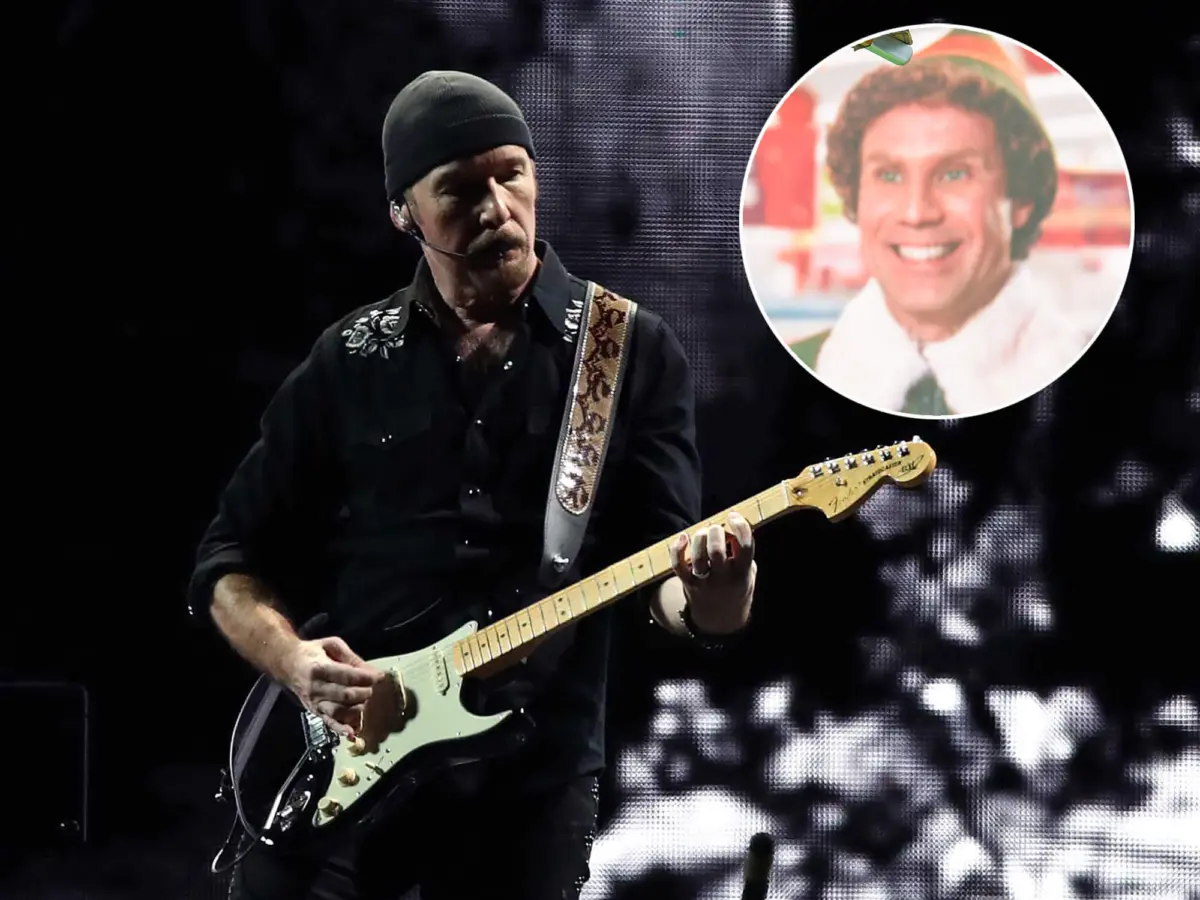
In a surprising disclosure that has captivated both film enthusiasts and music fans, U2 guitarist The Edge, born David Evans, is reported to have penned a complete screenplay for a sequel to the beloved 2003 holiday film, Elf. This intriguing piece of cinematic history, however, remains unproduced, existing only as a fascinating anecdote from Hollywood’s annals of "what if." The revelation surfaced during a recent episode of "Obsessed: The Podcast," where comedian Andy Richter, who played Morris in the original Elf, shared the extraordinary story, shedding light on a creative endeavor by one of rock music’s most iconic figures.
The Unexpected Revelation: Andy Richter’s Account
Andy Richter, known for his long-standing collaboration with Conan O’Brien and his role in Elf, recounted the genesis of this peculiar script during his podcast appearance. According to Richter, Elf producer Shauna Robertson received an unsolicited message conveying The Edge’s interest in discussing an Elf sequel. Richter quoted the message directly: "Somebody reached out to her and said The Edge from U2 has written a sequel to Elf, and he wants to talk to you about it."
The comedian described the situation as "the weirdest story," emphasizing the unexpected nature of the rock star’s foray into screenwriting for such a distinct cinematic property. Richter confirmed that the script was "apparently fully written," indicating a substantial commitment from The Edge to this creative pursuit. Despite the initial intrigue and Robertson’s willingness to meet with the U2 guitarist, the project ultimately "petered out and never happened." The exact reasons for its discontinuation remain undisclosed, leaving a tantalizing gap in the narrative of a potentially unique holiday film. Richter expressed his personal desire for the script to "make the light of day," underscoring the curiosity surrounding such an unusual creative crossover.
The Enduring Legacy of Elf (2003): A Modern Holiday Classic
To fully appreciate the significance of a potential Elf sequel, it is crucial to revisit the original film’s monumental impact. Released in November 2003, Elf quickly cemented its status as a quintessential holiday movie, beloved by audiences worldwide. Directed by Jon Favreau and starring Will Ferrell as Buddy, a human raised as an elf at the North Pole who travels to New York City to find his biological father, the film garnered critical acclaim for its heartfelt humor, imaginative premise, and Ferrell’s iconic, committed performance.
The film’s production budget was approximately $33 million, a modest sum for a major studio release. However, its box office performance far exceeded expectations, gross grossing over $220 million globally. Beyond its commercial success, Elf achieved a rare feat: it became an instant classic, entering the annual rotation of holiday viewing for millions of families. Critics praised its ability to blend genuine warmth with laugh-out-loud comedy, avoiding the cynicism often associated with modern holiday fare. Its themes of innocence, wonder, family, and the spirit of Christmas resonated deeply, establishing Buddy the Elf as an enduring cultural icon whose catchphrases and cheerful demeanor continue to define the festive season. The film’s lasting popularity underscores the high stakes involved in attempting any continuation of its story, as any sequel would face immense scrutiny and comparison to a near-perfect original.
The Perilous Path of Sequels: A Hollywood Conundrum
The prospect of an Elf 2, regardless of its author, immediately brings to the forefront Hollywood’s complex relationship with sequels. For every successful follow-up that expands a beloved universe—such as Toy Story 2 or The Dark Knight—there are numerous examples of sequels that fail to capture the magic of their predecessors, often tarnishing the original’s legacy. This industry phenomenon is precisely why Andy Richter, despite his initial intrigue about The Edge’s script, firmly advocated against an Elf sequel.
Richter articulated his stance with clarity: "I’m on the side of let it stand. Just let Elf be Elf, and just let it be. You don’t have to use every part of the animal. Just let it be. If anyone even attempted a remake… There’s already been an animated version. There’s been a stage version. There have been other versions of it. They have remade the sausage a few times. But they should just let it be. Don’t touch it.” His sentiment reflects a widespread apprehension among fans and critics alike regarding unnecessary sequels, especially for films that achieved a singular, perfect tone. The risk of diluting the original’s impact, or worse, producing a creatively inferior product, often outweighs the potential financial gains. Hollywood studios frequently grapple with the balance between capitalizing on established intellectual property and preserving its artistic integrity, making decisions about sequels a delicate and often controversial process.
Previous Attempts to Continue Buddy’s Story: A Chronology
The Edge’s unproduced screenplay is not the sole attempt to extend Buddy the Elf’s narrative beyond the original film. The enduring appeal of Elf has naturally spurred various creative endeavors to revisit its world, albeit with mixed results in terms of development and reception.
2003: Original Film Release
Elf, starring Will Ferrell, Zooey Deschanel, James Caan, and Bob Newhart, becomes an instant holiday classic.
Post-2003: Scot Armstrong’s Unproduced Sequel
Andy Richter also revealed that Scot Armstrong, known for his work on The Hangover Part II and reportedly contributing uncredited work to the original Elf script, penned a separate Elf 2 screenplay. This version reportedly delved into a darker comedic premise, involving the "angry South Pole elves" mentioned by Buddy in the first film, who kidnap Santa Claus. Like The Edge’s script, Armstrong’s vision never made it to the screen, underscoring the high bar and creative challenges associated with developing a worthy sequel.
2010: Elf: The Musical Debuts on Broadway
In a testament to the film’s theatrical potential, Elf: The Musical premiered on Broadway. With music by Matthew Sklar, lyrics by Chad Beguelin, and a book by Bob Martin and Thomas Meehan, the musical offered a live stage adaptation of Buddy’s journey. It enjoyed successful runs, demonstrating the adaptability of the Elf story to different mediums.
2014: Elf: Buddy’s Musical Christmas (Animated Special)
This stop-motion animated television special, produced by Warner Bros. Animation, aired on NBC. It featured the voices of Jim Parsons as Buddy and Mark Hamill as Walter Hobbs. The special served as another attempt to expand the Elf universe, offering a new interpretation of the story in an animated format. While these adaptations have found their own audiences, a direct live-action film sequel starring Will Ferrell has consistently faced obstacles, largely due to Ferrell’s reported disinterest in reprising the role and the collective desire to maintain the original film’s untarnished legacy.
The Edge’s Creative Ventures Beyond U2: A Diverse Portfolio
While his primary renown stems from his groundbreaking guitar work with U2, The Edge’s artistic curiosity and creative reach extend far beyond the realm of rock music. His alleged Elf 2 screenplay, though unproduced, fits within a broader pattern of his engagement with diverse artistic projects, particularly in film and theater.
The Edge, alongside bandmate Bono, has contributed significantly to various Hollywood soundtracks. Notable examples include his instrumental work on the theme for Mission: Impossible (1996) and contributions to films like The Million Dollar Hotel (2000), which U2 also produced and for which they recorded the soundtrack. These ventures showcased his ability to compose evocative soundscapes and adapt his musical talents to narrative storytelling.
Perhaps his most ambitious and publicly scrutinized non-U2 project was the Broadway musical Spider-Man: Turn Off the Dark. Composed with Bono, the musical was an unprecedented undertaking, aiming to blend rock music with high-flying acrobatics and intricate stagecraft. The production, which premiered in 2011 after a notoriously long and troubled preview period, became one of Broadway’s most expensive and technically challenging shows. Plagued by numerous injuries to its cast, creative differences, and extensive delays, it garnered significant media attention, often for its controversies rather than its artistic merit. Despite these challenges, Spider-Man: Turn Off the Dark eventually found its footing, running for over three years and showcasing The Edge’s willingness to push creative boundaries and embrace complex theatrical narratives.
His involvement in these projects demonstrates a consistent interest in storytelling through different mediums and a readiness to step outside the conventional role of a rock guitarist. The idea of him writing an Elf sequel, therefore, while initially surprising, aligns with his established pattern of exploring diverse creative avenues, indicating a deep-seated passion for narrative creation beyond just music.
The Silence from The Edge: Unconfirmed Details and Ongoing Speculation
As of the current report, The Edge himself has not publicly commented on Andy Richter’s revelation regarding the Elf 2 screenplay. This silence is not uncommon for unproduced projects, especially those that did not advance beyond the script stage. Artists often prefer not to discuss creative endeavors that never materialized, or they may simply consider it a private pursuit that never reached public fruition.
The lack of official confirmation from The Edge leaves several questions unanswered. What was the premise of his Elf 2? How would his distinctive artistic sensibilities, often characterized by atmospheric soundscapes, philosophical depth, and a blend of hope and melancholy, have translated into the bright, whimsical world of Buddy the Elf? One might infer that an Edge-penned sequel could have explored themes of alienation and wonder in a more nuanced, perhaps even melancholic, way, consistent with U2’s lyrical depth, while still retaining the original film’s core message of joy and acceptance. His background in composing for dramatic and epic narratives could have brought a unique structural and thematic approach to Buddy’s continuing adventures, potentially introducing a more layered emotional landscape than typically found in holiday comedies.
Without The Edge’s direct input, the script remains a tantalizing mystery, fueling speculation among fans about a potential sequel that might have offered a truly unique artistic interpretation of a beloved character.
Broader Impact and Implications: A Testament to Enduring Creativity
The revelation of The Edge’s unproduced Elf 2 script serves as a fascinating footnote in the histories of both cinematic sequels and cross-disciplinary artistic endeavors. It highlights the often-unseen creative projects that emerge from unexpected corners of the entertainment industry, showcasing the diverse passions of prominent figures. For Elf fans, it adds another layer to the mythology surrounding the film, reinforcing its status as a property that continues to inspire creative minds, even if those inspirations do not always reach the screen.
Ultimately, while the thought of an Elf 2 from such an unexpected source is undeniably intriguing, the consensus among many, including original cast members like Andy Richter, leans towards preserving the integrity of the 2003 classic. The film’s unique blend of humor, heart, and holiday spirit has cemented its place in popular culture, a testament to its singular vision. The Edge’s screenplay, therefore, remains a compelling "what if" – a secret chapter in the ongoing narrative of Hollywood’s unmade dreams, underscoring the enduring power of a story that continues to resonate, even in its unfulfilled possibilities. For now, an Edge-penned Elf 2 exists only as a story told on a podcast, a phantom holiday classic that sparks the imagination of what might have been.
