

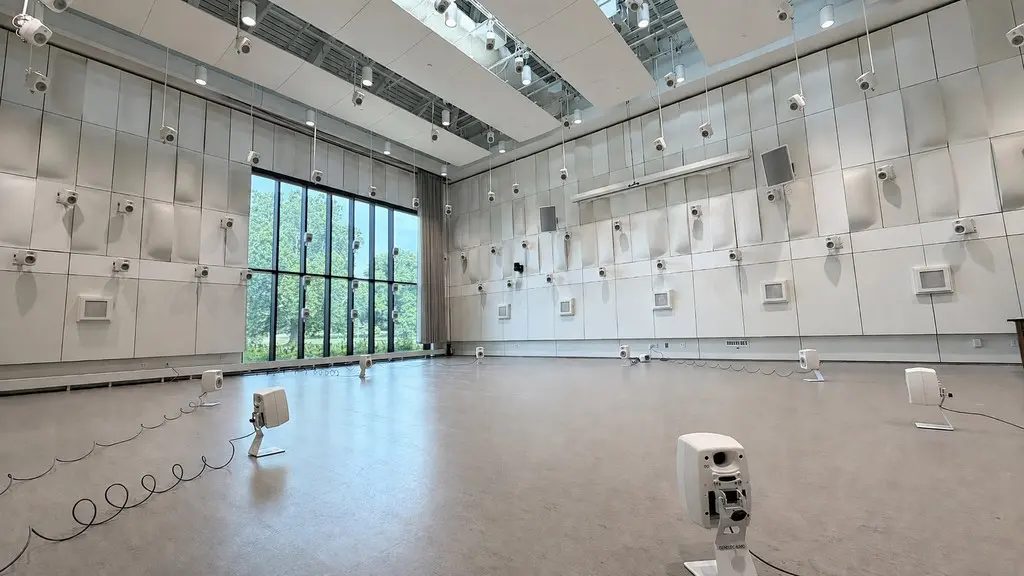
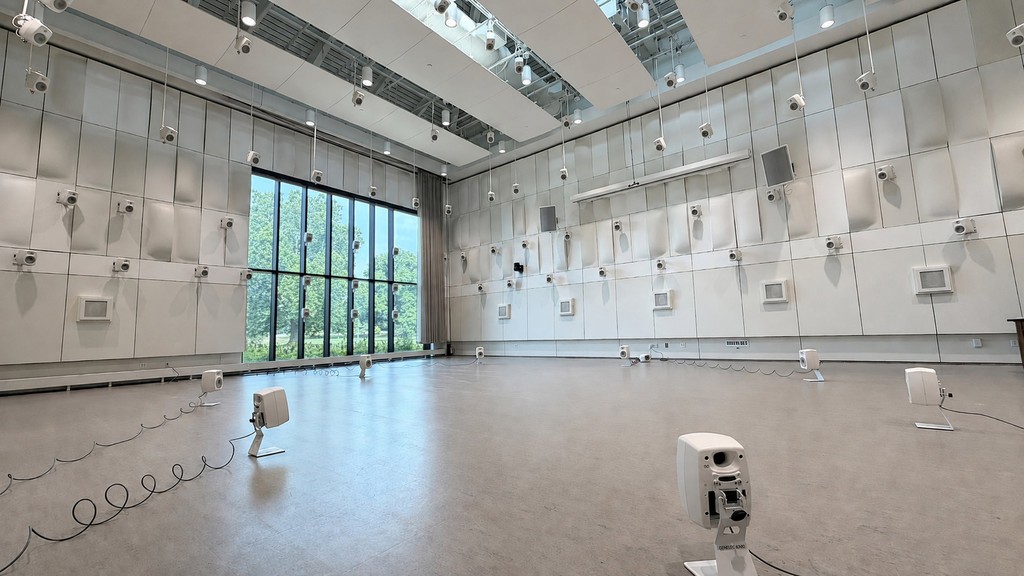
The College of Music at Michigan State University (MSU) has officially unveiled a groundbreaking technological overhaul of its primary rehearsal and performance space, Eichler Hall. By integrating 143 Genelec Smart IP loudspeakers and two high-output subwoofers, the university has converted the 200-square-meter facility into one of the most advanced Ambisonics environments in the world. This massive installation allows for the spherical positioning of sound, providing students and researchers with a three-dimensional acoustic canvas that represents the cutting edge of immersive audio technology. The project, spearheaded by Anthony T. Marasco, Assistant Professor of Composition and Technology, marks a significant shift in how academic institutions approach sound design, acoustic research, and live performance.
The Evolution of Eichler Hall: A New Paradigm for Immersive Audio
Eichler Hall has long served as the heart of the MSU College of Music, functioning as a vital rehearsal space for the university’s orchestra, wind symphony, and choral ensembles. However, the traditional acoustic properties of the hall were no longer sufficient for the rapidly evolving demands of modern music technology and spatial audio research. The decision to implement a high-density Ambisonics array was driven by a need to provide students with a permanent, high-fidelity environment for exploring immersive soundscapes without the logistical hurdles of temporary setups.
Ambisonics, a "full-sphere" surround sound technique, differs from traditional channel-based systems like 5.1 or 7.1.4 by covering the horizontal plane as well as above and below the listener. By using a high number of loudspeakers—in this case, 143—the system can recreate a highly accurate sound field where audio objects can be moved with pinpoint precision through three-dimensional space. This capability is essential for modern applications in virtual reality (VR), augmented reality (AR), cinema, and experimental music composition.
Strategic Implementation and Technical Chronology
The transformation of Eichler Hall was a multi-phase project that required meticulous planning and coordination between the university’s faculty and external consultants. System design and consultation were provided by Tanner Upthegrove of the planning firm Electroacoustics, who worked closely with Professor Marasco to ensure the system met both pedagogical and technical requirements.
The project timeline was strategically scheduled around the university’s academic calendar to minimize disruption:
- Planning and Design Phase: Initial consultations focused on the physical constraints of the 200-square-meter hall and the desired density of the speaker array to achieve high-order Ambisonics.
- Infrastructure Installation (Winter Break): During the university’s winter hiatus, crews laid miles of Cat-6 cabling. Because the chosen Genelec speakers utilize Smart IP technology, the infrastructure requirements were significantly streamlined, as audio, power, and control data are all delivered via a single network cable.
- Hardware Mounting (Post-Spring Semester): Once the spring semester concluded, the physical mounting of the 143 Genelec 4430AW loudspeakers began. These units were finished in white to blend seamlessly with the hall’s aesthetic, which features white acoustic panels and large windows.
- System Integration and Calibration (June): By mid-June, the hardware was fully installed. The final weeks were dedicated to network routing, software configuration, and individual speaker calibration.
Technical Specifications: The Power of Smart IP and Dante Networking
The core of the installation consists of 143 Genelec 4430AW Smart IP installation speakers. These monitors are specifically designed for networked audio systems, supporting both Dante and AES67 streams. The "Smart" aspect of the system refers to its ability to receive Power-over-Ethernet (PoE), eliminating the need for traditional power amplifiers and heavy-gauge electrical wiring.
According to Professor Marasco, the decision to use Smart IP was a matter of practical necessity. For an installation of this magnitude, providing individual electrical outlets and traditional audio cabling for over 140 speakers would have been a monumental and prohibitively expensive task. The PoE approach allowed the university’s internal staff to handle the majority of the installation, as it fell under low-voltage networking rather than heavy electrical work.
To handle the low-end frequencies and provide the physical impact required for cinematic and experimental works, two Genelec 7382A active subwoofers were integrated into the system. These subwoofers provide the necessary pressure and clarity to complement the massive array of 4430AW monitors, ensuring a full-frequency response across the entire listening area.
The signal chain is equally sophisticated:

- Central Interface: A Danish Audio Devices AX Center serves as the primary hub for audio distribution.
- Production Computer: A Mac Studio provides the processing power required for complex spatial calculations.
- Connectivity: The system utilizes Dante Virtual Soundcard and an RME Digiface Dante to manage the massive channel count.
- Analog Integration: A Behringer X32 console is utilized to bring analog sources and live instruments into the digital network.
- Software Suite: For composition, routing, and Ambisonics processing, the university relies on Reaper and Max/MSP, two of the most flexible platforms for spatial audio development.
Precision Calibration and Individual Speaker Profiling
One of the most critical phases of the project was the calibration of the 143-speaker array. In a space like Eichler Hall, which features various acoustic treatments and architectural features, each speaker interacts with the room differently. Using the Genelec Smart IP Manager software, the technical team was able to communicate with every speaker individually over the network.
During the commissioning process, Upthegrove and the MSU team measured the frequency response of each speaker from its specific mounting position. This allowed them to identify how the surrounding walls, ceiling, or floor affected the sound. They then created custom equalization (EQ) profiles for every single unit. These profiles are stored directly within the internal Digital Signal Processing (DSP) of each speaker. This decentralized approach means that the room correction is handled at the "edge" of the network, reducing the processing load on the central computer and ensuring that the system remains perfectly time-aligned and color-neutral regardless of the complexity of the audio routing.
Academic and Research Implications
The primary beneficiary of this new installation is the MSU student body. Professor Marasco’s "Immersive Sound Design" course, which is open to students across all disciplines, now has a permanent home. Previously, teaching this course required the laborious task of setting up and striking a temporary 7.1.4 system for every session. With the permanent Ambisonics array, students can now walk into the hall and immediately begin working with a world-class system that far exceeds standard commercial cinema layouts.
Beyond music composition, the hall is set to become a multidisciplinary research platform. The university has outlined several key areas of exploration:
- Sound Ecology: Researchers can use the system to recreate the acoustic environments of specific natural habitats, studying how humans and wildlife interact with sound.
- Virtual Room Simulation: By utilizing impulse responses from famous concert halls or historical sites, the system can "morph" the acoustics of Eichler Hall to mimic those of any other space in the world.
- Workplace Safety and Occupational Training: The hall can simulate high-noise industrial environments or emergency scenarios, allowing for safety training in a controlled, immersive setting.
- Acoustic Psychology: Studying how the human brain processes spatial cues and the emotional impact of three-dimensional sound.
Broader Industry Context and Future Outlook
The MSU installation represents a growing trend in higher education and high-end research facilities to move away from fixed-channel formats toward object-based audio. Facilities like IRCAM in Paris or the ZKM Center for Art and Media in Karlsruhe have long pioneered these technologies, but the MSU Eichler Hall project is notable for its scale and its use of modern, networked PoE technology.
As the music and film industries continue to embrace formats like Dolby Atmos and Sony 360 Reality Audio, the demand for professionals who understand spatial acoustics is at an all-time high. By providing students with access to a 143-speaker Ambisonics array, Michigan State University is positioning itself as a leader in the next generation of audio education.
The university plans to host a series of concerts, workshops, and international festivals in the space to showcase the system’s capabilities to the public. These events will not only feature experimental electronic music but also hybrid performances where traditional orchestral instruments are augmented and spatialized through the Genelec array, blurring the lines between acoustic and digital performance.
In conclusion, the transformation of Eichler Hall is more than just a hardware upgrade; it is a strategic investment in the future of sound. By leveraging Genelec’s Smart IP technology and Dante networking, Michigan State University has created a flexible, high-fidelity environment that will serve as a beacon for acoustic innovation for years to come. The project stands as a testament to the power of modern networking in simplifying complex audio engineering challenges, allowing the focus to remain where it belongs: on the creative and scientific exploration of sound.
