

The enduring allure of Telecaster-style guitars lies in their elegant simplicity, a design philosophy that champions functionality over embellishment. This minimalist approach, often described as a "wood slab with neck attached," has not only cemented the Telecaster’s reputation as an indispensable workhorse for countless musicians but also positioned it as an exceptionally fertile ground for modification. Its straightforward construction, combined with an abundant aftermarket of compatible components, empowers enthusiasts to transform even the most humble T-type into a highly personalized, high-performance instrument. This guide details a meticulous overhaul of a budget-friendly Vintage V20 Coaster, illustrating how strategic upgrades can yield a dramatic improvement in playability, stability, and tonal character, effectively creating a "dream Telecaster" without the premium price tag typically associated with custom builds or high-end models.
The Foundation: Why Budget T-Types Excel as Mod Platforms
The global guitar market has witnessed a significant evolution in recent decades, with entry-level and mid-range instruments achieving unprecedented levels of quality. Brands like Vintage, Squier, Harley Benton, and others consistently produce guitars with solid foundational elements – well-constructed bodies, stable necks, and surprisingly competent fretwork – at price points that were unimaginable just a few years ago. This surge in manufacturing excellence has democratized access to quality instruments and, crucially, provided an ideal canvas for modding projects. The Vintage V20 Coaster, acquired as B-stock for an exceptionally affordable £130, exemplifies this trend. Its butterscotch single-cutaway body, maple neck, and twin single-coil pickups offer a classic aesthetic and a robust platform. At this price point, the financial risk associated with DIY experimentation is considerably mitigated, allowing modders to approach the process with confidence, knowing that any misstep with a drill or soldering iron won’t result in a catastrophic loss. The core appeal lies in leveraging the inherent structural integrity of these guitars while systematically addressing their common shortcomings: often generic hardware and electronics that, while functional, lack the refined feel and sonic depth of premium components.

Phase One: Initial Assessment and Deconstruction
Before any new parts are ordered or tools engaged, a comprehensive assessment and complete disassembly are paramount. This initial phase serves to fully understand the instrument’s existing architecture, confirm routing dimensions, and identify any potential compatibility challenges. For the V20 Coaster, the process began by stripping it down to its bare components, revealing the standard Telecaster routing pattern. This critical step confirmed ample space for upgraded electronics, including full-sized CTS pots, which are often too large for the mini-pots cavities found in many budget guitars. While the existing cavity offered just enough clearance, a quick test-fit underscored the importance of verification, preempting the need for additional routing that might otherwise complicate the project. The original hardware and electronics, including the sealed tuners that proved stiff and unstable, and the Alan Entwistle pickups, which, while decent for the price, lacked vintage authenticity and character, were carefully removed and set aside. These components, though destined for replacement, can serve as valuable spares or be repurposed for future projects.
Phase Two: Laying the Groundwork with Electromagnetic Shielding

One of the most impactful, yet often overlooked, upgrades for any single-coil guitar is proper electromagnetic shielding. Single-coil pickups are inherently susceptible to electromagnetic interference (EMI) from external sources such as fluorescent lights, computer monitors, and mains hum, which manifests as unwanted noise through the amplifier. The V20 Coaster, like many affordable guitars, arrived from the factory with zero cavity shielding. Addressing this deficiency was therefore a top priority.
The process involves lining all internal cavities – pickup routes and control cavity – with conductive copper tape. This creates a Faraday cage, an enclosure that blocks static and non-static electric fields, effectively shunting external interference to ground before it can be picked up by the sensitive electronics. Crucially, the copper tape must feature a conductive adhesive to ensure electrical continuity across overlapping pieces, forming an unbroken shield. This meticulous application, often a therapeutic but time-consuming task, ensures that the entire shielded area is electronically connected. The shielding within each discrete cavity must then be connected to the guitar’s ground circuit. This can be achieved either by soldering jumper wires between cavities or, as was done in this project, by strategically placing copper tape to create a continuous conductive path to the main control cavity. Here, the pickup grounds are typically soldered to the back of the volume pot, which, when screwed into a metal control plate, ensures the entire shielding network is effectively grounded, drastically reducing hum and noise. For the bridge pickup cavity, the string ground wire, traditionally sandwiched between the body and the bridge plate, is also secured against the copper tape to ensure a robust ground connection for the entire system.
Phase Three: Upgrading Core Hardware – Bridge and Tuners

With the internal foundations secured, attention turned to the external hardware, beginning with the bridge. The compatibility of replacement bridge plates is a critical consideration. The V20 Coaster featured a four-screw mounting pattern behind the saddles, aligning with standard Fender specifications and most aftermarket replacements. This allowed for a direct drop-in replacement of the entire bridge plate. It is important to note that some budget T-types, particularly the cheapest Squiers, employ a four-screw pattern at each corner of the plate, which rarely has direct aftermarket drop-in replacements. In such cases, upgrading individual saddles (e.g., compensated brass barrel saddles for three-saddle bridges, or vintage/modern hardtail saddles for six-saddle setups) while retaining the original plate is the most viable option.
For this project, the decision was made to swap the entire plate for a Wilkinson compensated bridge. This choice not only promised enhanced sustain and resonance but also, crucially, allowed for superior intonation adjustments. The original article highlights the meticulous process of running the ground and hot wires of the bridge pickup to the control cavity before attaching the new bridge, ensuring seamless integration into the shielded and upgraded electronic system.
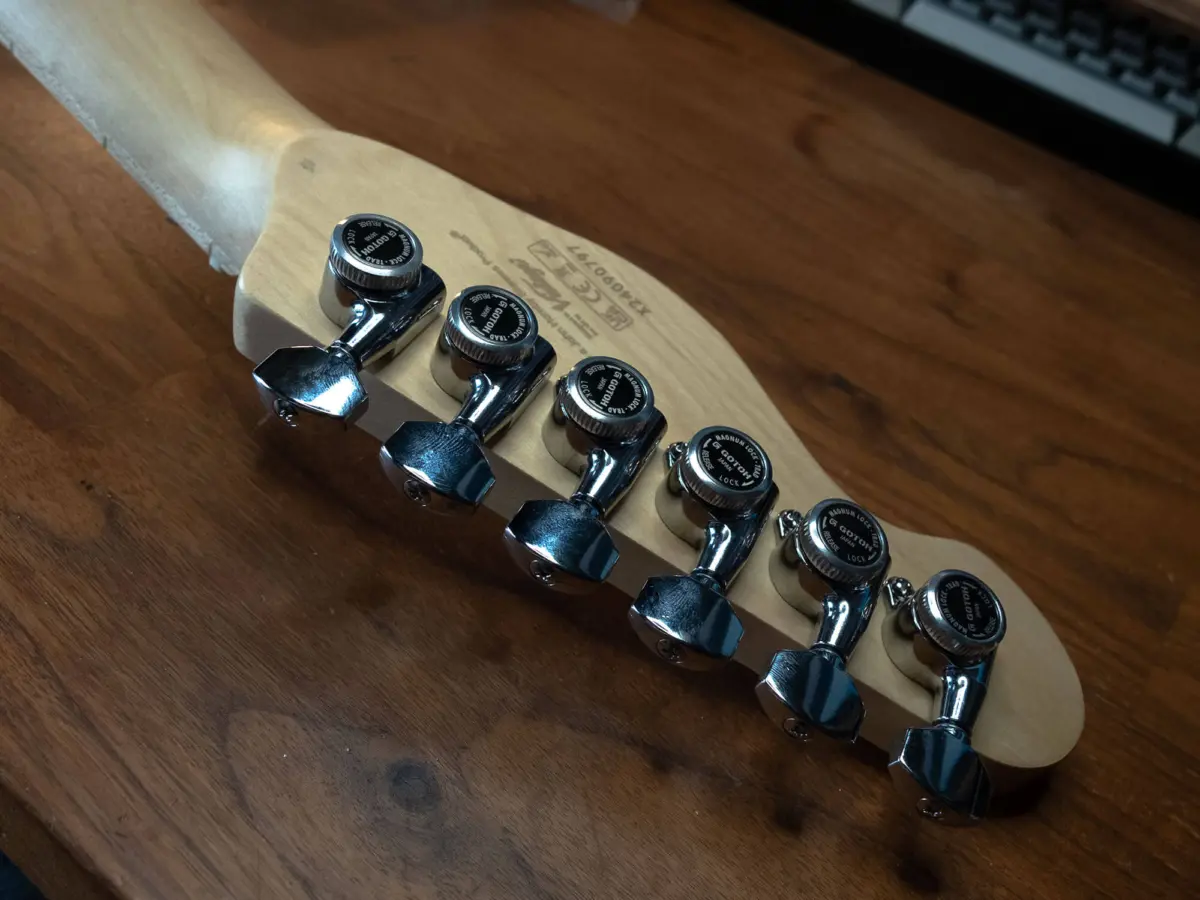
Next, the focus shifted to the tuners, a crucial component for tuning stability and overall playing experience. The V20 Coaster’s stock sealed-gear tuners were prone to stiffness and instability. A direct replacement with a high-quality Gotoh set, chosen for its renowned precision and reliability, proved to be a straightforward upgrade, fitting directly into the existing post holes without modification. However, this seemingly simple upgrade introduced an unforeseen consequence: the new Gotoh tuners were relatively high-mass locking units. Given the V20 Coaster’s body, likely constructed from a very light and affordable wood, the added weight at the headstock altered the guitar’s balance, resulting in a noticeable pull on the shoulder strap (commonly known as "neck dive"). This serves as an important cautionary tale for modders: always consider the potential impact of component weight on the overall balance of a lightweight instrument. Despite this minor ergonomic shift, the improvement in tuning stability and tactile feel was substantial, making string changes quicker and more secure.

Phase Four: The Electronic Heart Transplant – Pickups and Controls
The most transformative aspect of any guitar modification, particularly for a budget instrument, is the overhaul of its electronics. The pickups are the voice of the guitar, and upgrading them typically yields the most dramatic improvement in tonal quality. For the V20 Coaster, a Stewmac Premium Telecaster Wiring Kit was chosen, complete with a high-quality set of Stewmac Telecaster pickups, full-sized CTS pots, and a robust switch.
The selection of new pickups directly addressed the lack of punch and character in the stock Alan Entwistle units. The Stewmac Telecaster set delivered a significant sonic upgrade: a bridge pickup offering a "punchy, bright" tone without being brittle, and a neck pickup providing a "warm-yet-articulate" sound, ideal for smooth, overdriven solos. This change alone fundamentally altered the guitar’s sonic palette, elevating it from generic to genuinely inspiring.

Beyond the pickups, the quality of the control components dramatically influences both the feel and the signal integrity. The stock V20 Coaster came with mini-pots, which often feel loose and can be prone to failure. The Stewmac kit’s full-sized CTS pots, while a tight fit in the existing cavity, offered superior reliability, smoother operation, and a more robust feel. The original article notes that while the pots fit, a slightly larger hole had to be drilled in the control plate itself to accommodate their larger shafts. This is a common requirement for budget guitars transitioning to higher-quality components. The replacement switch also made a world of difference; the premium unit offered a "reassuring clunk," significantly enhancing the tactile experience of interacting with the guitar. This upgrade, though seemingly minor, contributes greatly to the overall sense of a premium instrument. The entire control assembly, wired onto a single plate, could be pre-assembled before being installed, streamlining the process.
Phase Five: The Final Assembly, Setup, and Sonic Transformation
With all the new components in place – the shielded cavities, the upgraded bridge, the stable tuners, and the entirely new electronic heart – the final phase involved re-assembly, meticulous setup, and a critical evaluation of the transformed instrument.

The Wilkinson compensated bridge proved invaluable during the setup process, allowing for precise intonation adjustments that are often challenging to achieve with traditional three-saddle Telecaster bridges. Using an accurate tuner and allen keys, the intonation for each string was carefully dialed in, ensuring perfect pitch across the fretboard. Following this, pickup heights were adjusted to achieve a balanced output across both pickups and to fine-tune the tonal response. A touch of lubrication on the nut further enhanced tuning stability and string action.
The immediate impact was palpable. The previously generic-sounding V20 Coaster now resonated with a vibrant, articulate voice. The premium hardware made the guitar far more inviting to play, with smooth-acting tuners, responsive controls, and a solid bridge. The sonic leap, driven primarily by the pickup swap, was profound, delivering the classic Telecaster twang and warmth with newfound clarity and character. Engaging a compressor pedal for some old-school clean Tele tones, the guitar performed admirably, a testament to the cumulative effect of the upgrades.
The Broader Implications: Accessibility, Personalization, and Market Trends

This successful transformation of a budget T-type into a high-performing instrument carries significant implications for the wider guitar community and the industry itself.
- Accessibility: Guitar modification democratizes access to professional-grade performance. By investing a modest sum in a low-cost foundation and then carefully selecting aftermarket components, players can achieve an instrument that rivals or even surpasses the playability and tone of guitars costing several times more. This opens up opportunities for aspiring musicians and hobbyists to own truly inspiring instruments without breaking the bank.
- Personalization: Beyond performance, modding offers unparalleled personalization. Each player has unique preferences regarding feel, sound, and aesthetics. The ability to choose specific pickups, bridges, tuners, and even control configurations allows for an instrument that is perfectly tailored to individual needs and artistic expression. This bespoke approach fosters a deeper connection between the musician and their tool.
- Learning Opportunity: The DIY nature of guitar modding serves as an invaluable educational experience. It demystifies the inner workings of an electric guitar, teaching fundamental principles of electronics, mechanics, and instrument setup. Online communities, forums, and vast resources from suppliers like StewMac provide a supportive environment for learning and troubleshooting, fostering a growing community of informed and capable enthusiasts.
- Sustainability and Value Retention: Modding breathes new life into existing instruments, reducing the demand for new manufacturing and giving older or budget guitars a renewed purpose. A well-modded instrument can also retain or even increase its value, offering a solid return on investment for the careful enthusiast.
- Market Trends: The burgeoning modding culture has undoubtedly influenced the aftermarket parts industry, leading to a wider array of high-quality components and wiring kits. It also encourages manufacturers of budget guitars to focus on solid fundamental construction, knowing that their instruments may serve as platforms for further enhancement.
While this particular project achieved a remarkable transformation, the journey of modding is often ongoing. The article notes areas for further improvement: a fret polish could eliminate any remaining grittiness, and a more comfortable neck finish could be achieved through careful sanding (ScotchBrite) or, for the truly brave, a complete neck replacement. Fender-style bolt-on necks often offer considerable cross-compatibility, though precise measurements are always advised.
Ultimately, the transformation of the £130 Vintage V20 Coaster into a highly playable and sonically superior instrument is a testament to the power of thoughtful modification. It underscores that the core essence of a great guitar often lies not just in its brand name or price tag, but in the quality of its fundamental construction and the judicious selection of its components. This project illustrates that with a little skill, research, and a commitment to detail, a truly personal "dream Telecaster" is within reach for any aspiring or seasoned guitarist. For those seeking to embark on their own modding journey, resources like StewMac’s extensive catalog provide an excellent starting point for parts and inspiration.
