

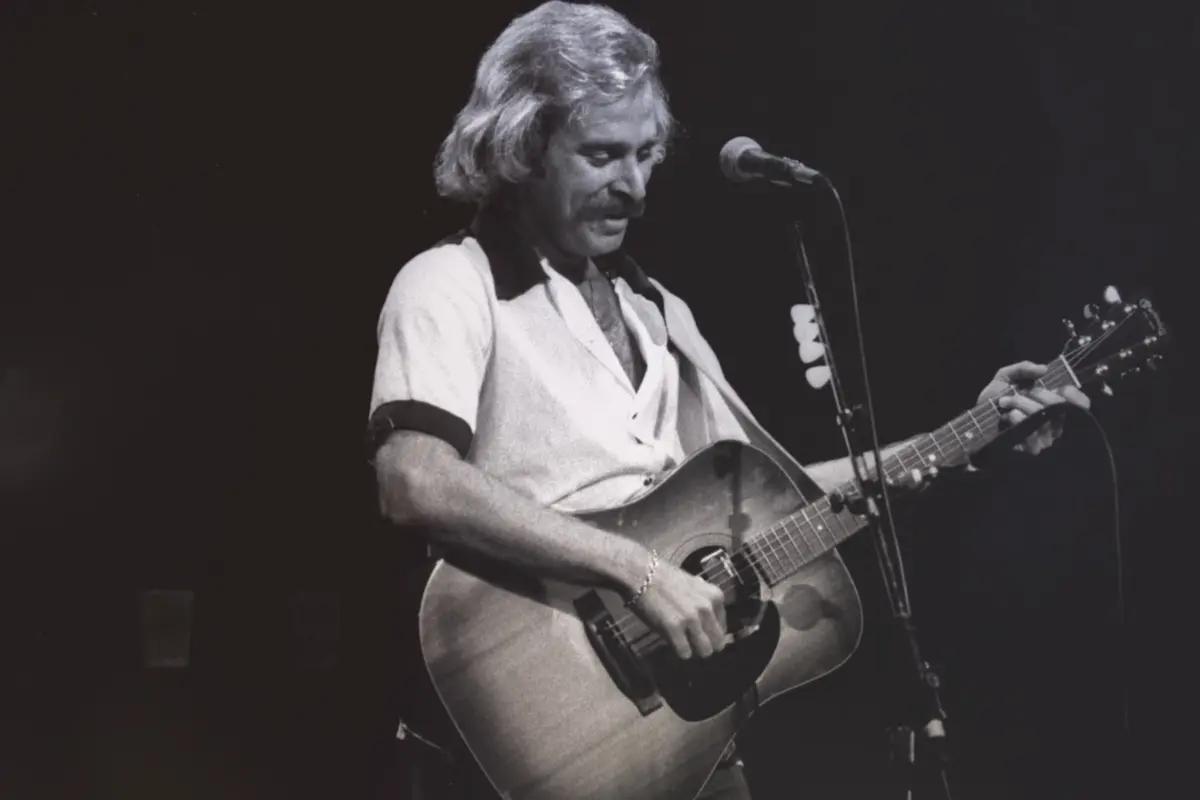
The Coral Reefer Band stands as an indispensable cornerstone of the Jimmy Buffett phenomenon, much like the E Street Band to Bruce Springsteen or the Heartbreakers to Tom Petty. This legendary ensemble, known for its pivotal role in shaping Buffett’s signature sound and laid-back ethos, is now the subject of a revealing new documentary, Occupational Hazard: The First Coral Reefers. After a successful nine-month run across film festivals and select theaters, the film is set to become widely accessible on October 30, available for rent through major digital platforms including Apple TV, Amazon Prime Video, Google Play, and Fandango. This release offers an unprecedented look into the nascent, often unvarnished, era of Buffett’s musical journey, providing crucial context to the legacy of an artist whose passing on September 1, 2023, left a profound void in the music world.
Unveiling the Untold Story: The Core Narrative of Occupational Hazard
As its evocative title suggests, Occupational Hazard serves as an origin story, meticulously charting the formative years of Jimmy Buffett’s career. The narrative begins with Buffett’s early days as a troubadour, a period that even included a tenure writing for Billboard magazine, before his seminal move to Key West, Florida. It was in this bohemian island outpost during the mid-1970s that Buffett assembled the inaugural lineup of the Coral Reefer Band. Interestingly, the name itself predates the actual band, having been used by Buffett for an imaginary ensemble during his solo performances. The documentary, narrated by acclaimed actor and longtime Buffett friend Jeff Bridges, delves into a decidedly different and significantly less polished incarnation of the band than the one generations of "Parrotheads" — Buffett’s devoted fanbase — became accustomed to from the late 1970s until his recent passing. This earlier period, characterized by a raw energy and a carefree, almost anarchic spirit, stands in stark contrast to the highly organized and meticulously choreographed performances that would later define the Coral Reefers.
The film paints a vivid picture of a time when the Coral Reefer crew, while perhaps indulging in what original guitarist Roger Bartlett candidly describes as being "fully staffed with artificial inspiration… in great quantities," was nonetheless incredibly productive. It was during these wild, formative years that Buffett penned and recorded many of his most iconic and enduring tracks, songs that would become anthems for a lifestyle: “Margaritaville,” “Cheeseburger in Paradise,” “Volcano,” “Fins,” and “Son of a Son of a Sailor.” These songs, imbued with themes of escapism, tropical idylls, and a relaxed philosophy, laid the groundwork for Buffett’s immense commercial success and cemented his status as a cultural phenomenon.
A Journey to Key West: The Genesis of the Coral Reefers
The decision by Jimmy Buffett to relocate to Key West in the early 1970s was a pivotal moment, not just for his personal life but for the trajectory of his musical career. Having honed his craft as a folk singer and songwriter in Nashville and New Orleans, Buffett found in Key West a unique blend of laid-back charm, eccentric characters, and a pervasive sense of freedom that deeply resonated with his artistic vision. This environment became the crucible for his unique blend of country, folk, and Caribbean-inspired rock, often termed "trop rock." It was here, amidst the island’s vibrant counterculture, that he sought to transform his solo act into a collaborative musical force.
Director-producer John H. Cunningham, a longtime Buffett fan who himself moved to Key West in 1978, emphasizes the documentary’s intent to capture this specific, often overlooked, period. "We wanted to capture the time before the Parrothead phenomenon began, when it was still rough ‘n’ ready out on the road," Cunningham told Billboard. "Those were wild times; many viewers who are watching this have no idea that period even existed for this band, because they’ve seen this very organized, polished group for such a long time. But the first years were a little bit different. Some of the band are starting to pass away and disappear without the history being recorded. So just for historical purposes, we thought this was an important time to document." This statement underscores the film’s crucial role in preserving a vital chapter of music history, ensuring that the contributions and experiences of the original Coral Reefers are not lost to time.
The Rough and Ready Years: Anecdotes from the Road
The documentary vividly portrays the stark contrast between the early, unpolished Coral Reefer Band and the highly refined touring machine it would later become. Original Coral Reefer guitarist Roger Bartlett, who not only appears in the film but also composed its score, provides invaluable first-hand accounts. He humorously concedes the prevalence of "artificial inspiration" during those early tours, a testament to the freewheeling, rock-and-roll lifestyle that often accompanied emerging musical acts of the era. Yet, Bartlett also passionately argues that "the early days were really the best days" for reasons extending beyond mere youthful exuberance.
"It was before the bodyguard and before (Buffett) flew on a private plane and had the restaurants and all of that," Bartlett explains, highlighting a simpler time before the advent of Buffett’s vast business empire, which includes Margaritaville Resorts, cafes, and merchandise. "We drove in a Rent-a-Car and raced down the corridors of the airports to get to the plane before the doors closed. We sat in economy class and read books and nobody said, ‘Oh, are you Jimmy Buffett?’ It was nice. In those early days we could do whatever we wanted to do. There were no big constraints. We did a lot of crazy things." These anecdotes offer a rare glimpse into the unburdened freedom and genuine camaraderie that characterized the band’s initial formation, a stark departure from the global celebrity status that would soon envelop Buffett. The documentary suggests that this raw, unfettered environment was, in fact, fertile ground for the creative explosion that produced some of Buffett’s most enduring works.
Beyond the Stage: The Personal Side of Early Success
Occupational Hazard is enriched with a treasure trove of archival footage and candid images, many of which come from personal collections. These include intimate home movies shot by Bartlett’s then-girlfriend Phyllis McBride and Brent Taylor, brother of the late harmonica player Greg "Fingers" Taylor, who served as the band’s assistant road manager for a period. Such personal artifacts provide an unparalleled window into the daily lives, struggles, and triumphs of the band members, far removed from the public eye. The film also unearths fascinating historical tidbits, such as the period when legendary gonzo journalist Hunter S. Thompson reportedly stayed with Buffett in Key West for about a year. This detail, unearthed during the filmmakers’ extensive research, underscores the vibrant, unconventional atmosphere that surrounded Buffett during his creative peak in the Keys, attracting a diverse array of artists and personalities.

Voices from the Past: Key Interviews and Contributions
The documentary’s strength lies in its comprehensive roster of interviews with individuals who were intimately involved in Buffett’s early career. Director John Cunningham meticulously secured revealing conversations with key figures, including:
- Roger Bartlett: Original Coral Reefer guitarist and the film’s score composer.
- Josh Leo: Another early guitarist for the band.
- Deborah McColl: Backing vocalist from the formative years.
- Keith Sykes: Singer-songwriter and early collaborator.
- Bob Liberman: Tour manager from the band’s nascent period.
- Norbert Putnam: The acclaimed producer responsible for key Buffett albums between 1976 and 1982, a critical period that saw the release of defining works like Changes in Latitudes, Changes in Attitudes (1977) and Son of a Son of a Sailor (1978).
- Michael Utley: Longtime keyboardist who retired from the band following Buffett’s death, providing a bridge between the early and later eras.
- Mac McAnally: A current Coral Reefer mainstay, offering perspective on the band’s evolution.
While Jimmy Buffett himself could not be interviewed due to his passing, his presence is maintained through carefully selected archival interviews, ensuring his voice remains a part of the narrative. Adding further star power and contemporary relevance, country music superstar Kenny Chesney provides extensive commentary. Chesney, a noted admirer and friend of Buffett, recently joined Mac McAnally and James Taylor in inducting Buffett into the Rock & Roll Hall of Fame in 2024, cementing his place in music history. The film’s narrator, Jeff Bridges, a mutual friend of Buffett and introduced to the project via Robert Duvall’s wife, lends his distinctive voice, adding a layer of warmth and authenticity to the storytelling. Co-producer Ted E. Haynes notes a recurring theme among interviewees: "All of these individuals, at some point or another either they quit or they were fired, some passed away, but even now, decades later, there’s a reverence in how they still speak about that time frame and Jimmy Buffett. I think that’s what I wanted to hear, but it was nice to have that reinforced." This collective sentiment underscores the profound impact Buffett had on those who shared his early journey, despite the inevitable shifts in band personnel.
The Filmmakers’ Vision: Crafting a Historical Record
The genesis of Occupational Hazard is as organic as the band it chronicles. It initially began as a concept for a short film focused solely on Roger Bartlett. Cunningham, a seasoned author of the bestselling Buck Reilly adventure series, had previously included Buffett as a character in his third novel, Crystal Blue, leading to a song collaboration with Matt Hoggatt, who was signed to Buffett’s Mailboat Records label. This connection, in turn, opened doors to meeting many of the first-generation Coral Reefers, fostering songwriting partnerships with Bartlett and Sykes. Bartlett himself recalls the initial pitch: "‘We should do a short film about you, Roger.’ I said, ‘Well, it’s gonna be really short. Maybe we should expand the subject matter a little bit.’"
During a dinner that included Haynes, the idea of expanding the scope to the entire Coral Reefer Band origin story began to take shape. Bartlett commends Cunningham’s drive: "I have to say Jim Cunningham is a can-do guy. From the time we decided to do it, it was finished in maybe two years. That was pretty impressive." The production process was intensive, involving the assembly of over 1,000 archival pieces, including photographs, videos, and personal documents. The filmmakers conducted an exhaustive 25 hours of interviews, generating a wealth of material. The initial edit of the film reportedly ran for four hours before being meticulously tightened to its current length, a testament to the wealth of stories and historical data uncovered. Haynes particularly highlighted "holy grail" moments during the research, including the Hunter S. Thompson anecdote, which added unexpected layers to Buffett’s Key West narrative.
A Shift in Latitude, A Change in Attitude: The Evolution of the Band
Occupational Hazard does not shy away from chronicling the gradual dissolution of the original Coral Reefers and the subsequent transition to a new, larger, and more professional group of musicians. This period of change, while necessary for Buffett’s burgeoning career, was not without its complexities. Roger Bartlett’s departure in 1977 was a personal choice, driven by his acknowledgment of being "in bad shape," for which Buffett gifted him a Rolex watch as a parting gesture. However, not all departures were as amicable, with some members being dismissed and expressing understandable resentment.
Bartlett candidly reflects on this evolution: "If you get fired, normally you’re gonna be a little angry. (Buffett) began to get more professional musicians in the band. We were just a ragtag band out of the clubs. The guys he changed to were more polished and much more talented — than I was, at least." Cunningham provides crucial context for Buffett’s decisions: "I think when Jimmy started achieving some success, he’s opening for the Eagles, for James Taylor, he’s managed by Irving Azoff, bigger doors are opening and it was, ‘Alright, I can’t keep doing what we’ve been doing.’ I think it was a mature moment for Jimmy to say, ‘Look, if I want to keep this going, we need to change some things.’ He knew he needed a team of first-class musicians, and also not bar partiers that weren’t going to be rocking the boat. It started out as more of a rock ‘n’ roll show, where anything could happen, and it became more of a production. There was definitely a change in the tenor. It had a different vibe — but the audience ate it up." This analysis underscores the strategic foresight required to navigate the music industry’s demands, transforming a raw, improvisational act into a polished, stadium-filling experience.
The Enduring Legacy and Future Horizons
The documentary has already garnered significant critical acclaim, winning audience awards at both the Dallas International Film Festival and the Sarasota Film Festival during its theatrical run. Its appeal extends beyond long-time Parrotheads, with Cunningham noting the enthusiastic engagement of audiences, often arriving at screenings in full Buffett concert regalia, from Hawaiian shirts to shark-fin hats. More importantly, the film is achieving its educational objective. Haynes recounts positive feedback from younger audience members during Q&As, stating, "I’m here because my dad likes Jimmy Buffett and I wanted to see what it was all about. I really love this music; I’m going to go back and listen to the catalog." This reaction highlights the documentary’s success in introducing Buffett’s rich musical legacy to a new generation, fostering a deeper appreciation for his foundational work.
The filmmakers were able to license a substantial amount of Buffett’s music from the period, maintaining a friendly relationship with his estate. It is noteworthy that Buffett’s estate is concurrently developing its own documentary, directed by Frank Marshall, indicating a multi-faceted approach to preserving and presenting the artist’s life story. Jane Buffett, Jimmy’s widow, has reportedly seen Occupational Hazard and offered her full support, a significant endorsement for an independent production. Roger Bartlett, meanwhile, borrowed musical motifs from Buffett’s songs for the film’s score but primarily focused on striking the appropriate mood for each scene. As an outgrowth of the film’s theatrical screenings, Bartlett has also embarked on duo concerts with Josh Leo, rekindling old musical partnerships. He is also preparing to release a new solo album, Shoot the Moon, in the spring.
Cunningham and Haynes are "kicking around" the idea of an extended director’s cut or another vehicle for the additional footage they accumulated, recognizing the immense interest in the material. As Cunningham aptly puts it, "We’re a small, independent team working hard on this. After we get [the video rollout] done we can come up for air and think about what’s next." Occupational Hazard: The First Coral Reefers thus stands as a vital and timely addition to Jimmy Buffett’s extensive legacy, offering a candid and comprehensive look at the crucial, formative years of a cultural icon and the band that helped him sail into legend. It provides not just a historical account, but a vibrant celebration of the unbridled spirit that defined a generation and launched a phenomenon.
