

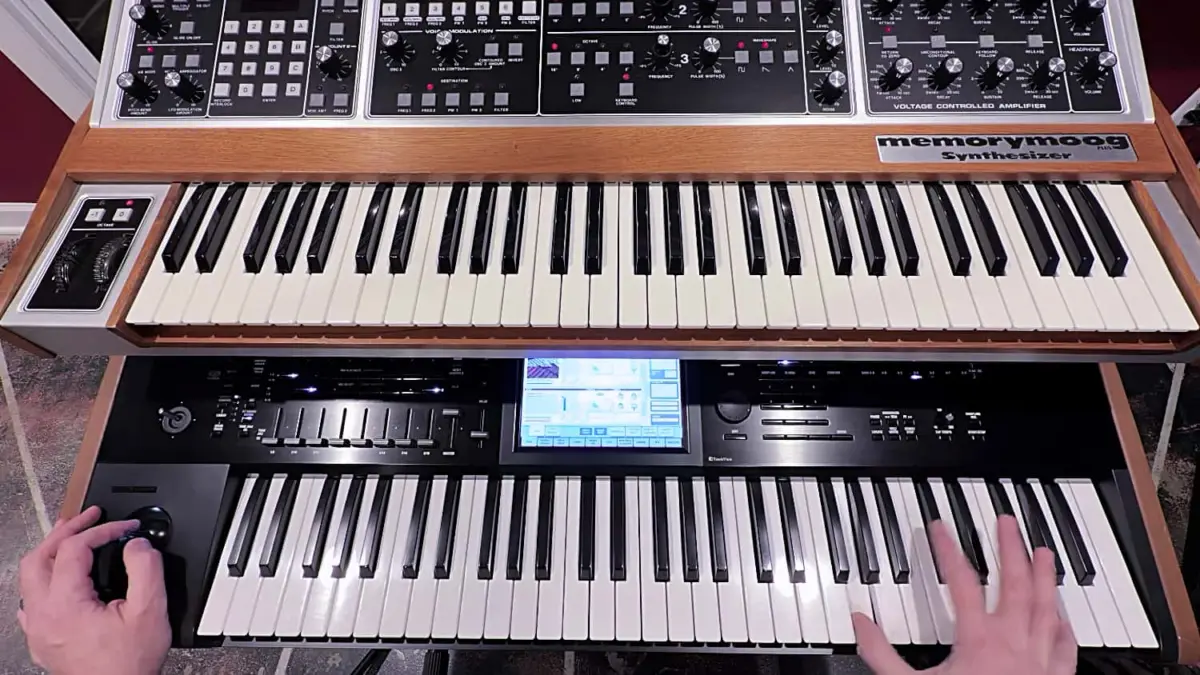
The landscape of vintage synthesizer restoration is poised for a significant shift as developer Eric Frampton unveils a comprehensive alternative firmware for the Memorymoog Plus, a legendary yet historically temperamental polyphonic analog synthesizer. This new software update, designated as the +EF firmware, seeks to address the foundational timing instabilities and operational bottlenecks that have characterized the instrument since its release in the early 1980s. By optimizing the internal processing logic of the machine, Frampton aims to provide owners with a level of reliability and functionality that was previously unattainable without extensive and costly hardware modifications. The developer has confirmed that the official release for this firmware is scheduled for December 1, 2026, marking a pivotal moment for the community of collectors, studio engineers, and performers who rely on the distinct sonic character of the Memorymoog.
Historical Context: The Legacy and Limitations of the Memorymoog
To understand the significance of Frampton’s firmware, one must look at the history of Moog Music Inc. during its most turbulent era. Released in 1982, the Memorymoog was designed to be the ultimate polyphonic synthesizer, effectively functioning as six Minimoogs housed in a single chassis. With three voltage-controlled oscillators (VCOs) per voice, it offered a sonic density and richness that surpassed its primary competitors, such as the Sequential Circuits Prophet-5 or the Roland Jupiter-8. However, the instrument arrived at a time when Moog Music was struggling financially and technically to keep pace with the digital revolution.
The "Plus" model, introduced shortly after the initial launch, added a basic sequencer and MIDI (Musical Instrument Digital Interface) functionality. While these were cutting-edge features for 1984, the implementation was hampered by the limitations of the Zilog Z80 microprocessor used to manage the instrument’s digital control systems. Because the Z80 had to handle keyboard scanning, the front-panel display, autotune routines, and the relatively new MIDI protocol simultaneously, the system often suffered from "processor lag." This resulted in noticeable timing jitter, where notes played via MIDI or the sequencer would trigger with inconsistent delays, making the instrument difficult to integrate into professional rhythmic arrangements.
Technical Analysis of the +EF Firmware Improvements
The +EF firmware represents a complete overhaul of the instruction sets governing the Memorymoog Plus’s digital brain. According to Frampton, the primary objective was to eliminate the timing discrepancies that have plagued the instrument for over forty years. In the original factory firmware, the interrupt priority for MIDI data was often shared with less critical background tasks, leading to the infamous "sluggish" feel of the Memorymoog Plus.
Frampton’s demo suggests that the new firmware utilizes more efficient coding practices to prioritize note-on/note-off commands and clock synchronization. By streamlining how the Z80 handles its various subroutines, the +EF firmware reduces latency and ensures that the sequencer remains tightly locked to external MIDI clocks. Beyond mere timing fixes, the update is expected to introduce a suite of modern features that "make it a whole new machine." While the full technical specifications are being finalized ahead of the 2026 release, industry analysts anticipate features such as expanded MIDI Continuous Controller (CC) support, which would allow users to automate filter sweeps and envelope changes from a digital audio workstation (DAW)—a capability that was severely limited in the original 1980s code.
Chronology of Development and Release
The development of the +EF firmware has been a multi-year endeavor, born from the necessity of maintaining these aging instruments in a modern production environment. The timeline of the Memorymoog’s evolution provides a clear view of why this firmware is necessary now:
- 1982: Moog Music releases the original Memorymoog. Despite its sound, it is criticized for tuning instability.
- 1984: The Memorymoog Plus is released, adding MIDI and a sequencer, but introducing the timing issues that Frampton is now addressing.
- 1985: Moog Music ceases production of the Memorymoog as the company faces bankruptcy, leaving the firmware in a largely unfinished, "buggy" state.
- 1990s–2010s: Third-party technicians, most notably Rudi Linhard of Lintronics, develop the "LAMM" (Lintronics Advanced Memorymoog) upgrade. While highly effective, the LAMM upgrade is an expensive hardware-and-software overhaul that requires shipping the unit to Germany.
- 2024: Eric Frampton releases a video demonstration of the +EF firmware, showing a stable, responsive Memorymoog Plus running on optimized software.
- December 1, 2026: The scheduled public release of the +EF firmware.
This timeline illustrates a persistent effort by the synthesizer community to "finish" the work that Moog Music started before its mid-80s collapse. Frampton’s solution is particularly notable because it focuses on the firmware, potentially offering a more accessible path to stability for owners who do not wish to undergo the invasive hardware changes required by other modifications.
Market Implications and the Vintage Synth Economy
The announcement of the +EF firmware is expected to have a tangible impact on the secondary market for vintage synthesizers. Currently, a functioning Memorymoog Plus can command prices ranging from $10,000 to over $15,000, depending on its condition and service history. However, many prospective buyers are deterred by the instrument’s reputation for unreliability.
By providing a software-based solution to the instrument’s most glaring functional flaws, Frampton may increase the long-term viability of the Memorymoog Plus as a working studio tool rather than a museum piece. Historically, when "boutique" firmware updates are released for classic gear—such as the "Gligli" firmware for the Sequential Circuits Prophet-600—the market value of those instruments tends to stabilize or increase, as the "hassle factor" of ownership is significantly reduced.
Furthermore, this development highlights a growing trend in the music technology industry: the "software-defined" preservation of analog history. As original components become rarer, the ability to optimize how the remaining hardware performs through smarter code becomes essential for the preservation of electronic music heritage.
Industry Reactions and Expected Features
While official statements from the current iteration of Moog Music (now owned by inMusic) have not been issued regarding this independent project, the community response among synth technicians has been overwhelmingly positive. Early feedback from the demo indicates that the +EF firmware may also include improved autotune algorithms. The original Memorymoog was notorious for its "Tune" button, which users had to press frequently as the analog oscillators drifted with temperature changes. Improvements in the digital polling of these oscillators could result in faster, more accurate tuning cycles.
Other expected enhancements include:
- Enhanced Sequencer Functionality: Potential for higher step resolution and easier editing interfaces.
- MIDI SysEx Support: Facilitating the backup and restoration of patches via modern computers, a process that was cumbersome with the original hardware.
- Improved UI Responsiveness: Reducing the "dead time" when switching between patches or adjusting parameters during live performance.
The Future of the Memorymoog Plus
As the December 2026 release date approaches, Eric Frampton’s work stands as a testament to the enduring appeal of the Moog sound. The Memorymoog was the last great gasp of the original Moog Music Inc., representing the pinnacle of analog polyphony. However, it was a pinnacle built on shaky digital foundations.
The +EF firmware does more than just fix bugs; it bridges the gap between the raw, unbridled power of 18 analog oscillators and the precision required by modern recording standards. For the global community of synthesists, the promise of a "whole new machine" suggests that the best days of the Memorymoog Plus may actually lie ahead, forty years after it first left the factory. This project underscores the importance of independent developers in the ecosystem of musical instruments, ensuring that the legendary tools of the past remain functional and relevant in the digital age. Professionals and enthusiasts alike will be monitoring Frampton’s progress closely, as the successful deployment of this firmware could set a new standard for the maintenance and modernization of vintage polyphonic synthesizers.
