

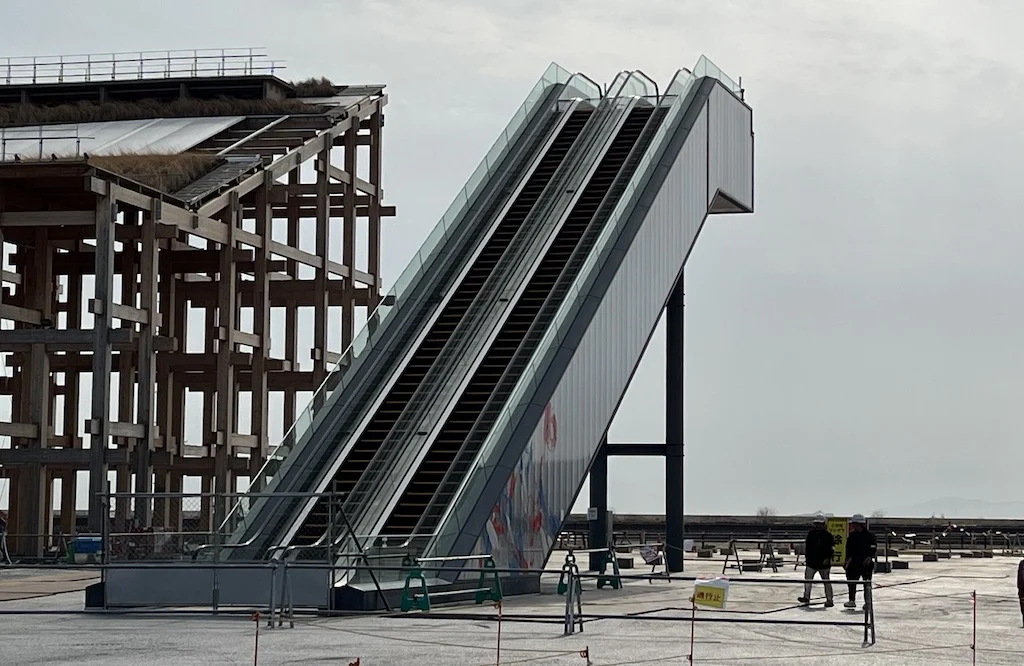
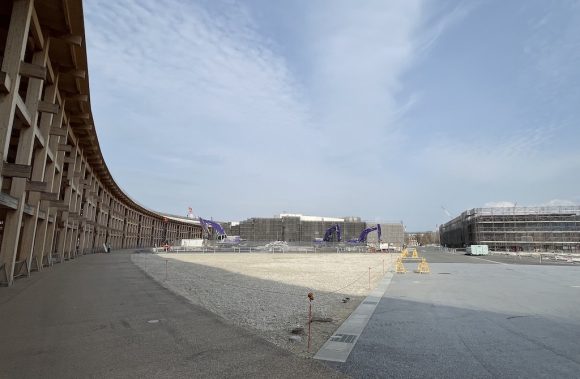
The official handover of the final construction plot used for the Kuwait Pavilion back to the City of Osaka marks the formal conclusion of Nüssli’s extensive operations at Expo 2025 Osaka. This milestone signifies the completion of a complex logistical and architectural lifecycle that began years ago with the initial planning and realization of several high-profile national pavilions. Following the conclusion of the World Expo, which centered on the theme "Designing Future Society for Our Lives," the dismantling process has been executed with surgical precision, ensuring that the artificial island of Yumeshima is returned to its original state. The orderly return of the Kuwaiti site, following the successful restoration of the Swiss, Austrian, and Uzbek plots, was completed without any complaints or technical objections from Japanese authorities. This achievement reinforces the reputation of the Swiss-based Nüssli Group as a leader in the specialized field of temporary and modular construction, particularly within the demanding environment of international mega-events.
The Full Lifecycle of Expo Participation: From Vision to Restoration
The completion of the Osaka project represents a full circle for Nüssli. In the world of temporary architecture, the success of a project is measured not only by the grandeur of the opening ceremony but also by the efficiency and ecological responsibility of the dismantling phase. For Expo 2025, Nüssli served as a critical partner for multiple nations, navigating the unique challenges of building on Yumeshima, a reclaimed island in Osaka Bay. The site presented significant engineering hurdles, including soft soil conditions and the strict seismic building codes of Japan.
The process began with the "Type A" pavilion category—self-built structures that allow nations the greatest creative freedom but also impose the highest level of responsibility for construction and removal. Nüssli’s role as a general or total contractor for several of these pavilions meant overseeing everything from initial structural engineering and procurement to the final "clean-up" phase. The successful handover to the City of Osaka confirms that the company met all contractual obligations regarding the environmental remediation of the plots, a task that involves the removal of deep-seated foundations and the restoration of the land to its pre-event topographical state.
Sustainability in Action: The Relocation of the Uzbekistan Pavilion
One of the most significant highlights of Nüssli’s engagement in Osaka was the Uzbekistan Pavilion, titled "Garden of Knowledge." Developed in collaboration with Atelier Brückner, this structure was never intended to be a single-use building. From its inception, the pavilion was designed around the principles of circular construction and modularity. The two-story structure featured a sophisticated wooden framework that allowed for rapid assembly and, more importantly, non-destructive disassembly.
Following the close of the Expo, the "Garden of Knowledge" was meticulously dismantled. Rather than being relegated to a recycling center or landfill, the modular components were shipped to Nukus, the capital of the Republic of Karakalpakstan in Uzbekistan. There, the structure is currently being reassembled to serve as a cornerstone of a new cultural and educational campus, housing a children’s library and community spaces. This relocation serves as a primary case study for the Bureau International des Expositions (BIE) and future Expo organizers on how temporary national showcases can leave a tangible, long-term legacy in their home countries, effectively bridging the gap between temporary event architecture and permanent social infrastructure.
Architectural Excellence and International Recognition
Nüssli’s work at Expo 2025 Osaka has garnered significant acclaim from the international design community. Several of the pavilions managed by the group were recipients of prestigious industry awards, cited for their technical precision, aesthetic impact, and innovative use of materials.
The Swiss Pavilion, "La Suisse Enchantée," stood out as a feat of lightweight engineering. Designed by Manuel Herz Architekten with content by Bellprat Partner, the pavilion utilized pneumatic elements to create a structure that was both visually striking and remarkably light. As the general contractor, Nüssli was responsible for the complex project management required to realize these unconventional forms. The pavilion’s design philosophy—focused on minimal material usage and high recyclability—resonated with juries looking for sustainable solutions in the event sector.

Similarly, the Austrian Pavilion, "Sounds of Austria," received accolades for its spiral-shaped wooden structure that visually represented a musical score. Designed by BWM Designers & Architects in collaboration with facts and fiction, the project required Nüssli to execute high-precision timber engineering to ensure the stability of the soaring, curved elements. The Kuwaiti Pavilion, "The Visionary Lighthouse," and the Brazilian Pavilion also added to the portfolio of success, with the former being noted for its integration of light and transparency, designed by the architectural firm LAVA and the agency insglück.
A Chronology of Execution: Navigating the Osaka Timeline
The success of the Osaka projects was the result of a multi-year timeline that required navigating the global supply chain disruptions of the early 2020s and the specific labor market conditions in Japan.
- 2022–2023: Planning and Procurement: Nüssli entered into contracts with various national organizing committees. This phase involved translating avant-garde architectural concepts into buildable, temporary structures that complied with Japanese "Kenchi-Kijun-Ho" (Building Standards Law).
- 2023–2024: The Construction Phase: Groundbreaking on Yumeshima began under challenging conditions. Nüssli managed a multicultural workforce and coordinated the arrival of prefabricated components from international suppliers.
- April – October 2025: The Expo Period: During the six months of the event, Nüssli provided facility management and technical support to ensure the pavilions operated flawlessly for millions of visitors.
- November 2025 – April 2026: Dismantling and Remediation: Following the closing ceremony, the focus shifted to the "reverse construction" process. This phase is often more complex than the build itself, as it requires the separation of materials for recycling and the logistical coordination of shipping modular parts back to home countries or to second-life locations.
- April 16, 2026: Final Handover: The return of the Kuwaiti plot marks the official end of Nüssli’s physical presence on the Expo site.
Technical Analysis of the Temporary Construction Market
The completion of the Osaka projects highlights a shift in the global event industry toward "Total Contractor" models. National governments are increasingly seeking partners who can handle the entire lifecycle of a pavilion. For Nüssli, this involved managing a diverse ecosystem of partners, including:
- Architectural Firms: Collaborating with visionaries like Manuel Herz and LAVA to ensure that "unbuildable" designs became structural realities.
- Kreativagenturen (Creative Agencies): Working with firms like Bellprat Partner and facts and fiction to integrate complex audiovisual and scenographic elements into the building’s shell.
- Logistics Providers: Managing the carbon footprint of transporting materials to an artificial island and back.
Industry analysts suggest that the demand for modular, relocatable structures—like the Uzbekistan Pavilion—is set to grow. As environmental regulations become stricter, the "build-and-burn" model of temporary construction is being replaced by "build-and-repurpose." Nüssli’s performance in Osaka serves as a benchmark for this transition, demonstrating that large-scale temporary structures can be both award-winning pieces of art and responsible examples of the circular economy.
Broader Implications for Future World Expos
As the focus of the international community shifts toward Expo 2030 in Riyadh, the lessons learned by Nüssli in Osaka will likely inform future construction strategies. The emphasis on sustainability, the use of timber as a primary structural material, and the requirement for a "second life" for every building are no longer optional—they are becoming core requirements of the BIE.
The successful completion of the Osaka engagement also underscores the importance of international cooperation. Nüssli’s ability to work within the Japanese regulatory framework while representing European and Middle Eastern interests illustrates the diplomatic role that construction firms play in World Expos. These events are as much about engineering diplomacy as they are about cultural exchange.
By delivering the final sites in pristine condition, Nüssli has not only fulfilled its contractual duties but has also contributed to the overall success of Expo 2025 Osaka. The city now moves forward with its plans for the post-Expo development of Yumeshima, while the modular legacy of the pavilions lives on in places like Nukus, Uzbekistan. For Nüssli, the focus now turns to new horizons, carrying the momentum of the Osaka success into the next generation of global events and specialized construction challenges. The company’s leadership expressed that these accolades and the smooth conclusion of the project serve as a profound motivation to continue pushing the boundaries of what is possible in temporary architecture, ensuring that "temporary" does not mean "wasteful," but rather "adaptive" and "future-oriented."
