

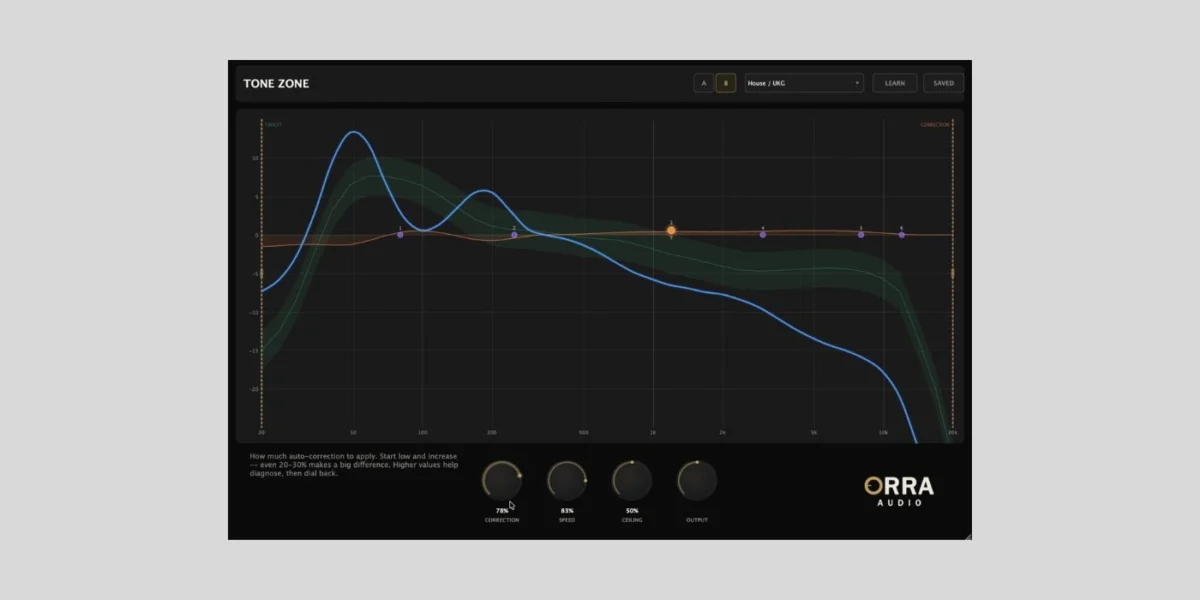
Orra Audio has officially released Tone Zone, an innovative tonal curve corrector plugin available for macOS and Windows, adopting a unique free (pay-what-you-can) model. This sophisticated tool enters the competitive landscape of audio production software, aiming to democratize access to professional-grade mixing and mastering capabilities by offering an advanced suite of features designed to achieve optimal spectral balance in audio mixes. Its introduction marks a significant development for producers, engineers, and musicians seeking to refine their sound with precision and efficiency, particularly those operating in home studios or with limited budgets.
The Genesis of Tonal Balance Solutions
The pursuit of tonal balance stands as one of the most critical and often challenging aspects of audio mixing and mastering. A well-balanced mix ensures that all frequency ranges – from the deepest bass to the brightest highs – are present in appropriate proportions, leading to a cohesive, impactful, and professional sound that translates effectively across various playback systems. Historically, achieving this balance relied heavily on the trained ears of experienced engineers, working in acoustically treated environments, utilizing a combination of spectrum analyzers and precise equalization. This traditional approach, while highly effective, often presented a steep learning curve and significant financial barriers for emerging artists and independent producers.
The digital revolution in audio production, while providing unprecedented creative freedom, also introduced new complexities. The proliferation of digital audio workstations (DAWs) and a vast array of plugins brought powerful tools within reach, but the fundamental challenge of achieving a "radio-ready" mix remained. In response, the audio software industry began developing assistive technologies. Pioneering solutions, such as iZotope’s Tonal Balance Control, emerged to offer visual feedback on a mix’s spectral characteristics, comparing it against established genre targets. These tools provided invaluable guidance, helping engineers identify frequency imbalances that might be imperceptible in less-than-ideal monitoring conditions. Tone Zone builds upon this foundation, not merely providing diagnostic metering but integrating a comprehensive set of corrective and creative tools within a single interface, thereby offering a more holistic approach to tonal shaping.
Unpacking Tone Zone: Core Functionality and Advanced Features
Tone Zone distinguishes itself by moving beyond simple metering to offer an integrated solution for spectral correction and enhancement. At its core, the plugin performs a smooth 40-band spectral analysis, providing a high-resolution visual representation of the mix’s tonal curve. This detailed analysis is crucial for identifying subtle peaks or valleys in the frequency spectrum that can detract from a mix’s clarity or impact.
Intelligent Spectral Analysis and Genre-Specific Targets
The plugin overlays the user’s mix curve against one of 24 meticulously genre-calibrated target zones. These targets cover an extensive range of musical styles, from contemporary genres like Modern Pop, Hip-Hop/Trap, and Drum & Bass to more classical and niche categories. This breadth of presets ensures that producers can quickly find a suitable reference point, regardless of their musical style, and begin shaping their mix towards a commercially viable sound. For instances where factory presets may not align with a unique artistic vision – perhaps for a genre-bending track like "Future Chiptune Metal Folk Trap" – Tone Zone offers a highly flexible solution: the ability to learn the tonal fingerprint of any reference track. Users can import WAV, AIFF, MP3, or FLAC files, and Tone Zone will analyze their spectral characteristics, allowing for the creation of custom target curves. These saved reference curves are stored as .otzcurve files, facilitating the development of a personalized library and seamless sharing among collaborators, fostering consistency across projects and teams.
Adaptive Correction Engine: Beyond Simple Metering
One of Tone Zone’s most compelling features is its auto-corrective EQ. When the "Correction" knob is engaged, an FFT-based EQ dynamically nudges the mix’s spectrum toward the selected target in real-time. This is not a blunt instrument; the engine demonstrates remarkable intelligence in its application. It applies frequency cuts at full strength, effectively taming problematic resonances or excessive energy. However, it boosts frequencies at only 50% strength. This conservative approach to boosting is a critical design choice, preventing the plugin from aggressively adding energy to frequencies that may not be inherently present or desired in the original arrangement, thus preserving the mix’s natural character and avoiding artificial enhancements. This thoughtful algorithm minimizes the risk of introducing unwanted artifacts or over-processing, a common pitfall with less sophisticated auto-correction tools.
Integrated EQ and Saturation for Granular Control
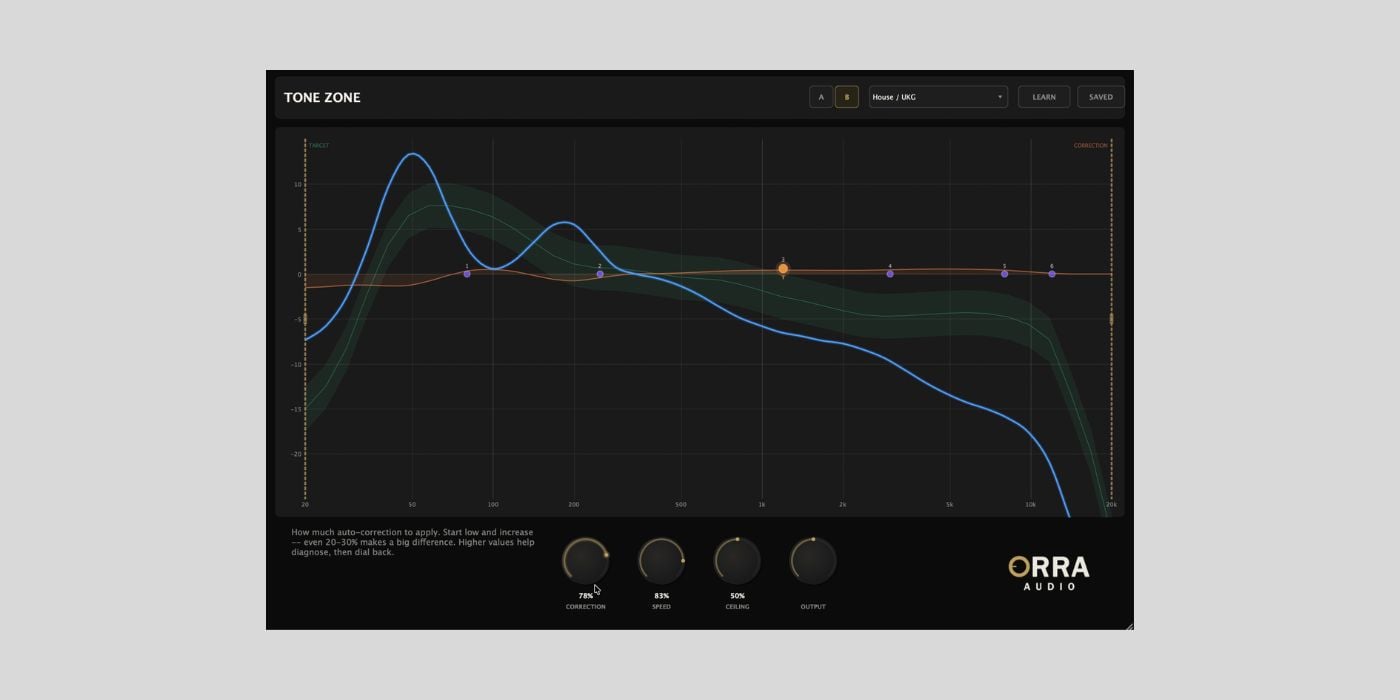
Beyond its intelligent auto-correction, Tone Zone integrates a powerful 6-band parametric EQ directly within the same window. This allows engineers to address major tonal deviations manually, providing a layer of precise control over the automatic adjustments. Users can drag nodes directly on the spectrum display, with the scroll wheel intuitively adjusting the Q factor for surgical or broad strokes. This combination of automated guidance and manual finesse empowers users to achieve highly refined results, leveraging the plugin’s diagnostic capabilities while maintaining creative command.
Adding another dimension to tonal shaping, each of the 6 parametric EQ bands can be switched from standard equalization to one of three distinct saturation modes by simply right-clicking a band.
- Tube mode: Introduces rich, warm even harmonics, often associated with analog tube equipment, adding fullness and depth.
- VCA mode: Provides a punchier character with a focus on odd harmonics, reminiscent of classic VCA compressors, ideal for adding aggression and definition.
- British mode: Imparts weight and rounds off the high frequencies, drawing inspiration from iconic British console designs, lending a polished, vintage quality.
These saturation effects operate in parallel, meaning the drive knob adds harmonic content without altering the overall signal level, allowing for subtle coloring or more pronounced textural changes without disrupting the mix’s gain structure.
User-Defined References and Workflow Enhancements
The flexibility to create and save custom reference curves is a significant advantage for producers working on diverse projects or those who adhere to specific sonic aesthetics. This feature not only streamlines the workflow by eliminating the need to re-analyze reference tracks for each session but also fosters collaboration, as these .otzcurve files can be easily shared. Furthermore, Tone Zone includes intuitive handles on the left and right edges of the spectrum display, enabling users to restrict auto-correction to a specific frequency range. For instance, if the bass frequencies have already been meticulously dialed in, dragging the left handle to around 200 Hz instructs the engine to leave that range untouched, focusing its corrective efforts on other areas of the spectrum. This level of granular control ensures that the auto-correction acts precisely where it’s needed, preventing unintended alterations to carefully crafted elements of the mix.
A Deep Dive into Intelligent Algorithms
The intelligence embedded within Tone Zone extends beyond its basic corrective functions, incorporating adaptive algorithms that react to the dynamic nature of music. These features are critical for maintaining musicality and preventing the plugin from overreacting to transient changes or structural shifts within a track.
Dynamic Correction and Density Gating
The spectral density gate is a prime example of this advanced intelligence. It actively detects whether the current audio segment corresponds to a full, dense chorus or a sparser intro/breakdown. Based on this detection, it intelligently adjusts the intensity of the correction. This prevents the plugin from overreacting during moments of lower spectral density, such as during breakdowns or sparse verses, where aggressive correction might sound unnatural or thin. By adapting its behavior to the musical context, Tone Zone ensures that the tonal balance remains consistent and musically appropriate throughout the entire track, rather than imposing a static correction that might work well in one section but poorly in another.
Section Transition Detection: Maintaining Musicality
Another crucial algorithmic innovation is the section transition detection. This feature recognizes when the arrangement changes – for example, moving from a verse to a chorus, or into a bridge. During these transitions, the plugin temporarily ducks the correction intensity. This subtle but effective mechanism prevents audible EQ shifts that could otherwise occur as the corrective algorithm re-evaluates the new spectral landscape of the incoming section. Such sudden changes in EQ can be jarring and distracting to the listener. By gracefully managing these transitions, Tone Zone ensures a smooth and cohesive listening experience, preserving the musical flow and integrity of the track. These intelligent algorithms collectively make Tone Zone a highly responsive and musically aware tool, capable of delivering professional results without sacrificing the artistic intent of the producer.
Strategic Implementation: Optimizing Your Workflow
The developers at Orra Audio recommend a structured approach to leveraging Tone Zone’s full potential, starting with a diagnostic phase. They suggest beginning with the Correction, Speed, and Ceiling parameters all set to 100%. In this configuration, the orange correction curve becomes a powerful diagnostic tool, visually articulating precisely what the engine perceives your mix needs to achieve the target tonal balance. This initial high-intensity setting serves as an objective "second opinion," highlighting areas of significant deviation that might be difficult to discern by ear alone or in untreated rooms.
Once these major deviations are identified, the next step involves using the integrated 6-band parametric EQ to address them manually. By taking over the "heavy lifting" with precise manual EQ moves, the user actively shapes the mix, and as these adjustments are made, the orange auto-correction curve should visibly flatten out, indicating a closer alignment with the target. This iterative process allows the engineer to learn and refine their understanding of tonal balance while making conscious, deliberate choices. Finally, after the major issues have been resolved manually, the auto-correction can be dialed back to a gentler 20-40% for ongoing, subtle maintenance. This approach combines the power of intelligent automation with the precision and creative control of manual intervention, resulting in a finely tuned and professionally balanced mix.
The Philosophy Behind ‘Pay-What-You-Can’
Orra Audio’s decision to offer Tone Zone as a free, pay-what-you-can plugin is a noteworthy aspect of its release, reflecting a growing trend in the software industry to balance accessibility with sustainable development. This model removes the financial barrier to entry, making a sophisticated tool available to a wider audience, including aspiring producers, hobbyists, and those in regions with limited economic resources. It embodies a commitment to democratizing professional audio production, empowering creators regardless of their budget.
From a business perspective, the pay-what-you-can model relies on the goodwill and support of its user base. While some users may choose to download and use the plugin without financial contribution, others, particularly professionals who derive significant value from the tool, are encouraged to contribute what they deem fair. This can foster a strong community around the product, where users feel a sense of ownership and appreciation for the developers’ efforts. It also serves as a powerful marketing strategy, generating buzz and widespread adoption that might be harder to achieve with a traditional pricing structure. The long-term viability of this model for Orra Audio will depend on the collective contributions of its user base, but it undeniably positions Tone Zone as a highly attractive and accessible option in the competitive plugin market.
Industry Reception and Expert Perspectives
Initial reactions from the audio production community and industry analysts have been overwhelmingly positive. Music technology reviewers are quick to point out the plugin’s comprehensive feature set, especially considering its "free" status. Many draw parallels to established tools like iZotope’s Tonal Balance Control but highlight Tone Zone’s unique integration of auto-correction, parametric EQ, and saturation within a single, intuitive interface as a significant differentiator.
Early adopters, ranging from professional mastering engineers to bedroom producers, have praised the plugin’s effectiveness in achieving quick, yet musically pleasing, tonal balance. The intelligent algorithms, particularly the spectral density gate and section transition detection, are frequently cited as standout features that elevate Tone Zone beyond basic spectrum analysis. "It’s an absolute game-changer for my workflow," remarked one independent producer, "especially for checking mixes in my untreated room. The auto-corrective EQ gives me a solid starting point, and then I can fine-tune it with the built-in parametric EQ. The saturation modes are just icing on the cake." Analysts suggest that Orra Audio’s strategic release of such a powerful tool under a pay-what-you-can model could disrupt segments of the audio plugin market, forcing competitors to re-evaluate their own pricing and feature offerings. The consensus indicates that Tone Zone is not just another free plugin; it is a genuinely powerful and intelligently designed tool that could become a staple in many producers’ arsenals.
Broader Implications for Music Production
The release of Orra Tone Zone carries several significant implications for the broader landscape of music production.
Democratizing Professional Audio
Perhaps the most profound impact is the further democratization of professional audio production. By offering a sophisticated tonal balance solution with intelligent correction and creative tools at virtually no cost, Orra Audio significantly lowers the barrier to entry for achieving high-quality mixes. This empowers a new generation of producers and artists to create music with a competitive sonic quality, regardless of their financial resources or access to high-end studio equipment. It levels the playing field, allowing talent and creativity to shine without being hindered by technical limitations.
Shifting the Plugin Market Landscape
Tone Zone’s release also puts pressure on established developers of similar, often premium-priced, tonal balance and intelligent EQ tools. The sheer breadth of features offered by Tone Zone, coupled with its flexible pricing model, challenges the traditional notion that advanced functionality must come with a hefty price tag. This could spur innovation across the industry, encouraging other companies to enhance their offerings or reconsider their pricing strategies to remain competitive. It also highlights the growing viability of community-supported and open-source models in the commercial software space.
The Future of Assistive Mixing Technologies
Finally, Tone Zone exemplifies the evolving direction of audio production tools: increasingly intelligent, assistive, and context-aware. The integration of dynamic algorithms that adapt to musical content, rather than applying static processing, represents a significant step forward. This trend suggests a future where AI and machine learning play an even more prominent role in guiding and enhancing the creative process, allowing engineers to focus more on artistic expression and less on purely technical challenges. Tools like Tone Zone serve as both diagnostic aids and powerful corrective instruments, streamlining workflows and helping producers achieve their sonic vision with unprecedented efficiency and precision.
Tone Zone is available in VST3, AU, and AAX formats for macOS (supporting both Apple Silicon and Intel architectures) and in VST3 and AAX formats for Windows. This wide compatibility ensures that the plugin can be seamlessly integrated into virtually any modern digital audio workstation, making its advanced capabilities accessible to a broad user base. Its release on April 13, 2026, as noted by Tomislav Zlatic, marks a pivotal moment for Orra Audio and the wider audio production community, setting a new standard for accessible and intelligent mixing tools.
