

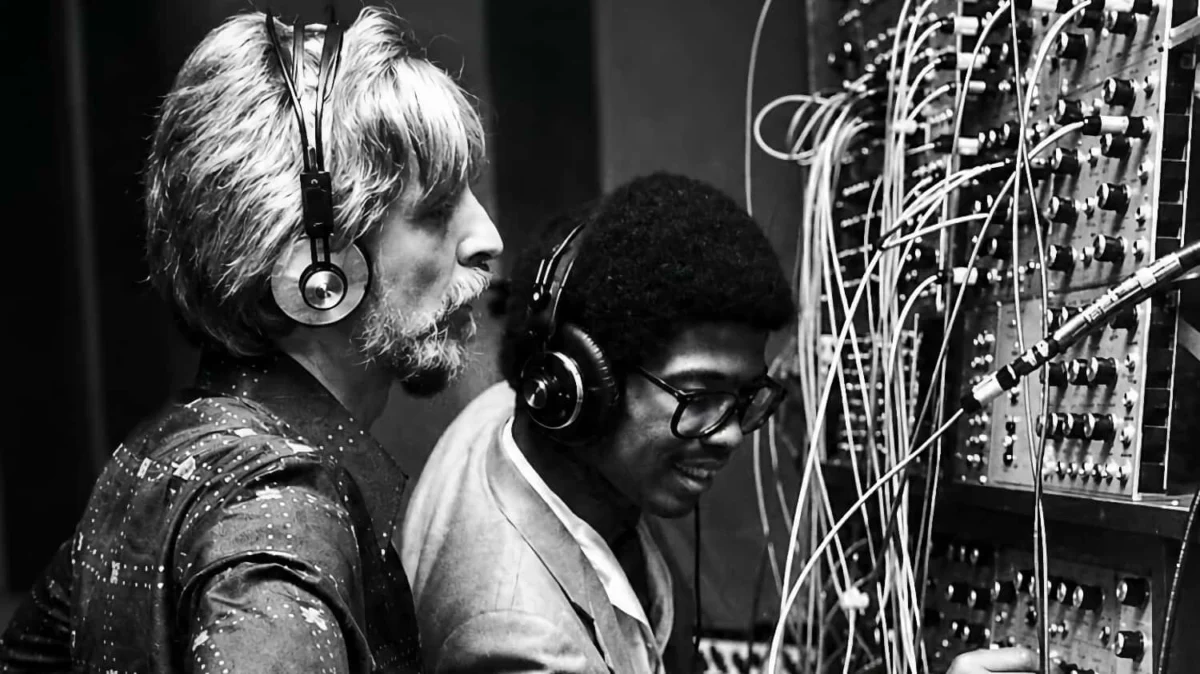
Patrick Gleeson, the visionary synthesist, composer, producer, and engineer whose work fundamentally reshaped the landscape of jazz fusion, electronic realization, and cinematic soundscapes, passed away on July 19, 2026, at the age of 91. A foundational figure in the evolution of electronic music, Gleeson is credited with bridging the gap between the academic avant-garde and popular musical forms. His death marks the end of an era for the San Francisco electronic music scene, where he spent over half a century pushing the boundaries of what was possible with modular synthesis and digital recording.
Gleeson’s career spanned several of the most transformative decades in music history. From his early days at the San Francisco Tape Music Center to his pivotal collaborations with jazz legend Herbie Hancock and his production work for New Wave icons Devo, Gleeson remained a constant innovator. His ability to humanize the often-cold machinery of early synthesizers made him a sought-after collaborator for artists looking to expand their sonic palettes.
Early Life and the San Francisco Avant-Garde
Born on November 9, 1934, Patrick Gleeson’s journey into music was not immediate. He originally pursued an academic path, earning a PhD in English literature and teaching at San Francisco State University. However, the cultural explosion of the 1960s in Northern California drew him toward the burgeoning field of electronic sound.
During this period, San Francisco was the epicenter of experimental audio. Gleeson began frequenting the San Francisco Tape Music Center, a hub for luminaries such as Morton Subotnick, Pauline Oliveros, and Ramon Sender. It was here that he first encountered the Buchla 100 series modular electronic music system. Unlike traditional instruments, the Buchla lacked a keyboard, forcing Gleeson to think about music in terms of voltage, frequency, and timbre rather than standard notation.
The turning point for Gleeson came in 1968 with the release of Wendy Carlos’s Switched-On Bach. The album demonstrated that synthesizers could be used for rigorous musical expression rather than just sound effects. Inspired by Carlos’s technical precision, Gleeson acquired a Moog III modular synthesizer—a massive, complex instrument that required a deep understanding of patch cables and signal flow. This acquisition set the stage for his professional transition from academia to the recording studio.
The Founding of Different Fur Recording
In 1968, Gleeson co-founded Different Fur Recording in San Francisco alongside John Vieira. Initially established as a modest space for electronic experimentation, the studio quickly evolved into one of the most technologically advanced recording facilities on the West Coast. Different Fur became a sanctuary for artists who felt constrained by the traditional studio systems of Los Angeles or New York.
Under Gleeson’s guidance, Different Fur hosted a diverse array of talent. The studio was instrumental in the development of the "San Francisco Sound" of the 1970s and 80s, serving as a creative home for artists including Brian Eno, David Byrne, and the Kronos Quartet. Gleeson’s reputation as a "synthesist-in-residence" meant that he often did more than just engineer sessions; he frequently helped artists integrate electronic textures into their work, providing a bridge between organic instrumentation and synthetic sound.
Revolutionizing Jazz: The Herbie Hancock Years
Perhaps Gleeson’s most significant contribution to music history was his collaboration with jazz pianist Herbie Hancock. In the early 1970s, Hancock was moving away from the acoustic post-bop of the Miles Davis Quintet toward a more expansive, experimental sound. Hancock famously credited Gleeson with introducing him to the world of synthesizers.
Gleeson joined Hancock’s "Mwandishi" band, a group known for its deep explorations into jazz fusion and Afro-futurism. He contributed his Moog III modular system to the seminal albums Crossings (1972) and Sextant (1973). At the time, the inclusion of a dedicated synthesist in a live jazz ensemble was revolutionary. Gleeson did not just play melodies; he provided "atmospheric environments," using the Moog to create swirling textures, ring-modulated abstractions, and deep, subsonic pulses that complemented Hancock’s Fender Rhodes.
The Mwandishi era remains a high-water mark for jazz fusion, and Gleeson’s role was pivotal. He proved that the synthesizer could be a sensitive improvisational tool, capable of reacting in real-time to the nuances of a live drummer or trumpeter. His touring work with Hancock took these complex electronic sounds to stages across the world, influencing a generation of keyboardists to look beyond the organ and piano.
"Beyond the Sun" and Classical Realization
In 1976, Gleeson released his most acclaimed solo work, Beyond the Sun – An Electronic Portrait of Holst’s The Planets. Following in the footsteps of Wendy Carlos and Isao Tomita, Gleeson utilized the Moog synthesizer to "orchestrate" Gustav Holst’s symphonic suite. The project was a massive undertaking, requiring thousands of overdubs and meticulous programming to replicate the power of a full orchestra through monophonic synthesis.

The album was a critical and commercial success, earning a Grammy nomination for Best Engineered Classical Recording. Its impact was solidified by the liner notes written by Wendy Carlos herself, who praised Gleeson for his "musical taste" and "unprecedented discipline." Carlos noted that Gleeson had finally met the high technical standards required for electronic realization, a field often marred by amateurish experimentation.
Gleeson followed this success with other electronic interpretations, including a synthesized version of Vivaldi’s The Four Seasons and a pioneering electronic arrangement of the Star Wars score. These works helped legitimize the synthesizer as a "serious" classical instrument in the eyes of the public and the recording industry.
Production Milestones: Devo and "My Life in the Bush of Ghosts"
As the 1970s drew to a close, Gleeson’s expertise was sought by the emerging New Wave and experimental rock movements. In 1978, he served as the engineer and co-producer (alongside Brian Eno) for Devo’s debut album, Q: Are We Not Men? A: We Are Devo!. Gleeson’s technical precision was a perfect match for Devo’s "de-evolutionary" aesthetic, helping to craft the jagged, mechanical sound that would define the band’s career.
Shortly thereafter, Gleeson contributed to the landmark album My Life in the Bush of Ghosts (1981) by Brian Eno and David Byrne. The album is celebrated for its pioneering use of sampling and world music influences. Gleeson’s ability to manipulate electronic signals provided the necessary texture for the album’s dense, polyrhythmic layers. His work during this period demonstrated an uncanny ability to adapt to the shifting tides of popular music, moving from the fluid improvisation of jazz to the rigid structures of post-punk with ease.
Cinematic Soundscapes and "Apocalypse Now"
Gleeson’s influence extended into the world of film. His most notable contribution was to Francis Ford Coppola’s 1979 masterpiece, Apocalypse Now. Working alongside composers Carmine and Francis Ford Coppola, Gleeson used his array of synthesizers to create the haunting, atmospheric drones that underscore the film’s descent into the jungle.
In an era before digital workstations, Gleeson’s ability to design custom sounds from scratch was invaluable for film scoring. He didn’t just provide music; he provided "sonic architecture" that heightened the psychological tension of the narrative. His work on Apocalypse Now helped set the standard for the use of electronics in Hollywood film scoring, a legacy that continues in the work of modern composers like Hans Zimmer and Trent Reznor.
Later Years and Technical Legacy
Even as digital technology began to replace the analog systems he helped popularize, Gleeson remained an active and curious musician. He embraced digital synthesis and computer-based recording, continuing to release solo jazz recordings and experimental works well into his 80s.
He remained a fixture at electronic music festivals, performing live at Moogfest in 2019 and Synthplex in 2022. During these appearances, he often performed alongside younger musicians, demonstrating a continued relevance and a desire to mentor the next generation of synthesists. His live performances, such as "The Leap" with Michael Shrieve and Sam Morrison, showcased a musician who had lost none of his improvisational fire.
Analysis of Impact and Industry Reaction
The passing of Patrick Gleeson has triggered a wave of tributes from the music community. The Bob Moog Foundation issued a statement highlighting Gleeson’s "pioneering spirit" and his role in "democratizing the synthesizer as a tool for all genres." Fellow musicians, including drummer Michael Shrieve and sound designer Drew Schlesinger, have characterized Gleeson as a "giant" who combined the intellect of a scholar with the soul of a jazzman.
Industry analysts point to Gleeson as a key figure in the "professionalization" of the synthesizer. Before Gleeson, the instrument was often viewed as either a gimmick for pop records or a tool for academic sound-on-sound experiments. Gleeson’s work with Herbie Hancock and his Grammy-nominated classical realizations proved that the synthesizer required the same level of virtuosity and emotional depth as any traditional instrument.
Furthermore, his founding of Different Fur Recording created a blueprint for the independent boutique studio. By providing high-end technology in a creatively open environment, he allowed artists to experiment in ways that major label studios often discouraged.
Chronology of Major Works and Milestones
- 1934: Born in San Francisco, California.
- 1960s: Joins the San Francisco Tape Music Center; begins experimentation with Buchla systems.
- 1968: Co-founds Different Fur Recording; acquires Moog III modular synthesizer.
- 1972: Collaborates with Herbie Hancock on Crossings.
- 1973: Contributes to Herbie Hancock’s Sextant and tours with the Mwandishi band.
- 1976: Releases Beyond the Sun – An Electronic Portrait of Holst’s The Planets; receives Grammy nomination.
- 1978: Produces/engineers Devo’s Q: Are We Not Men? A: We Are Devo!.
- 1979: Contributes synthesizer work to the score of Apocalypse Now.
- 1981: Collaborates on Brian Eno and David Byrne’s My Life in the Bush of Ghosts.
- 2019-2022: Performs at major electronic music summits (Moogfest, Synthplex).
- 2026: Dies at the age of 91.
Patrick Gleeson’s legacy is etched into the grooves of over 100 albums and the soundtracks of some of cinema’s most enduring works. He was a man who looked at a wall of patch cables and saw a symphony. As the music world mourns his passing, his recordings remain as a testament to a life spent in pursuit of the "new"—a tireless explorer of the electronic frontier who taught the machines how to sing.
