

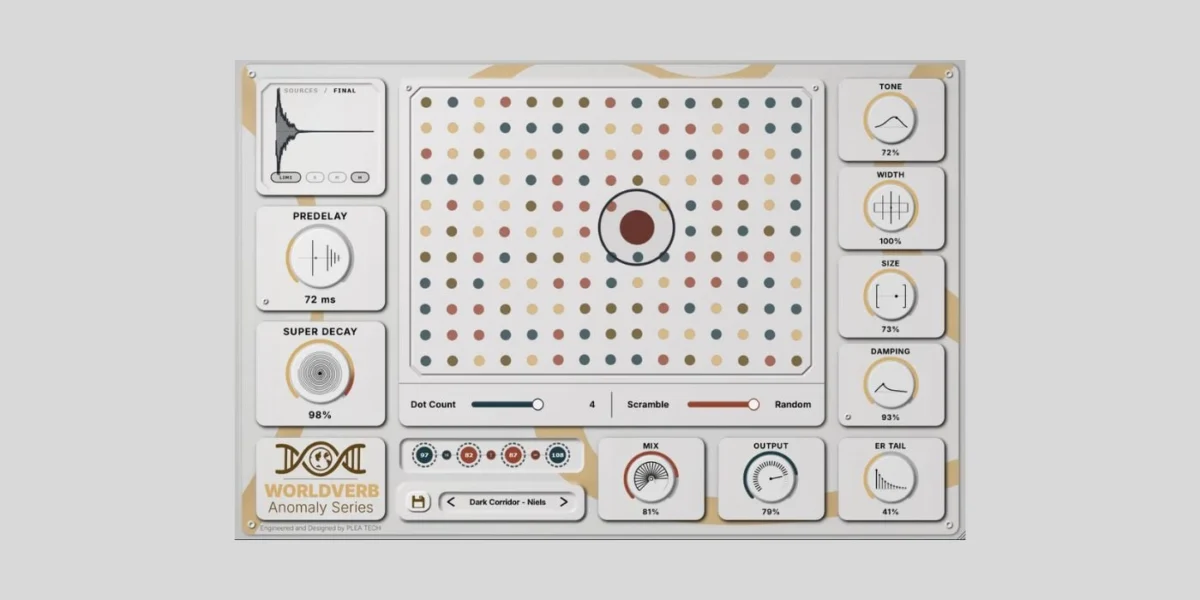
Pleatech Audio, an emerging developer in the audio software landscape, has announced a limited-time offer making its innovative creative reverb plugin, WorldVerb, available as a free download exclusively for readers of the Bedroom Producers Blog (BPB). The initiative, spearheaded by developer Niels, involves a direct offer to the BPB community, providing a unique opportunity for music producers and sound designers to acquire a full-featured plugin valued at $15, complete with future updates. The coupon code, KAAPXM3, shared within the BPB community section, has been verified and grants immediate access to the full version of the Windows-compatible VST3 plugin, with the offer slated to expire on July 27, 2026. This move underscores a growing trend among independent developers to engage directly with targeted creative communities, bypassing traditional marketing channels to foster goodwill and direct user feedback.
The Genesis of WorldVerb: A Developer’s Vision
Pleatech Audio, while not a long-established giant in the audio plugin industry, has quickly garnered attention for its commitment to developing tools that prioritize character and unique functionality over generic design. WorldVerb stands as a testament to this philosophy. Developer Niels, the driving force behind Pleatech Audio, articulated through his direct engagement with the BPB community a desire to create a reverb plugin that transcends the conventional boundaries of acoustic simulation. Unlike many digital reverbs that aim for pristine realism or simple algorithmic variations, WorldVerb is engineered for experimental sound design, encouraging users to manipulate and combine disparate acoustic environments in novel ways. This approach resonates with a segment of the audio production community that seeks instruments capable of generating distinctive sonic textures and pushing creative boundaries, rather than merely replicating existing sounds.
The development of WorldVerb likely involved an extensive process of capturing and curating a diverse library of impulse responses (IRs). The plugin’s core concept, built around 173 real captured spaces, suggests a meticulous effort to record a wide array of acoustic environments. This foundation of authentic acoustic data, when combined with WorldVerb’s innovative blending mechanisms, allows for an unprecedented degree of creative manipulation. Niels’ decision to offer the plugin for free to BPB readers at this juncture appears to be a strategic move to broaden its adoption within a highly engaged and technically savvy user base, eliciting valuable early feedback and building a strong community around the product.
Bedroom Producers Blog: A Hub for Innovation
The Bedroom Producers Blog, founded by Tomislav Zlatic, has established itself as a cornerstone resource for music producers, particularly those operating with budget constraints or seeking cutting-edge tools. Since its inception, BPB has cultivated a reputation for discovering and highlighting free plugins, deals, and innovative software that might otherwise go unnoticed in the crowded market. Its editorial stance often champions independent developers and unique offerings, making it an ideal platform for Pleatech Audio’s direct outreach. The blog’s active community section serves as a vital bridge between developers and users, facilitating direct communication and fostering a collaborative environment.
Tomislav Zlatic, in his editorial commentary on the WorldVerb offer, emphasized the increasing appreciation within the production community for plugins that possess "some character and uniqueness." He noted a recent trend where "a lot of plugin websites and plugins themselves have started looking alike," often adopting a sleek, minimalist aesthetic that can sometimes feel generic or even "AI look and feel." This observation highlights a growing fatigue with homogenous design and a renewed desire for tools that stand out visually and sonically. BPB’s consistent feature of such distinct plugins, like the previously highlighted "Grizzly," reinforces its role as a curator of originality in the digital audio workstation (DAW) ecosystem. The blog’s influence ensures that offers like WorldVerb receive widespread attention from a highly relevant audience, maximizing the impact for both the developer and the end-user.
Navigating a Saturated Market: The Quest for Character
The audio plugin market in 2026 is characterized by intense competition and rapid technological advancement. The proliferation of digital signal processing (DSP) tools, including a vast array of reverb plugins, means that developers must constantly innovate to capture user attention. While many plugins focus on hyper-realistic emulation of vintage gear or the pristine rendering of acoustic spaces, WorldVerb charts a different course. Its emphasis on a unique visual interface and a fundamentally experimental approach to reverb processing distinguishes it from the myriad of conventional convolution and algorithmic reverbs available.
The aesthetic choice, described as having a "unique style" and avoiding the "usual AI look," is not merely superficial. It signals a design philosophy that values intuitive, perhaps even playful, interaction over purely functional uniformity. This approach can be particularly appealing to sound designers and experimental musicians who often seek tools that inspire creative detours rather than just providing utilitarian effects. In an industry where many new releases leverage artificial intelligence for various functions, WorldVerb’s distinctive character represents a counter-narrative, suggesting that human-centric design and inventive concepts still hold significant appeal and can carve out a niche in a crowded marketplace. The $15 price point before the free offer positioned WorldVerb as an accessible yet specialized tool, making its current free availability an even more compelling proposition for those looking to expand their sonic palette without financial outlay.
Unpacking the Core Mechanics: Beyond Traditional Reverb
WorldVerb’s core innovation lies in its unique approach to impulse responses and their manipulation. Rather than presenting a simple dropdown menu of presets, the plugin offers a dynamic selection grid of 173 real captured spaces. This visual grid allows users to intuitively explore and select up to four distinct acoustic environments simultaneously. The real power of WorldVerb, however, unfolds within its "Merge Rack," where these selected spaces can be combined and transformed using seven distinct blend operators. This system moves far beyond the capabilities of standard convolution reverbs, which typically apply a single IR or blend a few in a basic parallel fashion.
The 173 Captured Spaces: A Sonic Atlas
The foundation of WorldVerb’s sonic versatility is its extensive library of 173 real-world impulse responses. These are not merely generic room sounds but likely encompass a vast spectrum of environments, from the intimate acoustics of small chambers to the expansive reverberations of grand cathedrals, perhaps even including abstract or unconventional spaces. The inclusion of CC0-licensed impulse responses, credited to contributors like NoiseCollector and Nox_Sound, highlights an open-source ethos that benefits the user by ensuring creative freedom. This diverse collection provides a rich starting point for both realistic acoustic placements and the construction of entirely fabricated soundscapes. The grid-based selection method, where users drag a ring to select spaces, offers a tactile and exploratory experience, encouraging serendipitous discovery and immediate sonic feedback.
The Merge Rack: A Symphony of Seven Operators
The true innovation of WorldVerb resides in its seven blend operators, each designed to interact with the selected impulse responses in a distinct and creatively powerful way. These operators are not just simple mixers; they perform complex transformations on the acoustic data, enabling a vast range of sonic possibilities:
- Layer: This operator functions much like traditional parallel processing, stacking the selected spaces on top of each other. Each space contributes its unique reverberant character, creating a richer, more complex overall sound. This is the most straightforward blending method, offering a quick way to combine the qualities of multiple environments.
- Series: In contrast to layering, the Series operator feeds the output of one space into the input of another. This cascading effect can create highly unusual and evolving reverb tails, as the reverberations from one environment are then further processed and colored by the subsequent space. It’s akin to sending an audio signal through a chain of physical rooms.
- Carve: This operator spectrally subtracts overlapping frequencies between selected spaces. This advanced spectral manipulation allows for a unique form of sound sculpting, where elements of one reverb can be "carved out" by another, resulting in highly specific and often ethereal textures. It can be used to clean up muddy low-ends or create spaces with precise spectral holes.
- Morph: Morph allows for a dynamic transition from one environment to the next over the duration of the reverb tail. This creates evolving, living spaces that shift and change, providing a sense of movement and narrative to the sound. It’s particularly effective for creating atmospheric textures or sound effects that require a gradual environmental transformation.
- Shimmer: The Shimmer operator shifts one of the selected spaces up an octave, adding a classic ethereal, bright, and often angelic quality to the reverb. This effect is widely popular in ambient music and film scoring for creating lush, sustained pads and otherworldly textures, now enhanced by the unique acoustic character of a real captured space.
- Scatter: This highly experimental operator breaks down a room’s impulse response into granular particles. This granular synthesis approach applied to reverb can generate fragmented, shimmering, or rhythmic textures that bear little resemblance to a natural acoustic space. It opens doors for glitch effects, complex rhythmic delays, and abstract soundscapes.
- Split: The Split operator separates frequency areas between the selected spaces. This allows for multi-band reverb processing, where, for instance, the low frequencies might reverberate in a large hall while the high frequencies resonate in a smaller, brighter room. This offers immense control over the spectral balance and spatial perception of the sound.
These blend operators collectively provide an unparalleled toolkit for experimental sound design, pushing WorldVerb far beyond the capabilities of a typical convolution reverb. They enable the creation of "impossible acoustic combinations from real impulse responses," as noted in the original description, inviting sound designers to explore uncharted sonic territories within their DAWs.
Sculpting Sonic Landscapes: Standard Controls and Practicalities
Beyond its innovative blend operators, WorldVerb also provides a comprehensive suite of traditional reverb controls, ensuring that users can fine-tune their creations with precision. These standard parameters work in conjunction with the experimental features, allowing for both subtle adjustments and dramatic transformations. Controls include:
- Size: Adjusts the perceived dimensions of the merged space.
- Decay: Controls the length of the reverb tail.
- Damping: Simulates absorption of high frequencies in a room, leading to a darker, warmer tail.
- ER Tail (Early Reflections Tail): Balances the intensity of early reflections versus the diffuse reverb tail.
- Predelay: Introduces a delay before the reverb begins, simulating the time it takes for sound to reach distant surfaces.
- Tone: Provides spectral shaping of the overall reverb sound.
- Width: Controls the stereo spread of the reverb.
- Output: Manages the overall output level.
- Mix: Blends the wet (reverb) and dry (original) signals.
These controls are essential for refining the output of the Merge Rack, allowing users to sculpt the character of their unique spaces to fit specific musical or sound design contexts. Given the potential for complex and sometimes unpredictable sonic outcomes when combining multiple spaces and operators, WorldVerb also incorporates a "Merged Limiter" with Soft, Medium, and Hard modes. This crucial safety feature protects against excessively loud or clipping combinations, which can easily occur during adventurous sound design, ensuring a stable and manageable output level.
Innovative Workflow: The Draggable Waveform and CC0 Licensing
One of WorldVerb’s most ingenious and practical features is its draggable waveform visualization. The plugin displays a color-coded visual representation of the merged reverb space, which can be directly dragged out of the plugin interface into a user’s DAW or sampler as a standard WAV file. This functionality offers immense utility for sound designers and producers. It allows for the capture and subsequent reuse of unique reverb impulse responses created within WorldVerb, turning the plugin into a powerful IR generator. Users can then load these custom IRs into other convolution reverbs, manipulate them further in audio editors, or even use them as raw sound design elements. This feature significantly enhances WorldVerb’s value beyond a real-time effect, turning it into a tool for asset creation.
Furthermore, the commitment to CC0 (Creative Commons Zero) licensing for all source impulse responses is a critical aspect for professional users. This ensures that any sounds created with WorldVerb, particularly those derived from its internal IR library, are entirely free to use in commercial projects without any copyright restrictions or attribution requirements. This freedom is invaluable for music producers, film composers, and game audio designers who need to ensure their assets are legally clear for commercial distribution. The transparency in crediting NoiseCollector and Nox_Sound for providing some of these captured spaces also reflects a respect for the community of sound recordists.
The Strategic Rollout: A Community-First Approach
The timing and method of WorldVerb’s free distribution underscore a calculated strategy by Pleatech Audio to maximize impact within the target community. The offer, initially posted by developer Niels in the BPB community section, leverages the blog’s direct line to its dedicated readership. The coupon code KAAPXM3 serves as a straightforward mechanism for redemption, simplifying the acquisition process for users.
In addition to the direct coupon code, Pleatech Audio has implemented a playful alternative: a "Lucky Pleatech" spin game on its product page. The developer openly stated that this digital wheel is "rigged so you always win," guaranteeing a free code for anyone who engages with it. This gamified approach not only adds an element of fun to the acquisition process but also encourages interaction with the Pleatech Audio website, potentially exposing users to other products or information. The short expiry window of July 27, 2026, creates a sense of urgency, prompting users to act quickly and preventing procrastination. This limited-time exclusivity for BPB readers strengthens the perceived value of the offer and reinforces the special relationship between the developer and the blog’s audience.
Broader Implications for Sound Design and the Industry
The release of WorldVerb, particularly its free availability, carries significant implications for both individual sound designers and the broader audio software industry.
Empowering Sound Designers
For sound designers, WorldVerb represents a powerful new instrument for sonic exploration. Its ability to combine real-world acoustics with imaginative digital processing provides a fertile ground for creating unique sonic textures, ambiences, and special effects. This is especially valuable for film scoring, game audio, and experimental music, where unique soundscapes are paramount. The experimental angle, encouraging the creation of "impossible acoustic combinations," directly addresses the need for tools that push creative boundaries beyond mere emulation. The draggable waveform feature further empowers sound designers by allowing them to quickly generate and export bespoke impulse responses, expanding their personal sound libraries and workflow efficiency.
Setting a Precedent for Plugin Development
Pleatech Audio’s direct engagement with the BPB community and its emphasis on unique character over generic design could influence other independent developers. This model of community-first offers, coupled with a product that stands out visually and functionally, demonstrates an effective strategy for gaining market traction and building brand loyalty. It also highlights the continued demand for innovative, creatively inspiring tools in an era increasingly dominated by feature-rich but often functionally similar plugins. The success of such a strategy could encourage more developers to focus on niche, character-driven products rather than attempting to compete directly with established giants in general-purpose effects.
The Future of Pleatech Audio
For Pleatech Audio, this free offer is a calculated investment. While foregoing immediate revenue from WorldVerb’s $15 price tag, the company stands to gain immense brand visibility, community goodwill, and a substantial user base for its product. This widespread adoption is crucial for a new developer, providing a foundation for future product releases, potential paid upgrades, and a loyal customer base. The planned "proper dark mode" update, mentioned by the developer, indicates a commitment to ongoing development and responsiveness to user preferences, further solidifying its relationship with the community. This initial offering could serve as a springboard for Pleatech Audio to establish itself as a significant player in the realm of creative audio software.
Technical Specifications and Future Outlook
WorldVerb is currently available exclusively in VST3 format for Windows operating systems. This focus on a single platform and format allows Pleatech Audio to streamline development and support efforts, which is common for smaller, independent developers. While this may limit access for macOS users or those preferring other plugin formats (like AU or AAX), it ensures a robust and stable experience for the target audience. The VST3 format itself offers modern advantages such as better CPU efficiency, dynamic I/O, and improved parameter handling within compatible DAWs.
The developer’s stated plan for a future update to include a "proper dark mode" reflects an awareness of contemporary user interface preferences and an ongoing commitment to refining the user experience. Dark modes are highly favored by producers who often work in dimly lit studio environments, reducing eye strain and improving visual comfort. This attention to user feedback, even for aesthetic features, is indicative of a developer keen on cultivating a positive relationship with its user base and continually enhancing its product.
Conclusion
Pleatech Audio’s decision to offer WorldVerb for free to Bedroom Producers Blog readers is more than just a promotional giveaway; it is a strategic move that highlights the evolving landscape of audio software development. By directly engaging with a passionate community and offering a plugin that champions unique character and experimental design, Pleatech Audio is poised to make a significant impact. WorldVerb’s innovative approach to combining real captured spaces with advanced blend operators offers unparalleled creative potential for sound designers and music producers. With its intuitive interface, powerful sound-sculpting capabilities, and valuable features like the draggable waveform and CC0 licensing, WorldVerb stands as a testament to the enduring appeal of originality in a saturated market. The limited-time offer, expiring on July 27, 2026, presents an unmissable opportunity for Windows users to acquire a truly distinctive and inspiring tool for their sonic arsenal, solidifying BPB’s role as a vital conduit for groundbreaking audio technology.
