

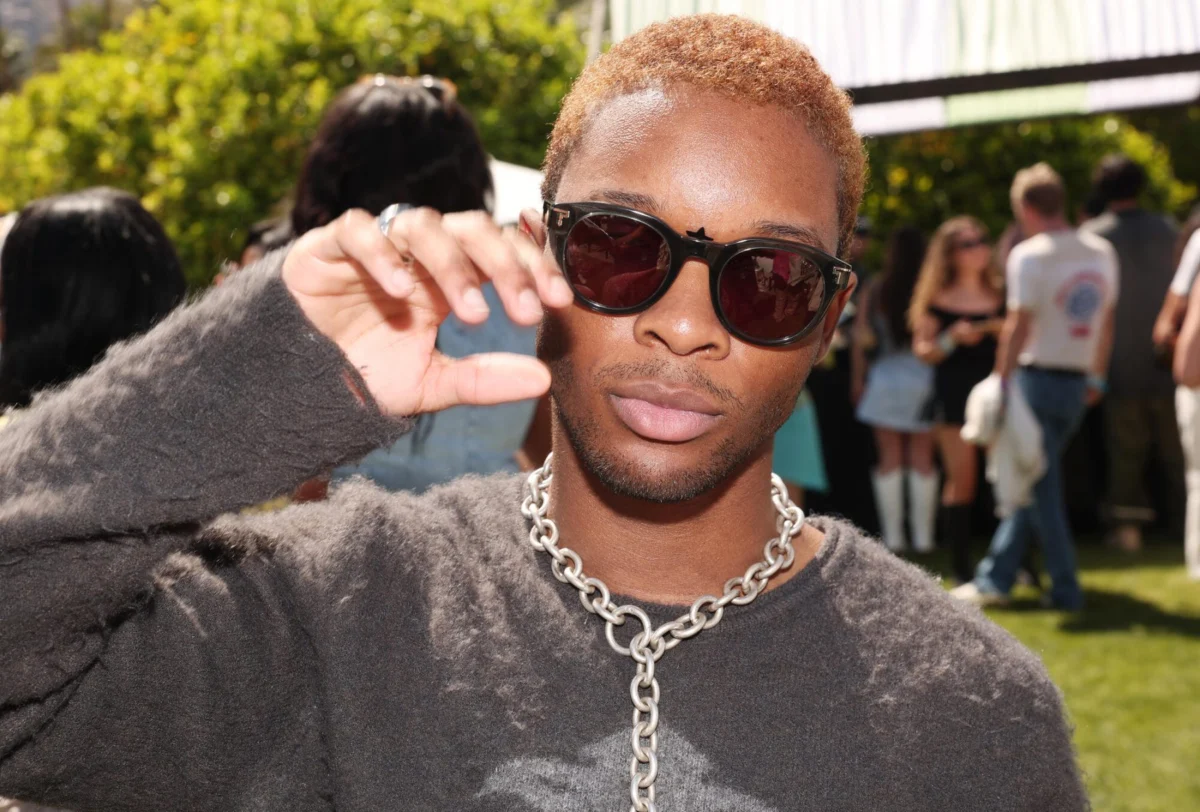
David Anthony Burke, professionally known as D4vd, the 21-year-old pop singer who rose to prominence with his 2022 breakout hit "Romantic Homicide," is currently facing severe legal challenges, having been charged with first-degree murder. The allegations, brought forth by the Los Angeles District Attorney’s Office, contend that Burke is responsible for the killing and subsequent dismemberment of 14-year-old Celeste Rivas Hernandez. Prosecutors assert that the musician maintained an illicit sexual relationship with the teenager and murdered her after she allegedly threatened to expose his criminal conduct, a revelation they claim would have irreparably damaged his burgeoning musical career.
The gravity of the charges has sent shockwaves through the music industry and D4vd’s fanbase. The Los Angeles District Attorney’s Office places the alleged murder on April 23, 2025, a date that coincidentally preceded the release of D4vd’s highly anticipated debut album, Withered, by just two days. The album, despite the looming tragedy, managed to debut at No. 13 on the Billboard 200, a testament to the artist’s initial commercial momentum. However, months following the alleged incident, law enforcement made a grim discovery: Rivas Hernandez’s decomposed and dismembered body was found inside an impounded Tesla, a vehicle registered to Burke.
Background on D4vd’s Ascent to Stardom
Born David Anthony Burke, D4vd emerged onto the music scene with a distinct sound that quickly captivated a global audience. His single "Romantic Homicide," released in 2022, became a viral sensation, particularly across streaming platforms and social media, propelling him from relative obscurity to a prominent position within the pop landscape. The track’s moody atmosphere and relatable lyrics resonated with millions, establishing D4vd as a significant new voice. His subsequent releases and the anticipation surrounding Withered solidified his status as an artist on the rise. Industry analysts and music critics had largely viewed D4vd as a promising talent, a perception underscored by his album’s respectable debut on the Billboard charts, even amidst the initial whispers and then concrete allegations that would soon consume his public persona. His trajectory was characteristic of many contemporary artists who leverage digital platforms for rapid ascent, converting online buzz into mainstream success and critical attention.
The Allegations: A Detailed Account from Prosecutors
The prosecution’s case hinges on a series of disturbing claims. Central to their argument is the alleged existence of an illegal sexual relationship between Burke and Celeste Rivas Hernandez. According to the District Attorney’s Office, the motive for the murder was Burke’s desperation to prevent Rivas Hernandez from exposing this relationship, which they claim she threatened to do. Such an exposure, prosecutors argue, would not only have legal ramifications but also a catastrophic impact on D4vd’s carefully cultivated public image and his rapidly accelerating career. The alleged timing of the murder, just before his debut album’s release, is presented as critical evidence, suggesting a calculated effort to silence the victim at a pivotal moment in his professional life.
The discovery of Rivas Hernandez’s body several months later in a Tesla registered to Burke provides a key physical link in the prosecution’s narrative. The state of the body – decomposed and dismembered – suggests a deliberate attempt to conceal the crime and hinder identification, further bolstering the first-degree murder charge, which typically involves premeditation or extreme atrocity. While specific details regarding the impoundment of the Tesla have not been fully released, such events typically follow traffic violations, outstanding warrants, or other police actions that lead to a vehicle being taken into custody, with the body being discovered during a routine inspection or a more targeted search. The timeline connecting the alleged murder date, the album release, and the subsequent discovery forms the backbone of the prosecution’s narrative, painting a grim picture of the events.
D4vd’s Defense: A Resolute Denial
In response to the formidable charges, D4vd has entered a plea of not guilty to all counts. His legal team has unequivocally stated its intention to "vigorously defend" the singer in court, signaling a robust legal battle ahead. In a statement released shortly after Burke’s arrest and formal charges, his attorneys asserted, "Let us be clear, the actual evidence in this case will show that David Burke did not murder Celeste Rivas Hernandez and he was not the cause of her death." This statement indicates that the defense plans to challenge the prosecution’s evidence directly, potentially presenting alternative explanations for Rivas Hernandez’s death or Burke’s involvement, or lack thereof.
The defense’s strategy is expected to focus on discrediting the prosecution’s narrative, scrutinizing the chain of custody for evidence, and potentially challenging the forensic findings related to the body and the Tesla. Legal experts anticipate that the defense will emphasize the principle of presumption of innocence, reminding the court and the public that allegations are not facts and that the burden of proof rests entirely with the prosecution. The statement also hints at the possibility of presenting evidence that points away from Burke, suggesting a complex and potentially prolonged legal process.
A Chronology of Events
The unfolding of this case has been marked by a series of critical dates and developments:

- 2022: D4vd releases "Romantic Homicide," launching his career and establishing him as a significant new artist.
- April 13, 2024: D4vd attends the Interscope & Capitol Records Coachella Party in Palm Springs, California, a period when his career appeared to be on a clear upward trajectory.
- March 9, 2025: D4vd attends the Coperni Womenswear Fall/Winter 2025-2026 show as part of Paris Fashion Week, maintaining a high-profile presence in the entertainment world.
- April 23, 2025: The Los Angeles District Attorney’s Office alleges the murder of Celeste Rivas Hernandez occurred. This date is central to the prosecution’s timeline.
- April 25, 2025: D4vd’s debut album, Withered, is released, achieving a No. 13 debut on the Billboard 200 chart.
- Months after April 2025 (Specific Date Not Disclosed): Police discover Celeste Rivas Hernandez’s decomposed and dismembered body in an impounded Tesla registered to David Anthony Burke. This discovery triggers the formal investigation and subsequent charges.
- (Date Not Disclosed, but following body discovery): David Anthony Burke, aka D4vd, is arrested and subsequently charged with first-degree murder.
- (Date Not Disclosed, but following charges): D4vd pleads not guilty to all charges. His legal team releases a statement affirming his innocence and their intent to vigorously defend him.
- (Date Not Disclosed, but following charges): D4vd’s headlining Withered tour is abruptly canceled, and a planned deluxe version of the album is shelved.
- (Date Not Disclosed, but following charges): D4vd is dropped by his record labels (Darkroom/Interscope Records), music publisher (Sony Music Publishing), and management company (The Team, formerly Wasserman), signifying a complete severing of professional ties.
- Ongoing: Billboard and other media outlets continue to track the legal proceedings as the case moves forward through the judicial system.
The Legal Landscape: Understanding First-Degree Murder Proceedings
A first-degree murder charge in California carries the most severe penalties, often including life imprisonment without the possibility of parole or, in some cases, the death penalty, though the latter is currently under a gubernatorial moratorium in the state. The prosecution must prove beyond a reasonable doubt that Burke not only caused Rivas Hernandez’s death but did so with premeditation and malice aforethought. The additional allegation of dismemberment could be used to demonstrate extreme depravity or an attempt to conceal the crime, factors that often weigh heavily in sentencing.
The legal process for a case of this magnitude typically involves several stages:
- Arraignment: Where the defendant is formally charged and enters a plea.
- Preliminary Hearing: A judge reviews the prosecution’s evidence to determine if there is sufficient cause to proceed to trial. The defense often uses this stage to gain insight into the prosecution’s case.
- Discovery: Both sides exchange evidence, witness lists, and legal arguments. This can be a lengthy process, especially in complex cases involving forensic evidence.
- Pre-trial Motions: Legal arguments regarding the admissibility of evidence, jury selection, and other procedural matters.
- Trial: If a plea agreement is not reached, the case proceeds to trial, where a jury will hear evidence from both the prosecution and defense before rendering a verdict.
- Sentencing: If convicted, the court will determine the appropriate punishment.
These proceedings can often span many months, if not years, given the intricate nature of forensic evidence, witness testimonies, and the legal strategies employed by both sides in such high-stakes cases.
Profound Implications for D4vd’s Career and the Music Industry
The immediate fallout from these charges has been catastrophic for D4vd’s professional life. His meteoric rise has been abruptly halted, and his career now hangs in severe jeopardy, regardless of the trial’s outcome. The cancellation of his Withered tour, a critical component of album promotion and fan engagement, represents a significant financial loss and a missed opportunity to solidify his burgeoning fanbase. The shelving of the deluxe album, typically a strategy to extend an album’s lifecycle and generate further revenue, further underscores the paralysis gripping his musical output.
Perhaps most damaging are the terminations of his contracts with Darkroom/Interscope Records, Sony Music Publishing, and The Team. These actions signify a complete abandonment by the industry infrastructure that supports an artist’s career – from recording and distribution to songwriting royalties and day-to-day management. For an artist, losing such foundational support is often an insurmountable hurdle, even if acquitted. The financial implications are immense, including potential demands for advances to be repaid and the loss of future earnings.
Beyond D4vd himself, this case sends a chilling message across the music industry. Record labels, publishers, and management companies are increasingly sensitive to the public image and legal standing of their artists, particularly in an era dominated by rapid information dissemination and heightened scrutiny. The swiftness with which D4vd’s contracts were terminated reflects a broader industry trend towards risk aversion, where the potential for reputational damage and financial liability from an artist’s alleged criminal conduct can outweigh any past or projected commercial success. This incident will likely serve as a stark reminder for industry executives about the importance of due diligence and moral clauses in artist contracts.
Broader Societal and Public Reactions
The case has undoubtedly garnered significant public attention, fueled by D4vd’s celebrity status and the extremely disturbing nature of the allegations. Discussions across social media platforms and traditional news outlets reflect a mixture of shock, disbelief, and calls for justice. The age of the alleged victim, Celeste Rivas Hernandez, further amplifies the tragedy and public outrage.
From a societal perspective, this case also reignites conversations about the responsibilities of public figures, the impact of alleged crimes on public perception, and the judicial process itself. It places a spotlight on the challenges faced by the justice system when high-profile individuals are accused of heinous crimes, balancing the presumption of innocence with the public’s demand for accountability. The case will likely be watched closely by legal observers, human rights advocates, and those within the entertainment industry, as its progression and eventual outcome could set precedents or influence future approaches to similar situations.
As the legal proceedings unfold, Billboard remains committed to providing objective, factual, and timely updates on this complex and deeply troubling case, tracking developments as they emerge from the courtroom and impact the broader music landscape.
