

The Developer’s Vision: Jan Schulten and the Inspiration Behind RealCassette
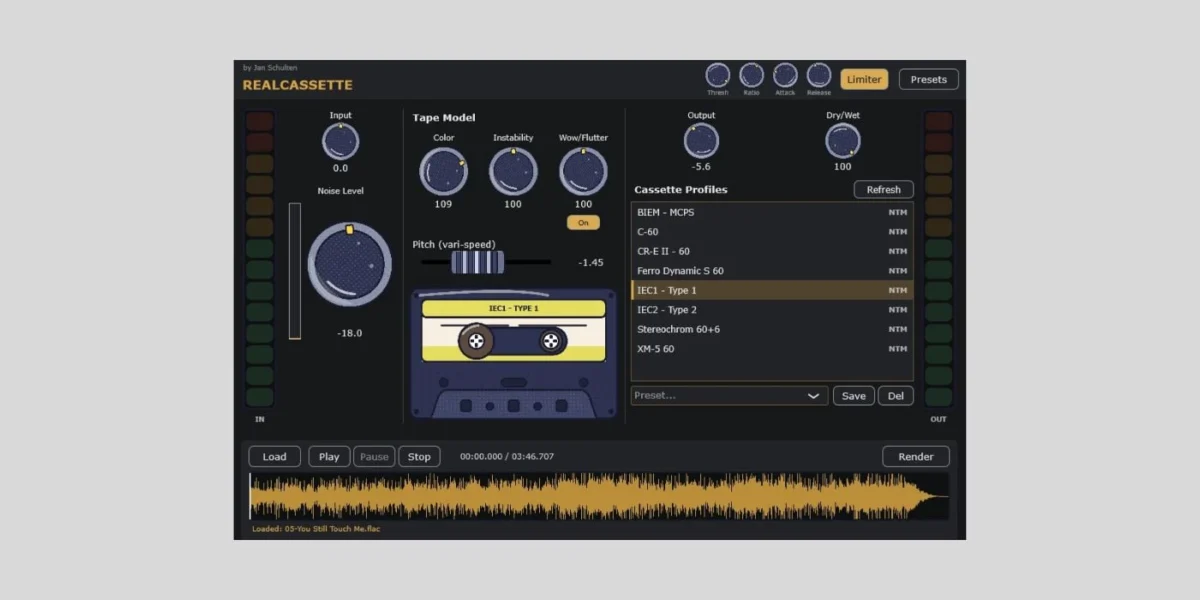
The release of RealCassette marks a notable contribution to the burgeoning market of audio processing tools designed to replicate vintage hardware. Jan Schulten, the developer behind this project, has imbued RealCassette with a distinct personality that extends beyond its sonic capabilities. The plugin’s interface, with its "vibe-coded" graphics and design cues, evokes the aesthetic of early computer operating systems, particularly Windows 98. This deliberate design choice resonates deeply with a generation of music producers who began their creative journeys on similar platforms, fostering a sense of nostalgia that complements the plugin’s lo-fi audio character. The developer’s website itself, mirroring this retro computing aesthetic, reinforces the thematic consistency and personal touch behind RealCassette.
Central to RealCassette’s authenticity is its methodology for capturing tape characteristics. Schulten has publicly stated that every profile integrated into RealCassette is derived from actual cassette tapes. These physical tapes, sourced from an unconventional location—his grandmother’s attic—were meticulously analyzed and sampled. This process involved capturing the nuanced "color," "wobble," "noise," and "movement" inherent to each tape. This hands-on, analog-centric approach differentiates RealCassette from purely algorithmic emulations, offering users a sonic palette grounded in real-world imperfections. The origin story itself adds a compelling narrative layer, highlighting a personal connection to the artifacts of a bygone era and translating that sentiment into a digital audio tool.
Technical Architecture and Core Functionality
RealCassette’s design prioritizes both sonic authenticity and user-friendly control, offering a suite of parameters that allow for detailed manipulation of the emulated tape effect. The plugin operates on a foundation of measured tape characteristics, ensuring that the digital processing accurately reflects the nuances of analog magnetic tape.
The Emulation Engine: Deconstructing Tape Characteristics
The core of RealCassette’s emulation engine is built upon the measured profiles of eight factory tape types, all derived from the aforementioned real-world samples. This allows the plugin to reproduce several key sonic artifacts associated with cassette tape playback:
- Color: This parameter directly utilizes the measured frequency response of the actual cassette tapes. Different tapes, due to their magnetic properties, formulation, and wear, exhibit distinct frequency profiles. The "Color" control allows users to dial in these unique tonal characteristics, ranging from warm, rolled-off highs to pronounced mid-range emphasis, effectively altering the harmonic texture of the input signal.
- Instability: Analog tape playback is inherently susceptible to inconsistencies, such as dropouts and subtle, slow level drifts caused by imperfections in the tape itself or the playback mechanism. RealCassette’s "Instability" control introduces these measured variations, imparting a sense of fragility and organic movement to the audio. This can range from barely perceptible fluctuations to more pronounced sonic artifacts, simulating a worn or poorly maintained tape.
- Wow/Flutter: These terms refer to pitch variations in analog playback. "Wow" denotes slow, cyclical pitch changes, often caused by variations in tape speed due to mechanical irregularities in the deck’s capstan or motor. "Flutter" refers to faster, higher-frequency pitch variations. RealCassette accurately replays the measured pitch curves from the original tape decks, allowing users to introduce varying degrees of these iconic pitch modulations, contributing significantly to the classic lo-fi tape sound.
- Noise Level: Cassette tapes are inherently noisy mediums. The "Noise Level" control introduces the measured background hiss and electrical artifacts characteristic of analog tape playback. This noise is not merely a static layer but is often modulated by the signal, adding to the realism and perceived depth of the emulation.
User Interface and Controls
The plugin’s interface provides clear and intuitive controls for these parameters, alongside essential input and output gain staging. Users can adjust:
- Dry/Wet: A crucial mix control that allows blending between the unprocessed (dry) input signal and the fully processed (wet) signal, enabling subtle enhancements or extreme effects.
- Input/Output: Standard gain controls for managing signal levels, preventing clipping, and optimizing the signal-to-noise ratio within the plugin.
- Spinning Reels: A visual element that enhances the nostalgic experience, with virtual tape reels on the interface moving in sync with the audio passing through the plugin. This tactile feedback reinforces the illusion of interacting with a physical cassette deck.
VST3 Integration and System Requirements
RealCassette is provided in the modern VST3 format, ensuring compatibility with a wide range of contemporary Digital Audio Workstations (DAWs) on Windows platforms. It requires a 64-bit operating system, specifically Windows 10 or 11, aligning with current industry standards for plugin development and system architecture. The inclusion of VST3 ensures efficient resource management and improved stability within host applications.
The Standalone Application: Beyond the Plugin
While RealCassette functions robustly as a VST3 plugin, Jan Schulten has also released a comprehensive standalone application that extends its utility, particularly for sound designers and those who prefer a dedicated processing environment. This standalone version offers unique features that go beyond real-time plugin insertion, enabling more extensive and experimental audio manipulation.
Varispeed: A Creative Catalyst
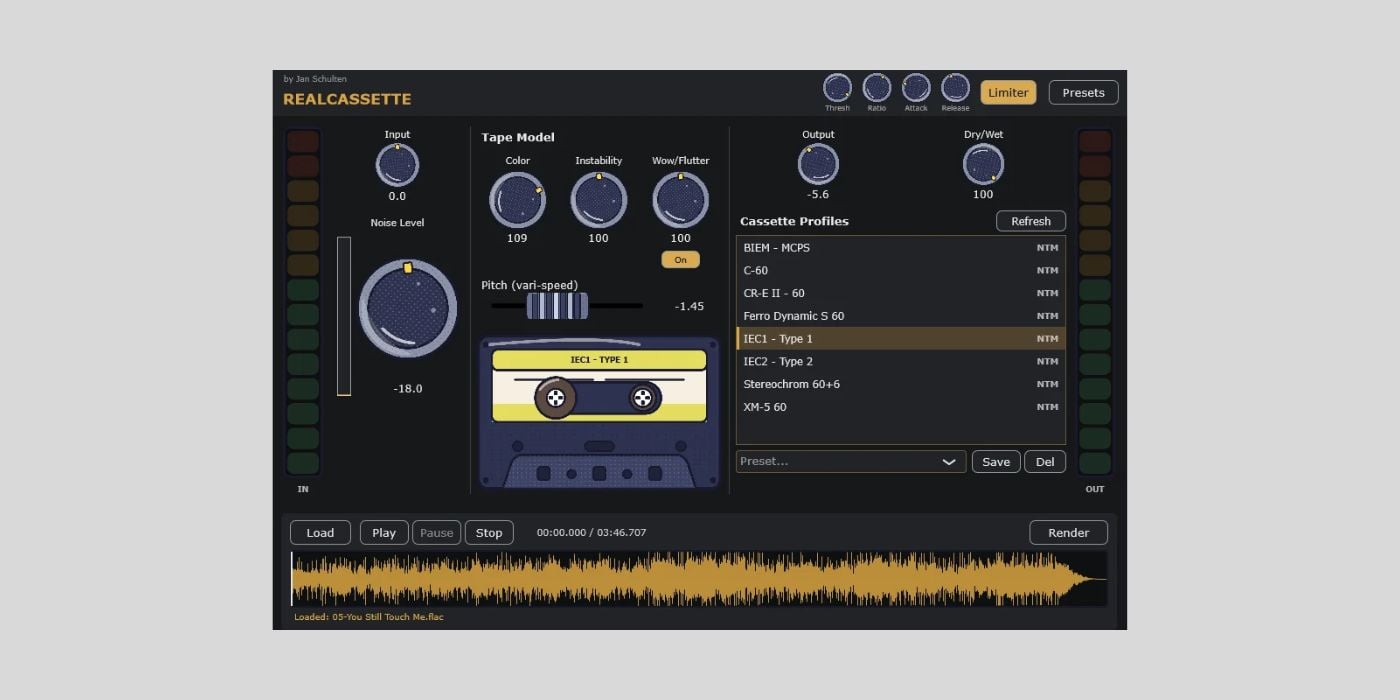
One of the most compelling features of the standalone RealCassette application is its "varispeed" functionality. This control directly mimics the speed knob found on many vintage tape decks, allowing users to continuously vary the playback speed of an audio file. As the speed changes, the pitch of the audio is proportionally altered, a fundamental characteristic of analog tape manipulation. This capability is not merely a cosmetic addition; it represents a powerful tool for:
- Sound Design: Varispeed opens up avenues for creating unique textures, drones, slowed-down vocal effects, or sped-up percussive elements. The ability to pitch-shift and timestretch simultaneously in an analog-emulated manner offers a distinct sonic signature.
- Drum Processing: Applying varispeed to drum loops or individual drum hits can yield effects ranging from subtle groove alterations to radically transformed sounds, imbuing them with a gritty, sampled-from-vinyl quality. The "crunching up" of drums mentioned by early users highlights its effectiveness in adding character and weight.
- Experimental Audio: For avant-garde producers or those seeking unconventional sonic results, varispeed allows for non-linear exploration of audio material, pushing boundaries beyond conventional time and pitch correction.
The synergy between varispeed and the plugin’s "Instability" and "Wow/Flutter" controls is particularly noteworthy. When combined, these features allow users to craft sounds that convey a sense of being "broken" or inherently unstable, simulating the extreme degradation or malfunction of a physical tape deck, offering a rich palette for expressive audio textures.
File Handling and Processing Capabilities
The standalone application is designed for practical workflow, supporting a broad array of common audio file formats for loading and processing:
- Supported Formats: Users can load WAV, AIFF, FLAC, OGG, and MP3 files, ensuring compatibility with most audio production workflows and source materials.
- Waveform Scrubbing: A visual waveform display allows users to scrub through the loaded audio, providing precise control over playback and selection for processing. This visual feedback is invaluable for detailed sound design work.
- Rendering: After processing, the standalone application can render the modified audio to a new WAV file. This capability makes it a self-contained processing utility, ideal for batch processing or preparing samples for use in other projects without needing a full DAW environment.
Integrated Dynamics Processing
Further enhancing its utility, the standalone RealCassette app includes an integrated output limiter/compressor. This module is critical for shaping the processed audio and ensuring it remains within desired dynamic ranges, especially after applying effects that can dramatically alter volume and transients. The controls provided are standard yet effective:
- Threshold: Determines the level at which compression or limiting begins.
- Ratio: Dictates the amount of gain reduction applied once the threshold is exceeded.
- Attack: Controls how quickly the compressor/limiter reacts to signals exceeding the threshold.
- Release: Governs how quickly the compressor/limiter returns to its normal state after the signal falls below the threshold.
- Brick-wall Safety: An essential feature for preventing digital clipping, ensuring that the output signal never exceeds 0 dBFS, thereby maintaining audio integrity.
This integrated dynamics section makes the standalone application a more complete and production-ready tool, allowing users to finalize their processed audio directly within RealCassette before exporting.
The Enduring Appeal of Lo-Fi Aesthetics in Modern Music Production
The release of RealCassette is emblematic of a broader and sustained trend within contemporary music production: the embrace of "lo-fi" aesthetics. This movement champions the sonic imperfections, warmth, and character traditionally associated with older recording and playback technologies, particularly magnetic tape.
Historical Context of Cassette Tapes
Cassette tapes, introduced by Philips in the 1960s, revolutionized personal audio consumption and amateur recording. While never achieving the fidelity of reel-to-reel tape or vinyl, their portability, affordability, and ease of use made them ubiquitous. However, these advantages came with inherent limitations:
- Limited Frequency Response: Cassettes typically had a narrower dynamic range and frequency response compared to professional formats.
- Noise: Tape hiss was a constant companion, especially noticeable during quiet passages.
- Instability: Mechanical imperfections in cassette decks led to wow and flutter, causing pitch variations.
- Degradation: Tapes could stretch, wear out, and suffer dropouts over time.
Paradoxically, these "flaws" are precisely what modern producers seek to emulate. The sonic footprint of a cassette tape—its inherent compression, subtle distortion, and organic modulation—imparts a distinct warmth and character that many find appealing in contrast to the clinical precision of purely digital audio.
The Lo-Fi Movement and its Digital Manifestation
The lo-fi movement, gaining significant traction in genres such as lo-fi hip-hop, chillwave, indie electronic, and ambient music, intentionally incorporates these "imperfections." Artists in these genres often seek to evoke a sense of nostalgia, intimacy, or dreaminess by processing their sounds to mimic the qualities of old recordings. This can include:
- Applying artificial tape saturation and compression.
- Introducing subtle (or extreme) wow and flutter.
- Adding vinyl crackle or tape hiss.
- Filtering frequencies to emulate old playback systems.
Digital audio workstations (DAWs) and plugin development have played a pivotal role in democratizing access to these sounds. Where once an artist needed access to vintage hardware—actual cassette decks, multi-track recorders, or reel-to-reel machines—now, sophisticated software emulations can achieve similar results with greater flexibility and recallability. The market for such emulations is robust, with numerous developers offering plugins that simulate everything from classic tape machines (e.g., Studer, Ampex) to consumer-grade cassette decks and even damaged tapes.
RealCassette enters this landscape as a tool that specifically targets the characterful, rather than pristine, end of the tape emulation spectrum. While some plugins aim for hyper-realistic replication of high-fidelity studio tape machines (e.g., Waves J37, UAD Ampex ATR-102), others, like RealCassette, focus on the unique charm of consumer-grade cassette recordings. The reference to "more polished cassette tape emulations" such as Schulz Audio Portacrunch 424 highlights this distinction, positioning RealCassette as a fun, character-driven alternative that prioritizes vibe and creative inspiration.
Implications for Independent Producers and the Free Software Ecosystem
The release of RealCassette as a free offering has several significant implications for the wider music production community, particularly for independent artists and the burgeoning ecosystem of freeware audio tools.
Accessibility and Innovation
One of the most profound impacts of high-quality free plugins like RealCassette is their role in lowering the barrier to entry for aspiring music producers and sound designers. Professional audio software and hardware can be prohibitively expensive, creating financial obstacles for those without significant resources. By providing a capable and characterful tape emulation tool at no cost, Jan Schulten empowers a broader demographic to experiment with advanced sound processing techniques. This accessibility fosters innovation, allowing more creators to explore sonic textures that might otherwise be out of reach. It also encourages experimentation, as users can freely integrate RealCassette into their workflows without financial commitment, potentially leading to new creative directions and unique sonic signatures.
Developer Contribution and Community Engagement
Jan Schulten’s decision to offer RealCassette for free positions him as a valuable contributor to the audio freeware community. This community thrives on the generosity of developers who share their creations, often as passion projects or as a means of giving back. Such contributions enrich the overall landscape of available tools, providing alternatives to commercial offerings and fostering a spirit of collaborative innovation. The positive reception often generated by high-quality freeware can also elevate a developer’s profile, leading to further community engagement, feedback, and potentially future commercial ventures built on a foundation of goodwill. The fact that the developer’s site itself carries a nostalgic, community-oriented aesthetic further reinforces this spirit.
The "Fun Factor" in Audio Tools
The original article explicitly notes that RealCassette is "fun" and that it aligns with the author’s "kind of vibe." This highlights an important, often overlooked, aspect of audio software design: the "fun factor." While technical precision and absolute sonic fidelity are paramount for certain applications, many producers also seek tools that inspire creativity, offer immediate gratification, and inject personality into their workflow. Plugins that evoke nostalgia, offer unique quirks, or simply make the creative process more enjoyable often find a dedicated following, even if they don’t claim to be the most "polished" or "accurate" emulations on the market. RealCassette, with its retro interface, whimsical origin story, and characterful sound, perfectly embodies this philosophy, proving that utility and enjoyment are not mutually exclusive in audio software.
Availability and Future Prospects
RealCassette is readily available for download directly from Jan Schulten’s Gumroad page. The download package includes the 64-bit VST3 plugin, the standalone application, and a "Tape Profiler" utility, though further details on the profiler’s user-facing functionality were not immediately provided in the initial release information. All eight factory tape profiles are built into the software, ensuring a rich variety of starting points for users.
The release of RealCassette is a testament to the ongoing innovation within the independent audio software development scene. By combining authentic analog measurements with a nostalgic digital aesthetic and offering the tool for free, Jan Schulten has created a product that is both functionally valuable and culturally resonant. Its impact will likely be felt across various genres that embrace the lo-fi aesthetic, providing an accessible and inspiring option for producers looking to inject vintage character into their modern productions. As the digital audio landscape continues to evolve, tools like RealCassette underscore the enduring appeal of analog imperfections and the creative potential unleashed by generous, community-minded developers.
