

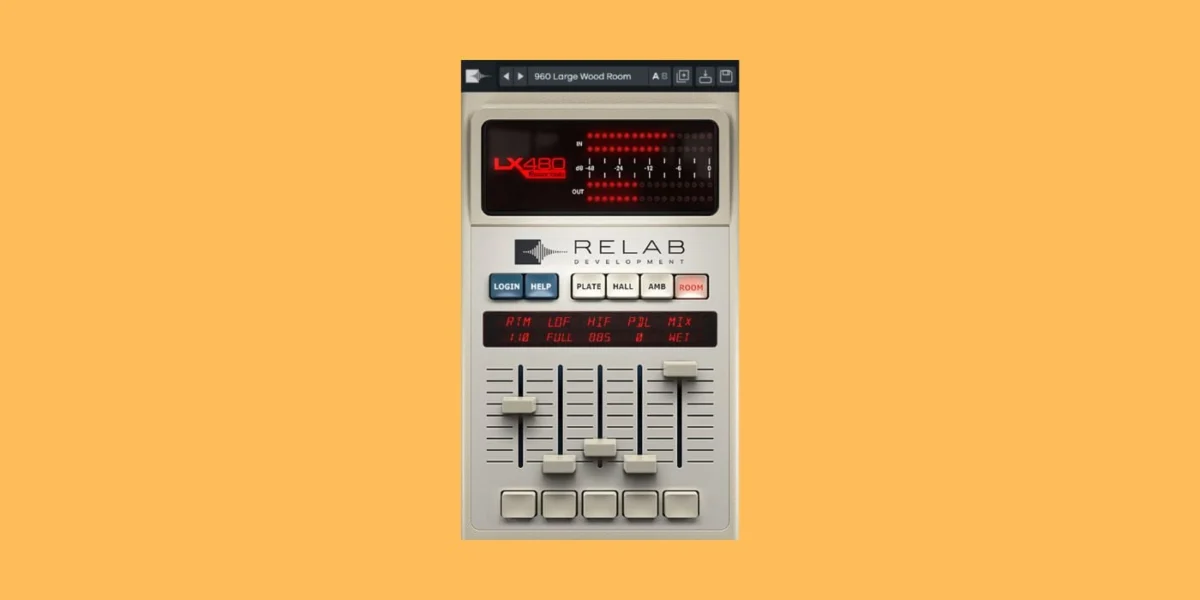
Relab Development’s highly regarded LX480 Essentials reverb plugin is currently available at a substantial 70% discount through Plugin Boutique, priced at $29, a significant reduction from its usual $99. This promotional offer presents a compelling opportunity for music producers, audio engineers, and digital audio workstation (DAW) users to acquire a meticulously crafted emulation of a legendary studio hardware unit. The deal is slated to conclude on March 31, 2026, providing a defined window for interested parties to capitalize on the reduced pricing.
The Enduring Legacy of the Lexicon 480L: A Benchmark in Reverb Technology
At the core of the LX480 Essentials plugin lies the heritage of the Lexicon 480L, a digital reverb and effects hardware unit that made its debut in 1986. This iconic processor rapidly established itself as an industry standard, fundamentally shaping the sound of recorded music throughout the late 1980s and 1990s. Revered for its lush, expansive, and highly musical reverb algorithms, the 480L represented a high-water mark for digital signal processing (DSP) technology at the time. Its dual-engine architecture allowed for complex and layered effects, offering unparalleled sonic versatility for mixing and mastering engineers.
The 480L’s distinct sonic signature, characterized by smooth decays, rich harmonic content, and an uncanny ability to create a sense of realistic or surreal space, became ubiquitous in professional recording studios worldwide. From pop anthems to film scores, its influence permeated countless hit records, making it a cornerstone of premium audio production. The unit’s original price point, often exceeding $15,000, placed it firmly in the realm of high-end professional studios, rendering its distinct sound largely inaccessible to independent artists and home studio enthusiasts. The demand for accurate software emulations like LX480 Essentials stems directly from this historical exclusivity and the enduring desire to harness the 480L’s revered sonic characteristics in modern production environments.
Relab Development’s Meticulous Approach to Emulation: Recreating a Classic
Relab Development has carved a niche in the audio plugin market by focusing on high-fidelity emulations of classic hardware. Their approach to creating the LX480 Essentials exemplifies this commitment. The genesis of this particular plugin involved a unique historical acquisition: Relab Development sourced an original Lexicon 480L unit directly from The Hit Factory, a legendary recording studio in New York City, when it ceased operations. This direct access to a well-maintained, historically significant unit provided an invaluable reference point for the development team.
The process of accurately emulating a complex digital hardware unit like the 480L is far from trivial. It involves not merely sampling impulse responses but meticulously dissecting and replicating the original unit’s DSP algorithms at a fundamental level. Relab Development asserts that LX480 Essentials utilizes the "exact same sample-accurate algorithms" as the original hardware. This claim underscores a deep commitment to preserving the nuanced mathematical processes that define the 480L’s unique sound, including its modulation schemes, filtering characteristics, and the way its digital converters interacted with the audio signal. Such a faithful recreation goes beyond superficial sonic resemblance, aiming to capture the very essence and behavior of the original unit, including its non-linearities and dynamic responses that contribute to its celebrated "mojo."
Key Sonic Offerings: The Core Presets of LX480 Essentials
LX480 Essentials focuses on delivering four of the most essential and widely utilized reverb sounds derived from the Lexicon 480L. These presets were carefully chosen to provide a versatile palette for a wide range of musical applications, encapsulating the core sonic character that made the original unit so influential. Each preset is designed to offer distinct spatial characteristics and decay profiles:
-
Fat Plate: Based on the 480L’s "RHall" algorithm, Fat Plate is renowned for its bright, colored, and dense sound. It excels at adding shimmer and presence to vocals, drums, and percussive elements, making them sit forward in a mix with a distinct, almost metallic, yet smooth, texture. Its character provides a sense of excitement and clarity often sought after in pop, rock, and electronic music productions.
-
Medium Hall: A quintessential traditional reverb sound, Medium Hall is engineered to create the impression of instruments or vocals residing within a coherent, shared acoustic space. It imparts a sense of depth and dimension with a smooth, natural-sounding decay. This preset is ideal for orchestral arrangements, ballads, and any scenario where a realistic and enveloping spatialization is desired without overwhelming the source material.
-
Small Ambience: This preset is specifically crafted for adding subtle distance and room characteristics to dry audio sources. It is particularly effective for creating a short, tight drum room sound, giving drums a natural, lively feel without excessive wash. Small Ambience provides a delicate sense of space that can make elements feel more organic and less "in your face," enhancing their integration within a mix.
-
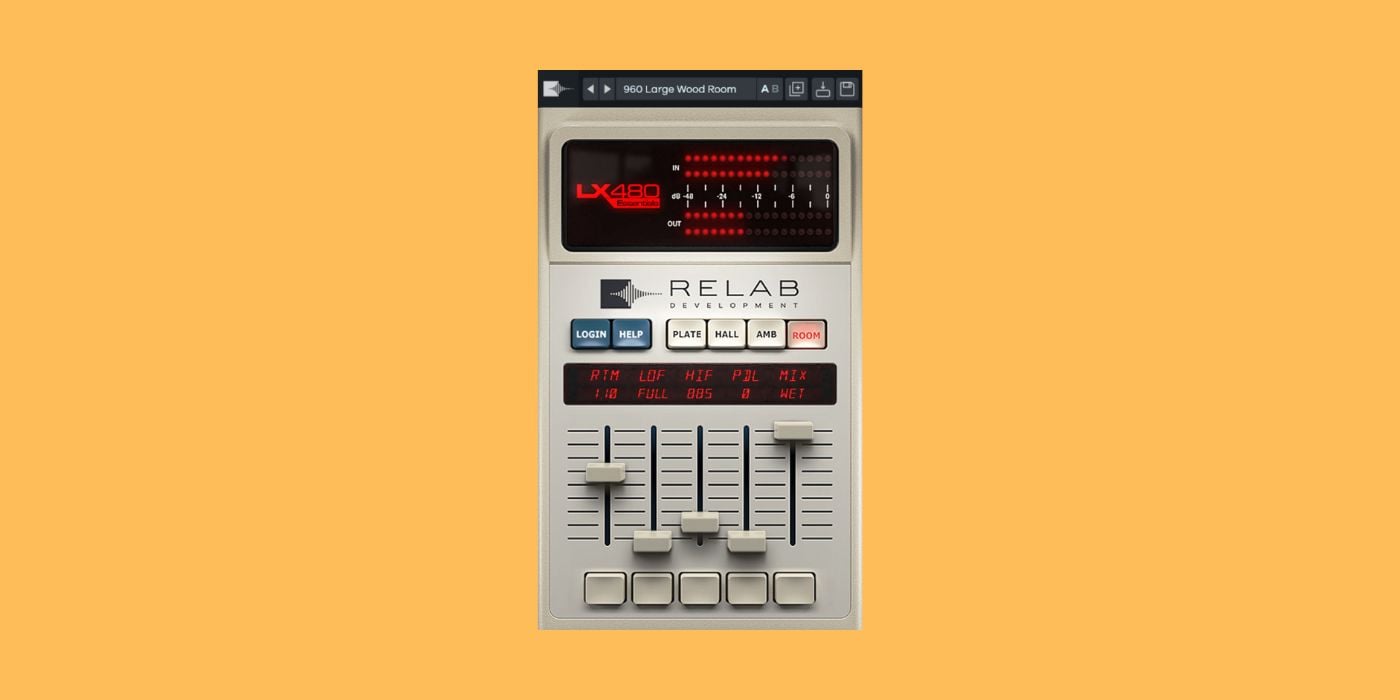
Large Wood Room: Designed to evoke the acoustics of a spacious wooden room, this preset offers a rich and resonant sense of space. It provides a generous spatial footprint without the expansive, sometimes overwhelming, character of a larger hall. Large Wood Room is excellent for adding warmth and body to instruments like guitars, pianos, and strings, allowing them to breathe within a naturalistic acoustic environment.
Together, these four presets enable LX480 Essentials to deliver the rich textures and lush reverb tails that audio professionals have come to expect from the original Lexicon 480L, democratizing access to these premium sonic qualities.
Technical Specifications and Modern Workflow Integration
The LX480 Essentials plugin is a 64-bit only release, ensuring compatibility with contemporary DAWs and operating systems. It supports major plugin formats across both macOS (VST, VST3, AU, AAX) and Windows (VST, VST3, AAX), catering to a broad user base regardless of their preferred production environment. This extensive compatibility ensures seamless integration into most professional and home studio setups.
While committed to sonic authenticity, Relab Development has consciously opted for a modernized user interface rather than a direct, exact replication of the 480L’s alphanumeric remote control. The original hardware’s interface, while groundbreaking for its time, could be perceived as somewhat esoteric and cumbersome by today’s standards. The LX480 Essentials interface has been revamped for rapid workflow, distilling the essential parameters into an intuitive layout. This design philosophy prioritizes efficiency and ease of use, allowing producers to quickly dial in desired reverb characteristics without navigating complex menus.
Crucially, the plugin incorporates practical features such as high- and low-pass filtering settings. These filters are indispensable for shaping reverb tails, enabling users to keep their reverbs clean, transparent, and free from undesirable muddy frequencies in the low end or harshness in the high end. This control allows the reverb to sit more effectively within a dense mix, ensuring that it enhances rather than detracts from the overall clarity.
A Chronology of Innovation and Accessibility
The timeline surrounding the Lexicon 480L and its software emulation highlights a significant evolution in audio technology:
- 1986: The Lexicon 480L Digital Effects System is introduced, setting a new benchmark for digital reverb and effects processing in professional studios. Its advanced DSP architecture and algorithms redefine studio sound.
- Late 1980s – 1990s: The 480L becomes a ubiquitous presence in top-tier recording studios globally, its sounds defining the sonic character of countless hit songs and film scores.
- Early 2000s: As The Hit Factory, a legendary New York recording studio, closes its doors, Relab Development acquires an original Lexicon 480L unit, laying the groundwork for future emulation projects.
- May 2021: Relab Development officially launches LX480 Essentials, bringing the revered sounds of the 480L to the software domain, making them accessible to a wider audience.
- March 2026: Plugin Boutique initiates a significant promotional campaign, offering LX480 Essentials at a 70% discount. This deal is timed to coincide with Plugin Boutique’s monthly freebie offerings, further enhancing its value proposition.
- March 31, 2026: The current promotional price for LX480 Essentials expires, marking the conclusion of this limited-time opportunity.
This chronology illustrates the journey from an exclusive, high-cost hardware unit to an accessible, software-based solution, reflecting broader trends in the audio production industry towards democratization of tools.
The Strategic Importance of Digital Distribution: Plugin Boutique’s Role
Plugin Boutique stands as a prominent digital marketplace for audio plugins, playing a crucial role in connecting developers with a global community of music producers and engineers. Their business model frequently involves strategic partnerships with developers to offer significant discounts and bundled promotions. These initiatives are designed to stimulate sales, introduce users to new or acclaimed products, and maintain customer loyalty.

The 70% discount on LX480 Essentials is characteristic of Plugin Boutique’s aggressive pricing strategies during promotional periods. Such deals not only make premium plugins more affordable but also serve as a powerful customer acquisition tool. For Relab Development, partnering with a major distributor like Plugin Boutique ensures broad market reach and visibility for their products.
Adding to the appeal of this particular deal, customers who purchase LX480 Essentials in March 2026 are also eligible to receive one of two complimentary plugins offered by Plugin Boutique: Diginoiz’s Distiller distortion/filter plugin (normally valued at $59.90) or Zak Sound’s Deep Waters reverb (normally priced at $39.00). This "freebie" incentive is a common tactic in the digital plugin market, designed to add perceived value to a purchase and encourage transactions during specific promotional windows. It exemplifies Plugin Boutique’s commitment to providing added benefits to its customer base, enhancing the overall value proposition of their deals.
Expert and User Perspectives: Bridging Hardware and Software
The audio production community has long debated the merits of hardware versus software, particularly concerning vintage equipment emulations. However, the consensus around high-quality emulations like LX480 Essentials often leans towards appreciation for their accuracy and convenience.
From Relab Development’s perspective, as inferred from their product statements and development philosophy, the motivation is clear: to meticulously preserve and make accessible the sonic heritage of legendary hardware. Their dedication to "exact same sample-accurate algorithms" and the release of a "shootout video" comparing the plugin directly against the original 480L hardware demonstrate a strong commitment to transparency and verifiable authenticity. This approach aims to address the skepticism sometimes associated with emulations by providing tangible evidence of their fidelity. Further demonstrating the plugin’s capabilities, Relab Development’s product page features an extensive Soundcloud playlist with audio demos showcasing LX480 Essentials across various sources and musical contexts, allowing potential users to judge its performance firsthand.
For music producers and audio engineers, the availability of such high-fidelity emulations at accessible price points represents a significant boon. Industry experts frequently highlight that while the tactile experience of hardware remains unique, the sonic differences between top-tier emulations and their analog counterparts have become increasingly negligible for practical production purposes. The LX480 Essentials offers the coveted 480L sound without the prohibitive cost, maintenance requirements, or physical space demands of the original hardware. This allows producers to infuse their tracks with the classic "80s and ’90s hit" sound that defined an era, enriching their sonic palette with historically significant textures.
Broader Implications for Music Production
The ongoing trend of high-quality hardware emulations becoming available as software plugins has profound implications for the music production landscape. It contributes significantly to the democratization of professional-grade audio tools, leveling the playing field for independent artists, home studio owners, and educational institutions.
Historically, access to equipment like the Lexicon 480L was reserved for well-funded commercial studios. Today, a producer working from a modest home studio can achieve comparable sonic results using plugins like LX480 Essentials, provided they possess the requisite skill and understanding of audio engineering principles. This shift empowers a new generation of creators, enabling them to produce music with a fidelity and character previously unattainable without substantial financial investment.
Furthermore, the integration of these classic sounds into a digital workflow offers unparalleled flexibility. Plugins can be instantiated multiple times within a single project, recalled instantly, and seamlessly integrated with automation, offering creative possibilities that are cumbersome or impossible with physical hardware. This enhances workflow efficiency and fosters greater creative experimentation, allowing producers to iterate quickly and explore a wider range of sonic textures.
In conclusion, the current 70% discount on Relab Development’s LX480 Essentials at Plugin Boutique is more than just a promotional sale; it represents an ongoing chapter in the story of audio technology’s evolution. It underscores the enduring appeal of classic sounds, the relentless pursuit of sonic accuracy by developers, and the increasing accessibility of professional tools for a global community of music creators. As the deal approaches its expiration on March 31, 2026, it stands as a testament to the dynamic interplay between heritage, innovation, and market strategy in the ever-evolving world of digital audio production.
