

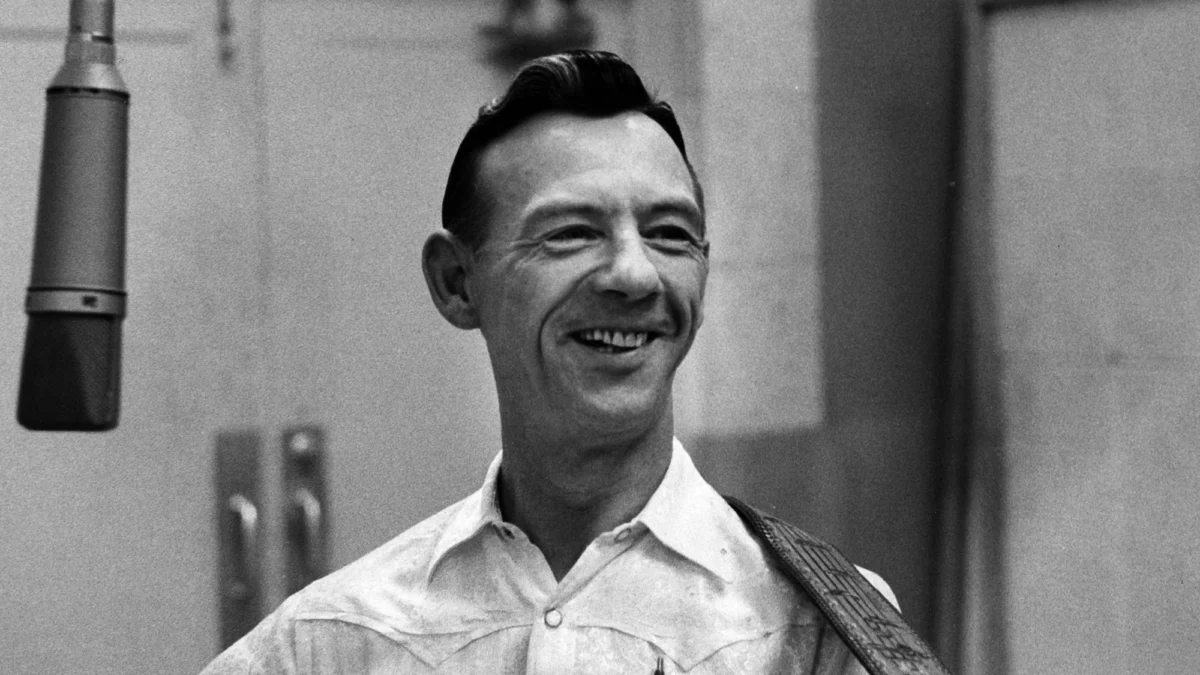
The history of popular music is often defined by singular moments of creative brilliance that transcend national borders, and few stories illustrate this phenomenon as vividly as the life of Geoffrey Ivan Stephen Mack, better known to the world as Geoff Mack. On July 21, 2017, the music industry lost one of its most unassuming yet influential figures when Mack passed away in Gold Coast, Queensland, Australia, at the age of 94. While his name might not carry the immediate recognition of the superstars who recorded his work, his contribution to the global songbook—most notably the travelogue anthem "I’ve Been Everywhere"—remains a cornerstone of country and folk music history. Mack’s journey from a Royal Australian Air Force (RAAF) serviceman to an internationally acclaimed songwriter represents a unique chapter in the mid-century cultural exchange between Australia and the United States.
The Formative Years and Military Service
Born on December 20, 1922, in Surrey Hills, Victoria, Geoff Mack’s early life was shaped by the shifting social landscape of interwar Australia. He discovered a passion for performance as a teenager, but the trajectory of his career was fundamentally altered by the outbreak of World War II. In 1942, Mack enlisted in the RAAF, a move that would provide him with an unexpected stage. During his service, particularly while stationed in Borneo and later during the occupation of Japan, Mack was tasked with boosting troop morale. It was within the RAAF’s entertainment units that he refined his skills as a "showman," a term he would use to describe himself for the rest of his life.
By the time he was discharged in 1946, Mack was no longer just a musician; he was a seasoned entertainer capable of holding an audience’s attention through a mix of music, comedy, and storytelling. This versatility allowed him to spend the late 1940s and much of the 1950s touring internationally. Alongside his wife and performing partner, Tabbi Francis, Mack traveled through Europe and the United Kingdom, appearing on BBC radio and performing in various theaters. This period of itinerant living not only broadened his cultural horizons but also provided the thematic inspiration for his most famous composition: the concept of the restless traveler.
The Accidental Creation of a Global Hit
In 1959, after years of international travel, Mack and Francis returned to Australia, settling briefly in Coolangatta on the Gold Coast. As he prepared for a residency in Sydney, Mack realized he needed a strong "opener"—a song that could immediately engage the audience and establish his credentials as a worldly entertainer. The result was "I’ve Been Everywhere."
The original version of the song was a rapid-fire list of Australian towns, from Wollongong to Mittagong, delivered in a "patter song" style that required immense breath control and comedic timing. Mack later admitted that he viewed the song as a "throwaway" piece, a functional bit of stagecraft rather than a serious musical endeavor. He performed the song for several years without even bothering to transcribe the lyrics or secure a formal copyright, assuming its appeal was limited to the local Australian club circuit.
The turning point occurred in 1962 when New Zealand-born publisher and musician Johnny Devlin approached Mack looking for fresh material. When Mack presented several of his more "serious" songs, Devlin famously asked about "the one with all the towns." Despite Mack’s skepticism, Devlin recognized the song’s infectious potential. Later that year, Australian singer Lucky Starr recorded the version featuring Australian place names, and it became an instant domestic sensation, topping the local charts and cementing Mack’s reputation at home.
Adapting for the American Market and the Hank Snow Milestone
The song’s success in Australia caught the attention of international publishers who saw its potential in the burgeoning Nashville country music scene. However, it was clear that a list of obscure Australian towns would not resonate with American audiences. Mack was tasked with rewriting the lyrics to feature North American geography. In a pre-digital era, this was a feat of manual research. Mack famously recounted using a magnifying glass and a large atlas to find American and Canadian cities that rhymed and fit the meter of the existing melody.
The North American version was picked up by Canadian-American country legend Hank Snow. Snow’s version, released in late 1962, featured a list of locations ranging from Reno and Chicago to Nashville and Knoxville. Snow’s impeccable diction and the song’s driving rhythm proved to be a perfect match. The track climbed to No. 1 on the Billboard Country Chart and remained there for two weeks, becoming one of the most recognizable songs of Snow’s career. For Mack, this represented a massive financial and professional windfall, proving that a song written for a Sydney hotel lounge could dominate the American airwaves.
A Chronology of Global Adaptation
The genius of Mack’s composition lay in its adaptability. "I’ve Been Everywhere" became a "template song," allowing artists in different regions to customize the lyrics to their own geography. This led to an unprecedented number of covers and variations:
- 1962: Lucky Starr (Australian version)
- 1962: Hank Snow (North American version)
- 1963: Rolf Harris (United Kingdom version, featuring towns like Morecambe and Dagenham)
- 1966: John Hore (New Zealand version)
- 1996: Johnny Cash (recorded for his "Unchained" album, introducing the song to a new generation of rock and alternative fans)
- 2000s: Versions in various languages, including German and Finnish, and parodies used in commercial advertising.
According to industry data, the song has been recorded more than 100 times by artists across various genres, including Lynn Anderson, Asleep at the Wheel, and even the Statler Brothers. In the 21st century, the song’s influence persisted; Rihanna’s 2011 hit "Where Have You Been" sampled the core hook of Mack’s classic, illustrating the song’s transition from traditional country to modern pop.
Technical Analysis and Songwriting Legacy
From a technical standpoint, "I’ve Been Everywhere" is a masterclass in the "patter" tradition, which traces its roots back to Gilbert and Sullivan. The song relies on a simple AABB rhyming scheme within the verses, but its complexity arises from the density of the syllables. To perform the song successfully, a vocalist must maintain a steady, galloping tempo while enunciating multi-syllabic place names without losing the rhythm.
The song’s enduring appeal can be attributed to its universal theme of the "rambling man." It taps into the folk tradition of the wandering minstrel, a figure present in almost every culture’s musical history. By providing a rhythmic list of locations, the song acts as a sonic map, allowing listeners to find a connection to their own hometowns or dream of distant places. Mack’s ability to find rhymes for disparate locations like "Texarkana" and "Louisiana" or "Tullamore" and "Seymour" showcased a linguistic dexterity that was often overlooked because of the song’s novelty appeal.
Recognition and Later Life
Despite the massive success of "I’ve Been Everywhere," Geoff Mack remained a grounded and humble figure within the Australian music community. He continued to perform and write, though he never quite replicated the lightning-in-a-bottle success of his 1959 hit. His contributions to the arts were eventually recognized with several prestigious honors.
In 2005, Mack was awarded the Medal of the Order of Australia (OAM) for his service to the country music industry and his work with various charities. He was also inducted into the Nashville Songwriters Hall of Fame, a rare honor for an Australian writer, acknowledging his profound impact on the American country music canon. Furthermore, he was a regular fixture at the Tamworth Country Music Festival, where he was treated as an elder statesman of the genre.
In his final years, Mack lived a quiet life on the Gold Coast with Tabbi, his wife of 64 years. He maintained a passion for mechanics, specifically aircraft and vintage cars, a hobby he shared with his fans and fellow veterans. When he passed away in 2017, the tributes that poured in from around the world emphasized not just his songwriting talent, but his character as a "true gentleman" of the industry.
The Broader Impact on Australian Music Exports
Geoff Mack’s success served as an early blueprint for the internationalization of Australian music. Before the "Australian Invasion" of the 1970s and 80s (led by acts like AC/DC, the Bee Gees, and Olivia Newton-John), Mack proved that an Australian songwriter could write a hit that resonated in the heart of the American South.
The legacy of "I’ve Been Everywhere" also highlights the importance of song publishing and the global nature of intellectual property. Mack’s willingness to adapt his work for different markets—rather than insisting on the original Australian phrasing—was a savvy business move that ensured the song’s longevity. Today, the song is used in geography classrooms, travel documentaries, and road-trip playlists, serving as a permanent tribute to the man who "found all the towns that rhymed" using nothing but an atlas and a magnifying glass.
As the music world observes the anniversary of his passing, Geoff Mack stands as a reminder that the most enduring songs are often those born from a simple need to entertain. What began as a "throwaway" opener for a Sydney club became a global anthem, proving that while Mack may have been everywhere, his music will always have a home in the history of song.
