

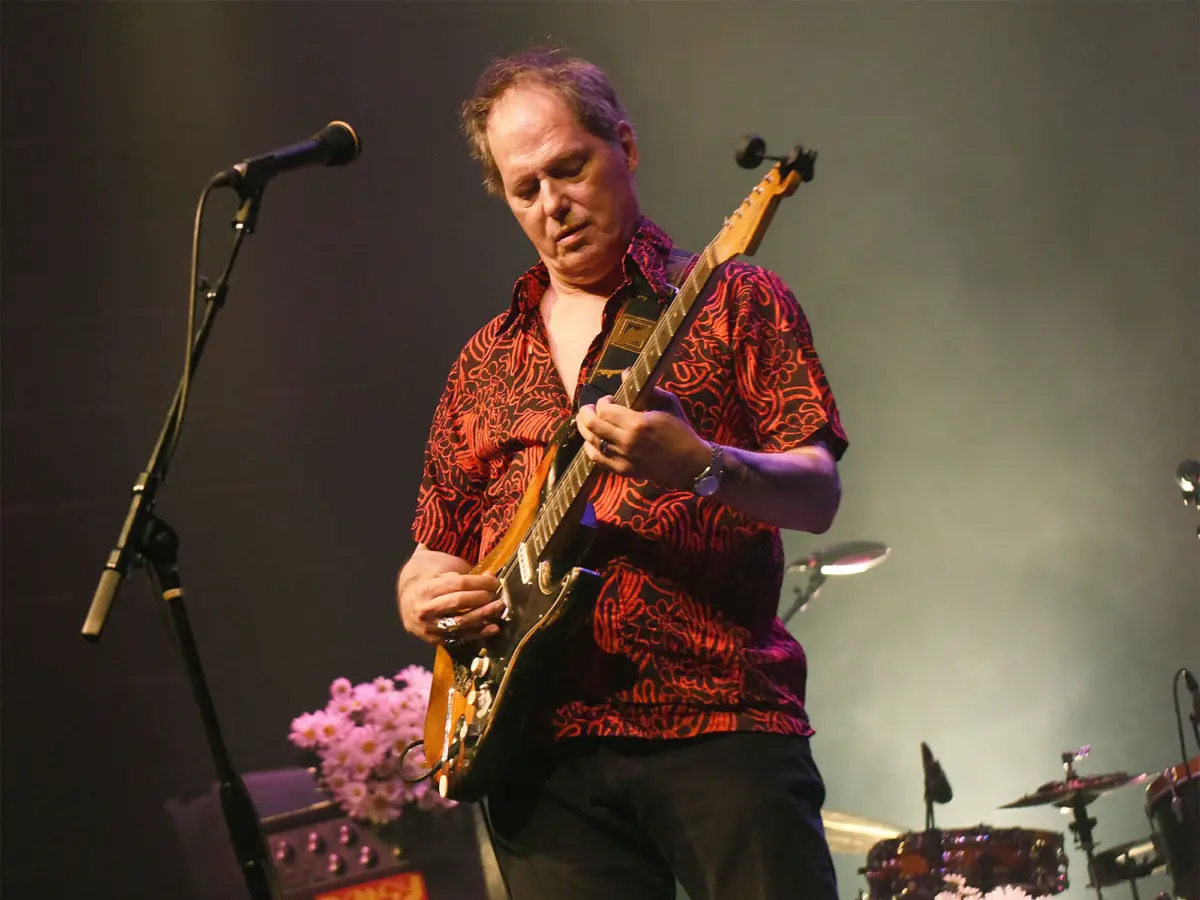
Richard Lloyd, the visionary co-founding guitarist whose distinctive playing helped define the sound of the seminal New York rock band Television, passed away on Saturday, November 7, at his home in Chattanooga, Tennessee, at the age of 75. His death was confirmed by a statement from his family to Rolling Stone, attributing the cause to cholangiocarcinoma, a rare and aggressive cancer of the bile duct, with which he had been battling since March of this year. Lloyd’s passing marks the loss of a pivotal figure in the development of punk and new wave, a musician whose innovative approach to the electric guitar left an indelible mark on rock history.
A Battle with Illness and Community Support
Lloyd’s health struggles became publicly known earlier this year, prompting an outpouring of support from the music community. In August, a GoFundMe campaign was launched to assist with his burgeoning medical expenses, as his illness had regrettably forced him to cease touring, his primary source of income. Sean Seymour, the bassist in Lloyd’s solo band, shed light on the severity of the situation at the time, explaining that the guitarist had "tumours in his liver, including one located dangerously close to a major blood vessel." The critical location of the tumor rendered surgical intervention unsafe, highlighting the challenging nature of his diagnosis and treatment. Cholangiocarcinoma is a particularly challenging cancer, often diagnosed at advanced stages due to its subtle early symptoms, making effective treatment difficult and underscoring the severe health battle Lloyd endured in his final months.
From Pittsburgh Drummer to Guitar Visionary
Born Richard M. Lloyd on October 25, 1951, in Pittsburgh, Pennsylvania, his journey into music began not with the guitar, but with the drums. However, it was the six-string instrument that would ultimately become his voice. His formative years were deeply immersed in the vibrant rock scene of the late 1960s, a period he spent as a devoted gig-goer, witnessing some of the era’s most groundbreaking acts. These experiences, which he recounted with vivid detail in his later years, included legendary performances by Jimi Hendrix, whose explosive innovation reshaped guitar playing; the heavy blues-rock grandeur of Led Zeppelin; the theatrical power of The Who; the intricate, blues-infused artistry of The Jeff Beck Group; and the improvisational psychedelia of The Grateful Dead. These encounters with masters undoubtedly sculpted his nascent musical sensibilities, imbuing him with a deep appreciation for both technical prowess and expressive freedom.
Driven by his passion, Lloyd left school prematurely and embarked on a nomadic musical apprenticeship. His path led him first to Boston, where he honed his skills and, remarkably, found himself sharing a stage with the venerable blues legend John Lee Hooker. This early exposure to the roots of American music further enriched his diverse palette. Subsequent spells in Los Angeles and, finally, New York City in the early 1970s positioned him at the epicenter of a burgeoning counter-culture movement that would soon redefine rock music.
The Genesis of Television and the CBGB Crucible
It was in New York in 1973 that Richard Lloyd’s destiny truly intersected with that of Tom Miller, who would soon adopt the more enigmatic moniker Tom Verlaine. Their shared vision for a new kind of rock music led to the formation of Television that very year, initially comprising Lloyd on guitar, Verlaine on guitar and vocals, Richard Hell on bass, and Billy Ficca on drums. This lineup would soon become inextricably linked with the legendary New York club CBGB. Located at 315 Bowery in Manhattan, CBGB & OMFUG (Country, BlueGrass, Blues and Other Music for Uplifting Gormandizers) was initially intended to be a country and bluegrass venue but quickly became the undisputed crucible for punk rock and new wave.
Television, along with contemporaries like Patti Smith, The Ramones, and Blondie, became a fixture at CBGB, performing countless shows that forged their sound and reputation. The club’s grimy, intimate setting and open-minded booking policy provided fertile ground for experimentation, allowing these bands to develop their unique identities outside the mainstream music industry. Television’s performances were characterized by their intricate, often extended guitar improvisations, a stark contrast to the three-chord simplicity of some of their punk peers. The dynamic interplay between Lloyd and Verlaine’s guitars was particularly mesmerizing – a dual-lead approach that was both complementary and competitive, weaving complex, almost jazz-like melodies and counter-melodies that drew comparisons to jazz masters and classical counterpoint rather than traditional rock guitar duels.
In 1975, Richard Hell departed Television, replaced by Fred Smith on bass. This lineup stabilized the band, paving the way for their debut single, "Little Johnny Jewel," a two-part epic released independently in 1975 that immediately signaled their artistic ambition and distinctive sound.
"Marquee Moon": A Landmark Album and Its Enduring Legacy
The arrival of Television’s debut album, Marquee Moon, in 1977, was nothing short of a seismic event in rock music. Produced by Andy Johns and released on Elektra Records, the album was a critical triumph, showcasing the band’s sophisticated songwriting, poetic lyrics, and, most notably, the unparalleled guitar work of Lloyd and Verlaine. Tracks like the epic title track, "See No Evil," and "Friction" demonstrated a sound that was both raw and refined, intellectual and visceral. The album stood apart from the nascent punk movement’s aggression, offering a more cerebral, art-rock sensibility while retaining a powerful rock-and-roll urgency.
Marquee Moon was hailed for its innovative approach to guitar playing, with Lloyd and Verlaine’s intertwining leads often described as a conversation, each guitarist responding to and building upon the other’s phrases. Lloyd’s style, often characterized by its precision, melodicism, and crystalline tone, provided a perfect foil to Verlaine’s more angular, spiky, and sometimes dissonant explorations. Their dual guitar attack influenced countless musicians and bands across genres, from post-punk and new wave to alternative rock. Many critics and musicians consider Marquee Moon one of the greatest and most influential rock albums of all time, a testament to its enduring artistic merit and its pivotal role in shaping the sound of modern guitar music. Its legacy is evident in the work of bands like R.E.M., U2, The Strokes, and countless others who absorbed its lessons in texture, dynamics, and melodic sophistication.
Television followed Marquee Moon with their second album, Adventure, in 1978. While critically well-received, it struggled to replicate the commercial impact of its predecessor. The band, plagued by increasing creative tensions and personal disagreements, particularly between Lloyd and Verlaine, dissolved shortly thereafter.
Post-Television: Solo Work, Collaborations, and Memoir
Following Television’s initial split, Richard Lloyd embarked on a prolific solo career, releasing his debut album, Alchemy, in 1979. This record showcased his continued prowess as a guitarist and songwriter, marking his independence from the band’s collaborative dynamics. Over the ensuing decades, Lloyd would release a total of nine solo albums, demonstrating a consistent artistic output and an evolving musical vision. His most recent solo effort, The Countdown, arrived in 2018, proving his sustained creative energy into his later years.
Beyond his solo work, Lloyd was a sought-after collaborator, lending his distinctive guitar talents to a diverse array of artists. He played on records by power-pop maestro Matthew Sweet, Swiss singer-songwriter Stephan Eicher, and John Doe of the iconic Los Angeles punk band X, among others. These collaborations underscored his versatility and his respected status within the broader rock community, allowing him to contribute his unique sonic signature to various musical contexts.
In 2018, Lloyd also added author to his list of accomplishments with the publication of his memoir, Everything Is Combustible: Television, CBGB’s and Five Decades of Rock and Roll. The book offered readers an unvarnished and often candid look into his life and career, presented as a "loose run of short pieces." It delved into his early years, his struggles with heroin addiction, and provided intimate anecdotes from his encounters with rock legends like Jimi Hendrix and Keith Richards, as well as his invaluable firsthand accounts of the vibrant CBGB scene. The memoir served not only as a personal reflection but also as a significant historical document, offering unique insights into a pivotal era of New York City music.
Reunions, Departures, and the Enduring Legacy
Television eventually reunited in the early 1990s, releasing a self-titled album in 1992, which garnered positive reviews and demonstrated that their unique chemistry remained largely intact. The band subsequently toured on and off for several years, delighting longtime fans and introducing their music to new generations. However, Lloyd ultimately left the band for a second time in 2007, choosing to focus on his solo endeavors and other projects.
The passing of Tom Verlaine in January 2023 marked a profound moment for Lloyd and for the legacy of Television. Lloyd later reflected on Verlaine’s death, stating that it left him as "the last functioning member of the band." This realization ignited a renewed sense of purpose and responsibility. He felt a profound obligation to the fans and to the enduring music of Television, prompting him to return to playing the band’s iconic songs live after years of consciously avoiding them. This act was a testament to his deep respect for the band’s legacy and his dedication to its audience.
A Guitarist’s Unmistakable Mark
Richard Lloyd was more than just a guitarist; he was a craftsman of sound, a meticulous architect of melody, and a vital component of one of rock’s most innovative bands. His contributions to Television were instrumental in shaping their unique sound, creating a sonic landscape that was both intellectually stimulating and viscerally engaging. His clean, precise, and melodic playing style, often intertwined with Tom Verlaine’s more jagged and experimental approach, created a guitar dialogue that was unlike anything else in rock music. He demonstrated that complexity and accessibility were not mutually exclusive, pushing the boundaries of what electric guitar could achieve within a rock context.
In an interview with Guitar World in December of last year, Lloyd candidly articulated his lifelong ambition: "I wanted to make a dent in rock history," he stated. "That was my goal, and that came true." Indeed, Richard Lloyd’s aspiration was not merely met but surpassed. His work with Television, particularly on Marquee Moon, etched an indelible mark on the annals of rock and roll, influencing countless musicians and securing the band’s place in the pantheon of rock’s most revered artists.
The music world now mourns the loss of a true original, a guitarist whose intelligence, precision, and passion helped forge a sound that remains as vital and compelling today as it was nearly five decades ago. Richard Lloyd’s legacy will undoubtedly continue to resonate through the intricate melodies and timeless artistry he left behind, ensuring that the "dent in rock history" he so earnestly sought will endure for generations to come.
