

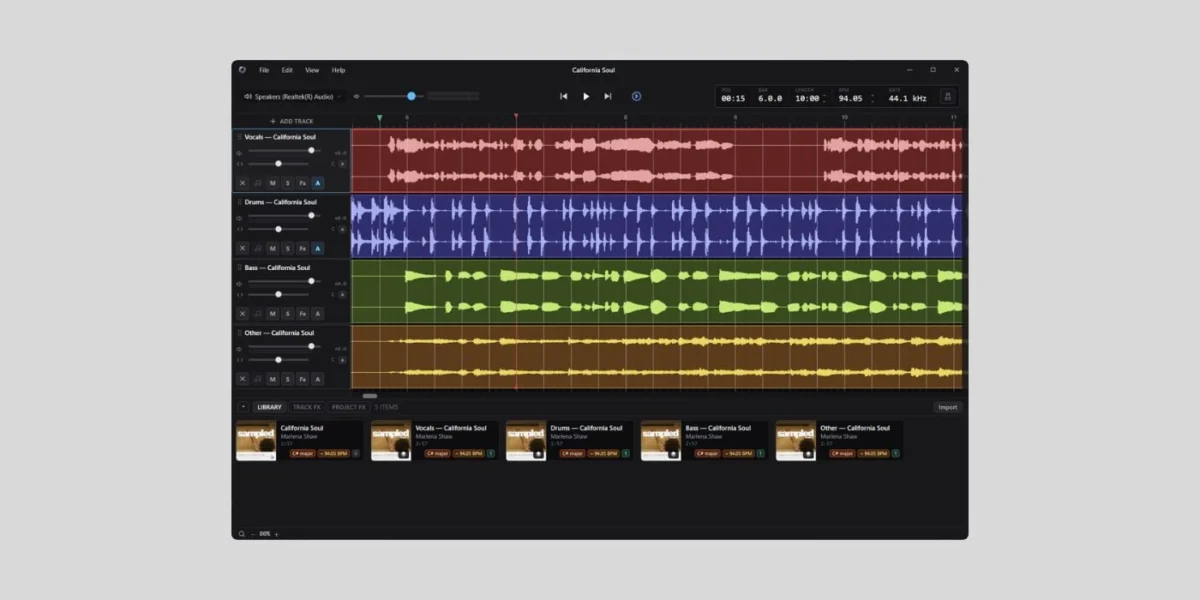
A new contender has entered the digital audio workstation (DAW) landscape, specifically targeting the burgeoning communities of remixers, mashup artists, and sample-based music producers. Silverdaw, a free and open-source application designed for Windows, distinguishes itself not by attempting to rival comprehensive studio DAWs like Ableton Live, FL Studio, or Cubase, but by focusing on a streamlined, intuitive workflow optimized for transforming existing audio into new creative works. Its recent release, currently at version 1.2.0, has drawn attention for its dedicated feature set and commitment to user privacy.
The Evolving Landscape of Digital Audio Workstations and the Rise of Specialized Tools
The music production industry has undergone a profound transformation over the past two decades, largely driven by advancements in digital technology and increasing accessibility to powerful software. What once required expensive studios and complex hardware can now be achieved with a laptop and specialized software. This democratization of music production has led to an explosion in the number of aspiring artists, bedroom producers, and content creators. Consequently, the market for DAWs has diversified, moving beyond the traditional full-suite offerings to include more specialized tools catering to niche workflows.
Historically, flagship DAWs like Pro Tools set the standard for recording and mixing, while others, such as Ableton Live, pioneered performance and loop-based composition. However, the sheer breadth of features in these comprehensive packages can often present a steep learning curve and unnecessary complexity for users with specific creative goals. For instance, a DJ looking to create a quick mashup or a producer focusing solely on sample manipulation might find themselves navigating an overwhelming array of functions unrelated to their immediate needs. This context explains the emergence and appeal of tools like Silverdaw, which prioritize a focused user experience over a sprawling feature set. The rise of free and open-source software (FOSS) in general, across various industries, further underscores a growing demand for accessible, community-driven alternatives that lower the barrier to entry for creative endeavors. In music production, free DAWs have gained significant traction, offering entry points for beginners and cost-effective solutions for independent artists.
Silverdaw’s Core Philosophy and Streamlined Workflow
Silverdaw’s fundamental design philosophy is centered on efficiency and ease of use for audio manipulation. The application is built from the ground up to facilitate the rapid transformation of audio, making it particularly appealing to those whose creative process begins with pre-existing sounds. Users can import a wide array of audio files—including full songs, individual loops, vocal tracks, or one-shot samples—directly into a project library. From there, these audio assets are dragged onto a timeline, where they become the building blocks for new compositions.
The editing process within Silverdaw is designed to be highly flexible and non-destructive. This means that any modifications made to an audio clip—such as trimming, altering tempo, shifting pitch, slicing, or applying effects—are stored as settings associated with the clip or track, rather than permanently altering the original source file. This non-destructive approach is a critical advantage for experimental workflows, allowing producers to freely experiment with different chops, arrangements, and effects without fear of losing their original material. It encourages iterative creativity, enabling users to revert to previous states or explore multiple variations of an idea seamlessly. This contrasts with destructive editing techniques, where changes are directly applied to the audio file, often requiring multiple saves or backups to preserve original content.
A key aspect of Silverdaw’s intelligent design is its background audio analysis capabilities. Upon importing files, the DAW automatically analyzes them to detect crucial metadata such as tempo (BPM), musical key, and beat positions. This analytical foundation significantly streamlines the creative process. For example, the first audio clip placed on the timeline can automatically dictate the project’s overall tempo. Subsequently imported and placed clips can then be automatically matched to this project tempo, ensuring musical alignment and simplifying the creation of cohesive arrangements. This automatic synchronization capability is a boon for remixers who frequently work with disparate audio sources, eliminating the laborious manual adjustments often required in less specialized software. The ability to quickly align different musical elements based on detected tempo and key signatures allows producers to focus more on creative arrangement and sound design rather than technical synchronization challenges.
Innovative Features: On-Device Stem Separation and Advanced Loop Slicing
Two features particularly distinguish Silverdaw in its targeted niche: on-device stem separation and comprehensive loop slicing. These tools directly address common challenges faced by remixers and sample-based producers, offering powerful capabilities that are increasingly sought after in modern music production.
Stem separation technology has rapidly advanced in recent years, largely driven by machine learning algorithms. It allows for the deconstruction of a mixed audio track into its constituent elements, typically isolating vocals, drums, bass, and other instrumental parts. Silverdaw integrates this cutting-edge technology directly into its workflow, offering users the ability to perform stem separation locally on their device. This local processing capability is a significant differentiator. Unlike cloud-based stem separation services, which require uploading audio files to remote servers, Silverdaw performs all processing offline. This not only enhances user privacy—a core tenet of the software—but also potentially offers faster processing times depending on the user’s hardware, and eliminates reliance on an internet connection. The application provides three modes for stem separation: "Fast," "Balanced," and "Best," allowing users to balance processing speed with output quality according to their specific needs and system capabilities. The implications of local stem separation are substantial for creative freedom, enabling artists to extract individual components from a track for remixing, sampling, or even practicing instrumental parts without requiring access to the original multitrack recordings.
Complementing stem separation is Silverdaw’s robust loop slicing functionality. Sample-based music production heavily relies on the ability to chop, rearrange, and manipulate segments of audio. Silverdaw facilitates this by allowing users to slice an audio clip according to its detected beat grid or through the placement of manual markers. Once sliced, these individual segments can be independently rearranged, re-pitched, or otherwise manipulated on the timeline. This granular control over audio segments empowers producers to create intricate rhythmic patterns, reconstruct melodies, or generate entirely new grooves from existing loops. The combination of automatic beat detection with manual refinement offers a flexible environment for creative sampling, enabling everything from subtle rhythmic variations to radical sonic transformations. The integration of such precise slicing tools directly within the DAW’s timeline streamlines a process that often requires external editors or complex workarounds in more general-purpose software.
Mixing, Control, and Performance: Beyond the Basics
While Silverdaw eschews the complexity of full-suite DAWs, it does not compromise on essential mixing and control capabilities vital for producing polished remixes and tracks. The software includes a suite of per-track mixing tools, providing users with the ability to shape their sound effectively. These include fundamental tone controls (EQ), a DJ-style filter for dynamic frequency manipulation, and compression to manage dynamics. For spatial effects, Silverdaw offers reverb and delay sends, allowing for the creation of depth and atmosphere within a mix.
Beyond individual track processing, the DAW also incorporates project-level effects (Project FX) and a master output meter, providing crucial feedback on the overall mix balance and loudness. A standout feature for dynamic control and creative expression is its support for saveable automation. Users can draw breakpoint curves for various parameters, including filter cutoff, pan position, gain levels, and send amounts. This automation capability is invaluable for crafting dynamic build-ups, smooth transitions, and adding movement and evolution to a remix. For instance, automating a filter sweep during a break or gradually increasing the reverb send on a vocal can dramatically enhance the emotional impact and professional polish of a track.
For performers and those who prefer tactile control, Silverdaw offers support for selected MIDI DJ controllers. This integration allows users to control the timeline, trigger track effects, and even record and edit vinyl-style scratch patterns directly from hardware. The ability to perform and record scratches within the DAW provides a creative outlet for DJs and hip-hop producers, bridging the gap between traditional DJing techniques and digital production. Recognizing that not all users will possess a supported controller, Silverdaw thoughtfully includes an on-screen deck, replicating the functionality of a physical controller and ensuring that all users can access these performance-oriented features. This dual approach to control highlights Silverdaw’s commitment to accessibility and diverse user workflows.
The Open-Source Ethos and Privacy Commitment
Silverdaw’s status as a free and open-source project, licensed under AGPL-3.0, is a significant aspect of its identity and appeal. Open-source software development fosters transparency, community collaboration, and often results in robust, user-driven applications. The AGPL-3.0 license, specifically, is a strong copyleft license that ensures that if anyone modifies and distributes the software, they must also make their modifications open source under the same license. This promotes a truly open ecosystem, preventing proprietary forks from closing off improvements made by the community.
Beyond its open-source nature, Silverdaw demonstrates a strong commitment to user privacy. The developer explicitly states that the software runs without requiring user accounts and does not transmit any user data externally. This privacy-centric approach stands in stark contrast to many contemporary software applications that often collect usage data or require online authentication. In an era of increasing concerns about data security and digital privacy, Silverdaw’s "no accounts, no data sent" policy offers users peace of mind, particularly those who are experimenting with sensitive or unreleased creative material. This commitment aligns with a growing movement among independent developers and users who prioritize autonomy and control over their digital assets. For many independent artists and bedroom producers, this privacy assurance can be a deciding factor in their choice of creative tools.
Development Roadmap and Future Prospects
As of its current version 1.2.0, Silverdaw is still in its early stages of development, indicating an active and evolving project. The developer has outlined a clear roadmap for future enhancements, with VST (Virtual Studio Technology) support being a prominent feature planned for integration. VST plugins are a ubiquitous standard in digital audio, offering an expansive ecosystem of virtual instruments, effects, and utilities developed by third parties. The addition of VST support would significantly broaden Silverdaw’s sonic capabilities and creative potential, allowing users to leverage a vast library of existing tools within the DAW. This would be a crucial step in enhancing its versatility and appeal to a wider range of producers who rely on specific VSTs for their sound design and mixing processes.
Another frequently expressed hope from the community is for Silverdaw to eventually land on macOS. Currently, the application is exclusively available for Windows. Expanding to macOS would open Silverdaw to a significant segment of the music production community, as Apple’s operating system has historically been a popular platform for creative professionals. While such a port would undoubtedly represent a substantial development effort, it would greatly enhance the software’s reach and impact.
The rapid iteration from its initial release to version 1.2.0 suggests an agile development process and responsiveness to user feedback, which bodes well for the future growth and stability of the platform.
Market Impact and Industry Reactions
Silverdaw enters a crowded market, but its specialized focus and open-source nature position it uniquely. By not attempting to be a "do-it-all" DAW, it avoids direct confrontation with established giants and instead targets a specific user demographic with tailored solutions. This strategy could allow it to carve out a significant niche among bedroom producers, DJs, and remixers who prioritize quick, efficient audio manipulation and privacy.
The availability of Silverdaw for free, combined with its robust feature set for remixing and sampling, significantly lowers the barrier to entry for aspiring music creators. It provides professional-grade tools without the financial investment typically associated with high-end DAWs, empowering a new generation of artists. Industry analysts might view Silverdaw as an important indicator of the ongoing trend towards specialized, user-centric software in music production. Its commitment to open-source principles and user privacy also sets a precedent that could influence other developers.
While the absence of VST support in its current version is a limitation for some advanced users, its presence on the roadmap signals a strategic move to address this, without compromising its core philosophy of simplicity and efficiency. The ongoing development and potential expansion to other operating systems will be critical factors in determining Silverdaw’s long-term impact on the music technology landscape. Its success will likely depend on continued community engagement, consistent updates, and the ability to maintain its focused vision while gradually expanding its capabilities.
Availability and Accessibility
Silverdaw is readily available for Windows users. It can be downloaded directly from the Microsoft Store, offering a convenient installation method for many users. Additionally, a portable download is available on GitHub, providing flexibility for users who prefer not to install software directly or wish to run it from a USB drive.
The software supports exporting mixdowns in several high-quality audio formats, including WAV, FLAC, and AIFF, catering to professional audio standards. It also offers MP3 export for more compressed, shareable files, balancing quality with convenience. This range of export options ensures compatibility with various platforms and playback devices, making it easy for users to share their creations with the world.
Silverdaw represents a compelling new option for a specific segment of the music production community. Its focused feature set, commitment to open-source principles, and strong emphasis on user privacy position it as a noteworthy development in the realm of digital audio workstations. As it continues to evolve, its potential to empower a new wave of remixers and sample-based artists is substantial.
