

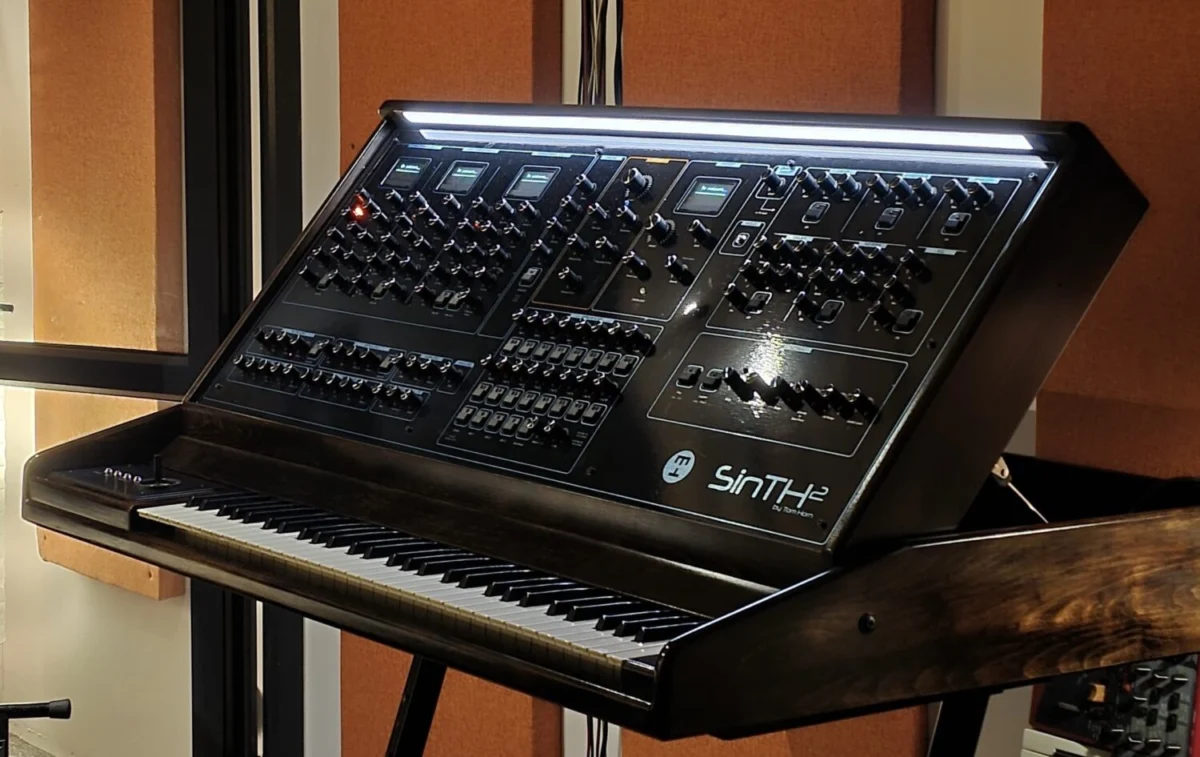
The landscape of modern hardware synthesis has witnessed a significant shift toward high-voice-count digital and hybrid instruments, a trend further solidified by the official introduction of the SinTH2. This new hardware synthesizer, emerging from a specialized manufacturing background in Poland, represents a sophisticated approach to sample-based synthesis combined with a massive, tactile user interface. Designed to cater to professional sound designers and live performers, the SinTH2 integrates a high-density control surface with a robust digital engine capable of 60-voice polyphony, a specification that places it in the upper echelon of contemporary hardware instruments.
Core Synthesis Architecture and Oscillator Design
At the heart of the SinTH2 lies a versatile sound engine driven by five primary sample oscillators and a dedicated noise oscillator. Unlike traditional virtual analog synthesizers that rely on mathematically generated waveforms, the use of sample-based oscillators allows the SinTH2 to utilize complex, harmonically rich source material as the foundation for its subtractive synthesis signal path. This architecture enables the reproduction of acoustic textures, classic synth waveforms, and complex digital transients with equal fidelity.
The inclusion of five oscillators per voice provides an immense amount of sonic layering potential. When multiplied by the instrument’s 60-voice polyphony, the SinTH2 is capable of producing dense, orchestral-scale textures without the risk of "voice stealing," a common limitation in hardware units with lower processing power. This high voice count is particularly beneficial for long-release ambient pads, complex unison patches, and multi-part sequencing where multiple timbres must overlap seamlessly.
To shape these raw sources, the SinTH2 employs a sophisticated filter section. The instrument features a multi-mode filter offering 18 dB per octave slopes for low-pass, band-pass, and high-pass configurations. The choice of an 18 dB slope is a notable design decision; it provides a sonic character that sits between the aggressive resonance of a 24 dB "ladder" filter and the more transparent, airy quality of a 12 dB state-variable filter. This specific slope is often favored by sound designers for its ability to provide clear frequency attenuation while maintaining a musical, non-clinical resonance.
Modulation, Sequencing, and Motion Control
Modulation on the SinTH2 is handled by a suite of four Low-Frequency Oscillators (LFOs) and two dedicated envelope generators per voice. These modulators can be routed to various parameters within the engine, allowing for evolving textures and rhythmic movement. However, the most distinctive feature of the instrument’s performance capability is its integrated motion recording system.
Motion recording allows the user to capture the real-time movement of the synthesizer’s various potentiometers and encoders. This data is then looped or played back in sync with the internal clock or an external MIDI source, effectively acting as a complex, multi-lane automation system. This feature bridges the gap between traditional hardware performance and the automation-heavy workflow of modern Digital Audio Workstations (DAWs).
The SinTH2 also includes a 16-step polyphonic sequencer. This sequencer is designed for rapid composition, allowing users to program not just single-note lines but full chordal progressions into each step. This functionality is complemented by a massive internal memory bank consisting of 1,920 preset cells, providing ample storage for complex patches and sequence data.
The Physical Interface: A "Knob-Per-Function" Philosophy
One of the most striking aspects of the SinTH2 is its physical design. In an era where many manufacturers are moving toward touchscreen-heavy interfaces and menu-diving to reduce costs, the SinTH2 adopts a "knob-per-function" philosophy on a massive scale. The control surface features 120 potentiometers, nine rotary encoders, and 36 tactile buttons.
This high density of physical controls ensures that almost every critical parameter of the synthesis engine is accessible on the front panel. To provide visual feedback for this complex system, the SinTH2 is equipped with four separate OLED displays. These screens are strategically placed to offer real-time data on oscillator settings, filter curves, modulation routings, and sequencer data, ensuring that the user remains informed of the instrument’s state without needing to navigate through deep sub-menus.
The build quality is further emphasized by the inclusion of a dynamic Fatar keyboard. Fatar, an Italian manufacturer, is widely regarded as the industry standard for high-quality keybeds. The choice of a Fatar action suggests that the SinTH2 is intended as a primary performance controller as much as a sound module, offering the tactile response required for expressive playing.
Connectivity and Professional Integration
The SinTH2 is designed to be the centerpiece of a professional studio or live rig. Its connectivity options reflect this ambition. The primary audio output is handled via symmetrical XLR connectors. Symmetrical (balanced) outputs are essential in professional environments to minimize electromagnetic interference and noise, especially over long cable runs in live venues or large studio complexes.

Furthermore, the instrument features a stereo audio input. This input is not merely a pass-through; it is routed directly into the SinTH2’s internal effects DSP. This allows musicians to process external instruments—such as other synthesizers, drum machines, or vocals—through the SinTH2’s filters and onboard effects engine. The integrated DSP provides a range of high-quality spatial and time-based effects, further expanding the unit’s utility as a sound processing hub.
Chronology and Development Context
The development of the SinTH2 follows a period of significant growth in the Eastern European synthesizer market. Over the past decade, countries like Poland, Latvia, and the Czech Republic have become hubs for boutique hardware manufacturing, with companies like Polyend and Erica Synths gaining global recognition.
The SinTH2 represents a continuation of this trend, moving from the prototype phase into a "built-to-order" production model. This approach to manufacturing is common among high-end boutique brands, as it allows for a higher degree of quality control and the ability to offer various form factors to the end-user. According to the manufacturer, the SinTH2 is available in several configurations, including a full keyboard version for performers and potentially desktop or rack-mount modules for studio-bound producers.
The initial unveiling of the instrument was accompanied by a detailed video overview in Polish, highlighting the "Polska Myśl Techniczna" (Polish Technical Thought) behind the project. This local pride in engineering is reflected in the instrument’s robust specifications and the decision to use premium components like the Fatar keybed and XLR outputs.
Market Implications and Analysis
The introduction of the SinTH2 comes at a time when the "megasynth" category is seeing a resurgence. Instruments like the Waldorf Quantum, the ASM Hydrasynth, and the Arturia PolyBrute have shown that there is a significant market for premium hardware that offers deep synthesis capabilities and immediate physical control.
The SinTH2 differentiates itself through its specific focus on sample-based oscillators and its sheer number of physical controls. While wavetable and analog modeling are common in this price bracket, a dedicated five-oscillator sample engine offers a different palette of sounds, particularly for those looking to blend organic textures with synthetic processing.
The 60-voice polyphony is also a major selling point. In the high-end hardware market, polyphony is often a bottleneck. By providing 60 voices, the SinTH2 positions itself as a "workstation-class" synthesizer capable of handling the most demanding arrangements. From a sound design perspective, this allows for the creation of patches with extremely long release times and heavy unison stacks that would choke most other hardware synthesizers.
Official Positioning and Custom Manufacturing
As a built-to-order instrument, the SinTH2 is not intended for the mass consumer market found in traditional retail outlets. Instead, it targets a niche of professional composers, synthesists, and collectors who value bespoke engineering. The manufacturer has stated that the instrument is built to the specific requirements of the buyer, which often includes a choice of aesthetic finishes or form factors.
This business model allows the manufacturer to maintain a direct relationship with their clientele, ensuring that each unit meets the rigorous standards required for professional use. While pricing for such instruments is typically high, reflecting the labor-intensive nature of boutique electronics, the feature set of the SinTH2 suggests a value proposition based on its "all-in-one" nature—combining a top-tier keyboard, a massive control surface, and a high-performance digital engine.
Future Outlook
The SinTH2 enters a competitive but thriving market. Its success will likely depend on the community’s reception of its unique 18 dB filter and the flexibility of its sample-based engine. As more units reach the hands of international artists, the library of 1,920 presets is expected to grow, showcasing the instrument’s versatility across genres ranging from cinematic scoring to experimental electronic music.
With its blend of massive polyphony, extensive tactile control, and professional-grade connectivity, the SinTH2 stands as a testament to the current state of independent hardware development. It challenges the dominance of larger corporations by offering a specialized, high-performance alternative that prioritizes the user’s physical interaction with sound. As the "Polska Myśl Techniczna" continues to influence the global music technology industry, the SinTH2 serves as a prominent example of how regional innovation can produce world-class tools for creative expression.
