

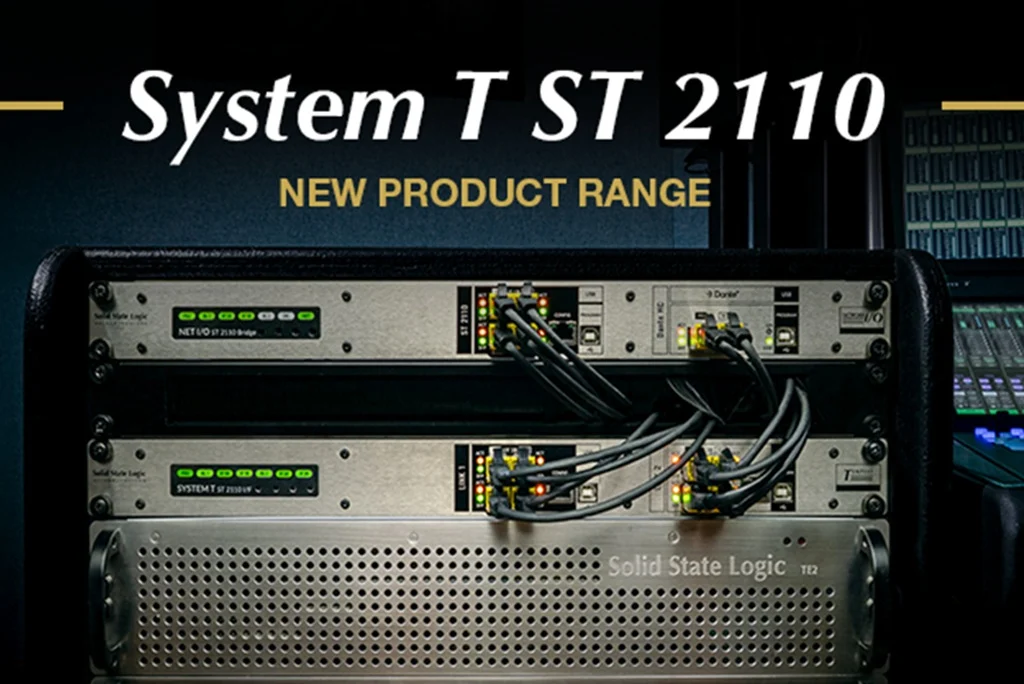
The global broadcast industry is currently navigating a pivotal transition from traditional Serial Digital Interface (SDI) infrastructures to comprehensive Internet Protocol (IP) based workflows. In a strategic move to address the complexities of this migration, Solid State Logic (SSL) has announced the release of the Net I/O ST 2110 Bridge. This new hardware solution is a dedicated 1-RU (Rack Unit) audio network converter designed specifically to bridge the gap between two of the most prevalent IP audio standards in the modern production environment: Audinate’s Dante and the SMPTE ST 2110 suite of standards. By offering a high-density, cost-effective method for bidirectional audio conversion, SSL aims to provide broadcasters with a versatile tool that ensures compatibility across diverse networking ecosystems, whether in permanent studio installations or mobile outside broadcast (OB) units.
The Net I/O ST 2110 Bridge arrives at a time when the broadcast sector is increasingly divided between the ease of use offered by Dante and the rigorous, multi-vendor interoperability requirements of SMPTE ST 2110. While Dante has become the de facto standard for professional audio production due to its plug-and-play nature and widespread adoption by hardware manufacturers, SMPTE ST 2110—specifically ST 2110-30 for audio—is the preferred choice for large-scale broadcast facilities that require synchronized transport of video, audio, and metadata over a unified IP fabric. The SSL Bridge acts as a critical gateway, allowing these two distinct "languages" to communicate without the need for complex, multi-stage conversion processes that could introduce latency or degrade signal integrity.
Technical Specifications and Hardware Architecture
At the core of the Net I/O ST 2110 Bridge is a robust hardware architecture designed for the mission-critical demands of 24/7 broadcast operations. The device is housed in a compact 1-RU chassis, making it ideal for space-constrained environments such as server rooms and OB trucks. SSL offers the device in two primary configurations: a 256-channel version and a 512-channel version. Recognizing the evolving needs of production facilities, the 256-channel model is designed with a clear upgrade path, allowing users to expand to the full 512-channel capacity via software licensing as their network demands grow.
Redundancy is a cornerstone of the device’s design philosophy. In the broadcast world, a single point of failure can lead to catastrophic on-air outages. To mitigate this risk, the Net I/O ST 2110 Bridge features full hardware redundancy for both media networking and power supplies. It supports SMPTE ST 2022-7 (Seamless Protection Switching), which allows for the simultaneous transmission of two identical streams over independent network paths. If one path fails, the receiving device switches to the other stream instantaneously and without any audible interruption. Furthermore, the inclusion of dual power supply units (PSUs) ensures that the device remains operational even in the event of a power circuit failure.
One of the most significant technical hurdles in IP audio conversion is the management of varying sample rates and clocking domains. To address this, SSL provides an optional high-quality Sample Rate Converter (SRC) for the Bridge. This allows the device to interface between networks operating at different sampling frequencies or under different master clocks, ensuring that audio remains perfectly synchronized and free of digital artifacts regardless of the source or destination network’s clocking configuration.
Bridging the Standards: ST 2110 and NMOS Support
The Net I/O ST 2110 Bridge is not merely a physical converter; it is a sophisticated management hub that adheres to the latest industry specifications for discovery and connection management. Central to this is the support for the Networked Media Open Specifications (NMOS), developed by the Advanced Media Workflow Association (AMWA). The Bridge fully supports NMOS IS-04 (Discovery and Registration) and IS-05 (Device Connection Management).
The inclusion of NMOS support is vital for modern broadcast facilities that utilize centralized orchestration systems. In a typical ST 2110 environment, manual routing of thousands of multicast streams would be impossible. NMOS IS-04 allows the SSL Bridge to automatically announce its presence and capabilities to a network registry, while IS-05 enables broadcast controllers to manage audio connections with the same familiarity and ease as a traditional SDI routing matrix. By integrating these protocols, SSL ensures that the Bridge can be seamlessly incorporated into any standards-based IP facility, regardless of the manufacturer of the overarching control system.
Furthermore, the device supports ST 2110-30 Level A, B, and C. These levels define the number of channels and the packetizing intervals used for audio transport. Level C, in particular, allows for very low latency and high channel counts per stream, which is essential for real-time live production. By supporting the full range of ST 2110-30 profiles, the Bridge ensures compatibility with a wide array of third-party broadcast equipment, from intercom systems to video switchers with embedded audio.
Strategic Integration with SSL System T and Third-Party Platforms
While the Net I/O ST 2110 Bridge is designed to function as a standalone interface capable of connecting consoles and audio sources from different manufacturers, it is also optimized for the SSL System T broadcast production platform. System T has long been at the forefront of IP-native audio production, and the addition of the Bridge expands its connectivity options significantly.
In tandem with the release of the Bridge, SSL has announced an expansion of the native ST 2110 connectivity for the System T range. Future updates will allow System T engines to support up to 2048 audiokanäle (audio channels) of ST 2110 connectivity, starting from a baseline of 256 channels. This massive increase in throughput reflects the industry’s move toward "all-IP" facilities where the scale of audio routing far exceeds the capabilities of traditional MADI or AES3 connections.
The Bridge allows existing System T users to integrate Dante-based stageboxes, wireless microphone systems, and playback devices directly into an ST 2110-based production core. Conversely, it allows facilities that have standardized on Dante to provide a professional-grade interface to ST 2110-based video infrastructures. This bidirectional flexibility is expected to make the Bridge a staple in rental houses and multi-purpose venues where equipment from various vendors must frequently be interfaced.
Industry Context: The Shift Toward Unified IP Infrastructures
The release of the SSL Net I/O ST 2110 Bridge highlights a broader trend in the media and entertainment industry. For years, the "format wars" between various IP audio protocols created silos within production facilities. Audio engineers often preferred Dante for its simplicity, while facility engineers pushed for ST 2110 to maintain compliance with EBU (European Broadcasting Union) and SMPTE standards.
According to industry analysts, the market is now entering a "coexistence phase." Broadcasters are realizing that a single protocol may not meet every specific need within a facility. For example, a local radio studio might find Dante perfectly sufficient, but that same studio needs to feed audio into a national television master control room operating on ST 2110. SSL’s Bridge acknowledges this reality by providing a "Switzerland" of sorts—a neutral ground where these protocols can meet and exchange data reliably.

This development is also a response to the increasing complexity of live sports and event production. In these scenarios, remote production (REMI) is becoming the standard. Audio must be transported over long distances via Wide Area Networks (WANs), often requiring the conversion of local Dante networks at the stadium into ST 2110 streams for transport back to the broadcast center. The SSL Bridge provides the high channel density and redundancy required to handle these demanding workflows without becoming a bottleneck.
Operational Impact and Economic Considerations
From an economic perspective, the Net I/O ST 2110 Bridge offers a compelling value proposition for broadcasters looking to modernize their facilities without discarding existing investments. Replacing an entire Dante-based ecosystem with ST 2110-native equipment would be prohibitively expensive for many organizations. The Bridge allows for a phased migration, where new ST 2110 infrastructure can be introduced while maintaining the utility of existing Dante assets.
Operationally, the 1-RU form factor and the software-expandable channel count mean that facilities can "buy what they need" today and scale tomorrow. This flexibility is particularly important in a post-pandemic economy where capital expenditure budgets are under increased scrutiny. By providing a clear upgrade path from 256 to 512 channels, SSL allows engineering departments to manage their growth incrementally.
The inclusion of ST 2022-7 redundancy and dual PSUs also reduces the "total cost of ownership" by minimizing the risk of downtime and the associated loss of advertising revenue or viewer trust. In high-stakes environments like live news or major sporting events, the reliability of the audio path is just as critical as the video path, and SSL has engineered the Bridge to meet these "tier-one" broadcast requirements.
Chronology of SSL’s IP Innovation
The announcement of the Net I/O ST 2110 Bridge marks a significant milestone in Solid State Logic’s long history of innovation in the broadcast sector.
- 2013: SSL introduces System T, one of the first broadcast consoles built from the ground up on an IP-native (Dante) backbone.
- 2017: As the industry begins to coalesce around SMPTE ST 2110, SSL joins the AMWA and begins implementing ST 2110 and NMOS support across its Net I/O range.
- 2021-2023: SSL expands its IP portfolio with various interfaces, focusing on high-quality mic preamps and MADI-to-IP conversion.
- March 2026: The launch of the Net I/O ST 2110 Bridge and the announcement of 2048-channel native ST 2110 support for System T represent the latest evolution in this timeline, cementing SSL’s position as a leader in the IP audio transition.
Conclusion and Future Outlook
As the broadcast landscape continues to evolve, the demand for interoperability will only intensify. The Solid State Logic Net I/O ST 2110 Bridge is a timely and sophisticated response to the practical challenges faced by today’s broadcast engineers. By combining high channel density, rigorous redundancy, and support for open standards like NMOS and ST 2110, SSL has created a tool that not only solves current connectivity issues but also future-proofs facilities for the next decade of IP-based production.
The industry’s move toward higher channel counts and more integrated workflows is clear. With the ability to handle up to 512 channels in a single rack unit and the promise of even greater native capacity within the System T ecosystem, SSL is signaling that it is ready to support the largest and most complex broadcast operations in the world. As facilities continue to decommission their old SDI routers in favor of high-speed IP switches, devices like the Net I/O ST 2110 Bridge will be the essential glue that holds the modern broadcast environment together, ensuring that audio remains a top priority in an increasingly video-centric IP world.
