

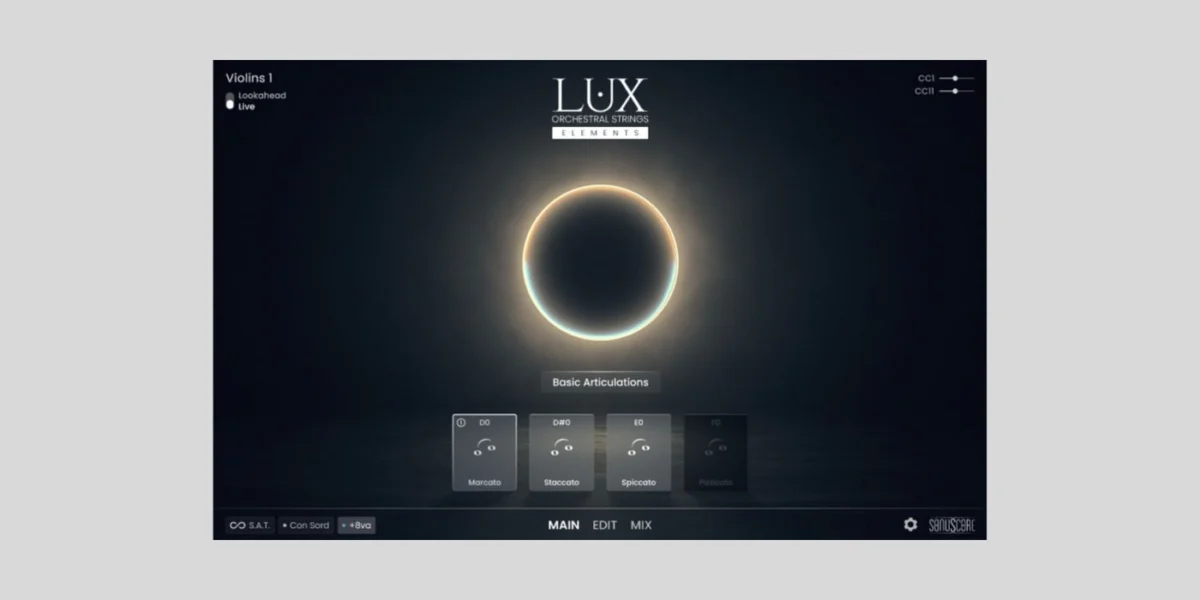
Sonuscore, a prominent developer in the virtual instrument market, has announced the release of LUX Orchestral Strings Elements, a complimentary orchestral strings instrument designed for use with the free Native Instruments Kontakt Player. This strategic release marks a significant moment in the ongoing democratization of high-quality music production tools, making sophisticated orchestral textures accessible to a broader audience without an upfront financial investment. The instrument directly leverages the acclaimed recordings and cinematic mix from Sonuscore’s flagship LUX Orchestral Strings library, providing users with a foundational set of articulations and string sections that are ready for immediate integration into professional-level compositions.
The Evolving Landscape of Free Orchestral Libraries: A Historical Perspective
The availability of high-quality orchestral content for free in the current music production landscape represents a profound shift from just a decade ago. Historically, acquiring an in-depth orchestral string library required a substantial financial outlay, often placing such tools beyond the reach of aspiring composers, independent producers, and those operating on limited budgets. Premium libraries from established developers could easily cost hundreds or even thousands of dollars, acting as a significant barrier to entry for many who wished to create realistic orchestral scores.
The past ten years, however, have witnessed a paradigm shift. Technological advancements in sampling, digital signal processing, and host platform development, coupled with innovative business models, have ushered in an era where professional-grade virtual instruments are increasingly offered at no cost. This trend has been spearheaded by several key players in the industry. For instance, Spitfire Audio’s "Symphony Orchestra Discover" series, Orchestral Tools’ offerings via their SINE Player, and various other initiatives have demonstrated the viability and demand for high-quality free orchestral plugins. These instruments, while often scaled-down versions of their paid counterparts, provide an invaluable entry point, allowing users to familiarize themselves with complex libraries and develop their compositional skills without financial burden. The "freemium" model, where a basic, yet capable, version is offered for free to entice users to upgrade to a more comprehensive paid product, has become a cornerstone of this evolution.
LUX Orchestral Strings Elements: Core Features and Technical Integration
LUX Orchestral Strings Elements is positioned as an ideal starting point for composers seeking to integrate lush, cinematic string sounds into their projects. The instrument is a direct descendant of Sonuscore’s full LUX Orchestral Strings library, which has rapidly gained traction among leading film and television composers, including the renowned Ramin Djawadi, celebrated for his work on productions like "Game of Thrones" and "Fallout." The "Elements" version utilizes the identical high-fidelity recordings and cinematic mix that define its premium counterpart, ensuring a consistent and professional sonic character.
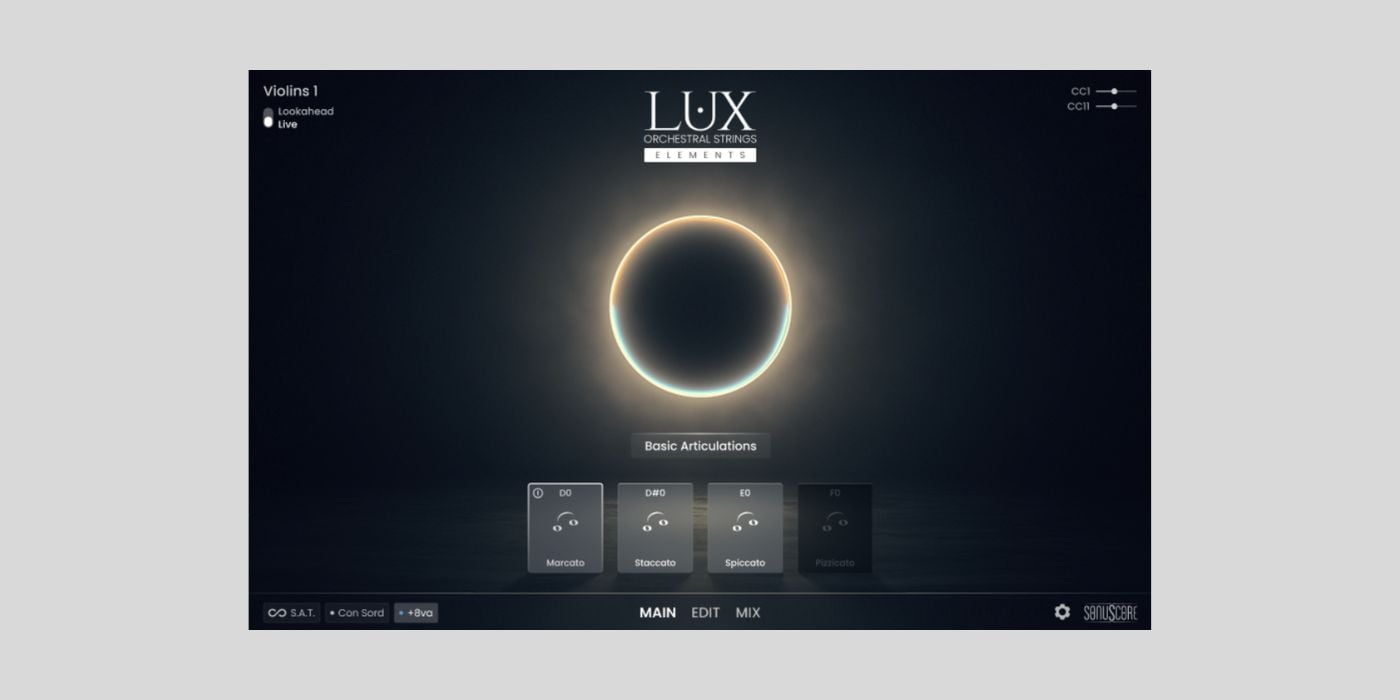
The free library encompasses all five essential string sections: 1st Violins, 2nd Violins, Violas, Celli (Cellos), and Basses. This comprehensive sectional coverage allows for genuine orchestral voicing and arrangement possibilities, crucial for authentic string writing. For each section, Sonuscore has included four core articulations: Sustain, Spiccato, Tremolo, and Sul Ponticello Tremolo. These articulations cover a broad spectrum of common string techniques:
- Sustain: Ideal for long, lyrical lines and pads, providing a continuous, expressive tone.
- Spiccato: A short, detached bowing technique, perfect for rhythmic passages, staccato chords, and energetic textures.
- Tremolo: Rapid repetition of a single note, generating tension, suspense, and dramatic swells.
- Sul Ponticello Tremolo: A tremolo played very close to the bridge, producing a shimmering, slightly metallic, and often unsettling timbre, excellent for creating eerie or atmospheric textures.
This selection of articulations is robust enough to facilitate melodic writing, drive rhythmic passages, and craft evocative tension textures, forming a solid foundation for most string writing scenarios. To further aid potential upgraders, a one-octave legato demo for the 1st Violins is also included. This allows users to experience the quality and fluidity of Sonuscore’s legato transitions firsthand, a critical aspect for realistic and expressive string performances, before committing to the full version.
From a technical standpoint, LUX Orchestral Strings Elements requires the free Native Instruments Kontakt Player, specifically version 7.10.9 or higher. This ensures broad compatibility and ease of integration into existing digital audio workstations (DAWs). The instrument supports both macOS (versions 13, 14, or 15, compatible with both Intel and Apple Silicon processors) and Windows (versions 10 or 11). A minimum of 8 GB of RAM is recommended to ensure smooth performance, particularly when loading multiple instances or complex arrangements. The Kontakt Player itself operates as a versatile plugin, supporting VST, AU, and AAX formats, making it accessible across virtually all professional DAWs.
The Full Vision: Exploring the Capabilities of LUX Orchestral Strings
While LUX Orchestral Strings Elements offers remarkable value for a free instrument, the full version of LUX Orchestral Strings, priced at $499, significantly expands upon its capabilities, catering to the demands of high-end professional scoring. The transition from "Elements" to the full library is designed to be seamless, with all learned skills and foundational understanding carrying over, ensuring no effort is wasted.
The full library introduces a vastly more comprehensive articulation palette, essential for nuanced and authentic orchestral performances. This includes:
- Staccato: Sharper, more defined short notes than spiccato, often used for powerful, punctuated phrases.
- Marcato: Emphasized, accented notes, providing a strong attack and presence.
- Pizzicato: Plucked strings, offering a distinct, percussive sound, commonly used for light, playful, or dramatic effects.
- Portamento: A smooth slide between notes, adding expressiveness and fluidity.
- Con Sordino Emulation: The sound of muted strings, creating a softer, more distant, and often melancholic timbre.
Beyond these standard articulations, the full LUX Orchestral Strings library delves into a realm of extended techniques that are crucial for modern cinematic scoring and unique sound design. These include:
- Whisper Sustains: Extremely soft, delicate sustained notes, ideal for creating subtle tension or ethereal atmospheres.
- Harmonics Legato: Smooth transitions between harmonic notes, producing a glassy, pure tone.
- Soft Interval Trills: Gentle, rapid alternations between two notes, adding shimmer and movement.
- Pendulum Glissandi: Controlled, sweeping slides across intervals, capable of building immense tension or dramatic flourishes.
- Slow Bends: Gradual pitch inflections, adding a human, expressive quality.
- Swarm Textures: Complex, evolving soundscapes created by multiple string players performing semi-randomized, overlapping gestures, perfect for unsettling or avant-garde scoring.
A critical enhancement in the full version is the inclusion of four distinct microphone positions: Close, Decca, Far, and an exclusive "Bleed" option.
- Close: Provides an intimate, detailed, and present sound, ideal for soloistic passages or when precise control over individual sections is desired.
- Decca: Captures the classic Decca Tree microphone configuration, offering a balanced and spacious stereo image, characteristic of traditional orchestral recordings.
- Far: Delivers a wide, ambient sound, emphasizing the natural reverberation of the concert stage, perfect for epic and grand statements.
- Bleed: A unique option that mixes in natural spill from other orchestral sections, enhancing the sense of a live, cohesive ensemble performing in a shared acoustic space, adding realism and depth.
Furthermore, the full library includes an ensemble instrument with polyphonic legato, allowing composers to play entire chords with realistic legato transitions, streamlining the orchestration process and enabling instant, convincing string arrangements. Fluid staccatos, meticulously recorded in real rhythmic contexts, ensure that short notes retain their natural punch and musicality, even in fast-paced passages. These comprehensive features underscore Sonuscore’s commitment to providing a versatile and authentic tool for professional composers, enabling them to realize their most ambitious musical visions.
Broader Implications: Democratization and Industry Trends
The release of LUX Orchestral Strings Elements exemplifies several significant trends within the music technology industry and has profound implications for the broader creative community.
Democratization of Music Production: The most immediate impact is the further democratization of orchestral scoring. By offering a high-quality, professional-grade string library for free, Sonuscore lowers the barrier to entry for countless aspiring composers, students, and independent artists who previously could not afford such sophisticated tools. This enables a wider demographic to experiment with orchestral textures, learn fundamental orchestration techniques, and ultimately produce more polished and professional-sounding music. This access can foster new talent and diversify the voices within the film, TV, and game scoring industries.
Impact on Education: Educational institutions and students benefit immensely from such free resources. Music composition programs can integrate these tools into their curricula, allowing students to gain hands-on experience with industry-standard sounds without the burden of expensive software licenses. This practical exposure can better prepare students for professional careers.
Challenges and Strategies for Paid Libraries: The proliferation of quality free instruments presents a challenge for developers of premium, paid libraries. To justify their price points, full libraries must offer significantly enhanced features, deeper sampling, more comprehensive articulation sets, and advanced scripting capabilities. The "freemium" model, as employed by Sonuscore, becomes a crucial strategy. By offering a compelling free version, developers can build brand loyalty, showcase the quality of their products, and provide a clear upgrade path. This encourages users to invest in the full version once they have experienced the core functionality and understand the added value.
Role of Technology and Innovation: The existence of instruments like LUX Orchestral Strings Elements is a testament to continuous advancements in sampling technology, scripting engines (like Kontakt), and computing power. Modern virtual instruments can capture and reproduce the nuances of live performances with unprecedented accuracy. The ability to record large ensembles on grand concert stages, meticulously edit vast amounts of audio data, and package it into user-friendly interfaces has reached a point where even free offerings can boast exceptional fidelity.
Future Outlook: Industry analysts predict a continued growth in the availability of high-quality free VSTs and sample libraries. As competition in the virtual instrument market intensifies, developers will likely continue to explore innovative ways to attract users, including more generous free offerings, subscription models, and creative bundling. This trend will likely push the boundaries of what is considered "entry-level" in music production, raising the overall quality standard across the industry.
Company Profiles: Sonuscore and Native Instruments
Sonuscore: Founded with a mission to create innovative and inspiring tools for composers, Sonuscore has established itself as a respected name in the virtual instrument landscape. Known for their unique "Action Strings" and "The Orchestra" series, they specialize in developing libraries that combine realism with intuitive playability, often focusing on orchestral and cinematic sounds. Their approach frequently emphasizes "play-first" design, allowing composers to quickly generate complex arrangements and textures, making their tools popular among media composers who require both quality and efficiency. The adoption of their flagship LUX Orchestral Strings by industry heavyweights underscores their commitment to excellence and their growing influence in the professional scoring community.
Native Instruments and Kontakt Player: Native Instruments is a German company renowned for its pioneering role in digital music production. Their Kontakt sampler platform has become an industry standard, serving as the backbone for thousands of virtual instruments from various developers worldwide. The Kontakt Player is a free, runtime version of Kontakt, specifically designed to host libraries licensed for it, allowing users to access these instruments without owning the full Kontakt sampler. Its stability, robust feature set, and widespread adoption have made it an indispensable tool for music producers and composers globally, solidifying its position as a critical component in the virtual instrument ecosystem.
Conclusion
The release of Sonuscore’s LUX Orchestral Strings Elements represents more than just a new free plugin; it signifies a pivotal moment in the ongoing evolution of music production. By making an instrument derived from a top-tier professional library freely available for the ubiquitous Kontakt Player, Sonuscore is actively contributing to the democratization of orchestral scoring. This move not only provides an invaluable resource for aspiring composers and budget-conscious producers but also underscores the industry’s shift towards more accessible, high-quality tools. As technology continues to advance and business models adapt, the landscape of virtual instruments will undoubtedly continue to evolve, with offerings like LUX Orchestral Strings Elements setting a new benchmark for what can be achieved without financial barriers. This strategic release ensures that a broader spectrum of creative talent can now access the lush, cinematic textures necessary to realize their musical visions, further enriching the global soundscape.
