

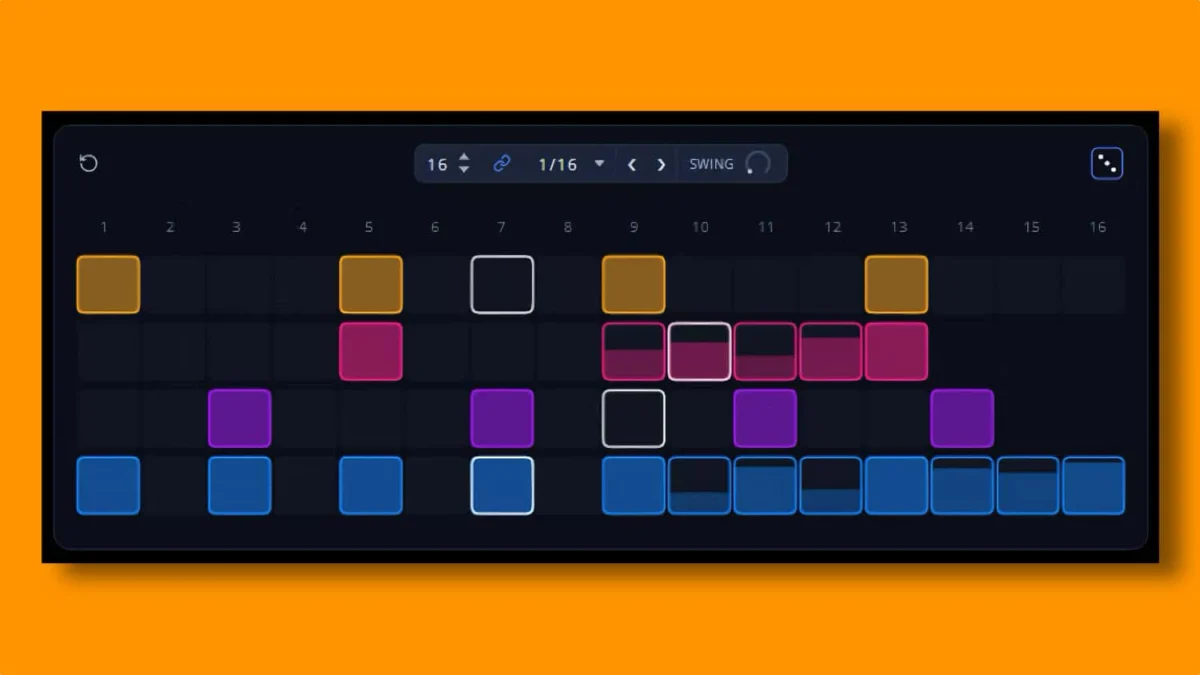
The landscape of digital audio workstations and plugin architecture has seen a significant shift toward tools that emphasize movement and generative textures. In this evolving market, developer Hagai Davidoff has officially launched Spectdrum, a specialized audio effect for macOS and Windows designed to transform static, sustained audio sources into complex, rhythmic grooves. By utilizing spectral decomposition and independent step sequencing, the plugin offers a sophisticated alternative to traditional volume gates and tremolo effects, providing music producers and sound designers with a granular level of control over the rhythmic evolution of their audio signals.
The Mechanics of Spectral Rhythmic Generation
At the core of Spectdrum is a processing engine that diverges from standard time-domain gating. Traditional rhythmic gates operate by simply modulating the overall amplitude of a signal. In contrast, Spectdrum employs a spectral approach, splitting the incoming audio into four distinct frequency bands. This division allows the user to treat different parts of the frequency spectrum as independent rhythmic elements. For example, a low-frequency band can be gated to create a driving bass pulse, while a high-frequency band can be sequenced to provide shimmering, syncopated highlights.
Each of these four spectral bands is governed by its own independent step sequencer. These sequencers are highly flexible, allowing for a range of 1 to 32 steps. This architectural choice is significant for contemporary music production, as it facilitates the creation of polyrhythms—rhythmic patterns where different bands cycle at different lengths (e.g., one band running a 7-step sequence against another’s 16-step sequence). This capability ensures that the resulting rhythm does not feel repetitive or "static," a common critique of basic step-sequencing plugins.
Advanced Modulation and User Interface
Beyond the primary sequencing engine, Spectdrum incorporates a suite of modulation tools designed for high-precision sound sculpting. The plugin features "drawable" envelopes for volume, filter cutoff, panning, and pitch. This visual approach to modulation allows producers to bypass the limitations of standard LFO shapes, enabling the creation of bespoke rhythmic shapes and percussive envelopes.
Each of the four spectral bands is equipped with its own dedicated effects sends, specifically for reverb and delay. This per-band processing is a critical feature for spatial sound design. In a practical studio scenario, a producer can apply a long, modulated delay to the mid-high frequencies while keeping the low-end rhythmic pulse dry and focused. This prevents the "muddiness" often associated with applying global effects to complex rhythmic patterns. Furthermore, a master effects section provides a final layer of processing to glue the four bands together, ensuring a cohesive output.
Background and Development Context
Hagai Davidoff, the developer behind Spectdrum, has a history of creating tools that bridge the gap between traditional composition and modern sound design. The release of Spectdrum follows a broader industry trend where the "performance" aspect of a plugin is as important as its sonic output. The interface is designed to be intuitive for live manipulation, reflecting a growing demand for plugins that can be used during the creative "flow state" rather than just during the mixing phase.
The development of Spectdrum comes at a time when "rhythmicization"—the process of turning atmospheric pads, field recordings, or white noise into percussive elements—has become a staple technique in genres ranging from cinematic scoring to underground techno. Previously, achieving the level of detail offered by Spectdrum would require a complex chain of filters, gates, and MIDI-triggered envelopes. By consolidating these functions into a single spectral interface, Davidoff has streamlined a previously labor-intensive workflow.
Market Positioning and Industry Implications
The audio plugin market is currently saturated with "one-knob" solutions and AI-driven tools. Spectdrum positions itself in the middle ground, offering a high degree of manual control while remaining accessible to those who may not have a background in advanced spectral synthesis. Its introduction at a competitive price point suggests an attempt to capture the interest of both hobbyist bedroom producers and professional sound designers looking for "happy accidents" in their creative process.
From a technical standpoint, the inclusion of VST3 support for both Windows and Mac, alongside AU support for macOS, ensures compatibility with all major Digital Audio Workstations (DAWs) including Ableton Live, Logic Pro, FL Studio, and Cubase. The focus on VST3 is particularly relevant as the industry moves away from the older VST2 standard, offering better CPU optimization and improved MIDI handling.
Practical Applications in Modern Production
The versatility of Spectdrum suggests several high-value use cases across different media sectors:
- Electronic Music Production: Producers can take simple sine waves or sustained synth pads and turn them into intricate glitch loops or percussive foundations. The polyrhythmic capabilities are particularly suited for IDM, Minimal Techno, and Progressive House.
- Cinematic Sound Design: For film composers, Spectdrum can be used to add a "ticking" or "pulsing" urgency to atmospheric textures, a common requirement in modern thriller and action scores.
- Foley and Sound Manipulation: Field recordings—such as the hum of an air conditioner or the roar of a crowd—can be processed through Spectdrum to create organic, rhythmic textures that retain the character of the original environment but gain a musical structure.
- Remixing: By applying the plugin to a vocal stem or a full instrumental loop, remixers can create "spectral stutters" that are more harmonically interesting than standard volume-based chopping.
Pricing, Availability, and System Requirements
Spectdrum is currently available through Hagai Davidoff’s official website. To incentivize early adoption, the plugin has been launched with an introductory price of US $69. Following the conclusion of the launch period, the price is scheduled to return to its standard MSRP of $99.
System requirements for the plugin are standard for modern DSP tools. It requires a 64-bit operating system, with support for Windows 10 or later and macOS 10.13 or later. The macOS version is optimized for both Intel-based Macs and the newer Apple Silicon (M1/M2/M3) architecture, ensuring low latency and high performance on the latest hardware.
Timeline of Rhythmic Processing Evolution
The release of Spectdrum marks a specific point in the chronology of rhythmic audio effects. To understand its significance, one must look at the evolution of these tools:
- The Analog Era: Rhythmic gating was achieved using side-chaining on hardware compressors or manually "chopping" tape.
- The Early Digital Era (1990s-2000s): The "Trance Gate" became a popular feature in synths like the Access Virus and plugins like Vanguard, allowing for 16-step volume patterns.
- The Modulation Era (2010s): Plugins like Cableguys ShaperBox and Xfer Records LFO Tool introduced drawable curves, giving users more control over the "shape" of the gate.
- The Spectral Era (Current): Tools like Spectdrum represent the current frontier, where the gate is no longer a binary "on/off" switch for the whole signal, but a multi-dimensional tool that acts on the frequency spectrum itself.
Analytical Overview: The Future of Spectral Tools
The launch of Spectdrum is indicative of a wider move toward "intelligent" sound design tools that prioritize the frequency domain. As CPU power continues to increase, the computational cost of splitting audio into multiple spectral bands in real-time has become negligible, allowing developers to experiment with more complex algorithms.
Experts in the field of music technology suggest that the next decade will be defined by plugins that allow for the "deconstruction" of sound. Spectdrum fits this narrative by deconstructing a sound into its spectral components and reconstructing it as a rhythmic entity. This "bottom-up" approach to sound design allows for a level of originality that is difficult to achieve with sample packs or preset-heavy synthesizers.
While the introductory price of $69 makes it an attractive purchase, the long-term success of Spectdrum will likely depend on the community of users and the sharing of presets that showcase its more avant-garde capabilities. Hagai Davidoff has indicated that the plugin is built to be a "playground" for sound, suggesting that future updates may bring even more modulation sources or spectral bands.
In conclusion, Spectdrum stands as a robust addition to the modern producer’s toolkit. By focusing on the intersection of rhythm and frequency, it provides a unique method for generating movement in an era where sonic texture is a primary currency in music production. Its professional-grade features, combined with an intuitive interface, position it as a significant release for the 2024 plugin market.
