

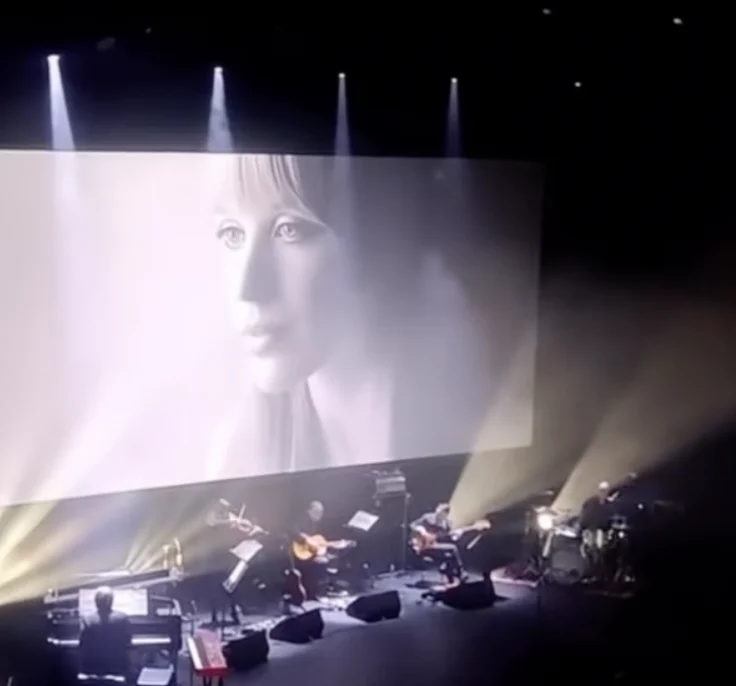
London’s Barbican Centre became the focal point for a poignant and powerful tribute on Wednesday, March 18, 2025, as an assembly of esteemed musicians and artists gathered to celebrate the life and indelible artistic contributions of Marianne Faithfull. The concert, held just over a year after Faithfull’s passing at the age of 78 on January 29, 2024, coincided with the imminent release of Broken English, a new documentary delving into the multifaceted career and personal journey of the iconic singer and actress. The evening featured performances by a diverse roster of talent, including Jarvis Cocker, Beth Orton, Anna Calvi, Rufus Wainwright, Nadine Shah, Samantha Morton, and Ed Harcourt, all backed by an exceptional house band comprising Radiohead’s Colin Greenwood, Portishead’s Adrian Utley, Rob Ellis, and violinist Anna Phoebe. This confluence of artistic homage and documentary unveiling served as a significant moment in acknowledging Faithfull’s profound and enduring impact on music and culture.
A Legacy Reimagined: The Tribute Concert’s Genesis
The decision to host a comprehensive tribute concert at a prestigious venue like the Barbican Centre, mere months after Faithfull’s death, underscores the immediate and widespread desire within the music community to honour her extraordinary legacy. Marianne Faithfull was not merely a singer; she was a cultural phenomenon, a survivor, and an artist who consistently reinvented herself, defying categorization and societal expectations. Her career, spanning six decades, was marked by both immense success and profound personal struggles, all of which informed her raw, honest, and often defiant artistry. The concert’s timing, strategically aligned with the release of the Broken English documentary, was designed to create a synergistic celebration, allowing audiences to experience her work anew through live performance while simultaneously gaining deeper insight into her life through film. This dual approach aims to solidify her place in music history and introduce her work to new generations. The Barbican, renowned for its commitment to diverse and experimental arts, provided a fitting backdrop for an artist whose career consistently pushed boundaries.
A Stellar Lineup Honours a Chameleonic Artist
The carefully curated lineup for the tribute concert reflected the breadth and depth of Faithfull’s musical journey, with each artist bringing their unique interpretation to her extensive catalogue. The selection of songs traversed her early pop successes, her pivotal punk-infused renaissance, and her later, more contemplative works, illustrating the remarkable evolution of her sound and lyrical themes.
Jarvis Cocker’s Homage to Later Works
Pulp frontman Jarvis Cocker, known for his incisive lyrics and distinctive stage presence, performed "Sliding Through Life On Charm" from Faithfull’s critically acclaimed 2002 album, Kissin Time. This choice highlighted Faithfull’s later career, demonstrating her continued relevance and ability to collaborate with contemporary artists. Kissin Time itself was a testament to her artistic vitality, featuring collaborations with a host of influential figures including Beck, Blur’s Damon Albarn, and members of Pulp, alongside production by various artists. The album was praised for its eclectic sound, blending elements of rock, electronic music, and cabaret, all unified by Faithfull’s world-weary yet captivating vocals. Cocker’s rendition undoubtedly brought his characteristic wit and sincerity to a track that perfectly encapsulates Faithfull’s seasoned perspective on life and relationships.
Beth Orton’s Rendition of Early Classics and Deep Cuts
Beth Orton, celebrated for her folk-infused electronic sound, delivered two pivotal tracks from Faithfull’s discography, showcasing the stark contrast between her early pop fame and her later, darker artistic explorations. Orton performed "Sister Morphine," a haunting ballad co-written by Faithfull with Mick Jagger and Keith Richards. Originally recorded in 1969, its stark depiction of drug addiction and despair was deemed too controversial for immediate release and later appeared on Faithfull’s 1979 album Broken English and the Rolling Stones’ Sticky Fingers (1971). Orton’s ethereal voice and introspective style provided a compelling interpretation of this raw and emotionally charged song, which remains a powerful testament to Faithfull’s unflinching honesty.
In contrast, Orton also performed "As Tears Go By," Faithfull’s debut single from 1964. Written for her by Mick Jagger, Keith Richards, and Andrew Loog Oldham, this track catapulted the then-seventeen-year-old Faithfull to pop stardom, establishing her as an angelic voice of the Swinging Sixties. The song, a delicate and melancholic ballad, was a significant commercial success, reaching the top 10 in the UK and becoming a global hit. Orton’s performance served as a poignant reminder of Faithfull’s innocent beginnings before her life and music took on more complex dimensions.
Rufus Wainwright’s Interpretation of Brechtian Drama
Rufus Wainwright, known for his theatricality and masterful vocal delivery, tackled "Ballad Of The Soldier’s Wife." This powerful anti-war song, originally by Bertolt Brecht and Kurt Weill, was famously covered by Faithfull on her 1987 album Strange Weather, which marked another critical resurgence in her career. Her rendition on Strange Weather, an album largely composed of covers, was celebrated for its dramatic intensity and the raw emotion she brought to each lyric. The track, a chilling narrative of a soldier’s wife following her husband through various wars, resonated deeply with Faithfull’s own experiences of survival and resilience. Wainwright’s interpretation, delivered with his signature dramatic flair, would have underscored the song’s timeless message and Faithfull’s prowess as an interpreter of profound lyrical content. The prompt mentioned Christopher John Spedding, who was indeed involved in some of Faithfull’s cover albums, including Rich Kid Blues (recorded in 1971, released 1998) which featured a different Brecht/Weill song. However, "Ballad Of The Soldier’s Wife" is most strongly associated with Strange Weather.
Anna Calvi Bridging Eras
Anna Calvi, a distinctive guitarist and vocalist known for her dramatic and intense performances, offered two tracks that spanned significant periods of Faithfull’s career. Calvi performed "Falling Back" from Faithfull’s 2014 album Give My Love To London. This album, released late in Faithfull’s career, was lauded for its powerful songwriting and collaborations with artists like Nick Cave and Roger Waters, demonstrating her continued creative output and ability to attract high-calibre contributors. "Falling Back" itself is a poignant reflection on memory and aging, delivered with a characteristic blend of vulnerability and strength.
Calvi also performed the title track from the seminal 1979 album, "Broken English." This song and album marked Faithfull’s extraordinary comeback, reinventing her from a 1960s pop idol into a gravel-voiced, punk-influenced art-rock icon. The track "Broken English," with its stark electronic soundscapes, raw vocal delivery, and politically charged lyrics addressing terrorism, captured the zeitgeist of the late 1970s and remains one of her most potent and influential works. Calvi’s commanding stage presence and guitar virtuosity would have brought a fresh, yet respectful, intensity to this groundbreaking piece.
The All-Star House Band: A Foundation of Musical Excellence
The calibre of the house band underpinning these performances was a testament to the respect Faithfull commanded within the music industry. Musical director Rob Ellis, known for his extensive work with PJ Harvey and other experimental artists, steered the ensemble. He was joined by Colin Greenwood, the esteemed bassist of Radiohead, whose nuanced and innovative basslines have defined a generation of alternative rock. Adrian Utley, the influential guitarist and producer from Portishead, brought his distinctive atmospheric and often haunting soundscapes to the arrangements. Completing the core band was violinist Anna Phoebe, whose classical training blended with a rock sensibility added another layer of texture and emotional depth to the performances. This collective of exceptional musicians ensured that each rendition was both technically brilliant and imbued with the spirit of Faithfull’s original recordings, while also offering contemporary interpretations. Their collaboration underscored the artistic community’s deep admiration for Faithfull’s work.
Marianne Faithfull: A Life in Music and Resilience
Marianne Faithfull’s journey was one of remarkable artistic evolution and personal endurance, making her a compelling subject for both tribute and documentary.
The Swinging Sixties Icon
Born in London in 1946, Marianne Faithfull first burst onto the scene in 1964, discovered at a Rolling Stones party by producer Andrew Loog Oldham. Her ethereal beauty and innocent charm quickly made her a symbol of the Swinging Sixties. "As Tears Go By," her debut single, became a global hit, solidifying her status as a pop star. She was inextricably linked with the Rolling Stones, particularly Mick Jagger, during this period, becoming a prominent figure in London’s burgeoning counter-culture. Her early albums, such as Marianne Faithfull (1965) and North Country Maid (1966), showcased her delicate vocal style and folk leanings.
Navigating Adversity and Reinvention
The late 1960s and early 1970s saw Faithfull’s life take a darker turn. Her relationship with Jagger ended, and she grappled with drug addiction and homelessness. This period of intense personal struggle led to a significant hiatus from recording and public life. Her voice, once soft and clear, became husky and gravelly, a direct consequence of her lifestyle and struggles. This transformation, however, would later become her most distinctive artistic asset.
The Broken English Renaissance (1979)
Her triumphant return to music in 1979 with the album Broken English marked one of the most remarkable comebacks in rock history. Shedding her former innocent image, Faithfull emerged with a raw, defiant, and politically charged sound. The album, featuring electronic elements and her newly gravelly voice, was a critical and commercial sensation, earning her a Grammy nomination. Tracks like the title song, "The Ballad of Lucy Jordan," and "Why D’Ya Do It?" tackled themes of disillusionment, societal malaise, and personal betrayal with an unflinching honesty that resonated deeply with a generation weary of punk’s initial fury. Broken English not only redefined her career but also influenced countless artists in the post-punk and new wave eras, establishing her as an enduring and uncompromising artist.
A Career Defined by Artistic Integrity
Following Broken English, Faithfull continued to release a steady stream of acclaimed albums, exploring various genres from blues and jazz to spoken word and orchestral collaborations. Albums like Strange Weather (1987), Vagabond Ways (1999), and Kissin Time (2002) showcased her continued artistic curiosity and her ability to work with a diverse range of musicians and producers. She embraced her distinctive vocal style, using its textures and imperfections to convey profound emotion and experience. Her acting career also flourished, with notable roles in films such as The Girl on a Motorcycle (1968) and Sofia Coppola’s Marie Antoinette (2006). Throughout her career, Faithfull remained an artist of uncompromising integrity, consistently prioritising artistic expression over commercial trends.
The Final Chapter and Enduring Influence
In her later years, Faithfull continued to record and perform, even as health issues mounted. Albums like Give My Love To London (2014) and Negative Capability (2018) were met with critical acclaim, demonstrating her enduring power as a songwriter and performer. Her lyrics often reflected on her life, her struggles, and her philosophical outlook, offering a rare blend of wisdom and vulnerability. Marianne Faithfull passed away on January 29, 2024, leaving behind a monumental legacy not just as a musician, but as a symbol of resilience, reinvention, and artistic fearlessness. Her influence extends across generations of musicians, from punk and new wave to alternative rock and beyond.
"Broken English" The Documentary: Unveiling a Deeper Narrative
The release of the Broken English documentary serves as a crucial companion to the tribute concert, offering audiences a deeper, more intimate understanding of Faithfull’s journey. While the concert celebrated her musical output, the documentary promises to explore the personal narratives, challenges, and triumphs that shaped her art. Named after her watershed 1979 album, the film likely delves into the period leading up to and following that pivotal release, exploring her struggles with addiction, her artistic rebirth, and her complex relationship with fame and the music industry. Documentaries play a vital role in contextualising an artist’s work, providing rare archival footage, interviews, and personal insights that enrich the audience’s appreciation. For an artist as enigmatic and influential as Faithfull, such a film is invaluable in preserving her story and ensuring her legacy is understood in its full complexity. It offers a chance to explore the motivations behind her lyrics, the resilience that powered her through adversity, and the profound impact she had on those around her.
The Barbican Centre: A Fitting Stage
The Barbican Centre, one of London’s premier arts venues, provided an ideal setting for this high-profile tribute. Known for its Brutalist architecture and its commitment to presenting a diverse programme of music, theatre, film, and art, the Barbican has a reputation for hosting events of significant cultural merit. Its main hall, with excellent acoustics and a capacity suitable for such a large-scale event, offered an intimate yet grand environment for the performers and audience alike. The choice of venue underscored the artistic and cultural significance of Marianne Faithfull, elevating the event beyond a mere concert to a genuine cultural happening.
Broader Implications: Preserving a Cultural Icon
The tribute concert and accompanying documentary represent more than just a commemoration; they are acts of cultural preservation. In an era where music consumption is often ephemeral, events like these ensure that the work of seminal artists like Marianne Faithfull continues to resonate and be discovered. They highlight the ongoing influence of artists who defied conventions and spoke truth through their art. For the artists performing, it is an opportunity to publicly acknowledge their debt to a pioneering figure. For the audience, it is a chance to reconnect with beloved music and gain new perspectives on a beloved icon. Such tributes reinforce the idea that true artistry transcends time and trends, continuing to inspire and provoke thought long after the artist has departed. The meticulous organisation, the calibre of participating artists, and the simultaneous release of a documentary all point to a concerted effort to enshrine Marianne Faithfull’s legacy for future generations, ensuring her voice – both literal and metaphorical – continues to echo through the annals of music history.
The evening at the Barbican Centre was a resounding success, a powerful testament to Marianne Faithfull’s enduring spirit, artistic courage, and profound influence. Through the collective efforts of a stellar lineup and the promise of a revealing documentary, her multifaceted journey was honoured, reminding all in attendance of the irreplaceable void her passing has left and the timeless beauty of her contribution to the world of music.
