

The global independent music sector has undergone a seismic shift over the past decade, evolving from a fringe movement into a dominant economic force within the entertainment industry. According to industry reports from MIDiA Research, independent artists—those not signed to major labels—generated approximately $1.2 billion in 2023, a figure that continues to grow as digital distribution becomes more accessible. However, as the barriers to entry have lowered, the volume of content has increased exponentially, with over 100,000 tracks uploaded to streaming platforms daily. In this saturated environment, the traditional "lone wolf" approach to music production is increasingly viewed as an obstacle to growth. Industry analysts and veteran performers now emphasize that strategic networking and cross-disciplinary collaboration are no longer optional activities but essential components of a sustainable professional career.
The Evolution of the Independent Music Landscape
Historically, the path to musical success was gated by a handful of major record labels that controlled production, distribution, and marketing. The digital revolution of the early 2000s dismantled these barriers, but it replaced them with a new challenge: the attention economy. In the current era, the "independent" label often refers to an artist who functions as a small business owner, responsible for every facet of their brand. This shift has necessitated a move toward community-centric models. Networking, once defined by cold-calling executives or handing out physical demo tapes, has transformed into a sophisticated process of building social capital and collaborative ecosystems.
The chronology of this shift can be traced through the rise of collaborative tools. In the late 2000s, MySpace and SoundCloud began to foster digital communities. By the mid-2010s, platforms like Sonicbids revolutionized how artists accessed festivals and workshops, providing a structured environment for professional interactions. Today, the focus has moved toward "hyper-local" engagement and "hyper-digital" collaboration, where the physical and virtual worlds overlap to create new opportunities for artistic and financial growth.

Interdisciplinary Synergy: Beyond the Sonic Medium
One of the most effective, yet frequently overlooked, avenues for networking is the engagement with local arts scenes outside the immediate music community. Visual arts, theater, and performance poetry offer fertile ground for cross-pollination. When a musician engages with a sculptor or a painter, they are not just seeking a soundtrack opportunity; they are entering a different demographic of art consumers.
For example, the "halo effect" of a gallery opening can introduce a musician’s work to collectors and patrons who may not frequent traditional music venues. From a logistical standpoint, these collaborations often solve mutual problems. A filmmaker may require original scores but lack the budget for high-end licensing; an independent musician may require high-quality video content for social media promotion but lack the equipment or expertise. By bartering services or co-creating projects, both parties enhance their portfolios without the need for significant capital expenditure. This interdisciplinary approach broadens the artist’s reach and embeds their work within a larger cultural context, making it more resilient to the fluctuations of specific genre trends.
The Rise of Community-Centric Professional Development
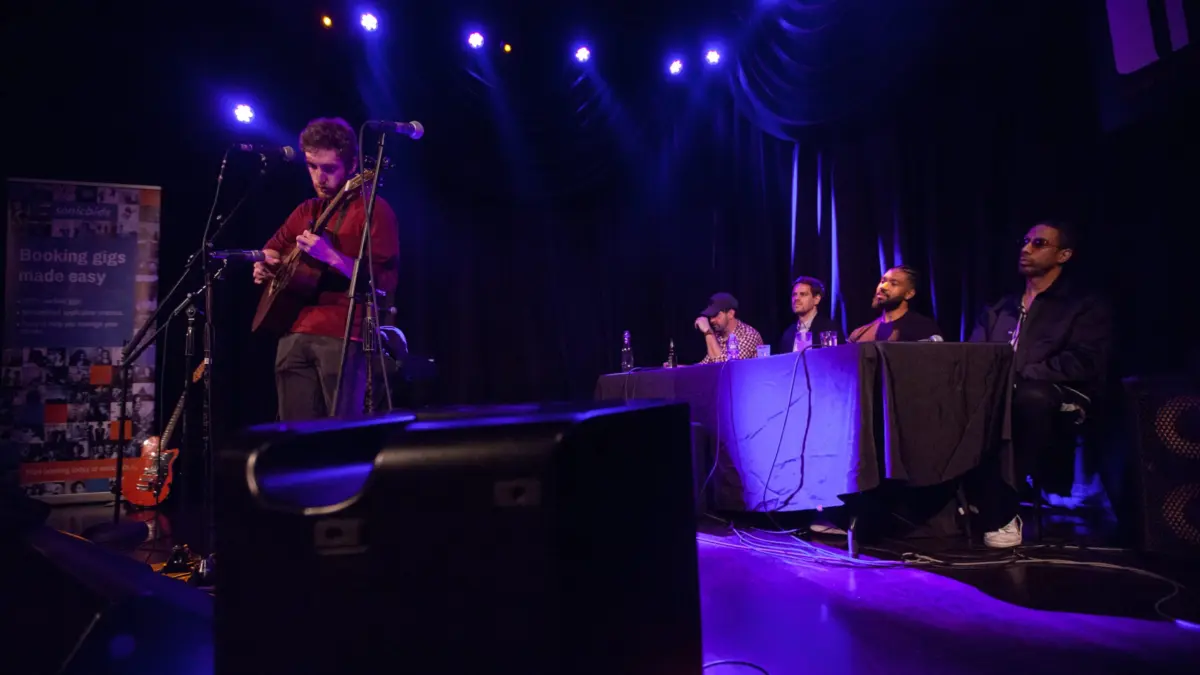
As the need for professionalization has grown, so has the popularity of peer-to-peer learning environments. The emergence of events like the "Feedback Collective Panel Discussion" and "Songwriting Workshops," often hosted by organizations like Sonicbids, highlights a growing trend toward structured networking. These gatherings serve a dual purpose: they provide technical skill-building while simultaneously acting as a "third space" for artists to interact away from the pressures of live performance.
Hosting a jam session or a workshop allows an artist to position themselves as a facilitator within their local ecosystem. This shift in role—from performer to community leader—can significantly enhance an artist’s professional reputation. In a workshop setting, the power dynamics of the industry are flattened, allowing a rock guitarist to collaborate with a jazz saxophonist or an electronic producer. These interactions often result in "genre-bending" projects that have a higher likelihood of being featured on curated playlists, which increasingly favor unique, hybrid sounds. Furthermore, these sessions provide a low-stakes environment for talent scouting, where musicians can identify potential band members or session players whose work ethic and creative style align with their own.

Digital Architecture and the Shift to Active Collaboration
While social media platforms like Instagram and TikTok are essential for brand visibility, they are often criticized for fostering passive engagement. In contrast, specialized platforms such as BandLab and SoundCloud are designed for active collaboration. BandLab, which surpassed 60 million users globally in 2023, provides a cloud-based digital audio workstation (DAW) that allows artists to collaborate in real-time across different time zones.
The data suggests that collaborative tracks often perform better on streaming algorithms. When two or more artists release a song together, the track is pushed to the "Release Radar" and "Discover Weekly" playlists of all participating artists’ followers. This creates a "multiplier effect," doubling or tripling the initial reach of a single. Professional analysis of streaming trends indicates that "feature" culture—long a staple of the hip-hop community—is now becoming a standard practice in indie-folk, synth-wave, and alternative rock. By utilizing online platforms to initiate these collaborations, artists can bypass geographic limitations and build a global network of peers.
The Festival Circuit as a Professional Gateway
Music festivals are often viewed through the lens of performance, but for the independent musician, the "back-of-house" environment offers unparalleled networking potential. Volunteering at festivals or working in production roles provides direct access to industry decision-makers, including talent buyers, stage managers, and lighting designers.
A timeline of a typical festival engagement shows that the most significant networking occurs during the "load-in" and "soundcheck" phases, rather than during the performance itself. By being present in these spaces as a volunteer or staff member, a musician gains insight into the logistical requirements of high-level touring. This "insider knowledge" is invaluable when the artist eventually transitions to a headlining role. Moreover, the camaraderie built during the high-pressure environment of a festival often leads to long-term professional relationships. Industry experts note that many successful indie careers were launched not by a single performance, but by a connection made in a backstage catering tent or a production trailer.

Leveraging Social Capital and Fan-Driven Intelligence
The modern musician’s fanbase is no longer just a passive audience; it is a decentralized A&R (Artists and Repertoire) department. Engaging fans in the collaborative process—through polls, surveys, or direct Q&A sessions—provides the artist with market research that was previously only available to major labels with large budgets.
The "1,000 True Fans" theory, popularized by Kevin Kelly, posits that an artist only needs a modest, dedicated following to sustain a career. By involving these fans in networking decisions, such as asking for recommendations on local collaborators, the artist strengthens the bond with their community. This strategy also taps into the "six degrees of separation" principle. A fan in a mid-sized city may have a personal connection to a local venue owner, a journalist, or another musician, providing the artist with a "warm introduction" that is far more effective than a cold email. This democratization of the industry allows the artist to build a support system that is rooted in genuine human connection rather than transactional marketing.
Economic Analysis and Future Outlook
The broader implications of these networking strategies point toward a more resilient and decentralized music industry. As independent artists become more adept at building their own ecosystems, the reliance on traditional gatekeepers continues to diminish. Fact-based analysis suggests that artists who prioritize collaboration and community engagement have a higher "career longevity" index. They are less susceptible to the "burnout" associated with the constant pressure to create content alone and are better positioned to pivot as the industry evolves.
The future of independent music likely lies in the integration of AI-driven collaborative tools and blockchain-based royalty sharing, which will make the legal and financial aspects of collaboration more transparent. However, the core of the industry remains human-centric. The ability to navigate social spaces, whether in a local art gallery or a digital workshop, remains the most significant predictor of professional success.

In conclusion, the path for the independent musician has shifted from a quest for "discovery" to a strategy of "connectivity." By embracing interdisciplinary events, hosting community workshops, utilizing specialized digital tools, volunteering in industry spaces, and leveraging their own fanbases, musicians can build a robust professional network. These efforts do more than just promote a single song; they create a sustainable infrastructure for a lifelong career in the arts. As the industry continues to grow and fragment, the artists who thrive will be those who view networking not as a hurdle, but as the very foundation of their creative practice.
