

The Gasteig, recognized as Europe’s largest cultural and community center, is preparing for a transformative period that will redefine its architectural and environmental footprint. As the facility approaches a comprehensive general renovation, the city of Munich and the Munich Space Development Company (Münchner Raumentwicklungsgesellschaft or MRG) have unveiled an ambitious "Re-Use Concept" designed to prioritize sustainability and circular economy principles. This initiative ensures that the vast inventory of the cultural complex is not merely discarded but is instead reintegrated into new projects or made available to the public through a specialized auction process. This strategy marks a significant shift in how large-scale public infrastructure projects handle decommissioning and resource management in the 21st century.
The Transformation Timeline: From Cultural Hub to Construction Site
The roadmap for the Gasteig’s renovation is structured around a rigorous schedule that balances logistical efficiency with environmental responsibility. According to current projections, the cultural center will officially transition into a construction site in the spring of 2027. However, the preparation for this massive undertaking begins much earlier. Starting in October 2026, the facility—which spans over 90,000 square meters—will undergo a total clearance.
The initial phase involves the systematic removal of furniture, fixtures, and technical equipment. Simultaneously, the building’s core infrastructure will be decommissioned. This includes the dismantling of technical systems and the disconnection of essential utilities, including district heating, electricity, water, gas, and telecommunications. By the end of January 2027, the building must be completely vacated and "construction-ready" for the first major phase of the physical renovation: pollutant remediation. This preparatory phase is essential to ensure that the subsequent structural changes can proceed safely and in accordance with modern environmental standards.
The Sustainability Mandate: Preservation Over Demolition
At the heart of the renovation is a commitment to "Preservation instead of Demolition." This philosophy, championed by MRG—the municipal subsidiary acting as the developer for the project—aims to minimize the carbon footprint of the renovation. Benedikt Schwering, Managing Director of MRG, has emphasized that approximately 80% of the building’s original substance will be preserved.
The environmental implications of this decision are profound. By retaining the majority of the existing structure, the project will save an estimated 40,000 tons of CO2. To put this figure into perspective, it represents the amount of carbon sequestered by approximately 1.25 million square meters of forest. This focus on "embodied carbon"—the CO2 emitted during the manufacture, transport, and assembly of building materials—positions the Gasteig renovation as a model for sustainable urban development. Instead of a traditional "tabula rasa" approach, the project treats the existing building as a valuable reservoir of materials and energy.
A Three-Tiered Strategy for Resource Recovery
The Re-Use Concept is organized into three distinct stages, each designed to maximize the lifespan of the building’s components and reduce waste.
Stage 1: Internal On-Site Re-Utilization
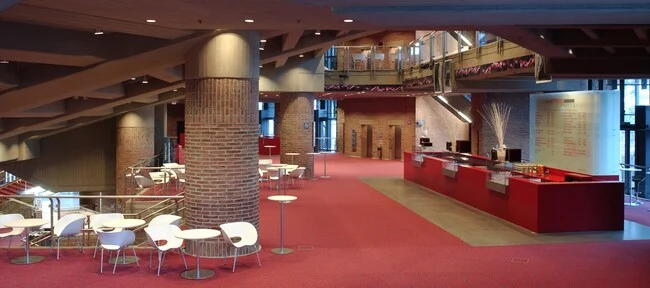
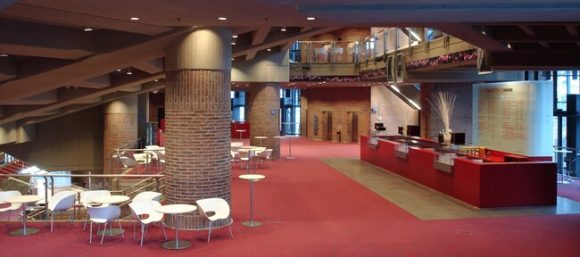
The first priority is to identify materials that can be reused directly within the renovated Gasteig. For instance, original bricks will be carefully removed, stored, and eventually reintegrated into the new design. Similarly, several thousand chairs from the various halls will be removed, refurbished, and reupholstered to be reinstalled once the renovation is complete. Even the architectural details are not overlooked; handrails will be polished and prepared for continued use.
One of the most complex tasks in this stage involves the Philharmonie’s grand organ. The instrument’s 7,000 pipes will be meticulously dismantled and placed in professional storage. In a few years, they will be returned to their place, ensuring that the acoustic soul of the Gasteig remains intact while the surrounding structure is modernized.
Stage 2: Municipal Redistribution
Items that cannot be used in the renovated Gasteig but remain in good condition will be offered to other municipal institutions and city-internal construction projects. Working with "Intep," a consultancy specializing in sustainable development, the project team is currently evaluating the inventory. This includes items such as partition walls and doors, which can be diverted to other public building projects across Munich. This "internal market" ensures that taxpayer-funded assets continue to serve the public interest in different locations.
Stage 3: The Public Auction via Restlos.com
The final stage of the concept opens the doors to the general public. Starting October 15, 2026, an online auction will be launched on the platform restlos.com. This public sale allows citizens, collectors, and businesses to bid on pieces of Gasteig history. The auction will feature a wide array of items, ranging from the iconic magenta-colored Gasteig armchairs to bookshelves, picture frames, and office furniture.
Every bid will start at just one Euro, making the auction accessible to a broad audience. All proceeds from the sale will be funneled directly back into the Gasteig renovation project, helping to offset the costs of the modernization. While the majority of the auction items consist of building elements and furniture, approximately 20% of the inventory will include lighting, sound, and media technology components that are no longer required for the facility’s future operations.
Context and Background: The Gasteig’s Legacy
Opened in 1985, the Gasteig has served as the cultural heart of Munich for four decades. It is home to the Munich Philharmonic Orchestra, the Munich City Library, and the Munich Adult Education Center (Volkshochschule). Over the years, the red-brick complex in the Haidhausen district has hosted thousands of concerts, lectures, and exhibitions, welcoming millions of visitors annually.
However, the building’s age has become increasingly apparent. The technical infrastructure is outdated, and the fire protection systems require urgent modernization to meet current safety codes. The decision to renovate rather than rebuild was the result of years of political and architectural debate. The current plan seeks to balance the need for a state-of-the-art cultural venue with the necessity of fiscal and environmental responsibility.

While the Haidhausen site is closed, the Gasteig’s activities have largely migrated to "Gasteig HP8" in the Sendling district. This interim site, featuring the acclaimed Isarphilharmonie—a modular concert hall known for its exceptional acoustics—has proven that cultural life can thrive even during periods of transition. The success of HP8 has provided the city with the breathing room necessary to execute the complex Re-Use Concept at the original site.
Implications for the Construction Industry
The Gasteig’s Re-Use Concept is likely to serve as a landmark case study for the European construction industry. Historically, demolition has been the default for aging 20th-century structures. The logistical challenges of cataloging, storing, and selling thousands of individual items are often cited as barriers to circularity. By demonstrating that a project of this scale can successfully implement a multi-tiered reuse strategy, Munich is setting a precedent for other metropolitan areas.
Architects and urban planners are increasingly looking at "urban mining"—the process of reclaiming raw materials from existing buildings—as a solution to the scarcity of resources and the rising costs of construction materials. The Gasteig project proves that urban mining is not just about raw materials like steel and concrete, but also about the "cultural mining" of furniture and equipment that carries sentimental and functional value.
Public and Institutional Reactions
The announcement of the public auction has already generated significant interest among Munich residents. The magenta chairs, in particular, are viewed as cult objects of local design. For many, owning a piece of the Gasteig is more than a sustainable choice; it is a way to preserve a personal connection to the city’s cultural heritage.
Environmental advocacy groups have largely welcomed the move, noting that the building sector is responsible for nearly 40% of global CO2 emissions. By focusing on the preservation of 80% of the building’s substance, the Gasteig project aligns with the goals of the European Green Deal and Munich’s own climate neutrality targets.
Looking Ahead
As October 2026 approaches, the focus will shift to the technical execution of the clearance. Detailed information regarding the specific items available for auction and the logistical requirements for buyers will be published on the MRG website in the coming months.
The renovation of the Gasteig is more than a construction project; it is a test of Munich’s commitment to a sustainable future. By turning a decommissioning process into a public event through the Re-Use Concept, the city is ensuring that the transition of its most famous cultural center is handled with transparency, efficiency, and a deep respect for the environment. When the "new" Gasteig eventually reopens, it will not only be a venue for the arts but also a testament to the power of circular thinking in modern architecture.
