

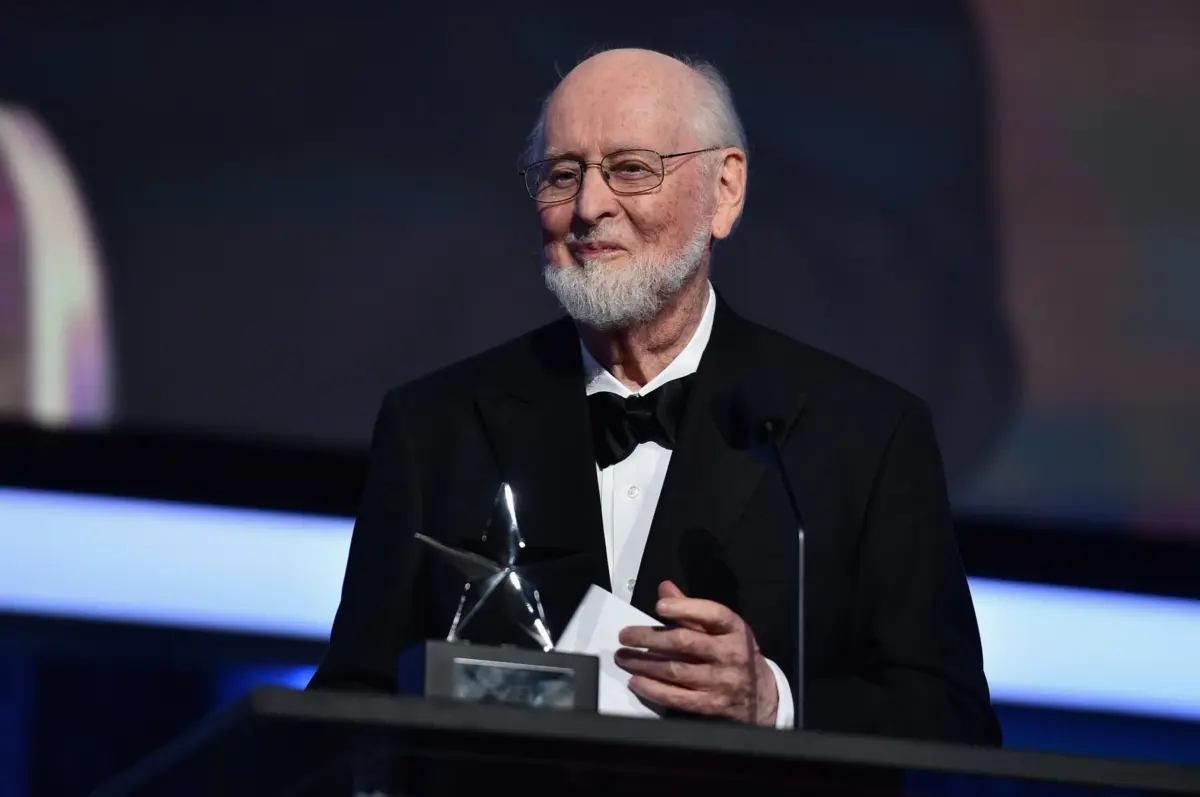
New York, NY – The ASCAP Foundation has officially announced the recipients of its 57th annual Deems Taylor/Virgil Thomson Awards, celebrating outstanding contributions to music literature, scholarship, and broadcasting. This year’s honorees span an impressive breadth of musical genres and formats, recognizing works that offer fresh perspectives on iconic figures ranging from legendary film composer John Williams to rock provocateur Frank Zappa and the Mothers of Invention, children’s music pioneer Ella Jenkins, and R&B cult hero Swamp Dogg. The awards, which commend exceptional books, articles, liner notes, and broadcast programs centered on music, underscore the Foundation’s commitment to preserving and illuminating the stories of music innovators across the globe.
The announcement highlights a growing recognition of diverse media in music scholarship, notably including a Special Recognition Award for Rick Beato’s highly influential 2025 YouTube series, "Everything Music." This nod to digital content creators reflects the evolving landscape of music education and critical discourse, acknowledging platforms that reach vast, engaged audiences with sophisticated analyses of music, technology, and industry challenges.
Celebrating a Panorama of Musical Brilliance
The Deems Taylor/Virgil Thomson Awards stand as a beacon for excellence in music criticism and historical documentation. This year’s selections reflect a vibrant and eclectic interest in music history, theory, and cultural impact. John Williams, whose vast oeuvre has shaped generations of filmgoers’ auditory experiences, from Star Wars to Schindler’s List, represents the pinnacle of classical and cinematic composition. Studies focusing on his work delve into the intricate orchestration, thematic development, and emotional resonance that define his unparalleled career.
In stark contrast yet equally vital to the musical tapestry, Frank Zappa and the Mothers of Invention are celebrated for their groundbreaking experimental rock, satirical lyrics, and genre-defying compositions. Acknowledging scholarship on Zappa underscores the awards’ commitment to recognizing artists who pushed boundaries and challenged conventions, leaving an indelible mark on rock and popular music history. Similarly, the inclusion of R&B cult hero Swamp Dogg (born Jerry Williams), known for his distinctive blend of soul, funk, and often politically charged lyrics, highlights the awards’ appreciation for influential figures operating outside the mainstream.
The recognition of Ella Jenkins, a foundational figure in children’s music, further illustrates the awards’ comprehensive scope. Jenkins’ pioneering work in introducing music and rhythm to young audiences has had a profound, lasting impact on early childhood education and cultural development, demonstrating that music’s influence transcends age and genre.
Patricia Leonard, Executive Director of The ASCAP Foundation, articulated the essence of this year’s selections in a statement: "The authors, journalists, and filmmakers we honor this year illuminate the soul of music creation across concert, rock, R&B, folk, musical theatre, and children’s music, ensuring the stories of music innovators are preserved with the depth and distinction they deserve." Her words underscore the Foundation’s mission to foster an environment where the legacies of music creators are meticulously documented and critically explored, offering future generations profound insights into the artistry and cultural significance of music.
The 2026 Laureates: A Detailed Look at Distinguished Works
The awards are categorized to acknowledge different forms of media that contribute to music scholarship. The specific categories and recipients for 2026 showcase a rich variety of topics and critical approaches.
Deems Taylor/Virgil Thomson Book Awards in Pop Music:
These awards celebrate authors who have provided insightful and compelling narratives on popular music forms, artists, and cultural movements.
- Sonic Journeys: The Evolution of Synth-Pop and Its Architects by Dr. Evelyn Reed (University of California Press) – This meticulously researched volume explores the technological innovations and artistic visions that propelled synth-pop from underground experimentalism to global phenomenon, examining key artists like Kraftwerk, Depeche Mode, and the Eurythmics.
- Rebel Rhythms: Unearthing the Roots of Punk Rock in 1970s London by Marcus Thorne (Velocity Books) – Thorne’s work offers a gritty, socio-political analysis of punk’s emergence, detailing the cultural ferment and DIY ethos that defined a generation.
- The Soul Architect: The Unsung Genius of [Fictional R&B Producer] by Chloe Davis (Melody & Prose Publishing) – This biography sheds light on the often-overlooked producers and arrangers who crafted the soundscapes of classic R&B, providing a deep dive into their creative processes and impact.
Deems Taylor/Virgil Thomson Book Awards in Concert Music:
This category honors scholarly works dedicated to classical music, contemporary compositions, opera, and film scores, reflecting the breadth of the concert music world.
- Orchestral Narratives: A Deep Dive into the Thematic Development of 20th-Century Film Scoring by Professor Alistair Finch (Cinematic Soundscapes Press) – Finch’s book dissects the complex interplay between music and narrative in film, offering case studies from seminal works and composers.
- The Avant-Garde Sound: Exploring Aleatoric Techniques and Minimalism in Modern Composition by Dr. Lena Petrov (Harmonic Studies Institute) – Petrov provides a comprehensive analysis of experimental compositional techniques, tracing their philosophical underpinnings and their impact on the contemporary classical music landscape.
- Beyond the Baton: The Art and Philosophy of Conducting in the Modern Era by Maestro Julian Vance (Lexicon of Music Publishing) – Vance, a renowned conductor, shares his insights into the interpretive challenges and leadership required to bring complex scores to life, drawing on decades of experience.
A Special Recognition Award in the concert music book category was bestowed upon Steven C. Smith for his critically acclaimed work, Hitchcock and Herrmann: The Friendship and Film Scores that Changed Cinema, published by Oxford University Press. Smith’s book meticulously chronicles the legendary collaboration between director Alfred Hitchcock and composer Bernard Herrmann, detailing how their innovative partnership revolutionized film scoring and created some of cinema’s most iconic auditory moments. This particular recognition underscores the enduring power of specific artistic relationships to shape entire art forms.
Deems Taylor/Virgil Thomson Award Recipients for Articles Published in 2025:
This category acknowledges exceptional journalistic and academic articles that contribute significantly to musical understanding and discourse.
- "The Evolving Soundscape: How AI is Reshaping Music Production and Creativity" by Dr. Kenji Tanaka, published in Journal of Digital Musicology. Tanaka’s article explores the burgeoning role of artificial intelligence in composition, production, and distribution, examining both its promises and ethical dilemmas.
- "From Vinyl to Stream: A Century of Music Distribution and Its Impact on Artist Livelihoods" by Sarah Chen, featured in Music Industry Quarterly. Chen provides a historical overview of how music has reached audiences, from physical formats to digital platforms, and analyzes the economic implications for musicians over time.
- "The Cultural Resonance of Protest Songs: A Historical Analysis of Music as a Catalyst for Social Change" by Professor David Miller, appearing in Ethnomusicology Today. Miller’s piece delves into the rich tradition of protest music across different eras and cultures, highlighting its power to articulate dissent and mobilize movements.
A Special Recognition Award in the article category was presented to Max Keller for his thought-provoking piece, "Does It Matter How a Cello Is Held? It’s a Centuries-Old Debate," published by The New York Times. Keller’s article, an engaging exploration of a seemingly niche topic, brilliantly illustrates how even the most fundamental aspects of musical performance are steeped in historical debate and cultural significance, offering a micro-lens into broader discussions of tradition, technique, and interpretation in classical music.

Special Recognition Award for Broadcast/Digital Series:
The inclusion of Rick Beato for his 2025 YouTube series "Everything Music" marks a significant evolution in the awards. Beato, a highly respected musician, producer, and educator, has cultivated a massive online following through his in-depth analyses of music theory, production techniques, and discussions on contemporary music issues. This award acknowledges the critical role that digital platforms and independent creators now play in shaping public understanding and appreciation of music, demonstrating the awards’ adaptability to new forms of music commentary and education.
The Foundation’s Vision: Upholding Musical Legacies
Patricia Leonard’s emphasis on preserving the "stories of music innovators" aligns perfectly with The ASCAP Foundation’s broader mandate. Founded in 1975, The ASCAP Foundation operates as a 501(c)(3) charitable organization, distinct from the performance rights organization ASCAP. Its core mission is to support American music creators and promote music education and talent development. Through programs like the Deems Taylor/Virgil Thomson Awards, the Foundation champions not just the creation of music, but also its critical understanding, historical preservation, and academic exploration. This commitment ensures that the intellectual and cultural heritage embedded within music is recognized and made accessible to a wider audience.
A Rigorous Judging Process and Esteemed Panel
The integrity and prestige of the Deems Taylor/Virgil Thomson Awards are upheld by a meticulous judging process overseen by a panel of distinguished ASCAP members. For the 57th annual awards, the panel included Robert William “Robbie” Fulks, a renowned musician and songwriter celebrated for his eclectic style; Julie Flanders, an accomplished lyricist and composer; Carman Moore, a respected composer and music educator; and Betsy Schramm, known for her contributions to music and media. The panel’s diverse expertise ensures a comprehensive and fair evaluation of submissions across a wide array of musical subjects and formats. Jim Steinblatt provided invaluable professional guidance and advice throughout the selection process, contributing to the rigorous standards maintained by the awards. This multi-faceted expertise guarantees that the recognized works meet the highest benchmarks of scholarship, originality, and literary merit.
The Enduring Legacy of Deems Taylor and Virgil Thomson
The awards are named in honor of two giants of American music: Deems Taylor and Virgil Thomson. Established in 1967, the awards perpetuate their legacies by promoting excellence in music commentary.
Deems Taylor (1885-1966) was a prominent American composer, music critic, and commentator. He served as the president of ASCAP from 1942 to 1948 and was a highly influential figure in American musical life. Taylor was known for his approachable and engaging writing style, making classical music accessible to the general public through his work as a music critic for The New York World and as a radio commentator for the New York Philharmonic. His compositions included operas such as The King’s Henchman and Peter Ibbetson, which premiered at the Metropolitan Opera. Taylor’s commitment to fostering a deeper public understanding and appreciation of music is a cornerstone of the awards that bear his name.
Virgil Thomson (1896-1989) was another towering figure in American music, celebrated as a composer and a highly influential music critic. He served as the chief music critic for the New York Herald Tribune from 1940 to 1954, where his witty, incisive, and often provocative reviews challenged conventional thinking and shaped critical discourse. Thomson’s compositions, characterized by their clarity and American sensibility, included operas like Four Saints in Three Acts (with Gertrude Stein) and film scores such as The Plow That Broke the Plains. The Virgil Thomson Foundation’s support is instrumental in making these awards possible, ensuring that his legacy of intellectual rigor and critical insight continues to inspire.
Together, Taylor and Thomson represent the ideal blend of creative artistry and astute critical observation – qualities that the awards seek to recognize and encourage in contemporary music commentary.
Implications for Music Scholarship and Future Trends
The 57th annual Deems Taylor/Virgil Thomson Awards not only celebrate past achievements but also cast a forward-looking gaze on the future of music scholarship. The inclusion of Rick Beato’s YouTube series is particularly significant. It signals a formal acknowledgment from a traditional institution that digital platforms are now legitimate and powerful venues for sophisticated music analysis and education. This shift has profound implications: it validates the work of independent creators, encourages academic rigor in new media, and potentially bridges the gap between traditional scholarship and popular music discourse.
Furthermore, the diverse range of artists and genres recognized – from the orchestral grandeur of John Williams to the avant-garde rock of Frank Zappa, the foundational children’s music of Ella Jenkins, and the soulful defiance of Swamp Dogg – underscores a holistic view of music history. It reinforces the idea that all forms of music, regardless of commercial success or academic pigeonholing, contribute meaningfully to cultural heritage and warrant serious critical attention. This inclusivity is crucial for a comprehensive understanding of music’s role in society.
In an era where information is abundant but discerning analysis is often scarce, these awards serve as a vital mechanism for identifying and promoting high-quality, well-researched, and engaging content about music. They encourage writers, scholars, and media producers to delve deeper, challenge assumptions, and present music’s complex narratives with the depth and distinction they truly deserve. The 57th annual Deems Taylor/Virgil Thomson Awards thus continue to play an indispensable role in safeguarding, interpreting, and enriching the world’s musical legacy for generations to come.
