

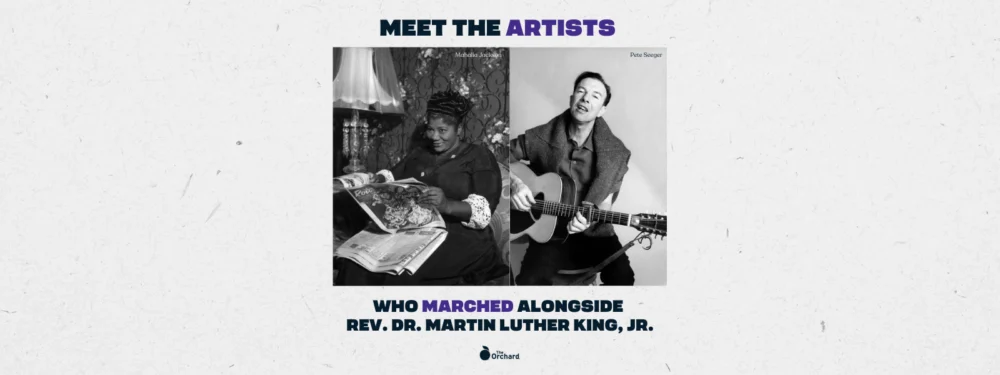
On this Rev. Dr. Martin Luther King, Jr. Day of Service, January 19, 2026, we commemorate not only the enduring legacy of the iconic civil rights leader but also the vital contributions of artists whose voices and actions amplified the struggle for justice. Among those who marched alongside Dr. King and whose music became the soundtrack to the Civil Rights Movement, the names of Mahalia Jackson and Pete Seeger stand out as powerful testaments to the intersection of art, activism, and social change. Their influence extended far beyond the concert hall and the protest line, embedding themselves into the very fabric of a nation grappling with its conscience.
The Civil Rights Movement, a pivotal era in American history spanning roughly from the mid-1950s to the late 1960s, was a multifaceted struggle against racial segregation and discrimination. It was characterized by nonviolent protests, civil disobedience, and legislative efforts aimed at securing equal rights for African Americans. While Dr. King’s leadership and powerful oratory are widely recognized, the movement was propelled by a symphony of voices, both spoken and sung, that galvanized communities, offered solace, and articulated the deep yearning for freedom and equality.
Mahalia Jackson, a towering figure in gospel music, was more than just a singer; she was a close confidante and spiritual anchor for Dr. King. Her resonant voice, imbued with profound faith and unwavering conviction, captivated audiences and provided a spiritual foundation for the arduous work of the Southern Christian Leadership Conference (SCLC), an organization co-founded by Dr. King. Jackson’s performances were not mere entertainment; they were acts of solidarity, often preceding Dr. King’s sermons and serving as powerful fundraisers for the movement’s critical operations. Her presence on stage, radiating strength and hope, was a beacon for those facing immense adversity.
One of the most indelible moments linking Jackson and Dr. King occurred during the 1963 March on Washington for Jobs and Freedom. As Dr. King delivered his historic "I Have a Dream" speech, a moment that would forever be etched in American memory, it was Mahalia Jackson, seated on the dais, who famously called out, "Tell them about the dream, Martin!" This powerful interjection, born from a deep understanding of King’s vision and the collective aspirations of the crowd, is believed to have spurred King to deviate from his prepared remarks and articulate his most iconic and enduring vision of racial harmony and equality. This spontaneous exchange underscores the profound synergy between the artists and leaders of the movement, where artistic intuition and political strategy converged to create moments of unparalleled historical significance.
The impact of Jackson’s music on the Civil Rights Movement can be understood through the lens of its emotional and spiritual resonance. Gospel music, with its roots in African American spirituals, offered a unique form of communal expression that validated the suffering of Black Americans while simultaneously instilling a sense of hope and resilience. Songs like "Move On Up a Little Higher" and "Didn’t It Rain" became anthems of perseverance, providing spiritual sustenance to activists facing violence, arrests, and systemic oppression. The Smithsonian Folkways, a renowned archive of American music and culture, distributed by The Orchard, has played a crucial role in preserving and disseminating the music of these freedom fighters, ensuring their voices continue to inspire future generations.
Pete Seeger, an American folk singer, songwriter, and tireless social activist, also played a pivotal role in the soundtrack of the Civil Rights Movement. His commitment to interlocking causes – civil rights, workers’ rights, and environmentalism – made him a natural ally and a powerful voice for social justice. Seeger’s repertoire was rich with songs that became rallying cries for change. His iconic labor songs, "Solidarity Forever" and "Which Side Are You On?", resonated deeply with the interconnected struggles for economic and racial equality.
However, it was Seeger’s co-written protest song, "If I Had a Hammer," with Lee Hays, that perhaps most powerfully articulated the hopeful yet urgent demand for justice and peace. The song, with its simple yet profound melody and lyrics, became a universal anthem for those seeking a more just and equitable world. Its message of love and understanding transcended racial and social divides, offering a vision of a future where harmony could prevail.
Crucially, Pete Seeger’s rendition of "We Shall Overcome" holds a particularly significant place in the history of the movement. It was through Seeger’s efforts that Dr. King first encountered the song, which he would later embrace as the unofficial anthem of the Civil Rights Movement. "We Shall Overcome" became a powerful symbol of the movement’s unwavering determination and its belief in eventual triumph over injustice. Its presence at marches, rallies, and even in the quiet moments of reflection for activists, provided a shared sense of purpose and collective strength. The song’s enduring power was evident when Dr. King quoted its poignant lyrics in his final speech in March 1968, just days before his assassination, underscoring its deep personal and political significance to him.
Seeger’s active participation in the movement extended to direct engagement. At the invitation of Dr. King, Seeger performed at the historic 1965 Selma to Montgomery March. This march, a critical event in the struggle for voting rights, saw activists face brutal violence from state troopers on "Bloody Sunday." Seeger’s presence and performance during this perilous journey symbolized the solidarity of artists with the cause, offering a morale boost and reinforcing the moral imperative of the marchers’ demands. His legacy as a musician dedicated to the people and their struggles continues to inspire contemporary activism.
The contributions of artists like Jackson and Seeger were not isolated incidents but part of a broader cultural landscape that supported and amplified the Civil Rights Movement. Musicians from various genres, including folk, blues, jazz, and gospel, lent their talents to raise awareness, mobilize support, and provide a voice for the voiceless. This period saw a remarkable convergence of artistic expression and political action, demonstrating the profound power of music to shape public opinion, foster solidarity, and sustain the morale of those engaged in difficult struggles.
The financial and logistical support for the movement was often bolstered by benefit concerts and recordings. Artists frequently donated their time and performances to raise funds for organizations like the SCLC, SNCC (Student Nonviolent Coordinating Committee), and the NAACP (National Association for the Advancement of Colored People). These efforts were crucial in sustaining the day-to-day operations of the movement, from organizing protests to providing legal aid for those arrested.
The impact of these artists’ work can be further contextualized by examining the broader societal shifts occurring during the Civil Rights era. The mid-20th century was a period of significant social and political upheaval in the United States, marked by the Cold War, the burgeoning counterculture movement, and a growing awareness of social inequalities. In this environment, music served as a powerful tool for dissent and a means of articulating alternative visions for society. The songs of freedom fighters provided a counter-narrative to the prevailing narratives of segregation and inequality, offering a glimpse of a more inclusive and just future.
The legacy of Mahalia Jackson and Pete Seeger, and indeed all artists who supported the Civil Rights Movement, continues to resonate today. Their commitment to using their platforms for social good serves as a powerful reminder that art and activism are inextricably linked. As we observe Martin Luther King, Jr. Day, it is essential to remember the collective effort that propelled the movement forward, recognizing the vital role played by those who sang, wrote, and performed their way toward freedom.
The data surrounding the impact of the Civil Rights Movement highlights its profound success in dismantling legal segregation and advancing civil rights legislation. Key legislative victories include the Civil Rights Act of 1964, which outlawed discrimination based on race, color, religion, sex, or national origin, and the Voting Rights Act of 1965, which aimed to overcome legal barriers at the state and local levels that prevented African Americans from exercising their right to vote. While the struggle for full equality continues, these achievements represent a monumental shift in American society, a shift undeniably amplified by the voices of artists.
For those inspired to act on this Day of Service, resources are available to support ongoing efforts for social justice and community mobilization. Platforms like YourCause Connect, and organizations dedicated to civil rights and social equity, offer avenues for engagement, volunteering, and financial support. Following and amplifying the social media accounts of organizations and individuals committed to these causes can also contribute to raising awareness and fostering dialogue.
The ongoing relevance of Dr. King’s message and the work of the artists who supported him lies in their timeless call for justice, equality, and human dignity. By understanding their contributions, we gain a deeper appreciation for the multifaceted nature of the Civil Rights Movement and the enduring power of art to inspire, unite, and transform society. The music of Mahalia Jackson and Pete Seeger, and countless others, remains a testament to the fact that a single voice, amplified by conviction and purpose, can indeed contribute to overcoming great challenges and shaping a more just world. Their harmonies with the marchers of the Civil Rights Movement continue to echo, reminding us of the power of collective action fueled by passion and art.
