

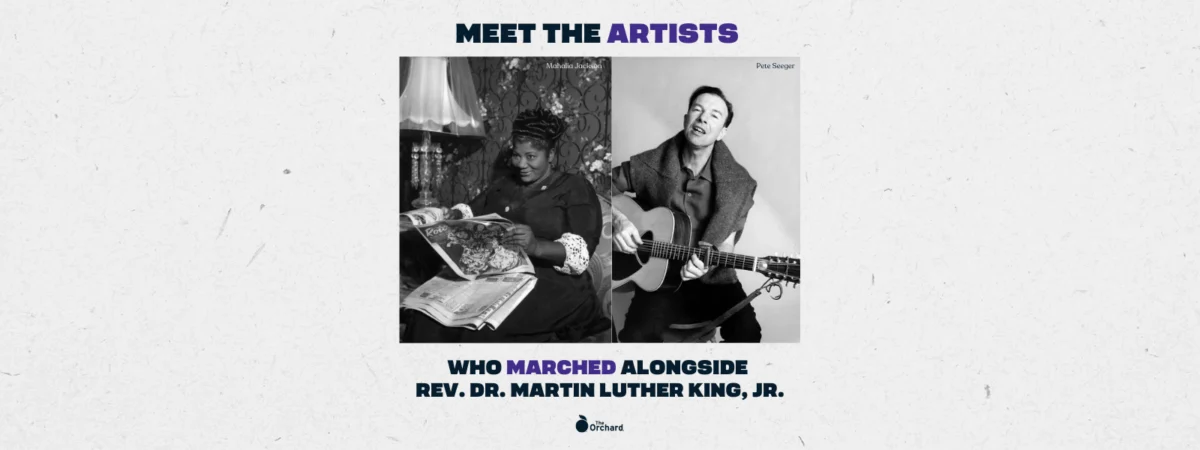
January 19, 2026 – On this Rev. Dr. Martin Luther King, Jr. Day of Service, a pivotal occasion dedicated to community engagement and civic action, attention rightfully turns to the indelible contributions of artists whose voices and melodies not only accompanied but actively propelled the Civil Rights Movement. Among these luminaries, gospel singer Mahalia Jackson and folk musician Pete Seeger stand as paramount figures, their artistry inextricably woven into the fabric of the struggle for racial equality in the United States. Their commitment, both on and off the stage, served as a powerful beacon, inspiring millions and shaping the course of American history.
The Civil Rights Movement, a watershed period in American history spanning roughly from the mid-1950s to the late 1960s, was characterized by a profound struggle against systemic racial segregation and discrimination. Rooted in decades of injustice, the movement gained significant momentum through nonviolent civil disobedience, legal challenges, and widespread public protest. Music played a crucial and often underestimated role in this era, serving as a unifying force, a means of disseminating messages of hope and resistance, and a powerful tool for emotional and psychological sustenance for activists facing immense adversity.
Mahalia Jackson, often hailed as the "Queen of Gospel," was more than just a singer; she was a confidante and spiritual anchor for Dr. King. Their friendship was deep and enduring, forged in shared faith and a common vision for a more just America. Jackson’s powerful, soul-stirring vocals were frequently featured at key movement events, often preceding Dr. King’s sermons, setting a tone of reverence and anticipation. Her performances were not merely musical interludes; they were acts of solidarity and profound spiritual encouragement. She was a consistent presence at Southern Christian Leadership Conference (SCLC) fundraisers, her voice raising both funds and spirits for the organization’s vital work.
A particularly poignant moment that highlights Jackson’s integral role occurred at the 1963 March on Washington for Jobs and Freedom. As Dr. King delivered his iconic "I Have a Dream" speech, it was Mahalia Jackson, seated on the dais, who, sensing the profound impact of his words and perhaps sensing the need for further amplification of the core message, famously called out, "Tell them about the dream, Martin!" This interjection, borne of genuine passion and shared conviction, is widely credited with prompting Dr. King to depart from his prepared remarks and delve into the extemporaneous, deeply personal, and ultimately immortal "I Have a Dream" segment of his speech. This spontaneous exchange underscores the symbiotic relationship between the movement’s leaders and its artistic champions, demonstrating how art and activism could coalesce in the most powerful ways.
The enduring legacy of Mahalia Jackson’s music is preserved and accessible through various channels. Smithsonian Folkways, a renowned record label and the non-profit archives of the Smithsonian Institution, has been instrumental in distributing and archiving music of freedom fighters, including gospel artists like Jackson. Their commitment ensures that future generations can access and learn from the sonic landscape of the Civil Rights Movement. Exploring Jackson’s discography reveals a profound testament to her artistry and her unwavering commitment to the cause of justice.
Pete Seeger, a towering figure in American folk music, was a dedicated activist whose life was a testament to his belief in the power of music to effect social change. His commitment extended across a broad spectrum of interconnected causes, including civil rights, workers’ rights, and environmentalism, particularly throughout the 1960s. Seeger understood that songs could be powerful vehicles for protest and solidarity, capable of articulating the grievances of the marginalized and rallying support for progressive causes.
Seeger’s repertoire includes several songs that became anthems of social justice. His iconic labor songs, such as "Solidarity Forever" and "Which Side Are You On?", resonated deeply with working-class communities and were frequently sung during labor disputes and union organizing efforts. These songs articulated a spirit of collective action and mutual support, essential elements for any movement seeking to challenge established power structures. Furthermore, his co-authorship of "If I Had a Hammer" with Lee Hays resulted in a protest song that captured the yearning for peace and justice, becoming a rallying cry for various progressive movements.
Perhaps Pete Seeger’s most significant contribution to the Civil Rights Movement was his role in popularizing "We Shall Overcome." While the song has roots in earlier spirituals and folk tunes, Seeger played a crucial role in adapting and disseminating it. His version of "We Shall Overcome" was Dr. King’s initial introduction to the song, a fact that profoundly shaped its trajectory. The song’s simple yet powerful message of hope and perseverance made it the unofficial anthem of the Civil Rights Movement, sung at marches, rallies, and sit-ins across the South. Its ubiquitous presence provided a unifying soundtrack to the struggle, offering solace and strength to those facing violence and oppression. Dr. King himself recognized the song’s profound significance, quoting its lyrics in his final public speech in March 1968, just days before his assassination.
Seeger’s direct involvement in movement events further cemented his status as an artist-activist. At Dr. King’s personal invitation, Seeger performed at the historic 1965 Selma to Montgomery Marches. These marches, a pivotal moment in the fight for voting rights, witnessed immense courage and sacrifice from participants, and Seeger’s presence and music undoubtedly provided moral support and inspiration to the marchers as they endured hardship and faced down violence. Seeger’s legacy as a "musician of the people" continues to inspire, his work serving as a reminder of the potent intersection of art and activism.
The broader impact of artists like Jackson and Seeger on the Civil Rights Movement cannot be overstated. Music served as a critical tool for:
- Mobilization and Unification: Songs provided a common language and a shared experience, bringing diverse groups of people together under a banner of collective purpose. The act of singing together fostered a sense of solidarity and belonging, essential for sustaining morale in the face of daunting challenges.
- Dissemination of Messages: In an era before widespread digital communication, music was a powerful medium for spreading the movement’s ideals, grievances, and calls to action. Songs could be easily learned, shared, and remembered, carrying messages of hope and defiance far and wide.
- Emotional and Psychological Sustenance: The risks and traumas faced by activists were immense. Music offered a vital outlet for emotional expression, catharsis, and spiritual renewal. The uplifting power of gospel and folk music provided strength and resilience to those on the front lines.
- International Awareness: The music of the Civil Rights Movement transcended national borders, garnering international attention and support for the cause of racial justice in America.
The continued accessibility of this music is vital for understanding the historical context of the Civil Rights Movement and for inspiring contemporary activism. Organizations like Smithsonian Folkways, a partner of The Orchard in distributing music, play a critical role in preserving and sharing this invaluable cultural heritage. Their work ensures that the "music of freedom fighters" remains a living testament to the struggles and triumphs of the past.
In reflection of Dr. King’s enduring message and the spirit of service he championed, individuals are encouraged to engage with the legacy of these artists and the movement they supported. Exploring the music of Mahalia Jackson and Pete Seeger offers a direct connection to the heart and soul of the Civil Rights Movement.
For those inspired to act, opportunities for engagement abound. Platforms like YourCause Connect offer pathways to support and mobilize within communities. Furthermore, identifying and supporting organizations dedicated to civil rights, social justice, and community empowerment is a tangible way to honor the legacy of Dr. King and the artists who stood with him. Engaging with social media accounts dedicated to amplifying these messages and movements can further broaden the reach of these important causes.
The Rev. Dr. Martin Luther King, Jr. Day of Service serves as an annual reminder of the ongoing pursuit of justice and equality. By understanding the profound impact of artists like Mahalia Jackson and Pete Seeger, we gain a deeper appreciation for the multifaceted nature of the Civil Rights Movement and the enduring power of art to inspire, unite, and transform society. Their music, a testament to courage and conviction, continues to resonate, urging us to confront injustice and work towards a more equitable future. The echoes of their voices, amplified by the collective spirit of a movement, still call us to action today.
