

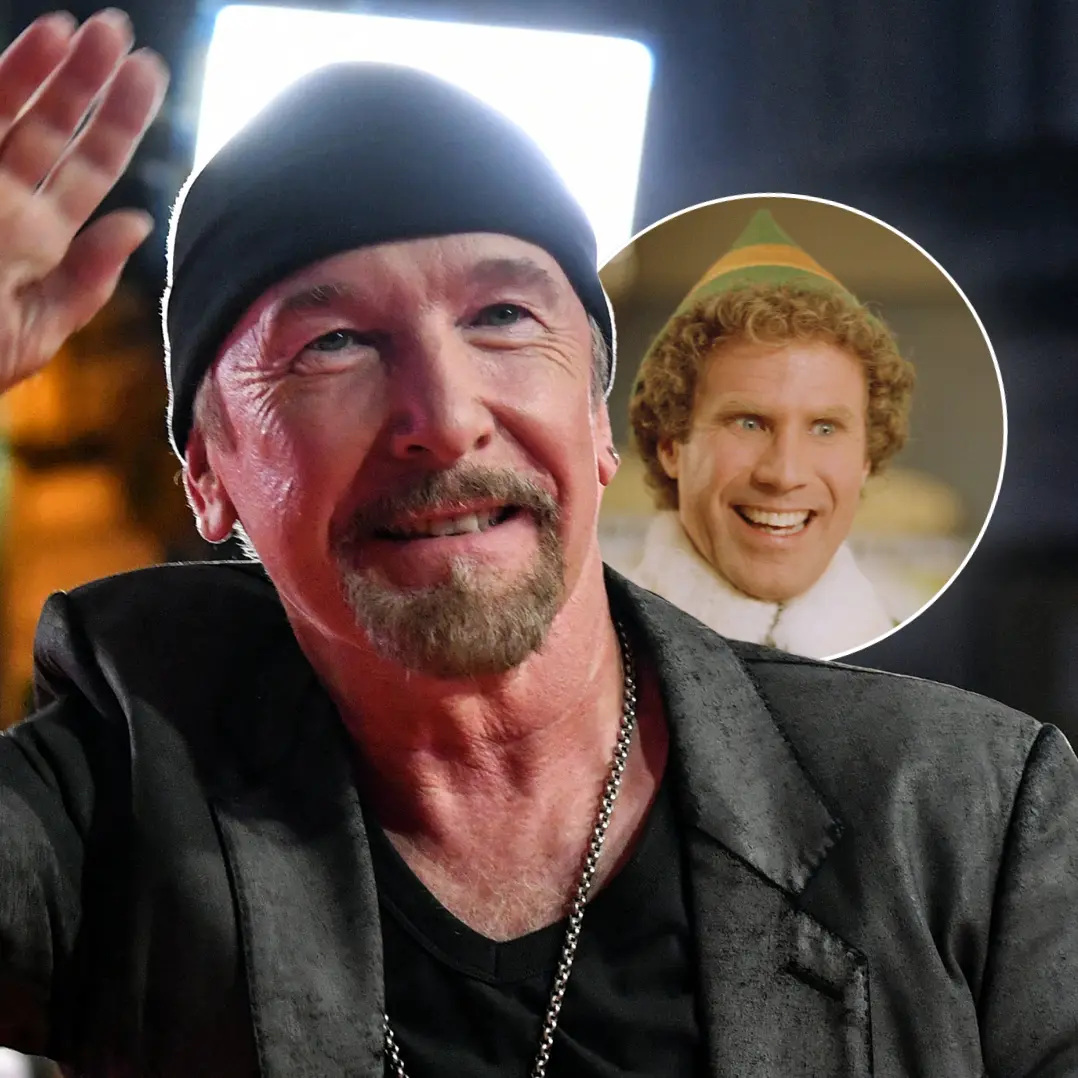
The festive cinematic landscape is adorned with timeless classics, and among them, Jon Favreau’s 2003 film Elf stands as a perennial holiday favorite. Starring Will Ferrell as Buddy, a human raised by Santa’s elves who embarks on a heartwarming journey to New York City to find his biological father, James Caan’s Walter Hobbs, the movie quickly transcended its initial release to become an essential part of annual holiday traditions. Its charm, humor, and earnest message about the spirit of Christmas have cemented its place in popular culture, leading many fans and critics alike to agree that its narrative arc feels complete, rendering a sequel largely unnecessary, if not potentially detrimental to its legacy. Yet, an astonishing revelation has surfaced, courtesy of actor and comedian Andy Richter, suggesting that a fully written sequel script for Elf was once penned by none other than David Howell Evans, widely known as The Edge, the iconic guitarist of the legendary rock band U2. This improbable piece of cinematic lore has ignited widespread curiosity, demanding a deeper exploration into the circumstances surrounding this clandestine creative endeavor and its ultimate fate.
The Enduring Legacy of Elf and the Sequel Conundrum
Released on November 7, 2003, Elf captivated audiences with its unique blend of whimsical fantasy and grounded comedic performances. Directed by Jon Favreau and featuring an ensemble cast that included Zooey Deschanel, Bob Newhart, Mary Steenburgen, and Ed Asner, the film was a critical and commercial triumph. It grossed over $220.4 million worldwide against a production budget of approximately $33 million, firmly establishing its financial viability. Critically, Elf was lauded for its humor, Ferrell’s performance, and its heartfelt narrative, earning a robust 86% approval rating on Rotten Tomatoes. Reviewers praised its ability to deliver genuine holiday cheer without succumbing to cynicism, making it a rare modern Christmas film that achieved instant classic status.
The plot follows Buddy, who, after discovering he is human, leaves the North Pole to connect with his cynical New York executive father. His innocent, elf-like perspective clashes hilariously with the harsh realities of city life, ultimately spreading joy and reminding everyone of the true meaning of Christmas. The film concludes with Buddy having found his place, his father embracing the holiday spirit, and even starting a family of his own with Jovie (Zooey Deschanel), indicating a complete and satisfying resolution to his journey.
The immense success and beloved status of Elf naturally led to discussions about a potential sequel. However, both the film’s lead, Will Ferrell, and director Jon Favreau have consistently expressed reservations. Ferrell, whose portrayal of Buddy is central to the film’s enduring appeal, has been particularly steadfast in his refusal to reprise the role. He has publicly stated on multiple occasions that he would not participate in an Elf sequel, citing concerns that a follow-up would inevitably dilute the magic of the original. In interviews, Ferrell has articulated his belief that forcing a continuation of the story for financial gain risks tarnishing the film’s legacy, emphasizing that the narrative felt complete and attempting to recreate that lightning in a bottle could lead to disappointment for fans. James Caan, who played Buddy’s father, Walter Hobbs, also publicly commented on Ferrell’s reluctance, noting that his co-star declined a reported $29 million offer for a sequel. This principled stance from the film’s star has been the primary impediment to any official sequel moving forward, despite the significant financial incentives typically associated with continuing successful franchises in Hollywood. Favreau, while acknowledging the enduring popularity of Elf, has also echoed the sentiment that some stories are best left untouched to preserve their original charm and impact.
The Unveiling: Andy Richter’s Revelation
The astonishing news of The Edge’s involvement in an Elf sequel script emerged through actor and comedian Andy Richter. Richter, who had a small but memorable role in the original Elf as a disgruntled New York City resident who encounters Buddy, recently co-authored the book Elf Unwrapped: Behind The Scenes Of A Modern Christmas Classic, released in late 2023. This deep dive into the making of the beloved film provided Richter with a platform to share previously untold anecdotes and insights.
During an appearance on The Daily Beast’s Obsessed podcast, hosted by Matt Wilstein, Richter dropped the bombshell. He recounted that Canadian film producer Shauna Robertson had been approached about a sequel written by The Edge. Richter reiterated this extraordinary tidbit during a subsequent interview on Page Six Radio, further solidifying the veracity of his claim. According to Richter, the U2 guitarist was not merely toying with an idea but had reportedly penned a "fully written" screenplay for Elf 2. The revelation was delivered with a sense of incredulity, even by Richter himself, highlighting the sheer unexpectedness of The Edge’s foray into such a distinct genre. The specific details regarding the script’s plot remain undisclosed, and Richter offered no definitive explanation for why the project ultimately failed to materialize, beyond a vague assertion that "things simply didn’t work out." The segment discussing this revelation appears around the 31-minute mark in the podcast video, providing a specific timestamp for those eager to hear the account directly from Richter.
Who is The Edge? A Creative Departure
David Howell Evans, universally known as The Edge, is one of the most recognizable and influential guitarists in rock history. Born in Barking, London, and raised in Malahide, County Dublin, Ireland, he is best known as the lead guitarist, keyboardist, and backing vocalist for the rock band U2. Formed in 1976, U2 comprises Bono (vocals), The Edge (guitar, keyboards, backing vocals), Adam Clayton (bass guitar), and Larry Mullen Jr. (drums). Over five decades, the band has achieved unparalleled global success, selling over 170 million albums worldwide, winning 22 Grammy Awards—more than any other band—and being inducted into the Rock and Roll Hall of Fame in 2005.
The Edge’s signature guitar style, characterized by its innovative use of delay, reverb, and other effects, has been a cornerstone of U2’s distinctive sound, influencing countless musicians across genres. While his primary creative outlet has been music, contributing significantly to U2’s lyrical and compositional efforts, his documented forays into screenwriting, particularly for a mainstream Hollywood comedy sequel, are virtually non-existent. His artistic endeavors outside of U2 have typically revolved around musical projects, such as contributing to film scores (e.g., The Million Dollar Hotel soundtrack with Bono), collaborating with other artists, or philanthropic work. The idea of him crafting a complete screenplay for a Christmas comedy, a genre far removed from U2’s often socially conscious and introspective rock anthems, presents a striking and intriguing deviation from his established artistic profile. This unexpected creative turn underscores the random, often serendipitous, nature of Hollywood development and the diverse passions that can motivate artists across different mediums.
Shauna Robertson: The Producer in the Middle
The narrative thread connecting The Edge’s script to Hollywood involves Canadian film producer Shauna Robertson. Robertson is a highly respected and successful figure in the entertainment industry, known for her work on numerous hit comedies. Her career highlights include producing critically acclaimed and commercially successful films such as Knocked Up (2007), Superbad (2007), Forgetting Sarah Marshall (2008), Pineapple Express (2008), and The 40-Year-Old Virgin (2005). Many of these projects were produced in collaboration with Judd Apatow and Seth Rogen, establishing her as a key player in the wave of smart, character-driven comedies that defined a significant portion of the 2000s.
Robertson’s impressive track record suggests that she possesses a keen eye for compelling scripts and a strong understanding of commercial viability within the comedy genre. Her involvement, even at the stage of being approached, lends a layer of credibility to the story, indicating that The Edge’s script was not merely a personal exercise but a serious proposition intended for production. It is plausible that The Edge or his representatives sought out Robertson due to her proven ability to develop and shepherd unique comedic voices and stories to the big screen. Her reputation for working with established and emerging comedic talent would make her a logical, albeit still surprising, choice to evaluate a sequel to Elf. One can only infer her initial reaction to receiving a screenplay from an internationally renowned rock star for such a project – likely a mix of professional curiosity and perhaps a degree of astonishment at the unconventional source.
Analyzing the Non-Materialization of The Edge’s Elf Sequel
The fact that The Edge’s "fully written" Elf sequel never saw the light of day, despite being presented to an accomplished producer like Shauna Robertson, points to a confluence of factors inherent in the complex machinery of Hollywood film development.
Firstly, and arguably most significantly, is Will Ferrell’s unwavering stance against an Elf sequel. His repeated public declarations of disinterest, coupled with reports of declining substantial offers, would have posed an insurmountable hurdle for any production. A sequel to Elf without Buddy the Elf, as portrayed by Ferrell, would be unthinkable and highly unlikely to garner studio backing. The original film’s success is inextricably linked to Ferrell’s unique comedic genius and his embodiment of the character. Any attempt to recast Buddy or pivot the story significantly away from him would alienate the core fanbase and invite inevitable comparisons and criticism.
Secondly, the sheer novelty of The Edge, a rock icon, penning a family-friendly Christmas comedy script, while intriguing, might have presented an additional layer of complexity for studio executives. While celebrities often transition between different creative roles, a complete screenplay from a musician of his stature for such a specific genre is highly unusual. Studios often prefer screenwriters with established track records in comedy or those who have successfully navigated the sequel landscape. While The Edge’s name would undoubtedly generate buzz, it might also raise questions about the script’s commercial appeal and artistic alignment with the beloved original.
Thirdly, the timing of this approach is crucial. If this occurred after Ferrell had already made his definitive statements about not returning, it would explain why even a well-received script might have been dead on arrival. Without the original star, a sequel becomes an incredibly risky proposition, regardless of the quality of the script or the fame of its author.
Finally, the inherent difficulties of getting any spec script produced in Hollywood are considerable. Even seasoned screenwriters face constant challenges in navigating the development process, securing financing, and attaching talent. For a sequel to a beloved film, the bar is set even higher, demanding not only a compelling story but also the successful reassembly of key creative elements, which in this case, proved impossible. Richter’s simple explanation that "things simply didn’t work out" likely encapsulates a myriad of these interwoven challenges, from talent availability to creative alignment and studio politics.
Broader Impact and Implications
The revelation of The Edge’s secret Elf sequel script adds an extraordinary and delightfully quirky chapter to the film’s already rich history. It underscores the unpredictable and often circuitous paths that creative projects can take in Hollywood. For fans of Elf, it provides a tantalizing "what if" scenario, fueling renewed discussions about the film’s legacy and the potential directions a sequel could have explored. It also serves as a testament to the enduring cultural impact of Elf, which clearly resonated deeply enough to inspire such an unlikely figure as The Edge to dedicate his creative energy to its continuation.
Moreover, this anecdote highlights the pervasive influence of popular culture across different artistic disciplines. It demonstrates that even rock legends can be deeply moved and inspired by mainstream cinema, prompting them to explore creative avenues far removed from their primary domain. While the prospect of an Elf sequel featuring Will Ferrell remains firmly in the realm of unlikelihood, this disclosure ensures that The Edge’s unexpected contribution will forever be a fascinating footnote in the annals of cinematic lore. It reinforces the idea that in the world of entertainment, the most astonishing stories often unfold behind the scenes, far from the glare of public scrutiny, only to emerge years later as captivating cultural curiosities. This particular tale, blending the festive magic of Elf with the rock and roll mystique of U2’s The Edge, is a prime example of such an unforeseen and utterly delightful intersection of popular culture.
