

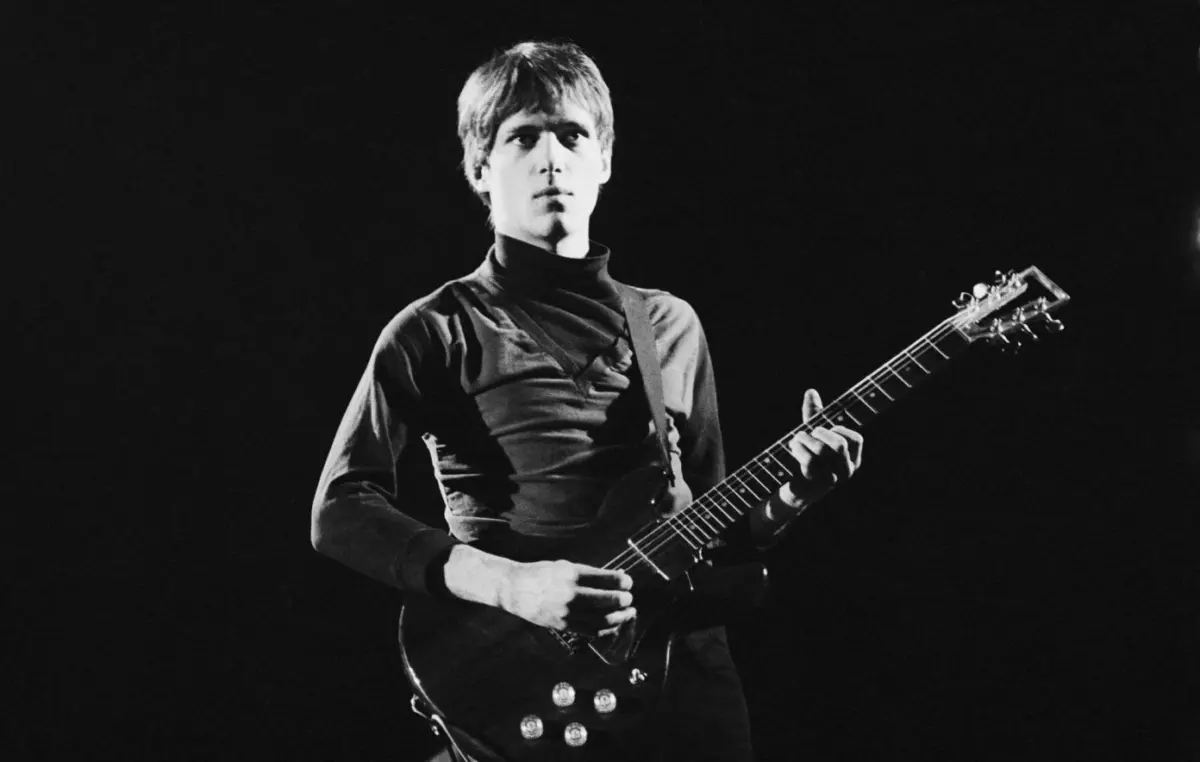
Richard Lloyd, the revered guitarist whose intricate and melodic playing was a cornerstone of the legendary New York art-punk band Television, passed away this morning at his home in Chattanooga, Tennessee. He was 75 years old. Lloyd had been diagnosed with cholangiocarcinoma, a rare and aggressive form of bile duct cancer, in March. His family confirmed his death in a statement to Rolling Stone, noting that his loving wife Sheila and his dog Willie Mays were with him at the end. Lloyd’s passing follows closely on the heels of Television frontman Tom Verlaine’s death in 2023, marking a profound loss for the music world, particularly the foundational figures of the influential New York City punk and new wave scene.
A Life Dedicated to Sound: Early Years and Formative Influences
Born Richard John Alt in Pittsburgh, Pennsylvania, on October 25, 1951, Lloyd’s journey to becoming one of rock music’s most distinctive guitarists began far from the steel mills of his hometown. His family’s relocation to New York City for his high school years proved to be a pivotal moment. It was there that he forged a friendship with Velvert Turner, a figure who famously claimed to be a protégé of Jimi Hendrix. Turner’s mentorship was instrumental in shaping Lloyd’s early musical development, immersing him in the avant-garde and experimental possibilities of the electric guitar. Lloyd, by his own account, found formal schooling largely irrelevant compared to the allure of the fretboard, often bringing his guitar to classes and dedicating himself to practice above all else. This early and intense devotion to his instrument, coupled with an unconventional apprenticeship, set the stage for the unique sonic identity he would later cultivate.
The late 1960s and early 1970s in New York City was a fertile ground for artistic experimentation, a melting pot where poetry, visual art, and music converged. Lloyd’s immersion in this vibrant counterculture, absorbing influences from jazz, blues, and the burgeoning rock scene, allowed him to develop a sophisticated and eclectic playing style that transcended the often simplistic aesthetics of early punk. He wasn’t merely a technician; he was an explorer of tone, texture, and melodic narrative, skills that would become the hallmark of his future work.
The Genesis of Television and the CBGB Era
The year 1973 marked a critical juncture in Lloyd’s career with the formation of Television. The band initially coalesced around Tom Verlaine (vocals, guitar), Richard Hell (bass), and Billy Ficca (drums). Lloyd was recruited as the second guitarist, a decision that would prove to be transformational for the group’s sound. While Hell contributed a raw, aggressive punk sensibility, it was the dual-guitar attack of Verlaine and Lloyd that truly defined Television’s innovative musical landscape. Their interplay was less about traditional rhythm and lead roles and more about a complex, intertwining dialogue, often described as a conversation between two distinct but complementary voices.
Television quickly became a fixture at CBGB, the legendary club on Manhattan’s Bowery that would become the epicenter of the nascent punk and new wave movements. Alongside peers like the Ramones, Patti Smith, and Talking Heads, Television helped define a new musical epoch. Yet, Television stood apart. While the Ramones championed minimalist, high-energy rock and Patti Smith infused rock with beat poetry, Television crafted extended, intricate compositions marked by sophisticated guitar work and intellectual lyrics. Their frequent performances at CBGB built a devoted following and honed their sound, attracting the attention of both fans and industry insiders. Early on, the band even worked with producer Brian Eno on demo recordings, though these were never officially released as a full album, signaling the industry’s early recognition of their unique potential. The band’s refusal to conform to prevailing musical trends, coupled with their undeniable talent, positioned them as trailblazers.
The Landmark Albums: Marquee Moon and Adventure
After much anticipation and interest from various record labels, Television signed with Elektra Records. This partnership led to the release of their groundbreaking debut album, Marquee Moon, in 1977. Marquee Moon was not merely an album; it was a manifesto, a sonic architecture unlike anything else in rock music at the time. Its eight tracks, many of them extended in length, showcased the band’s virtuosity and daring compositional approach. The title track, clocking in at over ten minutes, became an instant classic, lauded for its intricate dual-guitar solos, driving rhythm section, and Verlaine’s enigmatic lyrics. Critics universally hailed the album as a masterpiece, a bold departure from the three-chord simplicity of much of punk, yet possessing an undeniable punk spirit of independence and innovation.
Lloyd’s contributions to Marquee Moon were pivotal. His precise, melodic lines and soaring solos provided a counterpoint to Verlaine’s more angular, idiosyncratic style. Together, they forged a new language for the electric guitar, one characterized by counterpoint melodies, harmonic richness, and a telepathic understanding that allowed them to weave intricate tapestries of sound. The album’s influence reverberated across the music landscape, inspiring generations of musicians in genres ranging from post-punk to indie rock. Its success established Television not just as a band, but as an artistic statement.
The following year, in 1978, Television released their sophomore effort, Adventure. While Adventure demonstrated a slightly more accessible and polished sound, it maintained the band’s core identity of sophisticated musicianship and lyrical depth. It received strong critical reviews, though it perhaps lived in the immense shadow cast by its predecessor. Despite its artistic merit, internal tensions and creative differences, particularly between Verlaine and Lloyd, led to the band’s disbandment shortly after Adventure‘s release. This abrupt conclusion to their initial run left fans yearning for more, cementing their status as a cult phenomenon whose output, though brief, was disproportionately impactful.
Beyond Television: A Diverse Solo and Collaborative Career
The dissolution of Television in 1978 did not mark the end of Richard Lloyd’s musical journey. He swiftly embarked on a solo career, releasing his debut album, Alchemy, in 1979. This record showcased his continued exploration of melodic guitar work and songwriting prowess, demonstrating his capability as a frontman and composer in his own right. Over the subsequent decades, Lloyd released eight more solo albums, including notable works like Field of Fire (1986), The Cover Doesn’t Matter (2001), and The Art Provocation (2010), each a testament to his consistent creativity and dedication to his craft. His solo material often blended his signature intricate guitar work with more traditional song structures, allowing his distinct voice to shine.
Beyond his solo endeavors, Lloyd also became a sought-after session musician and collaborator, lending his distinctive guitar talents to a diverse array of artists. He contributed significantly to albums by Matthew Sweet, most notably on the critically acclaimed Girlfriend (1991), where his guitar lines added a layer of sophisticated rock sheen. He also worked with John Doe of the punk band X, further showcasing his versatility across different musical genres. In the 2000s, Lloyd briefly joined a reunited Rocket From The Tombs, the influential proto-punk band that also featured members who would go on to form Pere Ubu and the Dead Boys, demonstrating his continued connection to the roots of alternative music. In his later years, Lloyd shared his extensive knowledge and passion for the guitar by teaching aspiring musicians from his studio in New York City, passing on the legacy of his unique approach to the instrument.
Chronicling a Legacy: Everything Is Combustible
In 2018, Richard Lloyd offered fans and music historians an invaluable window into his life and career with the release of his memoir, Everything Is Combustible: Television, CBGB’s And Five Decades Of Rock And Roll. The book provided a deeply personal and candid account of his experiences, from his early days learning guitar and the formative years of Television, to the triumphs and challenges of their groundbreaking albums, his solo career, and the vibrant, often chaotic, scene at CBGB.
The memoir served as more than just an autobiography; it was a vital historical document, offering a first-hand perspective on one of rock music’s most pivotal periods. Lloyd’s engaging prose and sharp insights shed light on the creative processes, internal dynamics, and cultural forces that shaped Television and the wider New York art-punk movement. It became an essential read for anyone seeking to understand the nuanced history of that era and the contributions of one of its most innovative figures, solidifying his place not just as a musician but as a storyteller and chronicler of his time.
The Unique Sonic Tapestry: Television’s Enduring Guitar Legacy
At the heart of Television’s enduring impact was the singular guitar dynamic between Richard Lloyd and Tom Verlaine. Their interplay transcended conventional lead and rhythm roles, creating a rich, almost orchestral soundscape that was both complex and captivating. Verlaine’s style was often characterized by its angularity, abstractness, and unconventional phrasing, imbued with a sense of nervous energy and melodic twists. Lloyd, by contrast, brought a more precise, structured, and overtly melodic sensibility to the table. His solos were often soaring and lyrical, grounded in a deep understanding of harmony and counterpoint, yet delivered with a raw, expressive power.
Together, they forged a sonic tapestry built on interwoven lines, unexpected harmonies, and extended improvisations that were both disciplined and exploratory. This innovative approach to dual guitars became a blueprint for countless bands in the post-punk, indie rock, and alternative genres. Musicians learned from Television that two guitars could create a conversation, a complex interplay of voices rather than a simple division of labor. This legacy is evident in bands ranging from U2 and R.E.M. to The Strokes and Interpol, all of whom, in various ways, owe a debt to Television’s pioneering guitar architecture. Lloyd and Verlaine demonstrated that the electric guitar could be both an instrument of raw power and sophisticated artistry, pushing the boundaries of what rock music could achieve.
The Medical Context: Understanding Cholangiocarcinoma
Richard Lloyd’s death was attributed to cholangiocarcinoma, a rare and aggressive form of cancer that originates in the bile ducts. These ducts are small tubes that carry bile, a digestive fluid, from the liver to the small intestine. Cholangiocarcinoma is often difficult to diagnose in its early stages due to a lack of distinct symptoms, and by the time it is discovered, it has often advanced, making treatment challenging. The prognosis for patients with this type of cancer can be particularly grim, underscoring the rapid and severe nature of the illness that claimed Lloyd’s life within months of his diagnosis. While relatively uncommon, its aggressive progression highlights the profound health challenges individuals face when confronting such a disease.
Tributes and Reflections: The Music Community Mourns
The news of Richard Lloyd’s passing has sent ripples of sorrow throughout the global music community. Beyond the heartfelt statement from his family, an outpouring of tributes is anticipated from surviving bandmates, contemporaries, and generations of musicians he influenced. Billy Ficca, Television’s drummer, and even Richard Hell, who departed the band early but was instrumental in its formation, are expected to share their reflections on Lloyd’s profound impact and unique personality.
Musicians across the spectrum, from punk pioneers to indie rock stalwarts, are expected to take to social media and other platforms to express their condolences and share memories of Lloyd’s singular talent. Critics and music historians will undoubtedly revisit his contributions, reaffirming Television’s place in the pantheon of rock music and celebrating Lloyd’s instrumental genius. His passing marks not just the loss of a musician, but the loss of a vital voice from an era that redefined rock and roll.
A Lasting Influence: The Broader Implications of Lloyd’s Passing
The death of Richard Lloyd, following so closely after that of Tom Verlaine, represents a significant and somber milestone for the legacy of Television. Within a year, the two primary guitarists who together forged one of rock’s most innovative and influential sounds have departed, effectively bringing an end to an era. While their recorded output remains, the possibility of future live performances or new collaborations from the band’s core creative engine is now definitively closed.
Lloyd’s individual legacy, however, extends far beyond his work with Television. His solo albums showcase a remarkable artistic consistency, and his contributions as a session musician underscore his versatility and enduring skill. His memoir stands as an invaluable record, preserving the history of a crucial period in music through his unique perspective. Richard Lloyd helped define the sound of a generation, pushing the boundaries of what rock guitar could be. His intricate melodies, soaring solos, and harmonic innovations will continue to resonate with listeners and inspire guitarists for decades to come. His passing leaves a void, but his indelible mark on the landscape of rock and roll ensures that his music and influence will remain combustible and vital, forever etched into the annals of music history.
