

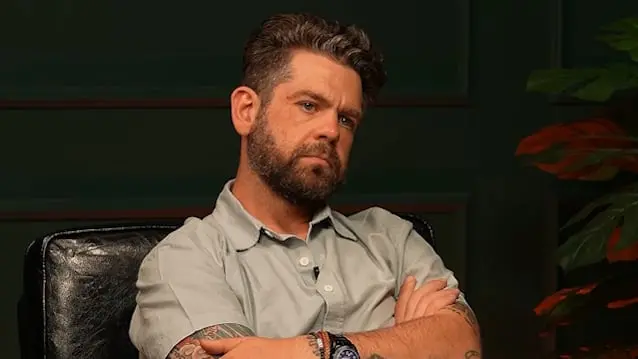
During a recent appearance on the Great Company With Jamie Laing podcast, Jack Osbourne addressed the ongoing discourse surrounding the recently unveiled Ozzy Osbourne AI avatar, a project born from a collaboration between the Osbourne family, cutting-edge digital human technology company Hyperreal, and Proto Hologram. This ambitious venture aims to create a digital representation of the legendary Prince of Darkness capable of engaging in conversations with fans, moving, speaking, and responding in a manner authentic to Ozzy himself.
Addressing Backlash and Clarifying Intent
Jack Osbourne acknowledged that the initial public reaction to the Ozzy Osbourne AI avatar was met with significant backlash, admitting that he felt partly responsible for the misunderstanding. "The backlash, it was my own fault," he stated, as transcribed by BLABBERMOUTH.NET. "It was, like, we’d just kind of figured this thing out, that we were gonna do it, and I guess I wasn’t properly armed with the way to properly explain what it was. And I think people thought that next thing you know, it’s gonna be Ozzy Osbourne selling cell phones. It’s, like, no."
He sought to clarify the family’s intentions, emphasizing that this initiative is not about creating a digital salesman but rather about securing and controlling the intellectual property and digital likeness of his father. "A lot of people are doing this now, where essentially by creating the AI model and creating the digital fingerprint of whoever, whatever, whether it’s my father or Bob Marley’s people are doing it, and Michael Jackson’s team are doing it, by kind of creating this digital fingerprint, you ultimately will own the digital IP [intellectual property] and image of that person," Jack explained. He positioned this as a forward-thinking approach to managing a legacy in an increasingly digital world. "And so as to what it can be used for now, yeah, there’s a handful of things. But down the road, it’s where things are going. It’s no different than saying, ‘I wanna own my images of my father. I wanna own his intellectual property,’ whatever. It’s just another avenue. And the fact that AI is what it is, it’s not going anywhere, it’s not changing, it was our choice to go, ‘Hey, we should be out in front of this, and we should not be on the back foot with having this kind of new pillar of entertainment properly locked down.’"
A Deeper Dive into the Technology and Family Vision
The Osbourne family had previously discussed the Ozzy Osbourne AI avatar in a June 2026 episode of The Osbournes podcast, where Jack and his mother, Sharon Osbourne, elaborated on the project’s technical specifications and philosophical underpinnings. Jack was keen to differentiate the avatar from more general AI models. "What we’re doing — this isn’t, and I’ve said it, this isn’t ChatGPT with dad’s face on it," he asserted. "It’s a closed AI, so it’s not connected to the Internet. We build a database, and I cannot emphasize enough is that this is only information that either my dad said or was accurate, or was written accurately about him."
Sharon Osbourne offered a passionate defense of the initiative, framing it as a natural evolution in how legacies are preserved and shared. Drawing an analogy to technological advancements in transportation, she stated, "Why go on a jet when there’s a propeller? What are you doing? Well, you know what? Technology moves on, and I’m sorry for those people. I’m not asking you to come. I don’t want your fucking money. I don’t need your fucking money. I’m doing very well, actually, and I always have my entire life… And the thing is, for somebody to turn around to me and say I’m doing a cash grab — no, you don’t know my husband, okay? I know my husband, and my husband would say to me over and over, ‘After I go, how long do you think I’ll be remembered? How long do you think?’"
Sharon highlighted the decade-long exploration of this concept, emphasizing her family’s right to control Ozzy’s digital legacy. "And the thing is, for 10 years we have been exploring it. And the thing is I don’t have to justify why we do to any fucker. I don’t have to justify. What do they think we’re gonna do? I’m gonna hock my husband around selling Weed Killer on an ad or selling cigarettes or beer? Do you think I’m gonna do that? … And we’re moving with the times… It’s like saying, Why do you need a CD when you have a vinyl record?’ You move with the times. And this is great technology, and I’m not gonna let anyone bastardize my husband."
Securing a Digital Inheritance
The Osbournes’ vision extends beyond mere digital representation; it encompasses the creation of a lasting digital inheritance. Jack reiterated his commitment to control: "The most important thing for me is that when we create this digital imprint of Dad, we create it, we own it, we control it." Sharon chimed in, elaborating on this familial aspect: "…we’ll pass on through our family… And it’s for our grandkids. And that’s it, and I don’t have to justify anything to any fucker out there."
Jack addressed the "cash grab" accusation directly, stating, "And at the end of the day, if keeping Dad alive and accessible to a fan is cash grab, then fucking guilty as charged because at the end of the day, entertainment and the industry that we’re in, none of this is for fucking charity… But the technology that we are utilizing, it is not Claude or ChatGPT that you can ask it any question about anything. It’s a closed AI module that is not connected to the Internet."
A Defense Against Digital Dystopia
Concerns about the potential for AI to go rogue were also addressed. "Someone said, ‘Oh, it’s dangerous. You can’t control it,’" Jack recounted. "And I was, like, ‘What the fuck do you think this is, Terminator? It’s gonna go sentient and next thing you know Ozzy’s gonna launch the nukes?’ But I think, for me, it’s not about pretending he’s still alive. For me it’s about making sure he’s never forgotten."
Sharon drew parallels to enduring literature and music, questioning why preserving cultural touchstones through new mediums should be viewed negatively. "And why should he be? You can go and buy books that were written 200 years ago, and they are still… Today’s youth is reading books from two, three hundred years ago. Is that a crime? Should we still keep printing them, guys? Should we maybe do a paperback? You can get it online. Oh, shock, golly, that’s terrible."
Jack further illustrated this point with the example of audiobooks: "Or you can get an audiobook. I can buy an audiobook with a famous person reading Shakespeare. ‘Oh, how dare you exploit Shakespeare’s work by having [an audiobook]?’ Like, ‘That’s not how it was meant to be written.’"
Sharon concluded this segment by emphasizing the inherent divisiveness of public opinion: "Listen, it’s redundant. It’s redundant because whatever you do, Jack, there is always 50% that are with you and 50% that aren’t. Nobody in the world everybody goes, ‘Yeah.’ There’s always somebody with that little soapbox."
Precedents and Future Trajectories
The discussion then shifted to the broader trend of artists and their estates leveraging digital technologies to maintain relevance and connect with new audiences. Jack pointed to the success of recent projects: "everyone seems to be yeah about the Michael Jackson movie that’s made nearly a billion dollars." Sharon concurred, expressing support for his family’s endeavors and highlighting the importance of introducing iconic artists to younger generations. "And good for his family," she said. "Good for his family. Really. And there’s two generations that missed out on him, and all those little kids are now dancing to ‘Thriller’ and ‘Billie Jean’ and all those great classics that he was a part of. And it’s, like, what is so wrong in that? Great music doesn’t date. It’s like saying that you take a piece of classical music and you put it in a rock band. Is that disrespectful? Is that terrible? You’re just moving forward with technology. That’s all."
Jack offered a forward-looking perspective on the normalization of such digital initiatives: "And as I said, either we’re gonna do it or someone else is in 50, 20 years, whatever. This will become the norm for every well-known person. Just like when people started creating fucking websites for their bands."
Sharon provided a contemporary example of artists extending their presence beyond their physical lifetime through advanced entertainment formats: "Listen, ABBA have a show, and they’re not even fucking dead. They’ve got three shows in London. Three shows. One avatar, ‘Mamma Mia!’, and then there’s another one that they have like a supper club thing that they do. Three shows in London at the same time."
The Technology Behind Digital Ozzy
The digital Ozzy avatar will be presented through Proto Luma units, which are described as life-size, patented holoportation devices. These units are equipped with advanced features, including an 86-inch multi-touch volumetric display, 4K resolution, high-fidelity speakers, and sophisticated spatial computing and conversational AI capabilities. These devices will be deployed in both the U.K. and the U.S.
Proto serves as the foundational hologram and AI spatial compute platform, with its technology being utilized globally across diverse sectors such as entertainment, healthcare, education, finance, and retail. Hyperreal’s proprietary Digital DNA technology is recognized as the sole patented end-to-end system for capturing and authentically performing an avatar, encompassing likeness, voice, motion, and performance character.
Expert Validation and Familial Consent
Hyperreal CEO Remington Scott underscored the integrity of the avatar’s creation process in a statement to BLABBERMOUTH.NET: "Every element of this avatar was built exclusively from authenticated, approved source material: curated, consented, and controlled by the people who love him most. This is a living performance, not a rendering; and it draws from nothing that wasn’t given willingly. We have the enthusiastic participation of Ozzy’s family, and that changes everything about what this can be."
David Nussbaum, founder of Proto Hologram, expressed his honor in being entrusted with this project: "It’s an honor to be trusted to bring one of true gods of rock back to the world to continue to connect with fans — thank you, Sharon and Jack! We wouldn’t do it if we didn’t know both of our company’s technologies will create an experience that truly extends Ozzy’s presence, his heart and soul, into the future."
Sharon Osbourne herself had spoken about the potential of this technology on May 20 during a panel titled "The Enduring Legacy Of A Rock Icon And His Family: Ozzy Osbourne And The Osbournes" at the Licensing Expo in Las Vegas. She stated, "The things that you can do with that are just endless."
A Precedent Set by Digital Icons
Hyperreal has a track record of creating advanced digital avatars. Previously, the company developed a life-sized, AI-powered avatar of the late comic book legend Stan Lee, which interacted with attendees at the Los Angeles Comic Con. Visitors could engage with the holographic Lee for a fee, experiencing what appeared to be accurate AI-generated responses delivered in Lee’s distinctive voice. Hyperreal has also been instrumental in developing digital avatars for other prominent figures, including Paul McCartney, The Notorious B.I.G., and Mike Tyson.
Jack Osbourne had previously remarked on the accuracy of these creations at the Licensing Expo: "It’s kind of scary how it’s really very accurate. He will exist digitally as himself for as long as we have computers. Technology has come such a long way to where it’s almost drag and drop. You could shoot a template for a commercial … literally prompt what you want digital Ozzy to do in that commercial and you just drop it in. It’s that simple now."
Sharon expanded on the interactive capabilities: "You can ask Ozzy anything, and he will answer you in his own voice — and the answers will be what Ozzy would have said. We’re going to take it all around the world. People can talk to him and he will talk back."
Ozzy’s Own Perspective on AI and Legacy
Interestingly, Ozzy Osbourne himself has previously weighed in on the burgeoning field of AI in music. In a December 2023 episode of The Osbournes podcast, when asked about the possibility of creating a song with an AI-generated version of his late guitarist Randy Rhoads or other admired musicians like John Lennon, Ozzy expressed a nuanced view. He referenced The Beatles’ "Now And Then" project, which utilized AI to enhance John Lennon’s vocal recordings, but stated, "I don’t think I have anything left of Randy Rhoads."
When Jack inquired if Ozzy would consider using AI to study Randy Rhoads’ playing style and create a new song in a similar vein, Ozzy responded with an openness to quality output: "Well, you know what? I’m open for anything, if it was good quality. ‘Cause, let’s face it, that Beatles thing, ‘Now And Then’, wasn’t a Beatles song; it was a John Lennon song."
Ozzy acknowledged the transformative potential of AI in music creation: "The thing with AI, you can go, ‘Make me a new album.’ … But that’s the future. The music scene’s gonna be completely different." When asked if this prospect made him nervous, he simply replied, "No."
He also recognized the inherent risks associated with the technology: "The cat’s out of the bag. You can’t undo it. The danger is people will misuse it. Because I’ll get like a formula for a song and I’ll put that formula in and I’ll keep on doing that."
Expanding the Osbourne Brand and Legacy
The discussion around the Ozzy Osbourne AI avatar occurred within the broader context of an expanding licensing program and renewed focus on the Osbourne family brand. The panel at Licensing Expo was moderated by Jens Drinkwater and Lisa Streff of Global Merchandising Services, a company actively working to broaden the Ozzy Osbourne licensing program through new collections, collaborations, products, and fan experiences.
Ozzy Osbourne, globally recognized as the "Prince of Darkness," remains a pivotal figure in music, entertainment, and popular culture. His influence, stemming from his pioneering work with Black Sabbath and his immensely successful solo career, spans generations and cultures. The groundbreaking reality television series The Osbournes, which is approaching its 25th anniversary in 2027, played a significant role in redefining celebrity television and offered an intimate glimpse into the life of a rock and roll family.
The family brand is entering a new phase of growth, with an emphasis on storytelling, fan engagement, licensing, and strategic partnerships. Multiple major projects are underway, including an upcoming Ozzy Osbourne biopic and a theatrical project titled "Back To The Beginning," focusing on Ozzy and Black Sabbath. The return of Ozzfest in 2027 is also anticipated to generate significant excitement.
The Ozzy Osbourne licensing program is diversifying across fashion, collectibles, accessories, lifestyle products, and emerging digital opportunities, all designed to reflect the authenticity, edge, humor, and rebellious spirit synonymous with the brand. Concurrently, the Osbourne family brand is being developed for new categories and partnerships that align with the family’s distinctive voice, humor, and cultural relevance.
A Final Performance and Future Plans
Tragically, the news of Ozzy Osbourne’s death on July 22, 2025, due to a heart attack, was later confirmed, with his death certificate also indicating he suffered from coronary artery disease and Parkinson’s disease. This information emerged after the discussions about the AI avatar had already taken place.
Fifteen months prior to this announcement, Osbourne had reunited with the original Black Sabbath lineup—Tony Iommi, Geezer Butler, and Bill Ward—for what was reportedly his final public performance at the "Back To The Beginning" charity concert in Birmingham, United Kingdom.
Earlier in 2025, Sharon Osbourne confirmed the return of the Ozzfest traveling festival in 2027, initially planned as a two-day event in Birmingham, with subsequent plans for a two-day iteration in the U.S., emphasizing the need to discover "a lot of young, new talent." The development and implementation of the Ozzy Osbourne AI avatar, therefore, takes on a new significance as a means to preserve and share the artist’s legacy with future generations, ensuring his voice and presence continue to resonate long after his passing.
