

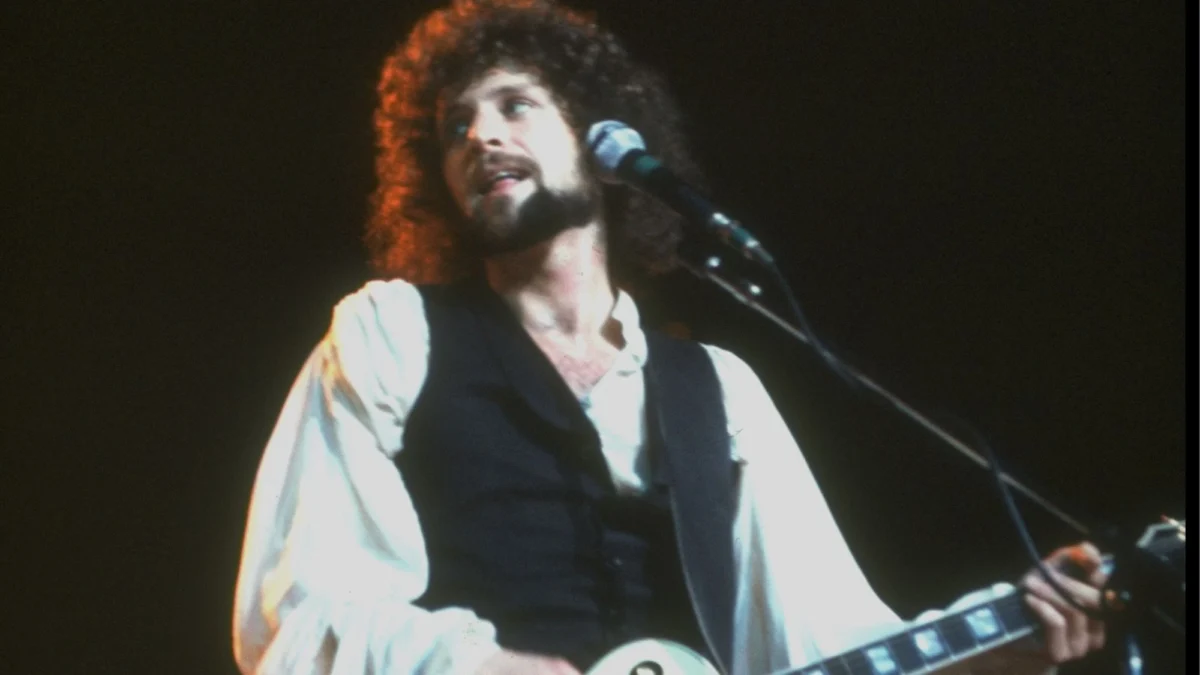
The trajectory of popular music is often defined by singular moments of cultural intersection, and for Lindsey Buckingham, the architect of Fleetwood Mac’s most commercially successful era, that moment occurred in 1956 with the release of Elvis Presley’s Heartbreak Hotel. Buckingham, who has long been recognized for his intricate fingerpicking style and avant-garde production techniques, credits the "King of Rock and Roll" not merely as an influence, but as the foundational reason for his entire professional existence. This connection highlights a broader historical pattern where the raw energy of 1950s rockabilly acted as the primary catalyst for the British Invasion and the subsequent California rock movement of the 1970s.
While Buckingham is frequently associated with the lush, melodic textures of Rumours and Tusk, his musical DNA is rooted in the stark, rebellious atmosphere of the mid-1950s. At the age of six, living in the San Francisco Bay Area, Buckingham was exposed to Presley through his older brother, Jeff. This early exposure occurred at a pivotal time in American history, as the post-war era gave way to the birth of the "teenager" as a distinct social and economic class. Presley, with his unconventional vocal delivery and provocative stage presence, became the symbol of this new generation, providing a blueprint for Buckingham and countless others who would go on to redefine the genre.
The 1956 Catalyst: Heartbreak Hotel and the Birth of a Rocker
In early 1956, Elvis Presley released "Heartbreak Hotel," a track that would spend seven weeks at number one on the Billboard Top 100. For a young Lindsey Buckingham, the song was more than a radio hit; it was a sensory overhaul. Buckingham has recalled that his brother, who was seven years his senior, brought the record home, signaling a shift in the household’s cultural consumption. The song’s heavy use of reverb, its blues-infused minor key, and Presley’s haunting delivery created a "mind-blowing" experience for the child who would later become one of the most respected guitarists in rock history.
The technical specifications of Presley’s early recordings played a significant role in Buckingham’s development. "Heartbreak Hotel" was recorded at RCA’s Nashville studio and featured a sparse arrangement that allowed the emotion of the vocal to take center stage. For Buckingham, this was a lesson in the power of presence and the "overall package" of an artist. He noted that it wasn’t just the music, but the independence it represented. In the 1950s, rock ‘n’ roll was often viewed by the older generation as a dangerous influence, but to Buckingham, it represented "freedom, possibility, and freshness."
Chronology of Influence: From the 1950s to Fleetwood Mac
To understand the depth of Presley’s impact on Buckingham, one must look at the timeline of Buckingham’s musical evolution. Following his childhood fascination with Presley, Buckingham did not immediately jump into the world of electric rock. Instead, he spent his youth mastering the banjo and folk guitar, influenced by the folk revival of the late 1950s and early 1960s. However, the "Presley spark" remained the underlying engine.
- 1956: Buckingham hears "Heartbreak Hotel" for the first time, establishing his interest in the guitar and the persona of the rock frontman.
- 1960s: He transitions into folk music, influenced by groups like The Kingston Trio, but retains the rhythmic intensity he admired in Presley’s early Sun Records sessions.
- 1973: The release of Buckingham Nicks showcases a guitarist who has successfully blended folk-style fingerpicking with the drive of rock ‘n’ roll.
- 1975: Buckingham joins Fleetwood Mac, bringing a visceral, rock-oriented energy to a band that had previously been rooted in British blues.
Industry analysts often point to Buckingham’s arrival in Fleetwood Mac as the moment the band shifted from a respected blues outfit to a global pop-rock phenomenon. This shift was fueled by Buckingham’s insistence on a "freshness" that mirrored the excitement he felt when first seeing Presley with his Martin guitar. While his peers in the 1970s were often focused on lengthy blues-rock solos, Buckingham’s contributions to albums like Fleetwood Mac (1975) and Rumours (1977) were characterized by a concise, rhythmic punch that echoed the 45-rpm singles of the 1950s.
The Technical Connection: Fingerpicking and the Martin Guitar
One of the most distinct elements of Lindsey Buckingham’s style is his refusal to use a plectrum (guitar pick). Instead, he utilizes a complex "Travis picking" style, usually associated with country and folk musicians like Merle Travis or Chet Atkins. While Elvis Presley was not a virtuoso guitarist in the technical sense, his use of the acoustic guitar—specifically the Martin D-28—as a percussive instrument was foundational.
Buckingham has specifically cited Presley’s "Martin guitar" as part of the "incredible package" that inspired him. In the 1950s, Presley often used his guitar more for rhythm and stage presence than for melodic lead lines, but the image of the lone singer with a guitar became the gold standard for the rock archetype. Buckingham took this image and expanded upon it, developing a style where he could play bass lines, chords, and melodies simultaneously. This "one-man-band" approach on the electric guitar can be traced back to the self-sufficiency of the early rockabilly stars who had to command attention with limited instrumentation.
Broader Cultural Implications and Official Reactions
The sentiment expressed by Buckingham is echoed by many of his contemporaries. The late John Lennon famously stated, "Before Elvis, there was nothing," and Keith Richards of the Rolling Stones frequently cited Presley’s early recordings as the reason he picked up the instrument. Buckingham’s admission adds another layer to this historical narrative, showing that the Presley influence crossed the Atlantic and returned to shape the "California Sound" of the 1970s.
From a musicological perspective, Buckingham’s career serves as a bridge between the raw rebellion of the 50s and the sophisticated production of the late 20th century. While Presley was the "role model" for the spirit of the music, Buckingham applied that spirit to the rigorous demands of the studio. His work on the song "Big Love," for instance, features an aggressive, percussive guitar style that carries the same "swagger" he saw in Presley, but updated with a modern, almost neurotic intensity.
Official biographers and music historians note that Buckingham’s praise for Presley is significant because it highlights the "aspirational" quality of 1950s rock. It wasn’t necessarily that Buckingham wanted to be Elvis in terms of look or vocal style; rather, he wanted to capture the "presence" and the "independence" that Presley’s music afforded the youth of that era. This distinction is crucial in understanding how rock ‘n’ roll evolved from a genre into a philosophy of creative autonomy.
Data and Market Impact: The Legacy of "Heartbreak Hotel"
The lasting impact of the music Buckingham heard in 1956 is reflected in the commercial longevity of both Presley and Fleetwood Mac. "Heartbreak Hotel" was Presley’s first million-seller and was eventually inducted into the Grammy Hall of Fame. Similarly, the music Buckingham created under that influence has seen unprecedented success. Rumours remains one of the best-selling albums of all time, with over 40 million copies sold worldwide.
The "Presley-to-Buckingham" pipeline illustrates a high return on cultural investment. A single 45-rpm record brought home by an older brother in the 1950s effectively laid the groundwork for a career that would produce dozens of Top 40 hits and influence subsequent generations of indie and alternative rockers. Modern artists such as Florence Welch and Haim have cited Buckingham’s guitar work as a primary influence, thereby extending Presley’s reach into the 21st century.
Analysis of Implications: The Enduring Archetype
The case of Lindsey Buckingham and Elvis Presley suggests that the "iconic" nature of rock ‘n’ roll is built on a specific type of role modeling. Buckingham’s observation that he didn’t want the "James Dean look" but rather the "overall presence" indicates that the true power of the 1950s pioneers was their ability to project a sense of "possibility."
For Buckingham, this possibility manifested in a career defined by risk-taking. Whether it was the experimental arrangements on the Tusk album or his intricate solo performances, the "freedom" he identified in Presley remained his North Star. This analysis suggests that the most impactful influences are those that provide an emotional and philosophical framework rather than just a musical one.
In conclusion, Lindsey Buckingham’s tribute to Elvis Presley serves as a reminder of the interconnectedness of the rock genre. The "crooning vocals" and "few chords" of a 1956 hit record provided the spark for one of the most sophisticated and enduring careers in music history. Without the "Heartbreak Hotel" moment, the landscape of 1970s and 80s rock would likely have lacked the unique, percussive, and fiercely independent voice of Lindsey Buckingham. His journey from a six-year-old listening to his brother’s records to a global guitar icon underscores the transformative power of the Presley legacy, proving that the "King" continues to reign through the artists he inspired.
