

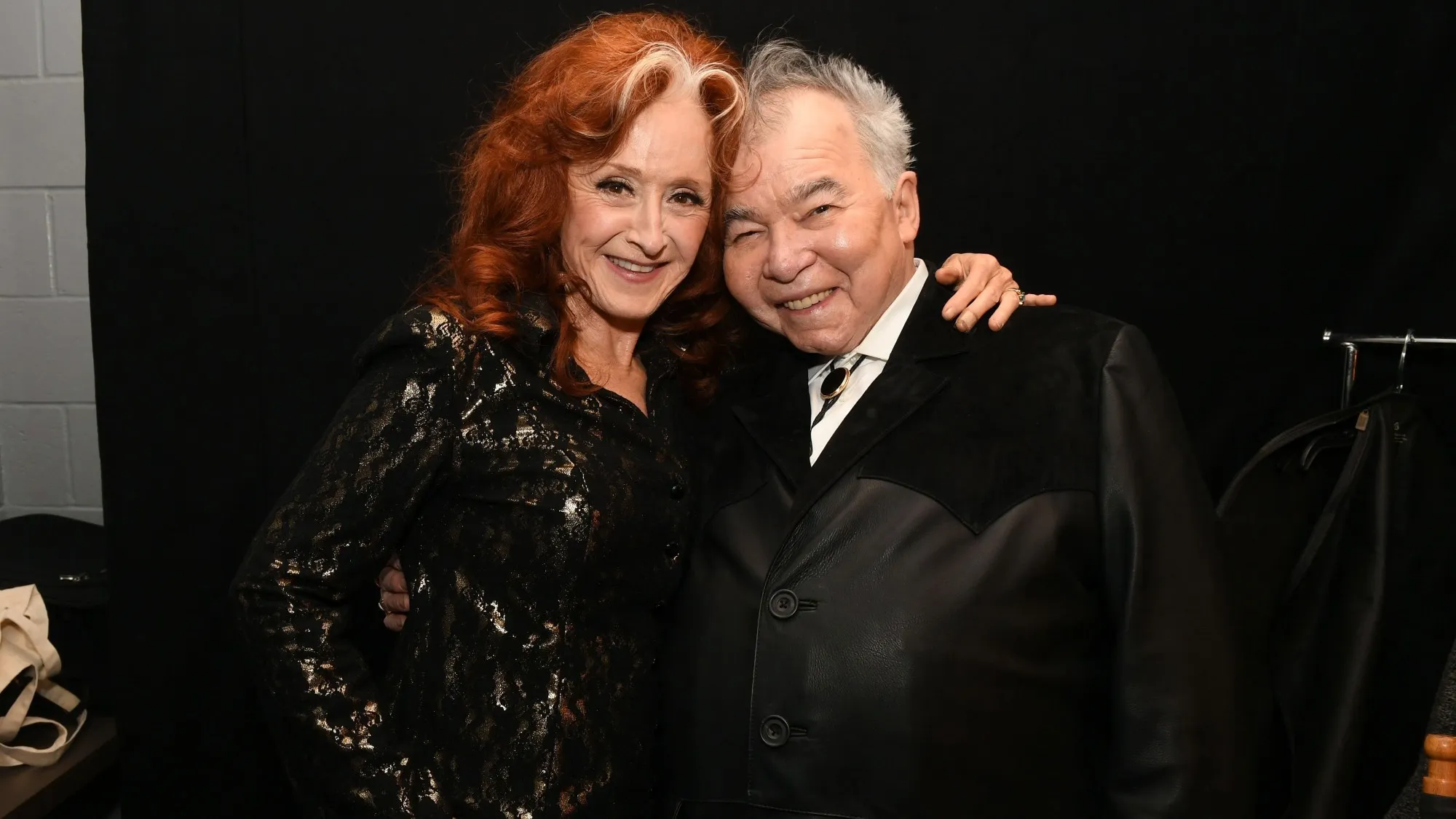
John Prine, the late American singer-songwriter whose work defined the Americana genre and influenced generations of musicians, remains a cornerstone of the global folk and country music landscape. Known primarily for his uncanny ability to weave profound emotional truths through the mundane details of everyday life, Prine’s career spanned five decades, earning him a reputation as a "songwriter’s songwriter." While his own gravelly, conversational delivery brought a unique charm to his compositions, his work possessed a structural integrity that allowed it to be reinterpreted across genres. This versatility is perhaps best demonstrated by three specific recordings: Bonnie Raitt’s soulful rendition of "Angel From Montgomery," George Strait’s chart-topping version of "I Just Want To Dance With You," and Miranda Lambert’s high-energy take on "That’s The Way The World Goes Round." These covers not only amplified Prine’s reach to mainstream audiences but also solidified his standing as one of the most significant literary voices in American music history.
The Architect of the American Songbook
To understand the weight of these covers, one must first examine the origin of the man who penned them. Born in 1946 in Maywood, Illinois, John Prine began his career as a mail carrier, a job that afforded him the mental space to compose lyrics while walking his routes. His discovery in the late 1960s at the Earl of Old Town in Chicago by Kris Kristofferson and Roger Ebert is the stuff of musical legend. Kristofferson famously remarked that Prine wrote songs so good that "we’ll have to break his fingers to keep him from taking over."
Prine’s debut self-titled album, released in 1971, contained an almost impossible density of classics, including "Sam Stone," "Hello in There," and "Angel From Montgomery." These songs demonstrated a level of empathy rarely seen in popular music, particularly from a man then only in his mid-twenties. He possessed a rare capacity to inhabit the perspectives of the elderly, the lonely, and the disenfranchised, a trait that made his material highly attractive to other artists seeking songs with narrative depth.
A Masterclass in Empathy: Bonnie Raitt and Angel From Montgomery
"Angel From Montgomery" is arguably the most famous of all John Prine compositions, largely due to the definitive version recorded by Bonnie Raitt. Originally appearing on Prine’s 1971 debut, the song is written from the perspective of a middle-aged woman feeling trapped in a stagnant marriage and a colorless life. The narrator’s plea—"Make me an angel that flies from Montgomery / Make me a poster of an old rodeo"—is one of the most evocative choruses in the folk canon.
Bonnie Raitt first recorded the song for her 1974 album Streetlights. While the prompt suggests a 1978 release, historical records confirm Streetlights was released in September 1974, marking a pivotal moment in Raitt’s career as she transitioned toward a more polished, soulful sound. Raitt’s interpretation brought a bluesy, yearning quality to the lyrics that Prine’s original folk arrangement lacked. Over the decades, Raitt continued to refine the song, including a notable live version on her 1995 multi-platinum album Road Tested and featuring it prominently on her 2003 compilation, The Best of Bonnie Raitt.
The synergy between Prine’s writing and Raitt’s vocal delivery created a cultural touchstone. In interviews, Raitt has often credited the song with being a cornerstone of her live sets, noting that Prine’s ability to write so convincingly from a female perspective was nothing short of miraculous. The song’s longevity is a testament to Prine’s structural brilliance; it has since been covered by Carly Simon, John Denver, and Tanya Tucker, yet Raitt’s version remains the gold standard for how a cover can honor and expand upon the original intent.
Crossing into the Mainstream: George Strait and I Just Want To Dance With You
While "Angel From Montgomery" appealed to the folk and rock sensibilities of the 1970s, Prine’s reach extended deep into the heart of mainstream country music in the late 1990s. In 1998, George Strait, often referred to as the "King of Country," released his version of "I Just Want To Dance With You." The track was the lead single from his album One Step at a Time and quickly ascended to the No. 1 spot on the Billboard Hot Country Singles & Tracks chart.
Co-written by Prine and the British songwriter Roger Cook, the song originally appeared on Prine’s 1986 album German Afternoons. In its original form, the song was a breezy, folk-inflected shuffle. However, under the production of Tony Brown and the smooth delivery of George Strait, it became a polished, mid-tempo country hit with a light tropical flair.
The success of this cover provided a significant financial and critical boost for Prine. For an independent artist who had founded his own label, Oh Boy Records, in the early 1980s to maintain creative control, having a major star like George Strait take a song to the top of the charts was a validation of his songwriting’s commercial viability. The lyrics—"I want to dance with you, twirl you all around the floor / That’s what they intended dancing for"—showcase Prine’s lighter, more whimsical side, proving he was as capable of writing a feel-good radio hit as he was a devastating social commentary.
Resilience and Humor: Miranda Lambert and That’s The Way The World Goes Round
In 2009, Miranda Lambert, then one of the most prominent rising stars in country music, included "That’s The Way The World Goes Round" on her critically acclaimed third studio album, Revolution. The song was originally written by Prine for his 1978 album Bruised Orange, a project produced by his close friend Steve Goodman.
The song is a quintessential example of Prine’s "cockeyed optimism." Written during a period of personal and professional transition, the lyrics use absurdism to describe the ups and downs of life: "It’s half an inch of water and you think you’re gonna drown / That’s the way that the world goes ’round." One of the most famous anecdotes in Prine’s career involves this song; he often recounted a story of a fan who misheard the lyrics "half an inch of water" as "happy enchilada," a mistake Prine found so delightful that he occasionally incorporated the "enchilada" line into his live performances.
Lambert’s version brought a feisty, modern country-rock energy to the track. By choosing to cover Prine, Lambert signaled her allegiance to the "outlaw" and "songwriter" traditions of country music, rather than just the polished pop-country mainstream. Her version introduced Prine’s wit to a younger generation of listeners, ensuring his influence would continue into the 21st century.
Chronology of Influence: Key Milestones
The timeline of John Prine’s influence through these covers illustrates his enduring relevance:
- 1971: John Prine releases his debut album, featuring "Angel From Montgomery."
- 1974: Bonnie Raitt records "Angel From Montgomery" for Streetlights, bringing the song to a wider rock and blues audience.
- 1978: Prine releases Bruised Orange, containing "That’s The Way The World Goes Round."
- 1986: Prine releases German Afternoons, featuring the original "I Just Want To Dance With You."
- 1998: George Strait’s cover of "I Just Want To Dance With You" reaches No. 1 on the country charts.
- 2009: Miranda Lambert covers "That’s The Way The World Goes Round" on her album Revolution.
- 2020: Following Prine’s death due to complications from COVID-19, streaming of his original works and these famous covers sees a massive resurgence, highlighting his permanent fixture in the American cultural fabric.
Statistical and Industry Impact
The impact of John Prine’s songwriting can be quantified through both chart success and industry accolades. While Prine himself never had a Top 40 hit on the Billboard Hot 100, the artists who covered him frequently did. The royalties generated from covers by artists like George Strait and Bonnie Raitt allowed Prine to remain fiercely independent, a rarity in an industry dominated by major labels.
Prine was a four-time Grammy Award winner, including a Lifetime Achievement Award in 2020. He was inducted into the Songwriters Hall of Fame in 2019. The Americana Music Association, which Prine helped define, honored him multiple times, including Artist of the Year awards in 2005, 2017, and 2018. According to industry data, Prine’s catalog saw a 417% increase in on-demand streams in the week following his passing, a testament to the deep connection audiences maintained with his work.
Broader Implications and Lasting Legacy
The phenomenon of the "John Prine cover" serves as a case study in the power of songwriting. In an era where music is often over-produced and fleeting, Prine’s songs rely on fundamental elements: a relatable narrator, a touch of humor, and a profound understanding of the human condition.
The fact that his work could be successfully interpreted by a blues-rock singer like Raitt, a country traditionalist like Strait, and a modern firebrand like Lambert speaks to the universal nature of his themes. Prine did not write for a specific demographic; he wrote for anyone who had ever felt lonely, in love, or simply confused by the world.
His peers have been vocal about his impact. Bob Dylan once remarked, "Prine’s stuff is pure Proustian existentialism. Midwestern mind-trips to the nth degree. And he writes beautiful songs." Bruce Springsteen echoed these sentiments, stating that Prine was "a true national treasure and a songwriter for the ages."
In conclusion, while John Prine may no longer be here to walk his mail route or grace the stage of the Ryman Auditorium, his voice persists through the voices of others. Every time Bonnie Raitt sings about that angel from Montgomery or a new listener discovers the "happy enchilada" in Miranda Lambert’s upbeat tempo, John Prine’s legacy is reaffirmed. He remains the gold standard for American songwriting, a man who could find the cosmic in the commonplace and the melody in the mundane.
