

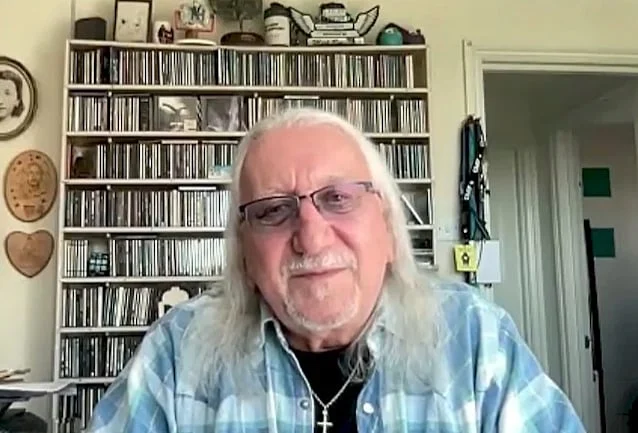
In a recent candid interview with Metal Mayhem ROC, Mick Box, the iconic guitarist and founding member of the legendary British progressive rock band Uriah Heep, shed light on the nuanced nature of the band’s announced "farewell tour," "The Magician’s Farewell," set to commence in early 2025. The tour, initially announced in September 2024, has generated considerable discussion within the rock music community regarding its definitive conclusion. Box clarified that while the tour signifies a significant shift in the band’s operational cadence, it is not an abrupt cessation of their musical endeavors.
A Strategic Wind-Down, Not an Absolute End
When pressed about whether "The Magician’s Farewell" represents a truly final tour or a prolonged, evolving phase of their extensive career, Box articulated a vision of a "slow wind-down." He explained the practicalities that necessitate this strategic recalibration of their touring schedule. "It’s gonna take two or three years to get round to all the territories that we normally… We play, like, 64 countries, so we have to get out there in the world and do it," Box stated. This extensive geographical reach, a hallmark of Uriah Heep’s enduring global appeal, requires a significant logistical commitment that has become increasingly challenging to sustain.
The evolving global landscape, particularly in the post-COVID era, has presented unprecedented hurdles for touring musicians. Box highlighted the cascading effects of these changes on international travel and logistics. "Things have changed in the world, as you all know, with flights and buses and everything else, after COVID, and especially in our political world over here [in the U.K.], we left Europe. Brexit, they call it. And that’s caused us – well, certainly in the musical world, no end of problems."
The Tangible Impact of Brexit on Touring
The ramifications of Brexit on the music industry, particularly for touring bands like Uriah Heep, have been profound and multifaceted. Box elaborated on the bureaucratic and financial burdens that have emerged. "We’ve got carnets [international customs and temporary export-import documents] we have to have everywhere, with all our equipment that travel in and out countries. There’s all sorts of tax problems." The introduction of these stringent customs procedures and associated taxes adds significant administrative overhead and potential delays to equipment movement, a critical component of live performances.
Furthermore, the cost of essential touring infrastructure has skyrocketed. "The buses are triple prices," Box noted, underscoring the dramatically increased operational expenses. This surge in transportation costs, coupled with the unpredictability of air travel, forces bands to adopt more conservative planning strategies. Box provided a stark example of the challenges faced with air travel: "Flights, I’ll give you an example, the one month, we were flying everywhere, but we had four flights canceled. And so now you write that into the equation, so you go in the day before now rather than the day of the gig and stuff like that, just to compensate for any of those problems." This necessitates longer lead times, increased accommodation costs, and a general reduction in the flexibility that characterized pre-Brexit touring.
Embracing the Future of Music Creation
Despite the impending shift in their touring paradigm, the creative spirit of Uriah Heep remains undimmed. The question of new music, specifically a follow-up to their 25th studio album, "Chaos & Colour," released in January 2023 via Silver Lining Music, was met with enthusiastic affirmation from Box. "Yeah, I’m sure. Well, it’s in my DNA to write. I mean, I write every day; I write something. So, yeah, we will. We will. We’ll find a spot somewhere along the line to put the brakes on and go in the studio, for sure. It’s just something we love doing. So, yeah, that’s definitely on the cards."
This commitment to new material underscores the band’s intrinsic motivation and their enduring passion for creating music. The studio remains a vital outlet for their artistic expression, and the logistical challenges of touring do not appear to be hindering their songwriting process. This suggests a potential future where Uriah Heep continues to release new music, even if their live performances become more selective and less frequent.
The Enduring Uriah Heep Sound: A Constant Core
The longevity and consistent sonic identity of Uriah Heep, even amidst numerous lineup changes over their illustrious five-decade career, is a subject of enduring fascination. In a November 2023 interview with Metallerium, Box attributed this steadfast sound to a foundational element: his continued presence in the band. "Well, I think, I think, basically, as long as I’m there, the band’s gonna sound like Uriah Heep," he stated.
This assertion is rooted in the band’s early creative blueprint. "Because we created a template on how we sounded back in 1970 with our first album, ‘…Very ‘Eavy …Very ‘Umble’," Box explained. "So, we’ve continued with that all the way along the line." This consistent adherence to their established sonic identity, while evolving and adapting, has allowed them to maintain a loyal fanbase that appreciates the core of their sound.
The Role of Production in Contemporary Relevance
Box also lauded the crucial role of their producer, Jay Ruston, in maintaining the band’s contemporary relevance. "And I think a lot of the credit must go to Jay Ruston, our producer, because he understood where we come from, what we’re all about, but he managed to make the album sound really fresh and today, and I think that’s a marvelous achievement." Ruston’s ability to bridge the band’s historical sonic foundations with modern production techniques has been instrumental in ensuring that their new material resonates with both long-time fans and a new generation of listeners. "So really, as long as we keep playing and writing good songs and doing good performances, and we get someone like Jay Ruston recording it, I think it will always sound fresh and exciting."
The Unifying Force of Passion
When asked about the driving force behind Uriah Heep’s remarkable endurance, Box’s answer was succinct and powerful: "passion." He elaborated, "I think the only thing that drives us on, it’s only one word – it’s called passion. And if you’ve got passion for what you do, then eventually you’ll achieve it." This intrinsic motivation, a deep-seated love for music and performance, has clearly been the fuel that has propelled Uriah Heep through decades of industry shifts, personal challenges, and evolving musical trends.
A Legacy of Sound and Performance
"Chaos & Colour," the band’s most recent studio offering, exemplifies this dedication. Recorded in the summer of 2021 at Chapel Studios in London, the album benefited from the expertise of producer Jay Ruston. Box previously commented on Ruston’s integral role in the recording process: "Jay was completely on board with what we are trying to achieve in the studio. We’re a band that has a fantastic heritage and to carry on that tradition it was vitally important that the band recorded in the studio all playing at the same time. Jay understood that and he pulled out the best of us as a band, as well as individual players, while getting us some amazing sounds." This emphasis on capturing the band’s live energy and interplay in the studio is a testament to their commitment to authentic musical performance.
The current lineup of Uriah Heep comprises Mick Box (guitar), Bernie Shaw (frontman), Dave Rimmer (bass), Russell Gilbrook (drums), and Phil Lanzon (keyboards). This stable core has been responsible for delivering the band’s powerful live shows and contributing to their recent creative output.
Uriah Heep’s journey began in 1970 with the release of "Very ‘Eavy, Very ‘Umble," an album widely recognized as a cornerstone of hard rock. Over their career, they have achieved global success, selling in excess of 40 million albums worldwide. Their relentless touring schedule has seen them play up to 125 shows annually to audiences exceeding 500,000 fans. Their live performances are celebrated for their ability to seamlessly weave together classic tracks from their extensive catalog, offering a comprehensive musical narrative from their inception to the present day.
Broader Implications for the Live Music Industry
The strategic shift by Uriah Heep towards a more measured touring approach reflects a broader trend within the veteran rock music scene. As artists who have spent decades on the road face increasing logistical, financial, and personal challenges, a gradual transition away from exhaustive global tours is becoming a common narrative. This does not signify a decline in artistic output or fan engagement but rather an adaptation to evolving realities.
The impact of Brexit on international touring artists, particularly those from the UK, is a significant factor. The increased costs and bureaucratic hurdles can disproportionately affect independent bands and those with extensive touring models. This may lead to a recalibration of touring routes, a greater emphasis on regional markets, and potentially a decline in the frequency of intercontinental tours for some artists.
The continued release of new music by Uriah Heep, despite their touring wind-down, highlights the enduring power of the studio as a creative space. It suggests that for many artists, the ability to connect with fans through recorded music will remain a vital component of their legacy, even as live performance strategies evolve. The success of "Chaos & Colour" and the anticipation for future releases underscore the fact that for bands with a deep-seated passion, the creative impulse transcends the limitations of the road. "The Magician’s Farewell" tour, therefore, represents not an ending, but a transformation—a testament to Uriah Heep’s enduring legacy and their commitment to sharing their music with the world in a sustainable and meaningful way.
