

The realm of rock ‘n’ roll memorabilia has witnessed an extraordinary surge in value over the past few decades, with iconic guitars wielded by legendary musicians commanding astronomical sums at auction. This phenomenon reached an unprecedented peak in March 2026, when the sale of the late Indianapolis Colts owner Jim Irsay’s collection at Christie’s in New York fundamentally reshaped the landscape of high-value musical instruments, ushering in an era where eight-figure prices for guitars are no longer a distant fantasy. This landmark event saw David Gilmour’s Black Stratocaster shatter previous records, selling for an astonishing $14,550,000, solidifying its place as the most valuable guitar ever publicly auctioned.
The Evolving Market for Iconic Instruments

The market for guitars with a direct lineage to rock ‘n’ roll royalty has been on a consistent upward trajectory since the early 2000s. A pivotal moment occurred with the sale of Eric Clapton’s "Blackie" Stratocaster to Guitar Center for just under a million dollars. This transaction, once considered the benchmark for outrageously expensive electric guitars, set a precedent, demonstrating the burgeoning appetite among collectors and institutions for tangible pieces of music history. However, the subsequent years have seen this benchmark dwarfed repeatedly, illustrating a rapid inflation in value.
Prior to the seismic 2026 Irsay auction, several notable guitars briefly held positions on the coveted "most expensive" lists, only to be supplanted by newer, higher bids. Bob Dylan’s "Newport Folk Festival" Stratocaster, infamous for its role in his electric "Judas" moment on July 25, 1965, fetched $965,000 in 2013. Similarly, Rory Gallagher’s 1962 Stratocaster and Jeff Beck’s "Anoushka" Fender Custom Shop Stratocaster (a rare non-vintage artist instrument to cross the million-dollar mark) both made fleeting appearances. These instances underscore the dynamic and competitive nature of this specialized auction segment.
The increasing sums paid for these instruments reflect more than mere financial transactions; they represent a deep cultural resonance. Buyers are often not just acquiring a guitar but a relic imbued with the creative spirit and historical significance of an era-defining artist. The provenance – the clear history of ownership and use – is paramount, directly correlating with the perceived value.
The Jim Irsay Collection: A Game-Changer
The Jim Irsay Collection, which had been celebrated by experts as "The Greatest Guitar Collection On Earth" when it was showcased in 2022, proved to be the ultimate catalyst for the market’s revaluation. Many of the guitars within Irsay’s collection had already been acquired at substantial prices in previous auctions, making their re-entry into the market in 2026 a highly anticipated event. The Christie’s sale in New York resulted in nearly half of the top 15 most expensive guitars ever sold being either displaced or dramatically re-valued in a single afternoon. This event firmly established the "eight-figure rock star guitar" as a reality.
While public auction figures are verifiable, the opaque nature of private sales often leaves significant transactions in the realm of rumor. For instance, reports that Kirk Hammett paid $2 million for "Greeny," the iconic 1959 Les Paul previously owned by Peter Green and Gary Moore, or that the late Microsoft co-founder Paul Allen acquired Jimi Hendrix’s Woodstock Stratocaster for $1.3 million back in 1993, remain unconfirmed. Such private deals, though significant, do not impact the publicly tracked auction records that define this list.
A Detailed Look at the World’s Most Expensive Guitars Sold at Auction:
The following list details the 15 most expensive guitars to have gone under the hammer, providing context to their extraordinary valuations.
15. David Gilmour’s 1954 Fender Stratocaster – $1,815,000 (2019)
This Fender Stratocaster, serial number #0001, is one of David Gilmour’s most iconic instruments, second only to his Black Strat. For years, popular belief held that its serial number indicated it was the very first Strat ever produced. While it was later clarified that #0100 holds that distinction, the #0001 remains one of the earliest pre-production Strat prototypes. Its legendary status is further cemented by its use in laying down the rhythm parts for Pink Floyd’s seminal track "Another Brick In The Wall Pt 2." This guitar was part of a massive charity auction in 2019, where Gilmour divested a significant portion of his legendary gear, raising funds for noble causes. The sale underscored not only the instrument’s historical value but also the immense philanthropic impact that such iconic items can generate.
14. Jerry Garcia’s "Wolf" Guitar – $1,900,000 (2017)
Jerry Garcia, the enigmatic guitarist of the Grateful Dead, was renowned for his penchant for unique and heavily customized guitars. The "Wolf," crafted by luthier Doug Irwin, stands as one of his most eccentric instruments. Its distinctive body, fashioned from ultra-strong purpleheart wood and capped front and back with bookmatched maple, made it instantly recognizable. The guitar also featured an innovative plate system for mounting pickups, allowing Garcia to seamlessly switch between an original SSS (single-coil, single-coil, single-coil) configuration and the HHS (humbucker, humbucker, single-coil) setup it currently sports. Auctioned in 2017, the proceeds from its sale were directed to benefit the Southern Poverty Law Center, aligning with the counter-cultural spirit often associated with Garcia and the Grateful Dead.
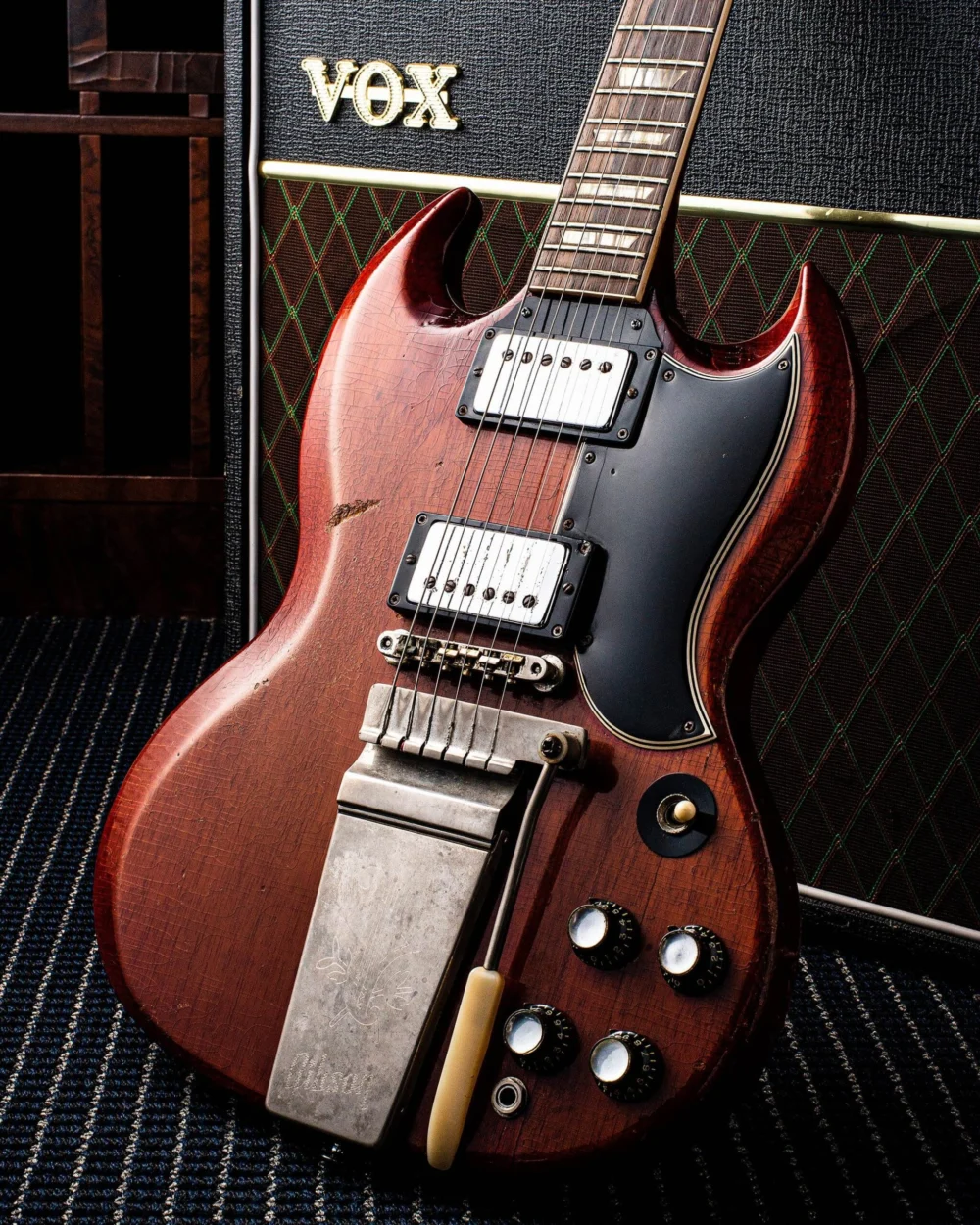
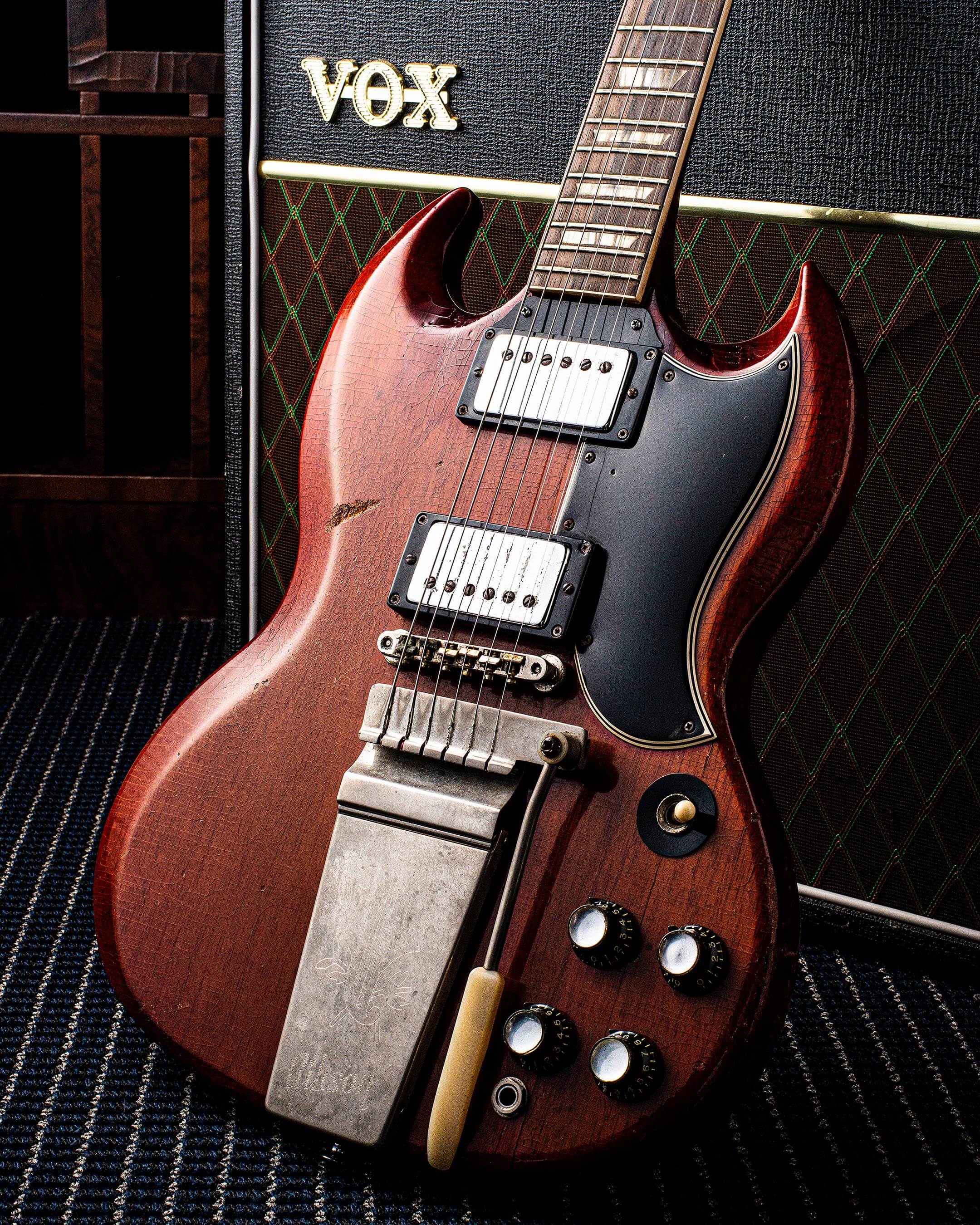
13. George Harrison’s “Revolver” Gibson SG – $2,271,000 (2026)
Breaking new ground as the most expensive Beatles electric guitar ever sold at auction, this 1964 Gibson SG defies the common expectation that Rickenbackers or Gretsches would command such a price. Acquired by George Harrison in 1966, this "humble-looking" SG quickly became a studio favorite, playing a significant role in the recording of the band’s peerless album Revolver. The guitar was a prized possession within Jim Irsay’s collection of Beatles memorabilia, which also included two electric guitars owned by John Lennon (a Rickenbacker and a Gretsch). All three were sold at Christie’s in March 2026. While the Lennon guitars each fetched $1.27 million, Harrison’s SG surpassed them, securing its place on this elite list. Its association with such a pivotal album in the Beatles’ discography undoubtedly contributed to its formidable value.
12. David Gilmour’s Martin D-35 – $2,393,000 (2026)
This 1969 Martin D-35 holds the unique distinction of having appeared on this list twice, first selling for $1,095,000 in 2019 to Jim Irsay, and then more than doubling its price to $2,393,000 in 2026. Its enduring demand is easily understood: this acoustic guitar is famously the sound of Pink Floyd’s iconic ballad "Wish You Were Here." The melancholic yet resonant tones emanating from this particular instrument are inextricably linked to one of rock music’s most beloved and poignant songs. Its significant increase in value within a few years highlights the accelerating appreciation for instruments tied to legendary recordings, especially when they re-enter the auction circuit with renewed interest.
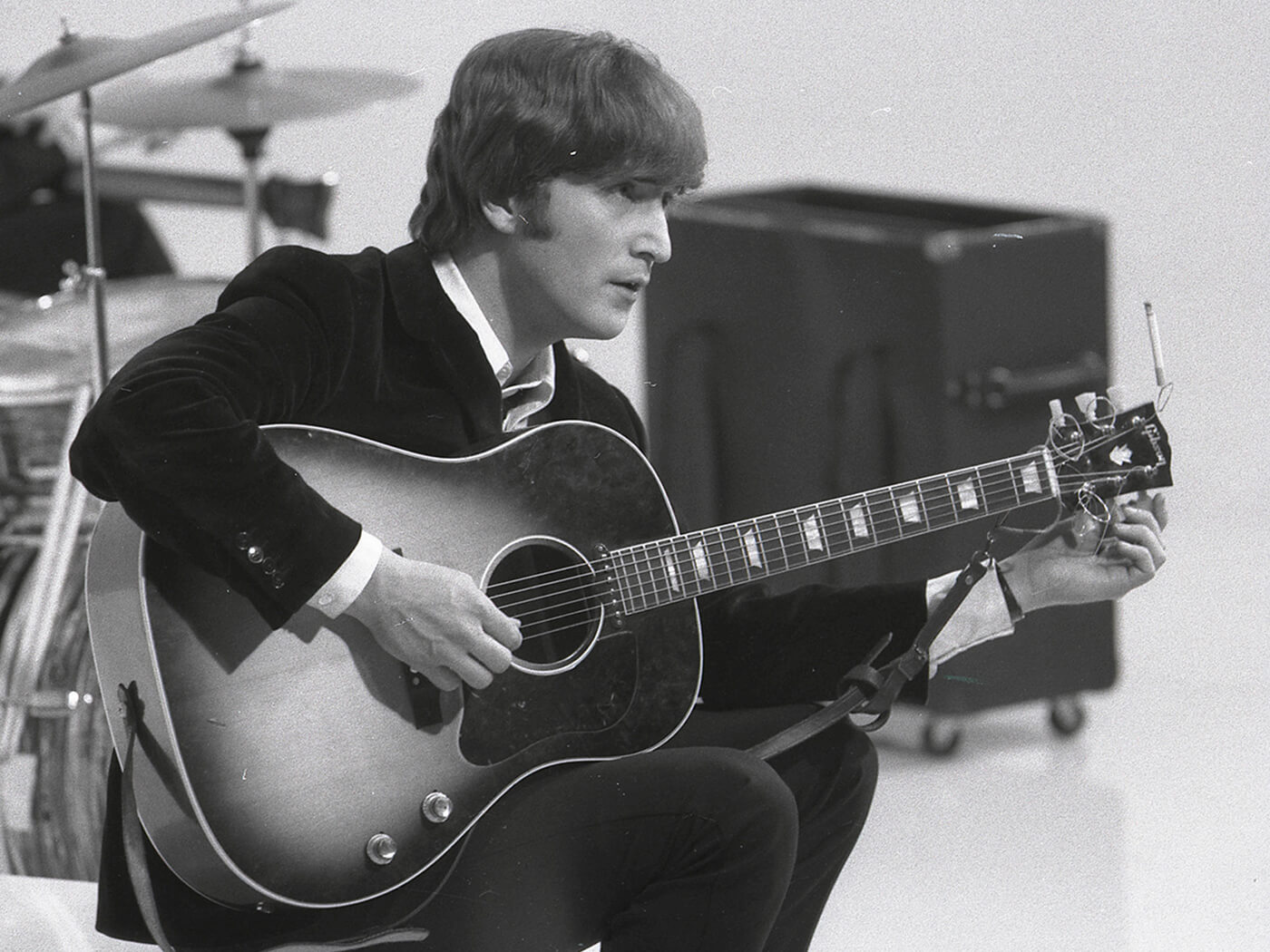
11. John Lennon’s 1962 Gibson J-160E – $2,410,000 (2015)
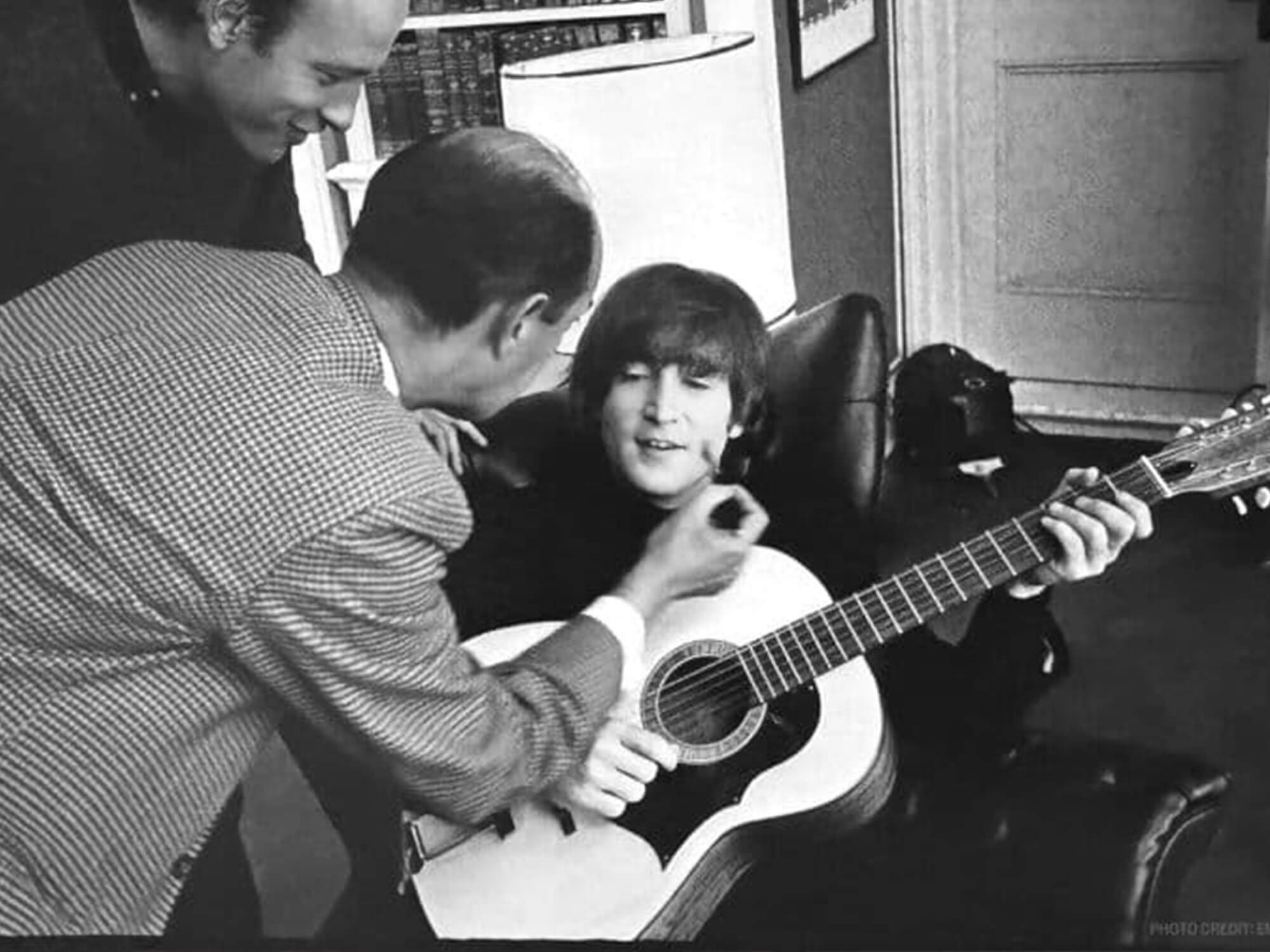
The Gibson J-160E, with its electric-like volume and tone knobs and a P-90 pickup artfully integrated between the neck and soundhole, was not celebrated for its elegant design. However, for young songwriters seeking amplification in the early 1960s, it was the perfect solution. This particular 1962 model was owned by John Lennon and can be heard on early Beatles recordings, including "Love Me Do." It remained a favored acoustic instrument for Lennon throughout his career. Its sale in 2015 for over $2.4 million underscores the enduring allure of instruments connected to the Fab Four, particularly those associated with their foundational works.
10. “Reach Out to Asia” Fender Stratocaster – $2,700,000 (2004)
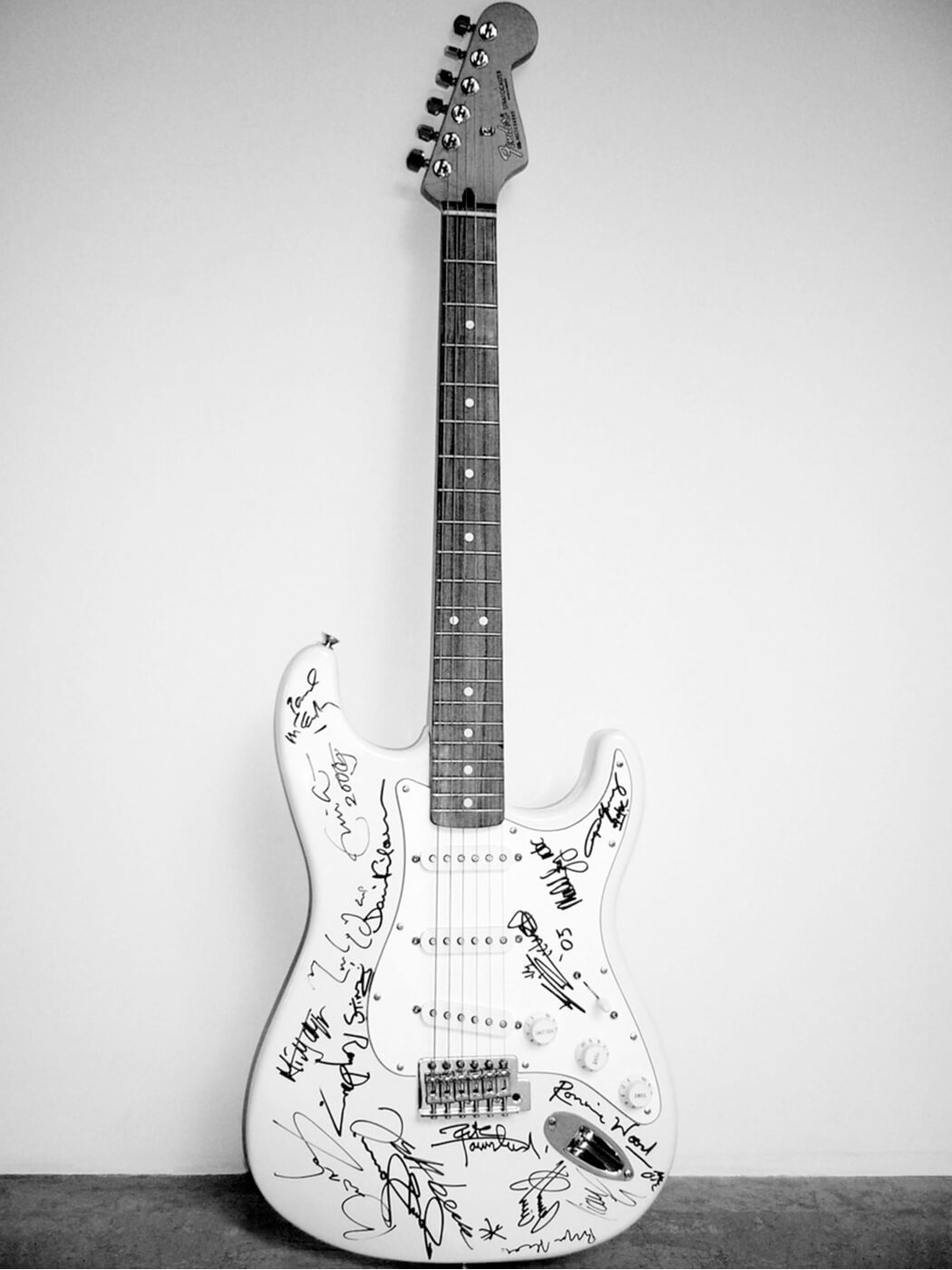
A unique entry on this list, this guitar is not primarily valued for its individual artistic provenance but for the collective power of rock ‘n’ roll. It is a standard Mexican-made white Fender Stratocaster, transformed into a historical artifact by the autographs of an unprecedented constellation of guitar legends. Signed by Mick Jagger, Keith Richards, Eric Clapton, Brian May, Jimmy Page, David Gilmour, Jeff Beck, Pete Townshend, Mark Knopfler, Ray Davies, Liam Gallagher, Ronnie Wood, Tony Iommi, Angus and Malcolm Young, Paul McCartney, Sting, Ritchie Blackmore, Def Leppard, and event organizer Bryan Adams, this instrument served a noble cause. It was auctioned in 2004 to raise funds for the victims of the devastating Indian Ocean Tsunami, demonstrating the profound charitable impact that the music community can mobilize.
9. Eddie Van Halen’s 1982 Kramer – $2,734,000 (2025)
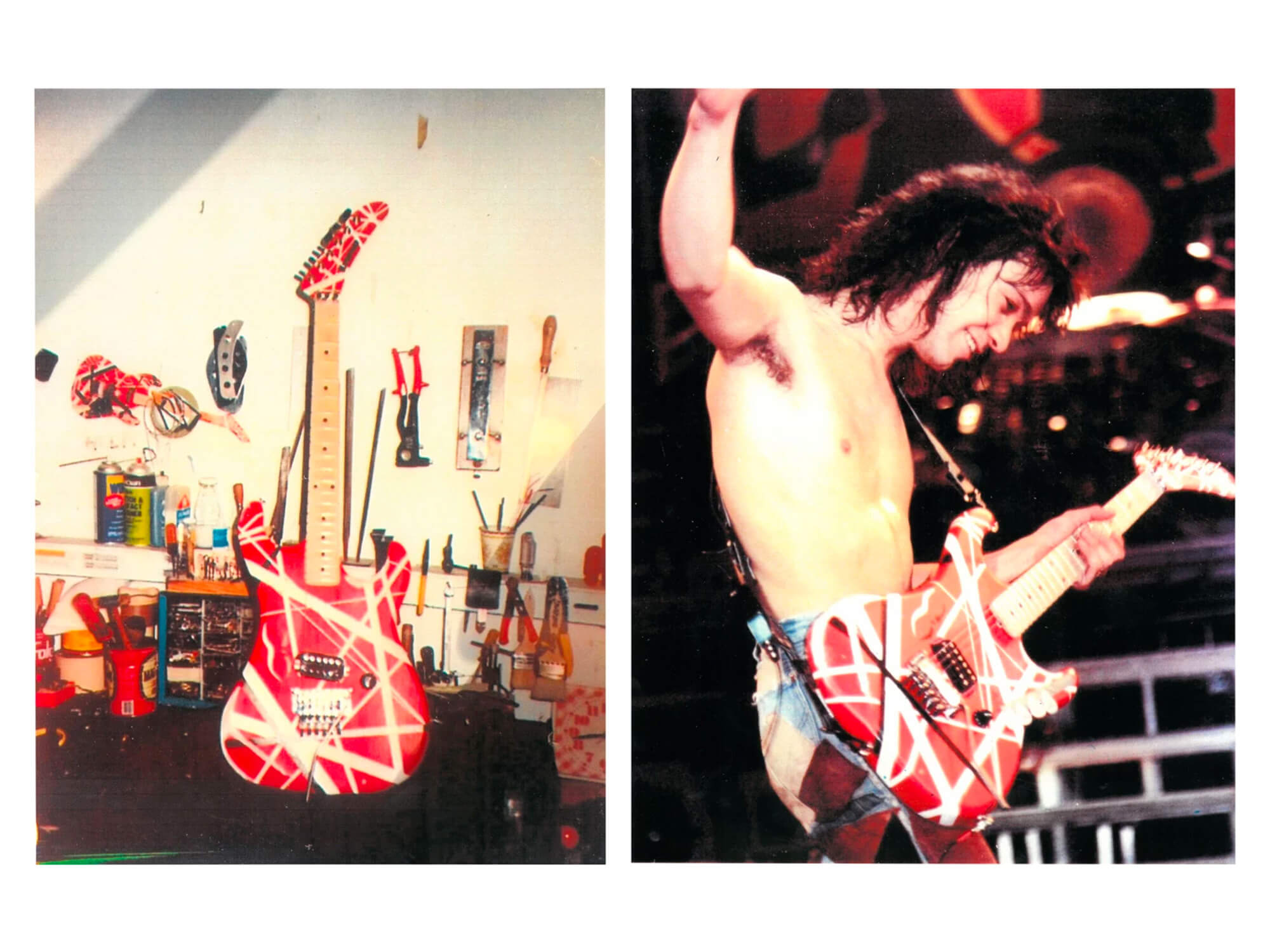
This custom Kramer, modeled after Eddie Van Halen’s iconic "Frankenstein" but featuring a distinctive striped "hockey stick" headstock, is instantly recognizable from one of the most memorable guitar advertisements of the 1980s. The ad, which proclaimed it "very simply the best guitar you can buy today," featured EVH with a lit cigarette under his E string, catapulting Kramer to become America’s biggest guitar brand. Used by Van Halen in various shows in 1982 and 1983, he later gifted it to his guitar tech, Rudy Leiren, inscribing it with "Rude – it’s been a great ten years – let’s do another ten. Eddie Van Halen." Leiren subsequently sold the guitar to Mötley Crüe’s Mick Mars, who utilized it extensively on their Dr. Feelgood album. Its 2025 sale at Sotheby’s, with a massive $2 million estimate, still saw it smash expectations, signaling the immense demand for instruments tied to Van Halen’s unparalleled legacy.

8. John Lennon’s Framus Hootenanny 12-string – $2,857,000 (2024)
For decades, this guitar, famously used on The Beatles’ Help! album and film, was considered lost to history. Its rediscovery in an attic in the British countryside by the new owners of a house sparked immense excitement. Originally given to Scottish guitarist Gordon Waller of the pop duo Peter and Gordon, and later to one of his road managers, the instrument had not been seen publicly for over 50 years. Lennon used this Framus Hootenanny in the Help! movie during the performance of "You’ve Got to Hide Your Love Away" and also to record tracks like "It’s Only Love," "I’ve Just Seen a Face," and "Girl." George Harrison also employed it for the rhythm track of "Norwegian Wood." Ahead of its May 2024 auction, speculation was rife that it could become the most expensive guitar ever sold. While it didn’t achieve that ultimate record, it did become the most expensive Beatles instrument ever, surpassing Lennon’s J-160E.
7. Eric Clapton’s “Fool” 1964 Gibson SG – $3,003,000 (2026)
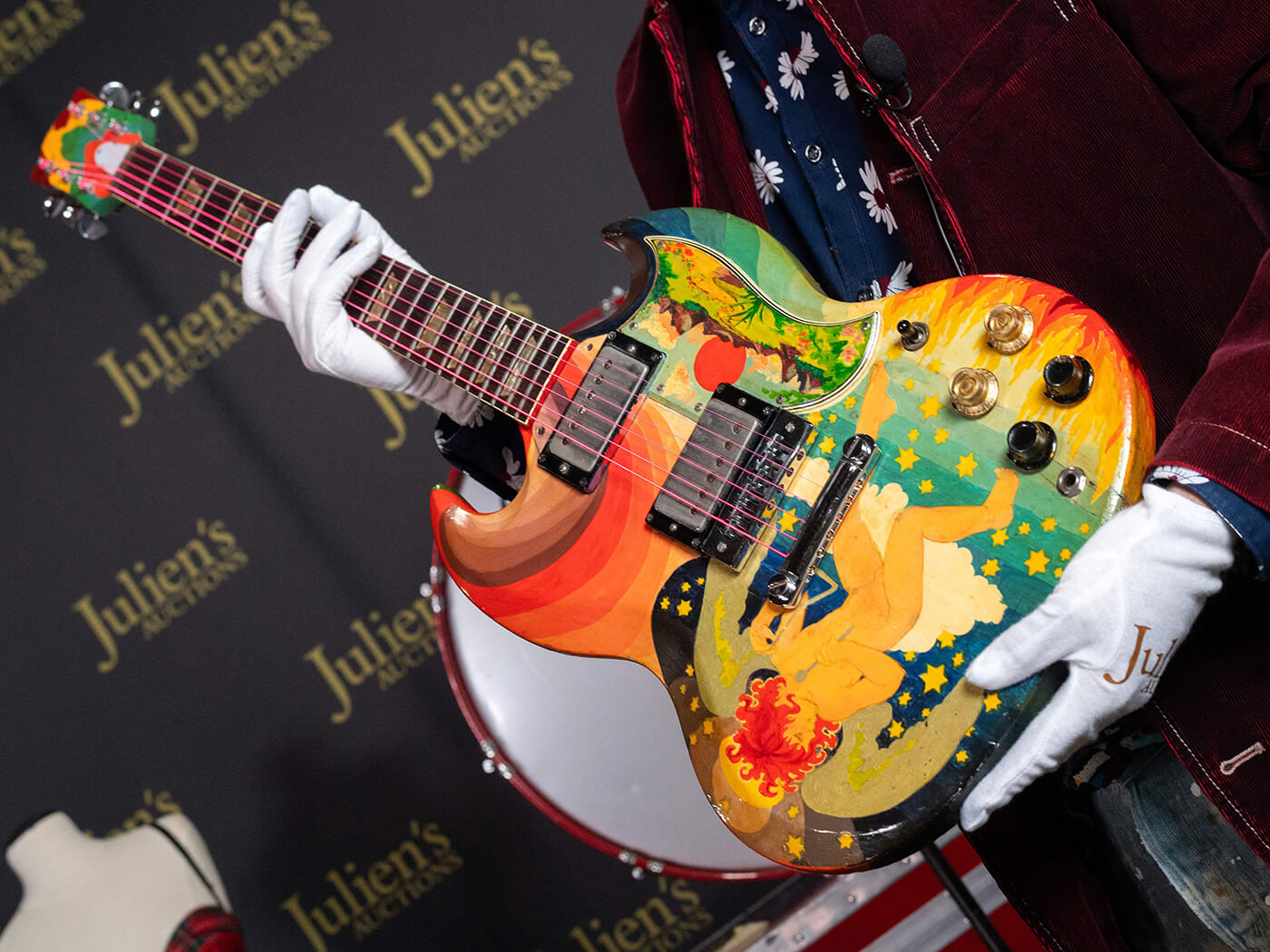
Perhaps Eric Clapton’s most visually distinctive instrument, the "Fool" Gibson SG, holds the unique distinction of being Slowhand’s most expensive electric guitar sold at auction—twice. Originating from Clapton’s iconic Cream era, the "Fool" is a vibrant symbol of psychedelic rock, named after the Dutch art collective responsible for its striking, hand-painted finish. This 1964 Gibson SG was instrumental in shaping Clapton’s legendary "Woman Tone," featured prominently on classics like "Sunshine of Your Love," "White Room," and "I Feel Free." Initially sold in 2023 for $1.27 million by Jim Irsay, its return to the market in 2026 saw it dramatically exceed estimates, ultimately fetching $3,003,000. This repeated high valuation underscores its profound cultural and historical significance in the evolution of rock music.
6. Eddie Van Halen’s Hot For Teacher Kramer – $3,932,000 (2023)
Eddie Van Halen’s innovative guitar designs became almost as iconic as his virtuosity. With most of his primary instruments remaining with his family, the opportunity to acquire a bona fide EVH stage and video guitar is exceptionally rare. This specific Kramer, famously used by Eddie in the groundbreaking "Hot For Teacher" music video, generated immense interest upon its auction. The intricate stripe pattern and distinctive headstock made it instantly recognizable to millions of fans worldwide. Its sale in 2023 for nearly $4 million reflected the profound impact of Van Halen’s artistry and the scarcity of his personal instruments on the open market. The high price tag confirmed the escalating demand for items directly tied to the legacies of rock’s most influential figures.
5. Eric Clapton’s “MTV Unplugged” Martin 000-42 – $4,101,000 (2026)
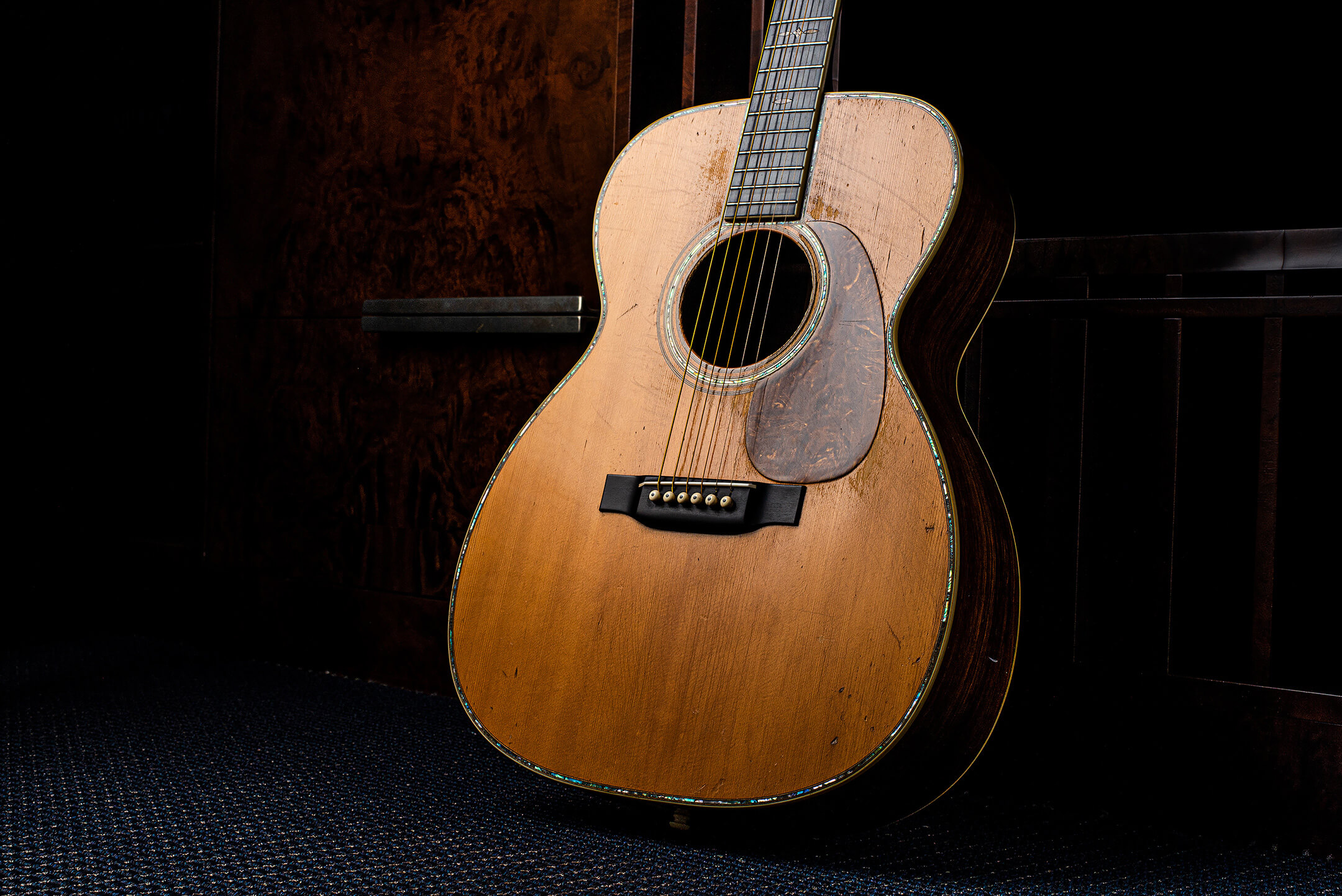
The profound cultural impact of MTV’s Unplugged series on the perception and popularity of acoustic guitar cannot be overstated, and its resonance with collectors is clearly evident on this list. Eric Clapton’s legendary 1992 Unplugged performance, and the multi-platinum album that followed, not only revitalized his career but also sparked a global resurgence in acoustic guitar interest. The 1939 Martin 000-42 played by Clapton during this pivotal performance is historically significant: Martin credits it with single-handedly reviving interest in their 000-sized guitars and inspiring their most successful and enduring signature model. Jim Irsay had originally acquired this guitar for under a million dollars, but its re-sale in 2026 saw it smash expectations, becoming the second most expensive acoustic guitar ever sold at auction, further solidifying the enduring legacy of that Unplugged moment.
4. Kurt Cobain’s Martin D-18E – $6,010,000 (2020)
Following another transformative Unplugged moment, Kurt Cobain’s Martin D-18E stands as a testament to Nirvana’s raw and poignant performance on MTV Unplugged. This incredible, bittersweet performance cemented the D-18E as one of the most iconic guitars in rock history. Cobain purchased the D-18E in 1992 from Voltage Guitars in Los Angeles. A rare Martin factory model equipped with DeArmond pickups, Cobain, ever the innovator, disliked their sound and had the instrument modified with a Bartolini 3AV soundhole pickup. The guitar was initially bequeathed to Cobain’s daughter, Frances Bean, and later transferred to her ex-husband, Isaiah Silva, as part of their divorce settlement. In 2020, it was acquired by RØDE Microphones founder Peter Freedman, briefly topping the list as the most expensive guitar sold at auction until the 2026 Irsay auction reshuffled the rankings.
3. Kurt Cobain’s Smells Like Teen Spirit Fender Mustang – $6,907,000 (2026)
The cost of an iconic moment in guitar history, it seems, can be measured in millions. The music video for "Smells Like Teen Spirit" undeniably altered the course of popular music and culture, and at its heart was Kurt Cobain playing a rather fetching, albeit unconventional, lefty Lake Placid Blue Mustang adorned with a competition stripe. With billions of YouTube views and countless hours of MTV airtime, this guitar’s place in the pop culture firmament was irrevocably assured. Ironically, this Mustang wasn’t one of Cobain’s primary stage guitars, appearing live on only a few other occasions. However, its central role in the Teen Spirit video secured its legendary status and its entry into the Jim Irsay collection in 2022 for $4,550,000. When it was put up for sale again in 2026, it had the largest estimated sale price of $2.5-5 million. While it comfortably surpassed that, its final price of $6,907,000 was still overshadowed by two other instruments from the same Irsay auction, underscoring the intense competition at the highest echelons of guitar collecting.
2. Jerry Garcia’s “Tiger” – $11,560,000 (2026)
The enduring magic of the Grateful Dead has captivated new generations, particularly fueled by the success of John Mayer-aided Dead & Company tours. The passing of Bob Weir earlier in the year, and the subsequent global outpouring of affection, further reinforced the timeless appeal of the band and its music. "Tiger," another masterpiece built for Jerry Garcia by luthier Doug Irwin, served as Garcia’s primary guitar from 1979 until his death in 1995, famously being the last guitar he ever played in public. Jim Irsay acquired "Tiger" for $957,500 in 2002. Given its immense historical significance and the rekindled passion for the Grateful Dead, its modest $1-2 million estimate at the 2026 Irsay sale raised eyebrows among connoisseurs. However, even seasoned observers were astounded by its final selling price: $11,560,000. This made "Tiger" the second most expensive guitar of all time and only the second instrument to achieve an eight-figure sum at auction, unequivocally demonstrating the enduring power and commercial viability of the Grateful Dead’s legacy.
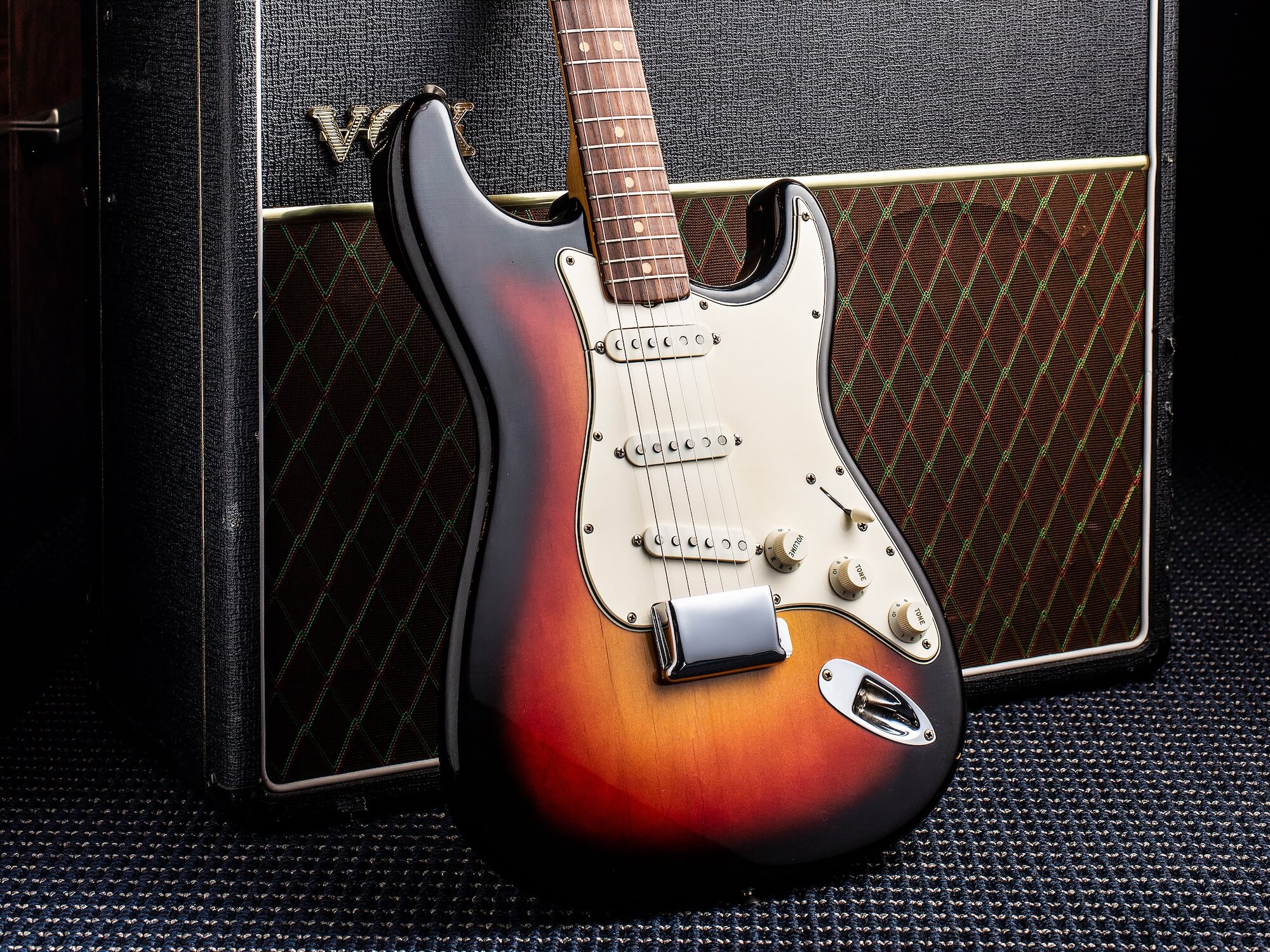
1. David Gilmour’s Black Fender Stratocaster – $14,550,000 (2026)
The Black Strat stands as David Gilmour’s most iconic and extensively modified guitar. Originally a 1968 Sunburst model purchased from Manny’s Music in New York, it had been refinished in black by the time Gilmour acquired it in 1970. Throughout the 1970s, Gilmour frequently swapped between different necks, experimenting with both rosewood and maple fretboards from 1950s models. The modifications didn’t stop there; over the decades, the pickups, tuners, pots, tremolo system, and scratchplate have all been replaced. It is now estimated that only the body, selector switch, and potentially the bridge plate remain from the original instrument. Despite its status as effectively the most important and iconic "partscaster" of all time, the Black Strat remains inextricably linked to Gilmour’s signature sound—the unmistakable voice of Pink Floyd classics like "Money," "Comfortably Numb," and countless others.
Its initial sale in 2019 for $3.9 million set a world record and crowned it the jewel of the Jim Irsay Collection. In the intervening years, its title was briefly usurped by Kurt Cobain’s guitars. However, the 2026 Irsay auction not only cemented the Black Strat’s status as the most valuable guitar on Earth but utterly redefined market expectations. Gasps were reportedly audible in the Christie’s New York sale room as the bidding soared past $10 million, culminating in a scarcely believable final price of $14,550,000. This record-breaking sale signifies a new chapter in the market for rock ‘n’ roll memorabilia, suggesting that the only trajectory for such profoundly significant instruments is upward.
Implications and Future Outlook
The astonishing sums achieved at these auctions, particularly the 2026 Irsay sale, have significant implications for the world of collecting and cultural heritage. They highlight the increasing confluence of art, history, and investment in the music industry. Buyers are often not just enthusiasts but sophisticated collectors who recognize the tangible and intangible value of these instruments. The motivations range from a profound appreciation for musical history and a desire to preserve cultural artifacts, to the shrewd understanding of these guitars as appreciating assets.
The phenomenon also underscores the enduring power of rock ‘n’ roll icons and their ability to command attention and value decades after their peak creative periods or even their passing. As more legendary musicians’ estates consider divesting their collections, and as global wealth continues to concentrate, the competition for these unique artifacts is likely to intensify. This trend raises questions about accessibility to such items, as they move further into the realm of ultra-high-net-worth individuals and institutions, potentially limiting public display or access.
However, the high-profile nature of these sales also brings increased awareness to the history and craftsmanship of these instruments, ensuring their stories continue to resonate. The market for rock star guitars is demonstrably robust, driven by a blend of nostalgia, cultural significance, and investment potential. If the patterns of the last decade are any indication, the ceiling for these prices remains far from being reached, promising an even more fascinating future for the world’s most expensive guitars.
Editor’s note: This article was first published on 1 February 2024 and most recently updated on 13 March 2026. All figures below are converted into US Dollars and were correct at time of auction and not adjusted for inflation.
