

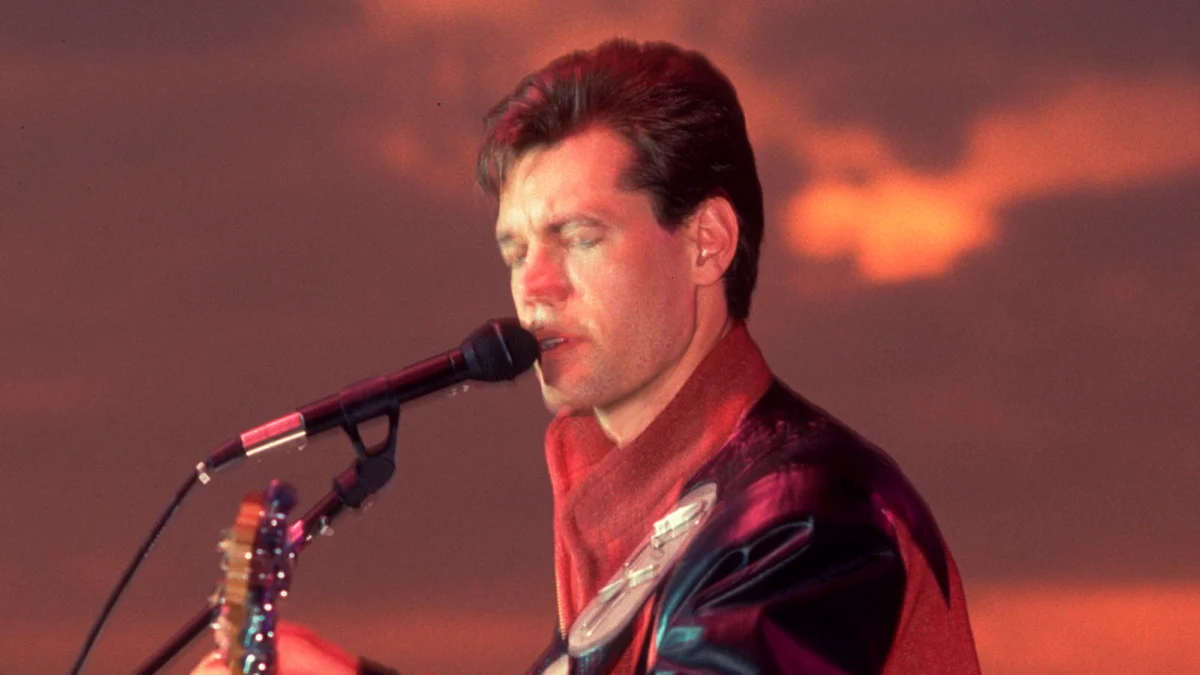
On July 29, 1985, a fledgling country singer named Randy Travis released a song titled On the Other Hand as his debut single with Warner Bros. Records. At the time of its initial release, the track was largely ignored by radio programmers and industry executives, failing to break into the Top 40 and peaking at a disappointing No. 67 on the Billboard Hot Country Songs chart. However, the story of this song did not end with its initial failure; instead, it became a landmark case study in the power of persistence and strategic marketing within the music industry. By the time it was re-released in 1986, it had transformed from a forgotten debut into a multi-award-winning chart-topper that would help define the "New Traditionalist" movement in country music.
The Long Road to Nashville Stardom
To understand the significance of On the Other Hand, one must look at the decade-long struggle Randy Travis endured before finding a home at a major label. Born Randy Bruce Traywick in Marshville, North Carolina, the singer began his journey in the late 1970s. Under his birth name, he released several singles on the independent Paula Records label in 1978. These early attempts, including She’s My Woman and I’ll Take Any Willing Woman, saw negligible success; the former peaked at No. 91, while the latter failed to chart entirely.
Travis’s career was managed and championed by Elizabeth "Libby" Hatcher, who discovered him during a talent contest at her club, Country City USA, in Charlotte. Hatcher eventually moved to Nashville to manage the Nashville Palace, a tourist-oriented nightclub and restaurant, where she hired Travis as a cook and a singer. Despite his obvious talent and a voice that recalled the legendary baritones of Lefty Frizzell and George Jones, Travis was rejected by every major label in Nashville—some more than once. The prevailing sound of the era was the "Urban Cowboy" style, characterized by pop-crossover production and polished arrangements, which made Travis’s raw, traditional sound seem archaic to many executives.
The 1985 Debut and the Initial Chart Failure
In early 1985, Martha Sharp, an executive at Warner Bros. Records, took a gamble on Travis, signing him to a major-label contract. The label chose On the Other Hand as his first single, releasing it in late July. Written by the powerhouse songwriting duo of Don Schlitz and Paul Overstreet, the song was a masterclass in traditional country songwriting, featuring a protagonist torn between the temptation of a new lover and the commitment represented by his wedding band.
Despite the pedigree of the songwriters and the quality of Travis’s performance, the single failed to gain traction. In the mid-1980s, country radio was still transitioning away from the slicker sounds of the early 80s, and a voice as unapologetically "country" as Travis’s was initially a hard sell. When On the Other Hand stalled at No. 67, many in the industry viewed it as a sign that the traditionalist revival was not yet ready for the mainstream.
The Strategic Pivot: The Success of 1982
Rather than abandoning their new artist, Warner Bros. moved forward with a second single, 1982. Released in December 1985, this ballad struck a chord with listeners and climbed to No. 6 on the country charts. The success of 1982 provided the necessary momentum and proved that there was indeed an audience for Travis’s brand of neotraditionalism.
As the label prepared for the release of Travis’s debut album, Storms of Life, they faced a dilemma. They felt that while 1982 had established Travis as a star, they lacked a follow-up single of equal or greater strength already in the queue. Martha Sharp and the promotional team made the unconventional decision to give On the Other Hand a second chance. They believed the song’s initial failure was a matter of timing rather than quality, and with Travis now a recognized name, they wagered that radio programmers would be more receptive.
The 1986 Re-release and the Ascent to Number One
In April 1986, Warner Bros. re-released On the Other Hand as Travis’s third single. The difference in reception was immediate. Bolstered by the success of 1982 and the critical acclaim surrounding the Storms of Life album, the song began a rapid ascent up the Billboard charts.
By late July 1986—almost exactly one year to the day after its original, failed release—the song reached No. 1. It became the first of 16 career No. 1 singles for Travis, cementing his status as the leader of a new generation of country artists. The song’s success was not merely a commercial victory; it was a cultural shift. It signaled that the "New Traditionalist" movement, which included artists like George Strait, Ricky Skaggs, and Reba McEntire, had officially moved from the fringes of the genre to its very center.
The Songwriting Genius of Schlitz and Overstreet
The enduring legacy of On the Other Hand is inextricably linked to its songwriters, Don Schlitz and Paul Overstreet. Schlitz was already a Nashville legend, having written The Gambler for Kenny Rogers, while Overstreet was an emerging talent who would go on to write numerous hits for himself and others.
According to historical accounts and interviews documented by Songfacts, the song was born out of a desire to write something that deviated from the "cheating songs" prevalent in country music at the time. Paul Overstreet recalled that the inspiration came from a personal desire to express the strength required to remain faithful.
"It was this idea that when you have one woman, you shouldn’t be looking for another one," Overstreet explained. "I, personally, was tired of that whole scenario of going from one relationship to another, and not having the strength to really say no in tempting situations. I was hoping we could write a song that would say we have the strength to say no."
The lyrical structure of the song is celebrated for its clever use of the phrase "on the other hand." In the first verse, it refers to the physical touch of a new lover, while in the chorus, it refers to the wedding band worn on the other hand, serving as a moral anchor. This clever wordplay, combined with Travis’s soulful delivery, created a narrative depth that resonated deeply with the country music audience.
Critical Acclaim and Industry Impact
The industry’s delayed recognition of the song was eventually compensated for with a sweep of major awards. In 1986, On the Other Hand won Song of the Year at both the Country Music Association (CMA) Awards and the Academy of Country Music (ACM) Awards. These honors were bestowed upon Schlitz and Overstreet, while Travis himself took home the ACM Award for Single of the Year.
The impact of the song on Randy Travis’s career cannot be overstated. Storms of Life went on to become the first debut album by a country artist to sell more than one million copies within a year of its release. It eventually reached triple-platinum status, a rare feat for a traditional country record in that era. Travis’s success paved the way for the "Class of ’89"—a group of artists including Garth Brooks, Alan Jackson, and Clint Black—who would take the traditionalist sound to even greater heights of commercial success in the 1990s.
Analysis of the "New Traditionalist" Movement
The trajectory of On the Other Hand serves as a perfect illustration of the shifting tides in Nashville during the mid-1980s. For nearly a decade prior, the "Nashville Sound" and the subsequent "Urban Cowboy" phase had moved country music closer to pop and adult contemporary styles. While this brought the genre a wider audience, it alienated many core fans who felt the music had lost its roots.
Travis’s breakthrough with On the Other Hand was a correction of that trend. His voice—thick with a North Carolina drawl and capable of profound emotional resonance—demanded an acoustic-heavy, fiddle-and-steel-guitar arrangement. The success of the re-release proved to label executives that there was a massive, untapped market for music that honored the genre’s heritage while maintaining modern production standards.
Chronology of Key Events
- 1978: Randy Travis (as Randy Traywick) releases his first singles on Paula Records; they fail to make a significant impact.
- Early 1985: Travis signs with Warner Bros. Records after years of rejections from Nashville labels.
- July 29, 1985: On the Other Hand is released as a debut single; it peaks at No. 67.
- December 1985: 1982 is released as the second single and becomes a Top 10 hit, peaking at No. 6.
- April 1986: Warner Bros. strategically re-releases On the Other Hand to country radio.
- June 1986: Storms of Life, Travis’s debut album, is released to critical and commercial acclaim.
- July 1986: On the Other Hand hits No. 1 on the Billboard Hot Country Songs chart.
- Late 1986: The song wins Song of the Year at both the CMA and ACM Awards; Travis wins Single of the Year at the ACMs.
A Lasting Legacy in the Country Canon
Nearly four decades after its release, On the Other Hand remains a staple of country radio and a benchmark for aspiring traditionalist artists. It is frequently cited by music historians as one of the most perfectly constructed songs in the history of the genre. The song’s journey—from a failed debut to a genre-defining masterpiece—serves as a testament to the importance of artistic conviction and the willingness of a record label to stand behind a talent they believe in.
Randy Travis would go on to endure health struggles in later years, including a devastating stroke in 2013 that limited his ability to sing and speak. However, his influence remains pervasive. Every time a new artist steps onto the stage of the Grand Ole Opry with a fiddle, a steel guitar, and a baritone voice, they are operating in the space that On the Other Hand helped re-open for the traditional country sound. The song stands not just as a hit record, but as the moment when country music rediscovered its soul.
